“We Own the Dark: How the SAS Defied Pentagon Suicide Orders and Exposed the Fatal Flaws of the Helmand Campaign”
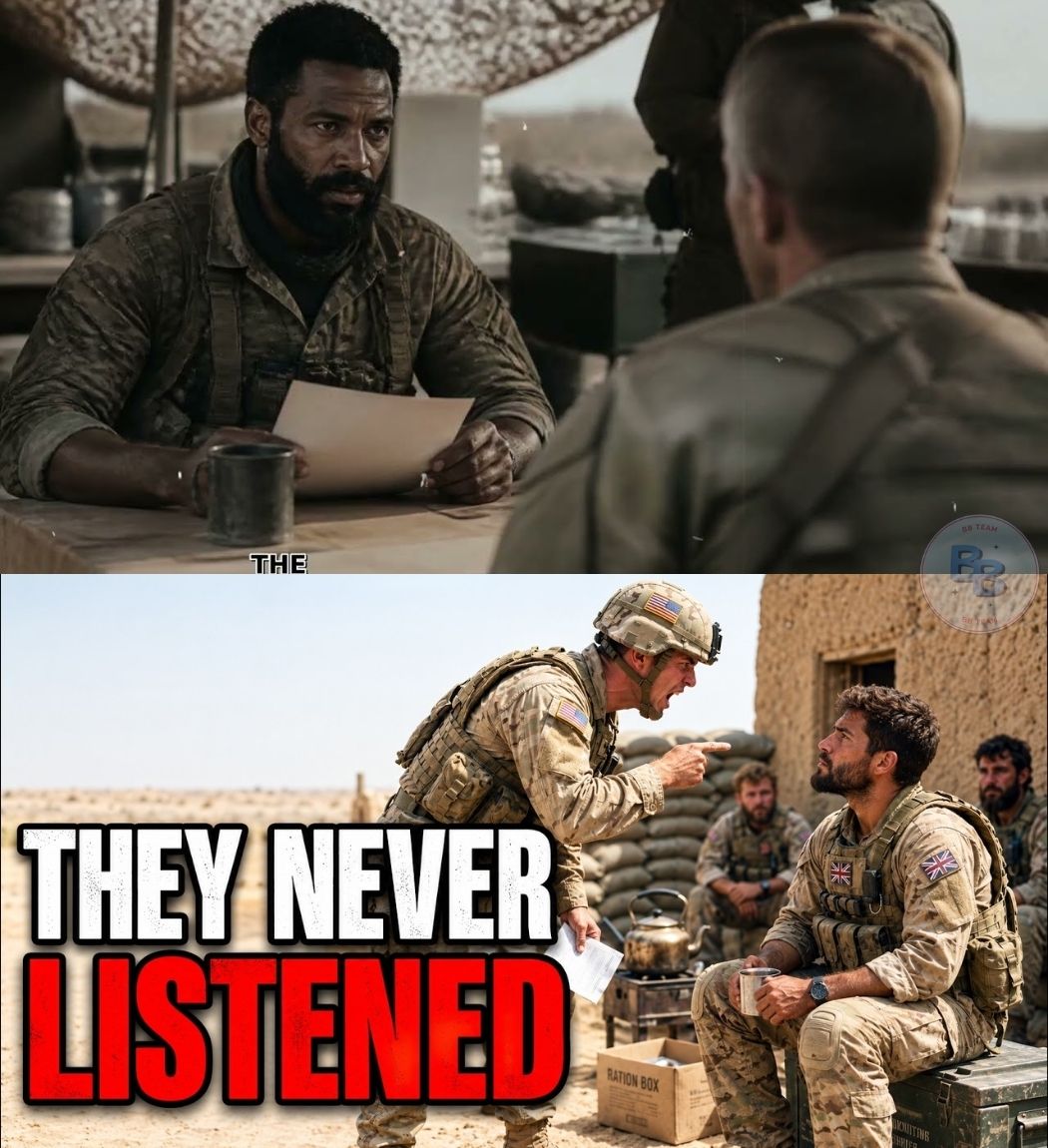
“We Own the Dark: How the SAS Defied Pentagon Suicide Orders and Exposed the Fatal Flaws of the Helmand Campaign”
The dust of Helmand province does not simply settle; it clings, it chokes, and it lingers like an unpunished sin. In the searing heat of 2010, the southern districts of Afghanistan were less a battlefield and more a sprawling, chaotic crucible where modern military doctrines went to die. For the British Special Air Service, operating in the shadows of Lashkar Gah and the treacherous alleys of Sangin, the war was a brutal exercise in localized survival and intimate violence. They knew every mud-brick compound, every irrigation ditch choked with reeds, and every subtle shift in tribal loyalties that dictated whether a village would shelter a patrol or bleed it dry. But knowledge, in the grand architecture of coalition warfare, is often treated as a dangerous nuisance by those far away from the frontline.
The flashpoint that would rupture relations between the British SAS and their American counterparts began in a dimly lit command bunker at Camp Bastion. The room smelled of stale coffee, sweat, and burning diesel. A newly arrived American colonel, high on the aggressive counter-insurgency mantras being pumped out of headquarters in Kabul and Washington, slammed a freshly minted operational dossier onto a scarred folding table. The mission directive was deceptively clean on paper: a mechanized night assault on a heavily fortified compound complex deep inside Taliban heartland, designed to capture a mid-level insurgent financier. To the American staff, it was a textbook target-acquisition drill, a neat little square to be checked off on a strategic matrix. To the SAS squadron leaders who had spent the last six months bleeding for every square yard of Helmand, it was an outright death sentence wrapped in administrative arrogance.
Squadron Commander Major Tom Vance, a veteran whose face was map-lined by desert sun and sleepless nights, picked up the flimsy paper. He read it once, twice, and then looked across the table at the American commander, his expression flat and devoid of professional warmth. The plan called for a broad-daylight insertion followed by a heavy armor sweep through an area known to be heavily saturated with Improvised Explosive Devices and interlocking insurgent ambush positions. It ignored every hard-earned lesson the British had learned about the local terrain, the seasonal migration of fighters, and the absolute folly of relying on heavy combat vehicles in terrain designed to swallow them whole.
“This isn’t a raid, Colonel,” Vance said quietly, his voice cutting through the hum of the air conditioning. “This is a massacre. You’re walking forty men straight into an active funnel.”
The American officer, visibly bristling at the pushback from a foreign subordinate, leaned forward, his eyes narrowing. “Major, my orders come directly from joint command. We have intelligence confirming high-value data inside that compound. The directive is to strike hard, fast, and loud to demonstrate coalition dominance. Your men are tasked with leading the initial breach. That is not a request; it’s an operational mandate.”
What followed was not a polite military disagreement, but a searing verbal clash that shattered the fragile veneer of coalition unity. Vance did not mince words. He told the colonel that his intelligence was three weeks out of date, that his tactical map was based on satellite imagery rather than ground truth, and that executing the order would result in the complete annihilation of the assault element. The atmosphere in the bunker turned glacial. The American staff officers sat in stunned silence, unaccustomed to allied units openly questioning, let alone flatly rejecting, the tactical gospel preached by the coalition leadership.
“We know this place, and you don’t,” Vance reportedly told him, standing up and dropping the dossier back onto the table. “My men are not going to walk into a meat grinder just to pad your weekly progress report. We are refusing this order.”
In the rigid hierarchy of military command, the word “refusal” is practically treasonous. It is a word that triggers career-ending investigations, court-martials, and immediate repatriation in disgrace. Yet, in the high-stakes theater of special operations, where lives are measured in seconds and tactical reality constantly battles institutional delusion, the line between following orders and committing murder often blurs. The SAS troopers stationed outside the command tent knew nothing of the shouting match within, but they knew their commander, and they trusted his judgment implicitly. When Vance walked out, lit a cigarette, and simply told his troop leaders to stand down their gear, a quiet mutiny had begun—one that would stay buried in classified archives for years.
To understand why the SAS took such an extreme stance, one must examine the fundamental philosophical chasm that separated British and American approaches to the Helmand theater. The United States military, operating with staggering technological superiority, vast logistical networks, and a rotational deployment model, often viewed counter-insurgency through the lens of overwhelming force and kinetic resolution. The strategy was frequently characterized by sweeping operations, large-scale footprints, and a desire to impose order through sheer might. They viewed the battlefield as a chessboard where pieces could be moved across vast distances based on top-down directives.
The British SAS, conversely, operated on a philosophy of surgical precision, deep cultural immersion, and protracted local engagement. They understood that in Helmand, every bullet fired without absolute tactical justification created three new enemies among the civilian populace. They relied on stealth, local intelligence networks cultivated over months of risk, and an intimate familiarity with the human terrain. To the SAS, a botched, heavy-handed raid wasn’t just a tactical failure; it was a strategic disaster that drove hundreds of fence-sitting locals straight into the arms of the Taliban.
The compound in question—designated Target Echo by the American planners—was situated on the outskirts of a sprawling agricultural community that served as a major transit hub for weapons and opium revenue. For months, the British had maintained a delicate intelligence-gathering posture in the area, using observation posts hidden in crumbling irrigation ruins to map insurgent movements without provoking a massive civilian backlash. They knew that the compound was surrounded by a complex web of command-wire IEDs and that any large-scale vehicle approach would immediately trigger a coordinated ambush from surrounding orchards and drainage ditches.
The American plan ignored these nuances entirely, relying instead on the terrifying assumption that air superiority and rapid armored movement could bulldoze through any tactical obstacle. They wanted a show of strength. They wanted a cinematic victory to report back to CENTCOM. But the real war in Helmand was not a Hollywood movie; it was a grinding war of attrition where tactical vanity was paid for in blood.
When the American command realized the SAS was refusing to execute the raid, the bureaucratic machinery swung into retaliatory motion. Threats of disciplinary action, withdrawal of logistical support, and official reprimands were fired off down the secure comms channels. The Americans decided to prove a point. If the British elite were too timid to execute the mission, the Americans would do it themselves, utilizing a specialized unit of US Army Rangers backed by local Afghan auxiliary forces and heavy air support.
The operation, launched two nights later, began with the thunderous roar of artillery and the low, menacing hum of Apache attack helicopters sweeping low over the desert. From their observation posts miles away, the SAS operators watched the unfolding disaster with grim, silent foreboding. They didn’t gloat; they didn’t feel vindicated. They simply watched as the American force drove directly into the trap they had warned against.
Within twenty minutes of the initial breach, the radio frequencies erupted into chaotic static and frantic calls for medical evacuation. The American convoy, driving heavy MRAPs down the primary agricultural track, hit a massive chain of deep-buried IEDs that tore the lead vehicles apart. As the surviving troops piled out into the irrigation ditches, they were met with a withering, coordinated crossfire from well-concealed Taliban positions inside the orchard network. The high-value target compound wasn’t empty, nor was it lightly defended; it was the staging ground for an entire insurgent reinforcement cell waiting precisely for such an aggressive, predictable advance.
The battle quickly degenerated into a desperate rescue operation. Apache gunships screamed overhead, chewing up the tree lines with 30mm cannon fire, but the dust, darkness, and close proximity of friendlies made accurate close air support nearly impossible. American soldiers were pinned down in open ground, taking heavy casualties as the minutes dragged into agonizing hours.
It was during this unfolding catastrophe that the true character of the SAS revealed itself. Despite having their orders rejected and their professional judgment insulted just days prior, Major Vance and his squadron commanders did not hesitate. Without waiting for authorization from the offended American brass, Vance ordered two quick-reaction force troops to saddle up and head straight into the kill zone to assist in extracting the pinned-down American soldiers.
The rescue mission executed by the SAS under the cover of darkness was a masterclass in tactical improvisation and lethal efficiency. Slipping in through flank routes that the American planners had deemed impassable, the SAS operators bypassed the primary insurgent ambush lines and established a secure extraction corridor. Utilizing night-vision superiority and silent movement, they neutralized several insurgent sniper positions that had been wreaking havoc on the trapped Rangers. They pulled wounded American soldiers out of burning wreckage under heavy fire, dragging them to makeshift casualty collection points with clinical, unshakeable discipline.
By dawn, the battlefield had fallen silent, leaving behind a smoking landscape of wrecked armor, churned earth, and profound professional embarrassment. The American casualties were severe, with multiple dead and dozens wounded—a catastrophic toll for a single night’s operation driven by institutional ego.
In the aftermath of the disaster, an internal review was quietly initiated, but its findings were rapidly sanitized. The official narrative released to the press and higher command glossed over the tactical miscalculations, framing the engagement as a hard-fought encounter with a resilient enemy force. The explosive disagreement between the SAS and the American command was quietly scrubbed from official logs, buried beneath layers of classified classification to preserve the illusion of flawless coalition harmony.
Yet, among the men who fought in the dust and blood of Helmand, the truth could never be erased. The incident became a legendary, cautionary tale whispered among special operations units across the globe—a stark reminder of the deadly friction that occurs when political directives and bureaucratic ambition override local expertise on the ground.
Major Vance and his men received no medals from the American military for saving the lives of the trapped Rangers that night; indeed, decorations for such unsanctioned heroics rarely make it past bureaucratic red tape. But among the British operators, the memory of that night remains a definitive testament to their core ethos. In a war defined by high-level incompetence, shifting political narratives, and distant commanders playing chess with human lives, sometimes the bravest and most necessary thing an elite soldier can do is look their superior in the eye, say no, and take the consequences—because in the brutal valleys of Helmand, knowing the place meant knowing when to refuse to die for a lie.