What British SAS Troops Did When Enemy Officers Refused to Drop Their Weapons
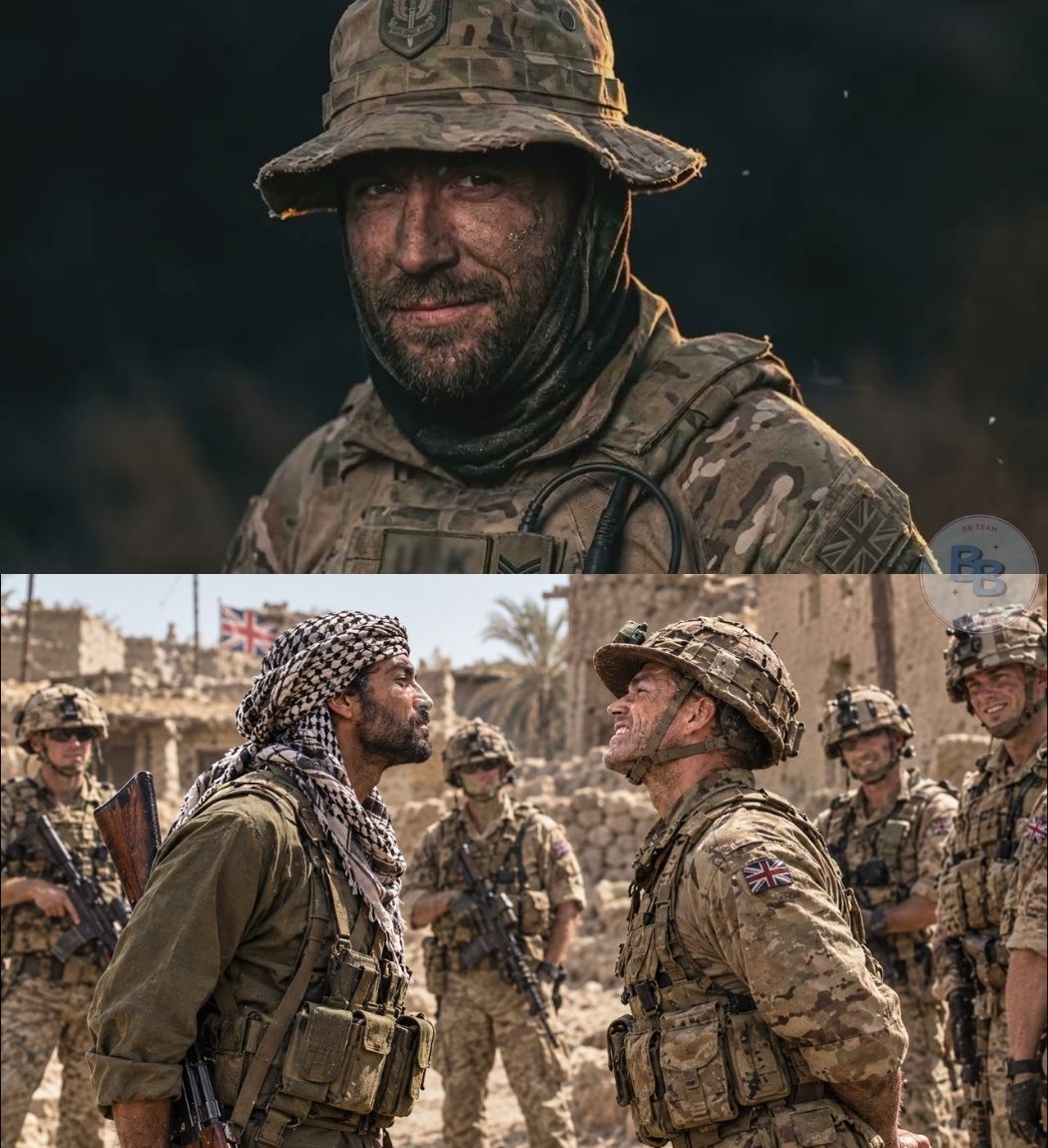
Beyond the Wire: The Uncensored SAS Bloodbath That Military Command Tried to Bury Forever
The wind howled across the jagged, moonlit peaks of the Hindu Kush, carrying with it the bitter chill of a high-altitude winter and the unmistakable, acrid scent of cordite and burning diesel. It was 03:14 hours. Deep inside a concrete-reinforced compound that intelligence had marked as a high-value shadow network hub, four members of the British Special Air Service (SAS) stood pressed against a damp, bullet-pitted corridor wall. They were cut off, outnumbered four to one, and completely out of conventional support. Yet, their breathing was remarkably steady. Their weapons—suppressed carbines equipped with thermal optics—were locked, loaded, and pointed straight down a narrow hallway illuminated only by the erratic flicker of a dying overhead fluorescent light.
Minutes earlier, what was supposed to be a textbook capture-and-exploit mission had devolved into a catastrophic nightmare. The primary target, a rogue intelligence liaison codenamed “The Architect,” had not been asleep in his quarters as satellite reconnaissance suggested. Instead, he was hosting a tactical briefing with three senior foreign military advisors turned mercenaries—men who had traded their official uniforms for blood money and loyalty to the highest bidder. When the SAS breached the heavy steel-reinforced doors, a violent firefight erupted in the enclosed courtyard. Two operators had sustained shrapnel injuries from a improvised explosive device, and their primary extraction chopper had taken heavy ground fire two miles out, forced to abort and limp back to base.
Now, trapped in the belly of the beast, the patrol commander, a battle-hardened veteran known only as Sergeant Major Vance, made a split-second decision that defied standard protocol: they would push forward into the inner sanctum, neutralize the active threats, and secure the high-value targets alive to extract vital encryption keys.
Moving in absolute silence, utilizing synchronized room-clearing techniques honed in the killing fields of urban warfare, the SAS team breached the final chamber. The room was dense with tobacco smoke and the glow of encrypted satellite terminals. Behind a heavy mahogany desk stood the four enemy officers. Their uniforms were disheveled, but their eyes were cold, calculating, and devoid of fear. They weren’t cowering; they were waiting.
In an instant, the room erupted with the crisp, authoritative commands of the British operators.
“Drop your weapons! Hands on your heads! Do it now!” Vance roared, his rifle leveled dead center at The Architect’s chest.
For a heartbeat, the silence in the room was absolute, broken only by the hum of cooling fans on the computer banks. The four enemy officers looked at the drawn weapons, then exchanged a chilling, knowing glance. Slowly, deliberately, the senior mercenary officer—a man identified later as a disgraced former European special forces commander—let out a low, mocking chuckle.
Instead of raising his hands, his right hand slid casually inside his tactical vest, his fingers wrapping around the grip of a customized sidearm.
“You’re out of bounds, boys,” the mercenary spoke, his voice dripping with absolute disdain and supreme arrogance. “There is no extraction coming for you. If we die here, our QRF wipes this entire sector off the map before dawn. You’re already dead; you just haven’t stopped breathing yet.”
In the high-stakes theater of modern special operations, a fraction of a second separates life from eternity. The refusal to drop weapons by officers of this caliber is never a sign of surrender hesitation; it is the prelude to a kamikaze counter-ambush. Training manuals dictate that in the face of imminent lethal threat when compliance is refused, the response must be absolute, overwhelming, and terminal.
What happened next in that cramped, smoke-filled room would later be classified under triple-restricted military seals for over a decade, sparking fierce internal debates among military ethicists, high command, and international human rights investigators.
Vance did not hesitate. He did not issue a secondary warning. Years of surviving the world’s most unforgiving combat zones had taught him a brutal, uncompromising truth: hesitation is a luxury bought with the blood of your own men.
With blinding speed, the SAS operators executed a drill known simply in dark operational circles as the “terminal sweep.” Within two seconds, four suppressed carbines barked in unison. The heavy report of supersonic rounds tearing through close-quarters space was deafening. The four enemy officers never even cleared their sidearms from their holsters. The precision was surgical, devastating, and absolute. The threat was neutralized in the time it takes to blink.
As the echoes of gunfire faded into the whistling mountain wind, the room fell into an eerie, suffocating silence. The warm scent of copper filled the air. The four enemy officers lay motionless around the mahogany desk, their defiant grins frozen in time, their secrets permanently locked away behind unblinking eyes.
Vance stepped forward, kicking a dropped pistol away from a lifeless hand with the heel of his combat boot. He checked each pulse, confirming the engagements were complete, then turned to his comms operator.
“Package compromised. Secondary extraction required immediately at coordinates Delta-Four. Move, move, move!”
The journey out was a harrowing test of human endurance. Dragging their wounded comrades through freezing ravines while dodging pursuing patrol units, the surviving SAS operators fought their way to a secondary extraction point just as the first rays of dawn painted the horizon in shades of bruised purple and gold. They made it back across the wire by the skin of their teeth, carrying with them a encrypted flash drive that would ultimately dismantle a multi-million-dollar arms smuggling ring.
Yet, when the after-action report hit the desks of senior defense officials in London, the reaction was far from celebratory. A quiet, tense internal inquiry was launched. The central question hanging over the debriefing rooms like a dark cloud was simple, harrowing, and deeply controversial: Did the enemy officers genuinely pose an immediate, unavoidable lethal threat at the exact millisecond the trigger was pulled, or did the SAS operators cross the razor-thin ethical line between lawful self-defense and summary execution?
Military lawyers pored over grainy helmet-cam footage frame by frame. Critics argued that since the enemy officers were technically cornered and had not yet fired a shot, alternative non-lethal neutralization methods—such as limb shots or physical takedowns—should have been attempted, especially given the immense value of capturing intelligence targets alive. They pointed out that eliminating the officers permanently silenced vital geopolitical secrets that could have been uncovered during interrogation.
Conversely, the operational command fiercely defended the SAS team’s actions. Veterans of the shadows rallied behind Vance and his men, arguing that armchair analysts sitting in comfortable London offices have zero comprehension of the sheer volatility of close-quarters combat. When an elite, highly trained enemy officer refuses to surrender and makes a deliberate movement toward a weapon, waiting to see if they are bluffing is a death sentence. In that environment, the only rule that matters is coming home alive. The operators made the only logical choice available to professionals tasked with surviving the impossible.
The debate remains a dark, polarizing scar on the history of modern special operations. Was it a masterclass in ruthless operational survival, or a chilling reminder of the dark side of war where the lines of justice are written in blood? The official file was eventually stamped and archived, but the whispers in the barracks refuse to die. The ghosts of that mountain compound still haunt the corridors of power, a stark reminder that in the world of the SAS, hesitation is not an option, and the ultimate price of survival is paid in silence.