What Green Berets Said When 8 SAS Entered Basra Without Body Armour or Support
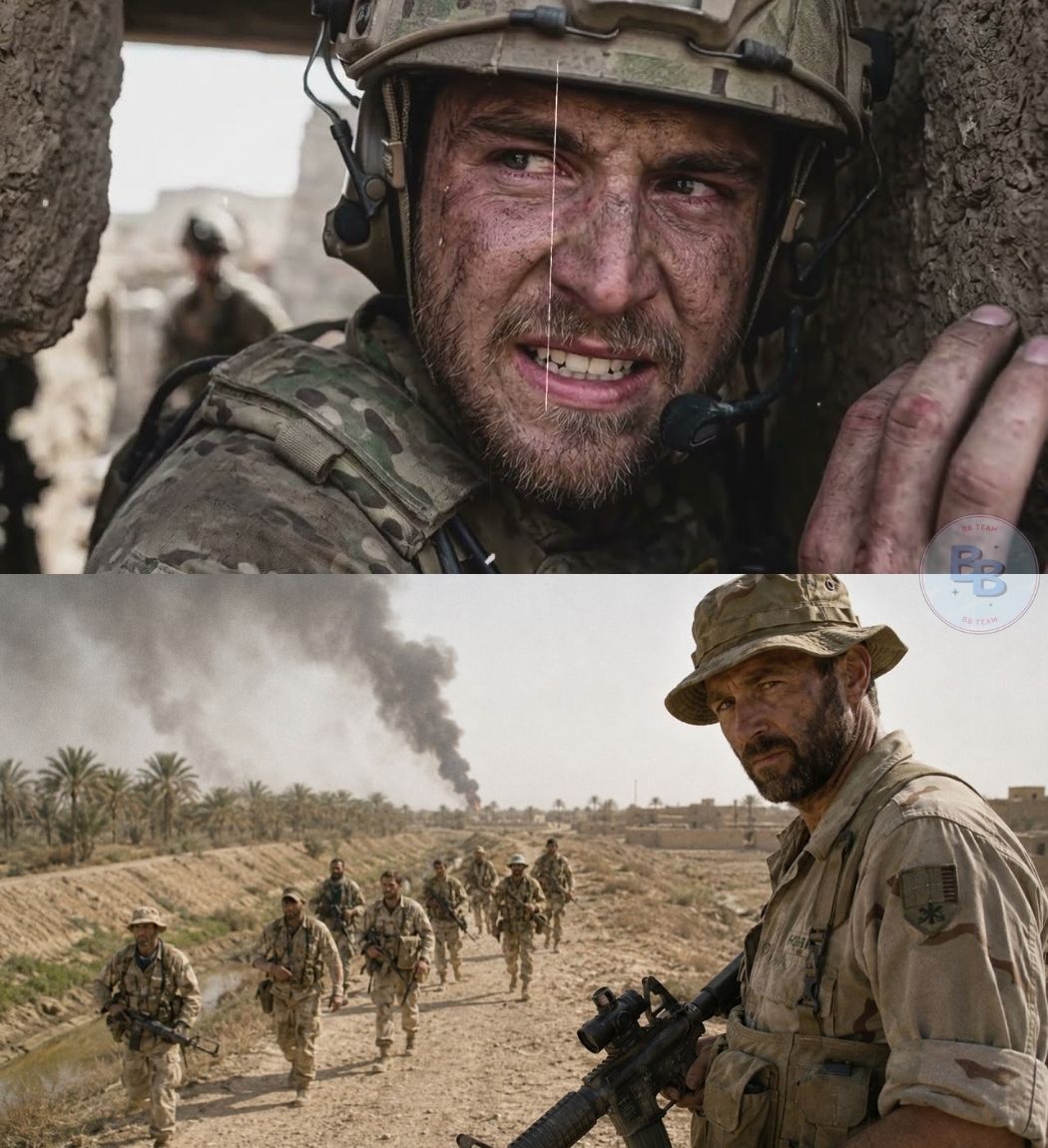
What Green Berets Said When 8 SAS Entered Basra Without Body Armour or Support
There are eight British Special Air Service men moving through the Hyanania district of Basra in the summer of 2004 without body armor, without a quick reaction force, and without any American on the net who can reach them. And you are standing at the corner of a mud brick wall in 31 kilos of plate carrier watching them do it.
Your name, for the purposes of this, is Master Sergeant Elliot Vance, United States Army Special Forces, 18 years in, and you have just been told by the man beside you, a staff sergeant called Ashworth, who is chewing a matchstick instead of a cigarette, that the plan is to walk in, collect the man, and walk out.
The air smells of burnt rubber and rivers, and the sweet rotten note of rubbish left too long in the sun. Somewhere two streets away, a loudspeaker is grinding through a call to prayer that has already ended. Feedback whining under the recorded voice.
Children are running the alley behind you. A woman in black is watching from a first-floor window and has been watching for 12 minutes. Your interpreter has gone very quiet.
The Hilux the British came in is parked at an angle that looks careless and is not careless and the driver has not turned the engine off. Two of the men are walking away from a car that is on fire at the top of the street. And they are walking the way a man walks from a shop he did not want anything from.
One of them turns his head, sees you, and raises a hand, palm flat. Low, the kind of wave a farmer gives another farmer across a field. Then he keeps walking.
Somewhere behind you, a 52-year-old woman is folded into the footwell of a Toyota you did not choose, and nobody has raised their voice all afternoon.
You will spend the next four years trying to explain to other Americans what you saw in that alley. You will fail with most of them.
Only once sitting in a bar in Fayetteville in 2008 with a chief warrant officer you trust will you find the sentence that fits it. And when you find it, you will say it quietly into your glass, and the chief will not answer for a long time.
What you say is not yet the point. The point is what took you there and what it cost you to admit that the men in the dun-colored shirts had understood the street better than you had.
Elliot Vance had joined the army out of a mill town in western Pennsylvania in 1986. Transferred to Special Forces in 1993 after 4 years with the 82nd Airborne. And by the summer of 2004, he was a master sergeant on Operational Detachment Alpha 065, 10th Special Forces Group on his third rotation into the theater.
One had been in northern Iraq the year before and two in Afghanistan. One of them straddling the winter that killed a friend of his in the Shahikot Valley.
He had run Cadre at Robin Sage twice. He had taught land navigation at the qualification course through two rotations of student intakes. And he still held the group’s second fastest recorded time on the Special Forces Assessment and Selection individual land nav problem, a fact he never mentioned and everyone in his team knew.
He kept a small green notebook in the left thigh pocket of his trousers. Every page was numbered. After every job, every patrol, every meeting, every kinetic contact, he wrote three things in it. What had worked, what had not worked, and what he would do differently.
He had been doing it since 1989. There were 14 notebooks in a cardboard box in his sister’s attic in Erie. Number 15 was in his pocket in Basra.
When you are the team sergeant of an Operational Detachment Alpha, the men look at you the way a crew looks at the man at the wheel. And Vance knew this. And Vance had decided a long time ago that the man at the wheel writes things down.
The belief that would break in Iraq had been forged in Kandahar in 2002. His team had been ambushed on a route they had used four times, and the rocket-propelled grenade that had opened it had killed no one, only because Chief Warrant Officer 3, Marcus Delgado, had been wearing the newest generation of plates the army had at that time, and had taken a fragment in the ceramic that would otherwise have gone through his sternum.
Delgado had looked at the plate afterwards, and Vance had looked at the plate afterwards, and neither of them had said anything, and both of them had understood.
From that morning on, Vance’s rule for himself and his team was simple, and he stated it to every new arrival who joined the detachment within the first hour.
“You go out in your kit, you go out in your plates, you go out with a quick reaction force on the net, every time. No exceptions, not for meetings, not for coffee, not for a five-minute walk across the compound.”
He said this in the way a man says the Lord’s Prayer.
His team called him L behind his back, never to his face. And they called him L because he was orderly and precise, and because he was, as Delgado said once when they were both drunk, the most stubbornly correct man he had ever worked with in every sense of the word.
Vance was not a martinet. He was patient with young sergeants. He gave the interpreters cigarettes. He listened more than he spoke. But he had a shape in his head of what a serious professional operator looked like on the ground. And that shape had a plate carrier on it. And that shape had a partner element in overwatch. And that shape had a bird on standby.
And when a man walked out of a compound in a civilian shirt with a Glock in his waistband and no radio, Vance saw him and did not see an operator. He saw a man who had confused confidence with competence, and Vance had been in the job long enough, he thought, to know the difference.
He was about to be shown, for the first time in 18 years, that he had not.
The compound sat on the eastern edge of Basra airport, a strip of Hesco and shipping containers and one squat concrete building that had been an Iraqi air force office and now had a British flag inside the door and an American flag inside the door and a handwritten sign taped between them that read:
“Do not steal the kettle.”
Vance’s detachment had rotated in three weeks earlier as part of a broader coalition footprint tasked with training an Iraqi special operations element and running low-level advisory work in the south. The British had been there longer. The British had been there in one form or another since the invasion and D Squadron of 22 Special Air Service had a small task-organized patrol working out of the same compound on a stream of jobs that never appeared on any board Vance was cleared to read.
The task that summer week came from the British side and it came fast. An Iraqi engineer known in the paperwork only as Yusef, an agent run by the Secret Intelligence Service for 8 months, had missed two contacts. On the third missed contact, his handler had judged him blown.
He was in a house in the Hayania district, a Shia slum on the northwestern edge of the city that had in the previous fortnight gone from tense to openly hostile as Mahdi Army influence spread.
The judgment in the head shed was that Yusef had somewhere between 24 and 48 hours before the militia worked out who he was and that if they got to him first, they would kill him slowly on camera and burn the network he had spent a year building. The extraction was to be tonight.
Vance and Delgado were invited to sit in on the orders group as a professional courtesy.
The tent was hot. There were maps on the wall and a laptop on a folding table and a large aluminum mug of tea in front of Warrant Officer Class 2 Ray Pritchard, the D Squadron Sergeant Major, whose voice Vance had to lean forward to hear.
The plan, as Pritchard laid it out in that quiet voice, was that eight men in three civilian vehicles would enter the Hayania district from the south, drive to a lockup two streets from the target house, walk the last 180 m in pairs, collect Yusef, walk back, and drive out.
There would be no plates. There would be no helmets. There would be no quick reaction force on immediate standby. Local Iraqi army units in the district would not be told. The only Americans on the net would be Vance and Delgado monitoring from the compound.
Vance did not say anything in the tent. He had been raised to keep his mouth shut in another unit’s orders group.
He walked out with Delgado into the flat white afternoon light, and he walked into their own tent, where Master Sergeant Ray Coburn, on a second detachment that had rotated through the compound the week before, and was still refitting, was sitting on a cot cleaning a rifle.
Vance said it to Coburn because Coburn had said something like it 6 months earlier in Bagram about a different British unit.
“Eight guys,” Vance said. “No plates, no quick reaction force. That’s not brave. That’s a body count waiting on a spreadsheet.”
Coburn snorted and did not look up from the bolt carrier in his hands.
Delgado, who had not spoken since they left the tent, sat down on his own cot and began methodically to lace his boots tighter. He did not agree, and he did not disagree. He knew Vance well enough to know that Vance had already begun the argument in his own head and would need to finish it there before anyone else could reach him.
Later that evening, when Vance was walking past the vehicle bay, Ashworth was standing beside one of the Hiluxes with a matchstick in the corner of his mouth and a bottle of water in his hand.
And Ashworth looked at him, mild, unhurried, and said:
“Armor is a decision, mate. It’s not a default. Weight buys you one thing and it costs you another and in a city the thing it costs you is the thing that keeps you alive.”
Then he drank from the bottle and went back to what he had been doing.
Vance filed it under arrogant and walked on.
Vance walked into the vehicle bay at 1900 hours because Delgado had told him mildly that if he was going to be on the net for the job, he might as well see the men whose voices he would be listening to.
The bay was a canvas-roofed enclosure at the back of the compound, open on one long side to the flat evening light. Three vehicles were parked in it. Two Toyota Hilux single cabs, one white and one a dust-colored beige, and a black Nissan Patrol whose windows had been tinted an amateur, slightly bubbled black by someone who had used a squeegee and not cared very much about the result.
The patrol looked deliberately like a car a middle-ranking Basra businessman would drive. The Hiluxes looked like every other Hilux in southern Iraq.
Pritchard was standing by the tailgate of the beige Hilux with a laminated street map in his hand talking to Ashworth and to a broad-shouldered young Welshman Vance would later learn was Sergeant Ewan Meredith.
Pritchard’s voice was so quiet that Vance, standing four paces away, could not hear the words. He could see Meredith and Ashworth leaning in slightly, the way you lean towards someone telling a story at a table you almost cannot hear.
Pritchard did not raise his voice to compensate. He simply spoke and they listened.
Vance noticed without meaning to that the top joint of Pritchard’s left ring finger was missing, an old wound cleanly healed, and Pritchard used the stub of it to tap the map exactly as another man might use a whole finger. No one asked about it. No one, Vance would later gather, had ever asked about it.
The kit was laid out on a ground sheet beside the Hiluxes, and it was not what Vance had expected.
Chest rigs, the low-profile sort, no plates, no comms hung, sat next to Diemaco L119A1 carbines that had been stripped to their shortest legal barrel length and fitted with suppressors.
Beside each rig was a civilian shirt, a long loose overshirt of the sort men wore in the markets in ochre, in dun, in a faded blue check, all of them large enough to fall over a chest rig without showing its outline.
There were Glock 17s in holsters that clipped to the waistband under the shirt. There were shemaghs folded on the dashboards of the vehicles, ready to be pulled up. There were small medical kits, flat individual, one to a man, and there were three larger trauma bags, one to a vehicle.
There were no helmets. There were no bulky radios. Each man had a small earpiece and a throat mic and a personal roll radio the size of a cigarette packet clipped inside his shirt.
The thing that unsettled Vance was not what was there or what was absent. It was the noise level.
His own team going out on any job ran on a low, steady thrum of last-minute check and call back. Serials serials. Mags mags. Comms comms. His own team’s prep was a kind of collective humming, the sound of men reassuring each other by saying the same words at the same time.
The Special Air Service bay was almost silent. Meredith was reading something in a paperback he had folded over his thigh, a western by the cover, the spine uncracked. Corporal Femi Adeboye was tying and retying the laces of a pair of civilian trainers, testing the knot.
Trooper Angus Kinlay, who looked to Vance about 19 years old, and whose forearm carried the strap of an old plain wristwatch turned to the inside of his wrist, was standing very still by the passenger door of the patrol, doing what appeared to be nothing at all, and was, in fact, Vance realized, on second look, breathing in the deliberate, slow-four count of a man managing his own heart rate before it needed managing.
At 2100 hours, Pritchard folded the map, put it inside his shirt, said something Vance did not catch, and the men got into the vehicles.
There was no farewell. There was no fist pump.
Ashworth, walking past Vance, glanced at him once and said:
“Keep the tea hot.”
And climbed into the driver’s seat of the white Hilux.
The engines started, the tailgates of the compound opened. The three vehicles rolled out into the Basra dusk at a speed that was neither fast nor slow in the manner of civilian vehicles going nowhere in particular. The gate closed behind them.
It had been from the arrival of Pritchard in the bay to the closing of the gate 22 minutes.
Vance stood in the bay for a while after that. He did not write anything in the notebook.
The operations room was a plywood-walled cell inside the concrete building, cool because someone had put a domestic air conditioning unit into the window and it had been running without complaint for 6 weeks.
Vance sat down at the radio bank on the left-hand side. Delgado sat down beside him. A British signaler, a lance corporal Vance did not know by name, sat opposite them wearing a headset and monitoring the Special Air Service troop net.
The map on the wall had the Hayania district ringed in red Chinagraph, the route in blue, and a lockup in the alley two streets from the target marked with a small blue cross.
Delgado poured coffee from a thermos into two enamel mugs and passed one to Vance without a word. It was 2109 in the evening. The light outside had gone from white to a bruised orange to the flat dark of a city with intermittent power.
Somewhere in the compound a generator started, ran for a minute, stopped.
On the net, someone—Pritchard, Vance thought—said:
“Mo three up.”
That was all.
The vehicles crossed the Shatt al-Basra Bridge at 2122. Vance watched their icons crawl on a laptop screen. The chatter on the net came in fragments and in a code Vance mostly understood. Roots were streets. Streets were birds. Birds were numbered.
Meredith in the beige Hilux called a road change with a single word, Robin. And Ashworth in the white Hilux acknowledged with a click.
Vance would learn later that Meredith had grown up in Merthyr Tydfil in the Welsh valleys and had spent his boyhood, according to Ashworth, memorizing the names of birds because his grandfather, a coal miner with bad lungs, had taught him to. The habit had followed him into the regiment as a shorthand no other unit used. It was not clever. It was not code of the day. It was the private grammar of men who had grown up together and worked together long enough that the grammar had become invisible.
At 2138, the vehicles reached the lockup. The patrol went in first. The Hiluxes parked in the alley outside. Six men got out—Pritchard, Ashworth, Meredith, Adeboye, Kinlay, and a man Vance had not been introduced to and would only later learn was the medic Torin Whitam—and two remained with the vehicles.
The six formed themselves without visible discussion into three pairs. On the operations room laptop, the icons uncoupled and moved. On the net, no one said anything for 4 minutes.
Vance watched Kinlay’s icon on the screen and thought absurdly about the watch on his wrist. 19 years old. The lad had passed selection the year before and was on the strength of the map Vance had been shown, the youngest badged man in the patrol. He was walking through a Shia slum at 10:00 in the evening in a shirt over a chest rig with a Glock in his waistband and no armor and no helmet and no partner element within a mile, and the only thing on the net from him was a single click when he reached the corner of his own street and looked at what was coming toward him and did not like it.
Pritchard’s voice came in quietly 4 seconds later:
“Vehicle checkpoint 180 m northeast. Four bodies, two long, two short. Not Iraqi army. Turning off.”
Ashworth answered on the driver immediately:
“Turning off. Roger. Alt Charlie.”
“Alt Charlie,” Pritchard said.
There was no other conversation. The icons rerouted through a parallel alley Vance had not seen marked on the map because the map had been drawn from an aerial photograph 3 months old, and the alley had, in the interval, been widened by someone knocking a wall down.
Meredith had walked the district in civilian clothes at 7 that morning. Ashworth had walked it at 4. Pritchard had walked it the day before. When they said Alt Charlie, they meant a route they had been on with their own feet.
The lance corporal on the British net turned to Vance without taking his headset off and said mildly:
“They’ve done this street twice this week.”
Vance had understood, watching the vehicles roll out of the bay, that he was watching men going out light. He understood now, watching the icons on the laptop reroute inside 3 seconds around a militia checkpoint they had known was possible because they had walked the ground, that he had been wrong about what he was watching.
He had thought he was watching men trading protection for speed. He was watching men who had traded protection for a different form of protection, knowledge of ground so intimate that four armed men on a corner produced a single sentence and a right turn and no further discussion.
The plate carrier on his own back weighed 31 lb and had in Kandahar 2 years earlier saved a friend’s life. It was a good thing. It was not, he began to understand, as Kinlay’s icon rejoined Pritchard’s icon and the pair moved on toward the target house, the only thing.
He picked up the notebook out of habit, and opened it to page 411. He wrote in his own careful handwriting that at 2138 a checkpoint had produced an alternate route in 3 seconds, because the ground had been walked prior—
He stopped there. He did not write, No plates. He did not write no quick reaction force.
He looked at what he had written and knew in the way a man knows something before he is willing to say it, that the framework he had brought into the room was going to need to be repaired before the night was over, and that some of the words he had used earlier, body count waiting on a spreadsheet, were going to sit in his stomach until he found somewhere to put them down.
The icons crossed the last street. Pritchard’s voice quieter still at the door.
Delgado beside him said nothing but poured him more coffee.
The lance corporal on the British net said:
“2 minutes.”
There would be before the week was out a compound in Hayania with 140 men outside its gate and eight men inside it, and Vance would be there in his plates watching. That was still to come. What came now was quieter, and quieter did not mean easier.
Yusef came out through the front door of the target house at 2151 in a shirt not his own, walking between two men whose hands were free and whose weapons were not visible. The three pairs regrouped at the lockup. The vehicles rolled out at 2203. They crossed the bridge at 2241.
Ashworth walked into the compound at 2338, chewed the matchstick from one side of his mouth to the other, and said to Vance in passing:
“Kettles off.”
Then Yusef was in a container that had a British medic in it before Vance had stood up.
Vance lay on his cot at 2:00 in the morning with his boots off and the mosquito net drawn and a small torch on the ceiling for reading. He was not reading. He was arguing.
He was telling himself in the careful interior monologue of a man defending a position he half suspected was undefendable, that what he had watched was one job in one district on one night, that any unit could get lucky, that walking a street in the morning did not immunize a man against a rocket-propelled grenade in the evening, that the discipline he had seen on the net was real but not new, and that if it came to shooting, if it came to the thing he understood as the true test of an operator, the plate carrier on his shelf would still be the thing that decided who went home.
He noticed in the middle of this monologue that on the shelf across the tent his own plate carrier and Delgado’s plate carrier were laid out side by side, and that they had cost between them more than every visible piece of kit in the vehicle bay put together, and he stopped noticing that quickly because it embarrassed him.
Captain Hugh Latimer was in the tea corner of the compound at 0615 the next morning, and Vance, unable to sleep, was there, too. Latimer was the troop officer, a tall, thin man with an Etonian accent and a paperback in his cargo pocket that Vance saw was a well-thumbed copy of Xenophon’s Anabasis in the Penguin edition.
Latimer poured Vance a mug of tea without asking in the assumption English officers make about tea and said:
“Sleep all right?”
Vance said:
“No.”
Latimer nodded as if this were unsurprising. He said after a while:
“It looks casual. It isn’t. Ray’s walked that district for a week before we took a car into it. We just don’t talk about the walking.”
He drank his tea. He did not elaborate. He went 5 minutes later back to his tent with his mug.
Vance sat with his own mug for a long time after that and thought and did not yet write anything down.
Ashworth found Vance at breakfast spooning porridge from a tin and said:
“We’re running a serial at 10, small compound out the back. Come and watch if you like. Come and run it if you don’t mind being told you’re slow.”
The matchstick moved to the other side of his mouth. He was not smiling. He was not not smiling.
Vance said he would come.
The mock compound was behind the vehicle bay. A footprint of three interconnected plywood rooms with sandbagged corners, a courtyard, a low outer wall, and an entry point that had been shifted since yesterday, Ashworth said, because they had been running the same shape for 3 days and were bored of it.
Cardboard figures, the plain hand-painted sort, some armed and some not. One holding what was meant to be a child had been arranged in the rooms in an order Vance was not shown. The men had not been shown either. That, Ashworth said, was the point.
Adeboye stacked at the outer door with three other men. He had grown up in Peckham in southeast London, had joined the army out of sixth form, and had in the year he passed selection run the London Marathon on his own initiative in a time of 3 hours and 10 minutes for a bet with a man in his old troop. He did not talk about it. He was the breacher on Ashworth’s team, and he was watching him now, a man who had been through a lot of doors.
The serial began without a countdown.
Adeboye opened the door with a controlled shoulder. No charge, no ram. The door was rehearsal-set to give, and the four men flowed into the first room in a shape Vance recognized and did not recognize.
He recognized the geometry. He did not recognize the tempo. The four moved at the speed of men who had already decided before they came through the door that every room could contain three things: a threat, a non-combatant, and a decision.
When Adeboye’s carbine came up on the first cardboard figure, he did not fire. The figure held nothing. Behind it, the second figure held a rifle. Adeboye’s second man—Vance did not see his face—fired two suppressed rounds into the second figure, and one into a third that had appeared on a hinge from a corner Vance had not been able to see from outside.
The child figure was left alone.
The room cleared in 7 seconds, the next room in five, the last room in nine because there was a decision in it: a figure with hands empty and a figure with hands not visible. And Adeboye called left clear right pending and did not shoot the right until the right’s hands came into view and were holding something.
When the compound was clear, the men walked out through the outer wall without speaking and stood in a loose semicircle watching beside Vance.
“Talk,” Ashworth said.
And the four talked. They did not talk the way Vance’s team talked in debrief. No round robin, no formal order. They said what had been wrong.
Adeboye said his angle on the second door was 2 feet too shallow. The second man said his second shot on the third figure had been a rushed follow-up he would have preferred to place higher. The third man said nothing, and Ashworth said nothing to the third man because the third man had done nothing wrong. The fourth said he had heard the hinge on the corner figure and had almost fired on it before it had shown a weapon.
And Ashworth said:
“Almost is where you live.”
And the man nodded.
Then Ashworth turned to Vance:
“Your go. Take Femi’s place. We’ll reset.”
Vance ran it. He was, and he knew this, one of the best close-quarters battle men in his group. His corners were good. His muzzle discipline was good. His shots on the two armed figures placed themselves in the upper chest without his having to think.
What he did wrong, and he knew it before Ashworth said it, was the tempo.
He moved through the first room at the speed his own team moved, which was the speed of men who assumed a room could contain at worst one surprise. He moved through it faster than the British had. He moved through the second room faster, too.
In the third room, the room with the decision, he cleared the left and turned to the right. And in the half-beat where the operators had held their shot until the right showed hands, Vance’s carbine came up, and if the figure had been real and had been a woman with a mobile phone, Vance would have shot her.
He lowered the carbine. He said:
“Yeah.”
Ashworth said:
“Yeah. Speed is a drug. Tempo is a decision. We move fast on the walls and slow on the corners. Your walls are lovely. Your corners are American.”
Nobody laughed. Ashworth had not said it to get a laugh. He had said it, Vance realized, as an accurate technical observation.
American close-quarters battle doctrine at that time favored speed of flow. The theory that the fastest team through a compound presented the smallest window for the enemy to react. It was a doctrine grown in aircraft assaults and hostage rescues, and it had killed a great many bad men.
It had also, Vance knew, in a number of jobs he had been briefed on, killed people it should not have killed.
The regiment’s answer to the same problem was not slower. It was later. They moved as fast as the Americans on the geometry that could not surprise them, and slower on the geometry that could. It was not a rejection of speed. It was a reciting of it.
He wrote a single sentence in the notebook that night: Tempo is a decision, not a speed, and left the rest of the page blank.
His assumption that their planning was casual because they were arrogant had in the running of that one serial dissolved. They planned casually in the vehicle bay, because the hard planning had been done days earlier in the district, on foot, in shirts not their own, when he had been drinking coffee at the compound thinking about plate carriers.
The message came in at 1422 the next afternoon and it was passed to Pritchard on a folded scrap of paper by the same lance corporal who had run the net the previous night.
Yusef, in a plywood-walled interview room in another part of the compound, had told his handler that his brother Karim, who ran a garage in Hayania and knew nothing of Yusef’s work, had been taken by four men in a black saloon at 0900 that morning.
If they held Karim for a day, they would learn from him that Yusef had disappeared. If they learned that Yusef had disappeared, they would kill Karim, and then they would work back through every man Yusef had ever spoken to.
Karim had in Yusef’s estimate until dusk.
Pritchard stood in the vehicle bay at 1540 and gave the brief in one paragraph.
The location of the garage was known. The likely place they had taken Karim to was known: a compound at the western edge of Hayania. Walled, one gate on a corner.
Eight men, same three vehicles, same kit. In and out before last light. If it went loud, the fallback was the same lockup as the previous night, and the extraction plan was to be improvised on the ground.
Vance, listening at the edge of the bay, was invited by Pritchard without ceremony to sit on the net again.
He said yes. He wanted to say something else. He did not know how.
They rolled out at 1610. They crossed the bridge at 1630.
At 1702, Ashworth on the driver said:
“We’re seen.”
2 minutes later, Pritchard said:
“Contact front, contact left.”
Two vehicles, six bodies, small arms, and rocket-propelled grenade.
Vance sat in the operations room and listened. The net did not become louder. It became emptier. There were over the following 11 minutes six transmissions, none of them longer than 4 seconds.
Pritchard called a bounding move by pair. Adeboye called a door being kicked. Whitam, the medic, a New Zealander who had taken British citizenship in 2001 and who hummed under his breath the way another man might whistle, called a casualty.
The casualty was Kinlay, and the injury was a graze to the left forearm from a round that had gone through the sleeve of his shirt and taken skin without taking meat, and Kinlay would apologize for it on the drive back.
Meredith, from a rooftop Vance had not known Meredith had climbed, called four shots and four hits at rangers he did not specify.
Ashworth called extract.
It was over on the net in 11 minutes. Karim came out of the compound in the footwell of the black patrol. The rocket-propelled grenade that had been fired at the white Hilux had missed by about 2 ft and detonated against the wall of a building nobody was standing next to.
Vance sat in the operations room with a cold mug of coffee in his hand. Delgado was beside him. Delgado had not spoken in 9 minutes. The lance corporal on the British net had at one point during the 11 minutes closed his eyes, breathed in for four, and opened them again.
There had been no shouting. There had been in the fight itself no music of the sort Vance’s own contacts produced, no rolling report of engagements, no confirming callbacks, no adrenaline in the voices. It had been in Vance’s ear like listening to men move furniture in the next room.
He looked at the plate carrier on his shelf, he thought body count waiting on a spreadsheet in his own voice, and it landed in his stomach the way a swallowed pill lands.
Eight men, no plates, no quick reaction force, had gone into a compound in a Shia slum, taken effective incoming from a rocket-propelled grenade and small arms, put four men down, taken one graze, and extracted a man none of them had ever met, at a tempo so unremarkable that a lance corporal had monitored it without unclenching his jaw.
The framework Vance had brought into the compound was at that moment no longer a framework. It was a heap of parts on a bench, and he did not in that moment know which of them he could put back together, and which of them he was going to have to throw out.
He shut the notebook. He did not open it again for 2 days.
The largest thing that happened that week had not yet happened. On the third night, the compound would be tested in a way it had not been tested since the invasion, and Vance would be in it.
Before that, on the evening of Karim’s extraction, there was a smaller thing that Vance would remember longer.
Kinlay was in the medical container being stitched by Whitam. When Vance walked past the open door on his way to the tea corner, Kinlay had his sleeve rolled up, and Whitam had a needle in his hand, and Whitam was humming, a low, tuneless hum, the sort a man hums under his breath while he is concentrating on something small.
Whitam had spent the six months prior to this rotation sitting every advanced trauma course the regiment could get him on. Vance had learned this the previous day in the tea corner from Latimer. The humming was not for Kinlay’s comfort and not for Whitam’s. It was, Latimer had said, the sound Whitam had made since Sierra Leone, and no one asked.
Kinlay was 19 and being stitched, and Kinlay was, as Whitam worked, telling Whitam very seriously about his father’s watch, which had been on his wrist under the sleeve of the shirt that had been shot through, and which the round had missed by the width of two fingers.
Vance did not go to the tea corner. He walked to the operations room instead. And in the corridor he passed Pritchard, who was standing outside Delgado’s tent.
And Pritchard was speaking to Delgado in that same quiet voice. And what Pritchard was saying was that if any American operator wanted to walk the district with a British pair in the morning in civilian clothes, in shirts, to see the ground the way the regiment saw it, Pritchard would take them himself personally and would take as many mornings as they wanted.
Pritchard did not say it as a favor. He did not say it as a boast. He said it as a professional invitation between men who worked the same trade, and he said it because his own team had noticed over the last three days that Vance had gone quiet, and Pritchard had judged correctly that a man like Vance would not come to him and ask.
Delgado said:
“That’s kind, Ree. L will want to.”
Pritchard said:
“He can want to or not want to. Offer stands. 6 in the morning, my tent.”
Then Pritchard walked past Vance in the corridor and did not by so much as a glance indicate that he had known Vance was there.
Vance lay in his cot that night with the mosquito net drawn, and thought three things in a row that he did not write down.
The first was that the man he had described in his own head as arrogant had twice in three days done things for him that no arrogant man would have done.
The second was that the tempo he had mistaken for laziness in the vehicle bay was in fact the visible surface of a discipline so deep that the men doing it did not notice they were doing it in the way a fluent speaker of a language does not notice the grammar.
The third was that at 6:00 in the morning he was going to be at Pritchard’s tent in a civilian shirt with no plates on and no rifle in his hands and that he was going to walk the ground.
He slept after that better than he had slept since he arrived at the compound.
By 0900 on the fourth morning, the loudspeaker at a mosque on the western edge of Hayania has been broadcasting for 40 minutes that a British spy named Yusef has betrayed the district and that the men who took him work out of the coalition compound at the airport.
By 1000, a crowd has begun to gather on the road outside the airport gate.
By 1100, a second source, a schoolteacher, a woman run by the same handler as Yusef, has sent a single line signal from a house eight streets from the mosque. She has at most 3 hours. If the militia find her before the regiment reaches her, the loudspeaker at the mosque will read her name, too.
The plan given in Pritchard’s tent at 1115 is that eight men will go in, will pick up the schoolteacher, and will hold a compound two streets from her house for as long as it takes to walk her out.
Vance is invited. He puts on a dun-colored long shirt bought that morning in the market, a chest rig without plates, a Glock 17 in his waistband, and an L119 lent to him by Corporal Bram Otterley, a man with grease-stained hands who has, Ashworth says, rebuilt the engine of the beige Hilux twice in the last year, once because he had to, and once because he wanted to.
Vance’s own carbine sits on his cot beside a plate carrier. It looks for the first time in his career ornamental.
They cross the bridge at 1140. The Hilux rides low with four men in it. The vehicles part at a market and rejoin without radio traffic at a lockup Vance walked to the previous morning with Pritchard in a shirt just like the one he is wearing now, and which he can find on foot without looking at anything.
The compound they are to hold is a house with a walled yard, one gate, thick roof.
Trooper Rhys Howarín, a spotter, Northern Irish, and Latimer has said the only man in the troop who prays before a job, moves to the roof with a rifle. Meredith moves to the roof with him. Adeboye and Ashworth take the gate. Kinlay and Whitam take the yard. Pritchard takes the door of the house.
Vance is placed by Pritchard at the internal doorway between the yard and the ground floor of the house, which is a corridor with a line of sight to both.
“You’ve got the hinge,” Pritchard says quietly. “You see both, you call it.”
The schoolteacher comes in through a back wall Adeboye had 4 minutes earlier and without ceremony blown a hole in with a charge no larger than a paperback. She is 52 years old in a black abaya and she is not crying. Otterley walks her across the yard by the elbow in the same way a man walks his mother into a church.
Howarín on the roof calls:
“Eyes on gate. 12 up. 30 m.”
And then a beat later:
“20 up. Three long.”
And then:
“Dragunov right of the shopfront.”
And then he does not say anything for 11 seconds because Meredith fires once from the roof with a suppressed rifle and the long-barreled shape drops out of the frame he has been watching.
Meredith does not say hit. He does not need to.
Howarín says:
“One down. Others static.”
Adeboye at the gate has not fired. He is holding his angle and breathing.
They walk her out. They walk her out because to drive her out would be to attract everything Howarín has just described. And to walk her out is to be four dun-colored shirts and one civilian woman moving at market pace through a street that is being watched but has not yet been closed.
Vance walks second in the file. Pritchard walks fourth.
Meredith stays on the roof for six more minutes and then comes down through the compound. Howarín clears behind them. And Howarín, in the doorway of the compound as he leaves, does something Vance does not see, but Otterley tells him about that evening: Howarín stands for one beat with his lips moving, and then he leaves.
At the corner where the alley meets the road, a car is burning. It has been burning for 4 minutes. Adeboye set it at the far end of the alley on a delay to draw the eye of the crowd that is beginning to gather at the mosque end of the street.
The eye of the crowd is drawn.
The schoolteacher is walked past a burning car and past the eyes that are not on her to the beige Hilux and put into the footwell.
Two of the men are walking away from the burning car in the direction of the Hilux, unhurried in the manner of men leaving a shop they did not want anything from. One of them is Ashworth.
He turns his head. He sees Vance in his shirt at the corner of the mud brick wall. He raises a hand, palm flat, low, the kind of wave a farmer gives another farmer across a field. Then he keeps walking.
Vance, standing in the alley in a shirt bought from a market at 7 that morning with a Glock in his waistband and no plates on his chest and no quick reaction force on the net and eight British men and one Iraqi woman moving in a loose line toward a Hilux he could not three days ago have imagined himself being in, understands in the way a man understands something with his whole body before he understands it with his head, that his fourth and last assumption—that eight men in shirts cannot hold a compound in a hostile district against a crowd and a Dragunov and a mob with fuel—has just been dismantled in front of him on foot without a raised voice.
They drive out at 1228. The crowd at the mosque end of the street is still watching the burning car.
Years later, in 2008, in a bar in Fayetteville, North Carolina, on a slow Tuesday evening in November, Elliot Vance sat with Marcus Delgado at a table by the window, and for the first time said out loud in a room with another American in it, the sentence he had been rehearsing in his head for 4 years.
Delgado had asked him—not for the first time, but for the first time in a way Vance felt able to answer—what he had seen in Basra that summer that had changed him, because his team had noticed the change and the change had not gone away.
Ray Coburn, who had once said in Bagram that the British were cowboys and who had in the tent at Basra airport said it again in his own way by snorting at the doorframe, wrote something down four years later in a private message to Vance that Vance kept and later showed to Delgado.
What Coburn wrote was short:
I called them cowboys. I was wrong. They walked the ground so hard that when they went in light, they weren’t going in light. They were going in known. I’ve thought about that a lot. Tell Delgado I owe him the beer I lost.
Delgado himself, when asked once by a young weapons sergeant why the team’s standard operating procedures had changed after Basra, why they now walked their district before they drove it, why every operator on the team now spent hours in civilian clothes on foot in the area of operations before any kinetic job, why the detachment’s tempo on entries had without formal instruction slowed at the corners and quickened on the walls, said only:
“Because eight men we worked with in Iraq did that and eight men we worked with in Iraq came back. Do the math.”
But it was Vance’s sentence that ran in the years afterwards quietly through 10th Special Forces Group the way a story runs through a professional community when the man who tells it is trusted.
Vance said in the bar into his glass, and Delgado did not answer for a long time:
“I watched eight British Special Air Service men walk into the worst district of Basra in the summer of ’04 without body armor and without a quick reaction force and without anybody on our net who could reach them. And I called it a body count waiting on a spreadsheet. And then I watched them do it. And then I watched them do it again with a rocket-propelled grenade going over their heads. And then I put on a shirt from a market and walked in with them and stood in a doorway and called an angle for a sergeant major who I could barely hear when he talked. And they took me back out again with a 52-year-old schoolteacher in the footwell of a Hilux. And the thing I understood standing in that alley, the thing I’ve been trying to say to anyone who listens since I got home, is that armor is a decision, not a default. Weight buys you one thing and it costs you another. And those men had decided in a city that the thing weight costs you is the thing that keeps you alive. I was the best-equipped man on that street. I was the least prepared man on that street. And the difference wasn’t fitness and it wasn’t shooting. And it wasn’t guts. It was that they had walked the ground so many times in shirts in silence with nothing to prove that when they went in, they weren’t going in blind. They were going in known. That’s not cowboys. That’s not reckless. That’s the hardest work I’ve ever seen anyone in this trade do. And most of it happens where nobody is watching.”
Delgado did not answer for a long time. When he did, he said:
“Yeah. They finished the beers.”
Vance paid.
Delgado, walking to the truck, said one more thing quietly in the parking lot, as if to himself:
“I’ve said the same thing three times this year to three different sergeants, and none of them believe me until they see it. Nobody ever believes it until they see it.”
Vance said:
“I know.”
He drove home. He put the notebook—number 17 by then—on the kitchen table. He opened it to a fresh page. He did not write anything about armor. He wrote in his own careful handwriting one sentence he had heard four years earlier from a man chewing a matchstick in a vehicle bay at Basra airport and he underlined it once:
Armor’s a decision, mate, not a default.
He closed the notebook. He did not open it again that night.
Elliot Vance retired from the United States Army in 2013 as a sergeant major, having spent his last three years running a small, unglamorous course out of Fort Bragg on urban ground truth for Special Forces sergeants, a course that had no official name, and was known in the group only as Vance’s thing, and which every detachment in 10th Group, and in time several in 3rd and 5th, sent men to as a matter of routine.
He wrote a paper for the group’s internal journal in 2011 titled Weight and Knowledge. He never named the men in it. He mentioned Basra once in a footnote as a shared task in southern Iraq.
Pritchard retired from the regiment in 2010 and went quietly to work training close protection men in a country he did not name in public.
Ashworth was killed in Helmand in 2007 in circumstances his family were not at the time told about. The matchstick habit died with him.
Meredith made staff sergeant and went back to Merthyr on leave more often than any of the others.
Adeboye passed selection for a role Vance was not cleared to know about.
Kinlay, who had turned 20 in Basra, made corporal by the end of that tour and sergeant three years later, and the watch on his wrist was still his father’s.
Whitam went home to New Zealand for 2 years after 2009 and then came back.
Latimer left the army for the city in 2011 and kept the Xenophon on his desk.
Otterley rebuilt the engine of a third Land Rover.
Howarín was still praying and still not talking about it.
The standing invitation Pritchard had made to Delgado outside a tent at Basra airport in the summer of 2004—that any American who wanted to walk the ground with the regiment could walk—never became a formal program. It became something better. It became a habit between two units at the level of team sergeants and squadron sergeant majors that outlasted the officers on both sides and outlasted in the end the war they had met in.
There is in a Basra alley in the summer of 2004 an American master sergeant in 31 lb of plate carrier standing at the corner of a mud brick wall watching two British men in dun-colored shirts walk away from a burning car.
One of them turns. He raises a hand, palm flat, low. Then he keeps walking.
The American stands there for a long time afterwards and does not write anything in the small green notebook in his left thigh pocket because there is nothing yet to write.
Armor is a decision. Knowledge is armor. And most of the hardest work in this trade happens where nobody is watching.