Why Al Qaeda Leaders Couldn’t Work Out How the British SAS Always Chose the Perfect Ambushg
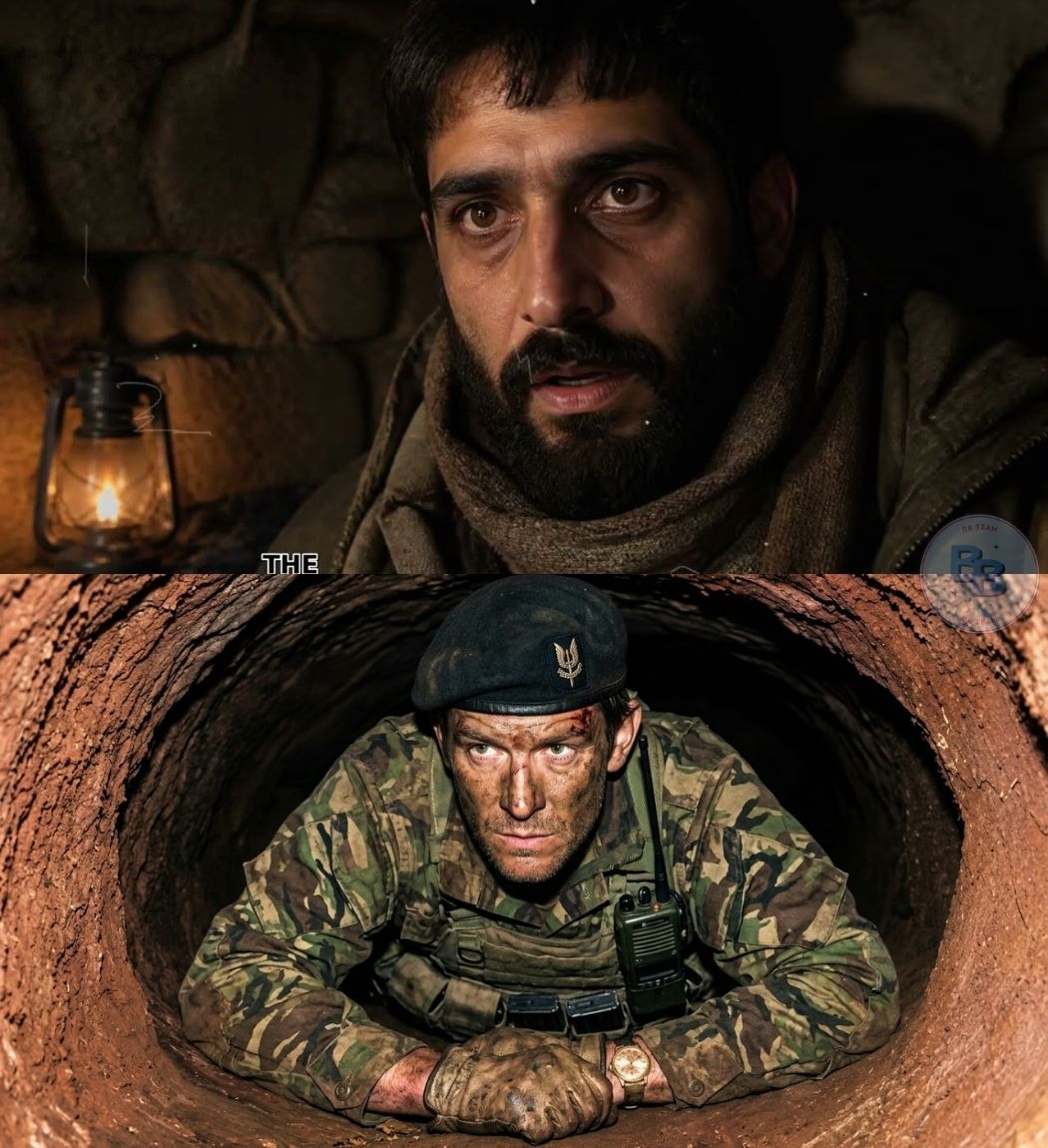
Why Al Qaeda Leaders Couldn’t Work Out How the British SAS Always Chose the Perfect Ambush
There is a stretch of country east of coast between the Pakistani line and the Shahikot bowl that in the winter of 2002 the foreign fighters called the thin corridor. It is a chain of wadis and goat paths that feed down out of the high passes and into the villages that will not ask questions. Men move along it at night. Couriers, escorts, money.
On the first clear night after a long week of weather, a column of 11 men steps off into that corridor from a hamlet whose name the Americans never bother to learn. And the man leading them is a Chechen called Katab Al-Shani. And he has done this walk four times before. And he is not frightened of it.
You should hold on that because what follows is the story of how a man who was not frightened of that country learned over the course of one long night and the dawn after it that the country had never belonged to him.
The courier he was escorting was an Egyptian, Abu Yaya al-Masri, with a limp and a leather satchel chained to his left wrist. What was inside the satchel is not the point of this. The point is that the chain was still attached to the satchel when the satchel was photographed in the snow two mornings later and the wrist was not.
Before they left the hamlet, the muleteer they had hired, an old Pashtun called Bashier, who did not share their war, pressed his hand to Katab’s chest and said something quiet in Pashto that Katab did not understand and did not ask to have translated.
The Yemeni scout, Rafi, laughed about it afterwards. He said the old man had told them to be careful of the jinn.
There is an older rule in those mountains, older than the war the column thought it was fighting. The elders of the foreign fighter camps, the men who had been there since the Soviet time, used to say it to the young ones the way a mother says a prayer. Do not take their knives. Do not take their watches. Do not take anything they leave behind because they always know what they have left and they always come back for it.
The men who came back from that valley—and only one of them did—would for the rest of their lives only ever say one thing about who they were. We will come to that.
The eastern mountains of Afghanistan in late winter are a country of their own. In the daylight, they are the color of old iron, pale and striped where the snow has not yet lifted off the north faces, and at night they are not any color at all.
The moon in that first week of February 2002 was down to a thin paring, and on the night the column stepped off, there was no moon at all, which was why Katab had chosen that night, and why he was pleased with himself for choosing it.
He walked second from the front. Rafi the Yemeni was ahead by 30 meters, moving in that half-crouch of a man who had learned to walk in the dark on ground that would kill him if he did not.
Behind Katab came Abu Yaya, the courier, limping and silent, the satchel against his hip. Behind Abu Yaya came Sulleman the Uzbek. Then Wed the Libyan. Then Idris. Then Nabil with the Chinese radio under his coat. Then two more fighters whose names do not matter yet. Then the muleteer Bashier with his two beasts carrying food and rounds and the courier’s second satchel. And at the back, 40 m out, Hamza the Algerian, who smoked when no one was looking and who had not slept properly in six days.
They moved up a dry stream bed between two shoulders of rock. The air was cold enough that it hurt the inside of the nose. Katab had told them to breathe through cloth, and most of them had, except for Wed, whose breath was already a visible plume.
The ground underfoot was gravel and old ice. Juniper grew in the cracks of the walls, stunted and black against the stone, and a wind came down the wadi every few minutes in a way that smelled faintly of goat and faintly of woodsmoke from somewhere miles away.
Beyond the wadi walls, when the column passed the gaps, the sky was the deep, bright winter black of high altitude with stars in it that in the lowlands you never saw.
Katab had grown up at this altitude. He had fought at this altitude. He had buried friends at this altitude in Grozny, and in Pankisi, and in the first bad year here. He pressed his thumb against the chip in his front tooth as he walked, which was his habit when he was reading ground. He read it now.
He read the gradient and the shadow and the way the wind came and the way a column his size would print on the gravel if a man were looking down from above. And he was satisfied because no man was looking down from above.
The high ridges to either side were empty. He knew this because he had sent two parties up them two days before and they had come back and said they were empty, and in that country two days before was good enough.
He listened as he walked. This was the other half of reading ground: knowing what the night was supposed to sound like, so that any wrongness in it would come at you like a shout.
The night was behaving. Somewhere far up the slope on the western side, a pair of jackals were working at each other. That thin yipping cry that went on for a minute, and then went quiet, and then came back from a different place.
Lower down in the valley the column had left two hours ago, the mule bells of a shepherd’s camp carried on the wind in little bursts, high and tinny.
Closer, the wind in the junipers made a dry sound against the stone, and once Katab heard the beating wings of some nightbird going over, big and slow, probably an owl.
Every one of these things was a sound he knew. Together they made what he thought of as the voice of the country at night, and the country was speaking to him, and he was reading it, and it was telling him nothing was wrong.
He could not have known—because no one could have known—that the men who had come down off the eastern ridge three hours before the column stepped off had made no sound at all. They had not disturbed a single stone. They had not startled a single jackal. The country had not spoken about them to anybody because the country had not noticed them.
That is the first thing you need to understand about the night that followed. The failure was not Katab’s reading of the ground. The failure was that the ground had failed him. Whatever had come down that eastern ridge was outside the register of warnings that the country knew how to give.
Three kilometers up the wadi, where the walls narrowed and the stream bed bent north under an overhang the local shepherds called the elbow, something was already in position. It had been in position for some hours. It had chosen its ground before the column had chosen its route, which is a thing that should not have been possible, and which Katab, pressing his thumb to his tooth and listening to the jackals, would not know had happened until it was far too late to matter.
For now he walked and the column walked behind him. And Bashier the muleteer walked at the back of the baggage train with his head down and his lips moving over words that were not a conversation and not a prayer, but something older than either.
To understand why what happened at the elbow happened, you have to understand what the foreign fighters of eastern Afghanistan were telling each other about them in that winter, in low voices in the back rooms of the madrassas on the Pakistani side and in the stone huts above the snow line on this side when the generators were off and the children were asleep.
The Americans they did not fear. The Americans came from the sky, and from the sky you can hear a man coming. The bombers left trails in the daylight sky like white scars, and the gunships at night had a sound you learned to feel in your chest before you heard it in your ears. And the men who came out of the helicopters came with lights and with voices, and with the kind of volume that let a careful fighter melt into the stone before contact. You could survive the Americans by being quiet and small and patient. Thousands of men did.
The British were a different problem. The elders in the camps had a story they told. They said that in the Soviet time there had been a certain kind of foreign adviser in the valleys. Not many of them. Nobody could ever agree on how many. They did not wear the Soviet uniform and they did not wear the mujahideen uniform and they did not fight in the way either side fought.
They came down from the ridges in parties no bigger than you could count on one hand, and they left in the morning, and in between they did things to Soviet columns that the Soviets in their official papers blamed on ambushes of 50 men.
The elders said these advisers had been Englishmen. The elders said this with the certainty of men who did not know and could not have known. And the certainty was the point. The point was that the Englishmen in the stories had never been seen. They had only been inferred from the shape of what they left behind.
In the winter of 2002, the elders were saying that the Englishmen had come back.
What any fighter in those mountains could tell you if you got him alone and gave him tea and did not write anything down was that patrols had begun to go missing in a particular way. Not all of them, not most of them, but enough.
A 10-man patrol would move out of a village toward a crossing that it had used safely for months, and the two outriders would come back in the morning, and the eight men in the middle would not. There would be no gunfire in the night. There would be no helicopters. The outriders, who had been 50 m ahead and 50 m behind, would tell you that at some point they had looked back or looked forward, and the eight men had simply not been where they had been. One of the eight might turn up later at a crossroads in the open, laid out in a way that was not accidental. The other seven would not turn up at all.
There was the business of the knives. Twice that winter in villages on the Pakistani side a knife had been found that did not belong to anybody in the village and did not belong to anybody known to be fighting on either side.
Both times the knife had been left openly in a place where it would be seen—pushed into the dirt beside a well or laid flat on the stone step of a house whose owner had until that morning been a courier for the movement. Both times the knife had been handled by someone, and both times that someone had within three nights not been in the village anymore. The first man had been found a kilometer away in a ditch. The second had never been found.
The elders took the knives and buried them, each in a different place, and would not say where. That was how the taboo got written down in the oral law of that country, in that war, in that winter: Do not take their knives. Do not take their watches. Do not take anything they leave behind because they always know what they have left and they always come back for it.
A fighter who had been in Tora Bora two months before and who had slipped out across the Pakistani line with the rest of the senior cadre had told Katab personally in a stone room in a border village what the Arabs there had whispered to each other about the days when the bombing had thinned and the Englishmen had come.
He said the Englishmen did not fight at night because night and day were the same to them, and that was why you could not predict them. He said they knew where you would stop before you stopped. He said that in Tora Bora in the last week before the escape, a sentry on an outer position had been found at his post at dawn, sitting up, still holding his rifle, with no mark on him anywhere that anybody could find.
The fighter had told Katab this with the slow, careful attention of a man who did not want to tell it. And Katab had listened and then thanked him and gone outside and smoked and come back in and said that the fighter was tired and had been through a very bad month and should sleep.
Katab did not believe the stories. That is important. Katab believed that the British were good. He was not a fool, and he believed that they used specialist units, and he believed that those units had been inserted into certain areas. And he believed that a careful column that moved on moonless nights down wadis that had been swept 48 hours earlier, with scouts in front and behind, and that avoided the known compromised villages and the known compromised passes, was a column that had no cause to be afraid.
That is what he believed as he walked up the dry stream bed toward the elbow, pressing his thumb to the chip in his tooth.
Behind him, Wed the Libyan was praying under his breath loud enough that Idris in front of him could hear it. Idris was running the chipped prayer bead counter in his coat pocket with his left hand, turning each small clay bead against his thumb.
Up ahead, Rafi had stopped at a bend and gone down on one knee. And Katab saw him do it and raised his hand, and the column halted.
Rafi had seen something on the ground. He waved Katab forward, and in the cold black of the wadi, with the jackals calling thin and far up the slope, Katab moved up to see what it was.
That was the first wrongness. That was where the night began to turn.
What Rafi had seen was a bootprint. It was in a patch of mud at the bend of the stream bed where a tiny seep came out of the rock and kept the ground soft even in the deep cold. The print was in the mud. It was a left boot. The lugs of the sole were the shallow square kind worn down at the outer edge. The toe pointed up wadi, the direction the column was going.
Beside it, half a meter back, was the matching right print. Less clean. There were no other prints before them and no other prints after them. Two steps, one left, one right, as if a man had come out of the wall of the wadi and taken two paces and gone back into it.
Rafi looked up at Katab. Rafi was good. He was 22 years old, and he had been reading ground since he was six. And he was good. He did not say anything. He only looked up and waited for Katab to see it the way he had seen it.
Katab crouched beside him. He did not touch the print. He put his face close enough to feel the cold of the mud against his cheek, and he looked along the line of it, the way a man reads a line of writing.
The lugs were pressed in evenly across the whole sole. The man who had made the print had been standing on the whole foot, not on the toe, not on the heel. He had not been running and he had not been sneaking. He had been walking briefly at an ordinary pace in a straight line from the stone to the stone. The water in the seep had not yet refilled the deepest part of the heel.
Rafi looked at Katab’s face and saw Katab calculating this, and his own stomach, which had been tight for 10 minutes, became tighter.
Katab said quietly in Arabic that it was perhaps an hour old. He said, “Perhaps.”
Rafi said nothing. The reason Rafi said nothing was that he had walked past this bend of the stream bed himself 40 minutes before at the head of the column’s first careful reconnaissance of this section, and there had been no print.
He did not tell Katab this immediately. He wanted Katab to have the thought first, so that Katab did not have to hear it from a 22-year-old. He waited the half second it took.
Katab’s thumb went to the chipped tooth and stayed there. The column had closed up behind them. Abu Yaya, limping, had come up to Katab’s shoulder and was looking down at the print without comprehension because he was a courier and not a tracker. Wed had stopped praying. Bashier the mule was somewhere further back keeping his animals quiet, and he had not come forward.
Katab stood up. He did a thing that any good commander does in that moment, which is that he gave the column a reason not to be afraid. He said loud enough for the men nearest him to hear that the print was ours, one of the forward sweep parties from two days ago down to drink at the seep.
He said that the mud was wet and preserved prints longer than ordinary ground. He said that the column would continue and that Rafi would move more carefully and that Hamza at the back would close up by 10 m.
Nobody argued with him because Katab was not a man you argued with and because every man there wanted the explanation to be true.
Rafi, as he moved off, did one thing more. He looked at the wall of the wadi where the print had come out of, and he looked at the wall of the wadi where the print had gone back into. And in neither wall was there any way for a man to have come down from the ridge above. Both walls were sheer for seven or eight meters above the floor. If a man had come out of that wall and gone back into it, he had done it the way a man comes out of a dream.
Rafi began to walk again, slower. The column moved on, and in the 40 minutes that followed, as they covered the next kilometer of the wadi, the second wrongness happened, which was not a thing anyone saw, but a thing that was not.
The jackals, which had been working at each other on the western slope for most of an hour, stopped. They did not finish a sequence and move away. They stopped mid-cry in the middle of one of those thin running yips, and they did not come back from anywhere. The sound of them was simply gone, as if a door had been closed on it.
Nabil, the Saudi with the radio under his coat, was the one who noticed. He was 20 years old, and he had the kind of hearing 20-year-olds have. He slowed his step, and he turned his head, and he said quietly to Idris, who was in front of him, that the jackals had stopped.
Idris, running his beads, said that they must have found their food.
Nabil said, “Yes.”
He kept walking. He did not say what he was thinking because what he was thinking was that jackals do not stop in the middle of a cry.
Above them the stars had not moved. The wind had not changed. The wadi was behaving in every way exactly as a wadi at night in that country behaved, except that the one living voice that had been in it for the length of an hour was not in it anymore.
Katab, walking second from the front, pressed his thumb to his tooth and did not notice. He was still thinking about the print. He had decided that the print was old. He had decided this because he had to decide this. Decisions of that kind in that country in that winter were the things that kept a column alive. Decisions of that kind were also sometimes the things that killed a column, because a decision that resolved a question stopped a man from asking the question again. And the question of who made the print and when was the only question in that wadi that still mattered.
The first man they lost was Hamza al-Jazeri, the rear scout. The Algerian with the missing fingertip and the hidden cigarettes. They did not know they had lost him for 22 minutes.
What happened was this. Katab, following his own order, had asked the column to close up, and Nabil, who was second from the back of the main body, had turned his head once or twice to check that Hamza was still at his 30 m station. The first time he turned his head, Hamza was there, a dark shape against darker stone, moving at the same pace as the column. The second time he turned his head, perhaps 3 minutes later, Hamza was still there.
Nabil did not turn his head again because turning his head slowed his walking and because he had seen Hamza twice and because the pattern of seeing him was the pattern that let a radio man stop worrying.
Twenty-two minutes later the column reached a wide spot in the wadi where Katab had planned to halt and drink water. The men came in off the walking line and sat on the stones with their backs against the wall and their rifles across their knees.
And Katab counted them because Katab always counted them. He counted and he counted again. And he said in a voice that was perfectly level, “Where is Hamza?”
Nobody knew. Nabil said he had seen him 20 minutes ago. Rafi up front had not looked back in 40. Wed said he had thought he had heard Hamza cough perhaps 10 minutes earlier, but he had not turned around because the order had been not to turn around. Idris was running his beads faster.
Katab sent two men back down the wadi. He sent them in a particular way: not together, not along the same line, one on either wall, moving slowly, with the understanding that if the first did not come back within 15 minutes, the second was to come forward to the column, not continue down. He sent Sulleman the Uzbek and one of the two fighters whose names do not matter yet.
Sulleman came back inside 10 minutes. The other fighter came back inside 12. They had found nothing. They had walked the two kilometers back to the bend where the first print had been. They had checked every patch of soft ground. They had looked up at the walls. They had listened. There was no sign of Hamza. There was no sign of anything at all.
The wadi behind the column was empty of Hamza in the specific way that a man who has been standing in a doorway becomes empty of a man when he steps out of it, which is to say that the space where he had been was unchanged and only he was gone.
Katab did not shout. Katab did not swear. Katab pressed his thumb to the chipped tooth and he thought. He thought about the possibilities in order of how much he wanted each of them to be true. He thought that Hamza had turned his ankle in a hole and was lying somewhere between the bend and the halt, unable to call out, waiting for daylight. He thought that Hamza had decided for his own reasons to desert, which Hamza had never shown any sign of. He thought that Hamza had been taken.
The last of the three had a quality the first two did not. The first two left evidence. The third did not. If Hamza had been taken, he had been taken in the way the elders in the camps said men were taken, which was to say without noise, without blood on the ground that could be found by lamplight, without any of the ordinary traces a column of 11 men had been trained to look for.
Katab did not say any of this to the men. He said that Hamza had probably fallen and that they would send a party at first light—which was in 6 hours—and that the column would continue to its waypoint and lie up there and wait. He said this with the calm of a man whose authority rested on his calm, and the men took it because the alternative was to admit in the dark in that wadi that something else had happened and that the something else was still happening.
They moved on.
The second man they lost was one of the unnamed fighters, the second of the two who had gone back down the wadi looking for Hamza. He went in the next hour. He was walking fifth in the column between Sulleman and Wed. He was there when the column crossed a short stretch of frozen gravel that chimed faintly under boots. He was there when Katab at the front raised a hand and the column paused. He was there when Katab put the hand down and the column moved on.
He was not there 12 minutes later when the column passed under a slight overhang of rock and Katab, out of a habit of counting, counted again.
There had been no shout. There had been no shot. There had been, if anyone had been listening for it, a very small sound, perhaps a scuff of cloth on stone that Wed later believed he had heard and dismissed. Wed was walking directly behind the man, and Wed did not see him go.
One moment, in the forward edge of Wed’s peripheral vision, there had been the pale smudge of the back of a head between two shoulders. The next moment there had not.
This time Katab did not send men back. This time Katab halted the column against the eastern wall of the wadi, where the overhang gave them 2 m of cover from the ridge above, and he squatted on his heels, and he spoke very quietly with Rafi. And Rafi’s face in the starlight was the face of a man who had understood something he did not yet have the words for.
While they spoke, the third thing happened, which was that the wind stopped. It did not drop. It did not slow. It stopped between one breath and the next, the way a tap stops when you close it. And in the silence that replaced it, the column could hear its own breathing and the small shift of its own boots on gravel and nothing else. No junipers moving, no distant mule bells from the valley behind.
The air in the wadi became perfectly still, and in that stillness the cold came up out of the stone and into the men’s feet like water rising in a cellar.
Nabil, the radio man, who had been standing with the Chinese set under his coat and the earpiece in his ear in case headquarters came up on the schedule, said very quietly, “The carrier has gone.”
Katab turned his head.
Nabil said again, “The carrier has gone. I had the hiss. Now there is no hiss.”
He pulled the earpiece out and offered it to Katab, and Katab did not take it because taking it would have been to admit that it mattered. He only said in Arabic that the batteries were cold. He said it the way he had said that the first print was old. He said it because something had to be said.
The column stood against the overhang in a silence that had never been that complete in that country at that hour for a count of perhaps 4 minutes.
In the fourth minute, Wed noticed something on the stones at his feet. It was a knife. It was lying flat on a slab of granite where the slab stepped down into the wadi floor, perfectly visible against the pale stone in a place where none of them had been standing a moment before.
The handle of it was dark, wrapped in something that was not leather. The blade was clean. It had not been thrown there. It had been laid there.
Wed breathed out. He looked at it the way a hungry man looks at a loaf of bread. He bent at the knee.
Katab’s hand came down on his shoulder before Wed’s hand reached the stone. Katab did not say, “Do not touch.” Katab said in Arabic, in a voice from very far back in his throat, the first six words of the old rule: “Do not take their knives.”
Wed did not finish the movement. He straightened. The knife stayed on the stone. Nobody looked at it directly after that, and nobody looked at anybody else.
The column moved on and left the knife where it had been placed. Three hundred meters further up the wadi, when Katab glanced back for the last time at the overhang, the knife was no longer there. Nobody had gone back for it. Nobody had seen anyone take it. The slab of granite was bare in the starlight the way the inside of a mouth is bare. And Katab understood then—not fully, not yet, but in the first way a man understands a thing—that the knife had been for him. The knife had been a question. He had answered it correctly. There would be another question.
He pressed his thumb to the chipped tooth so hard that the taste of iron came into his mouth.
The jackals did not come back.
They halted again 50 minutes later in a side cut off the main wadi where a narrow cleft in the eastern wall opened into a kind of pocket of broken ground with juniper around its lip. Katab had used this pocket on a previous crossing. He had thought of it as safe because it was invisible from the ridges and because it had only one entrance. Standing in it now, he understood that both of those properties had been his and were no longer his.
He counted the men. Nine with himself. Nine out of the 11 who had left the hamlet. He did not say the number out loud.
The men were sitting on the stones in a half-circle, breathing white. Each of them pretending to look at a different arc of the dark. Each of them with his rifle across his knees. Each of them not asking what had happened to the two who were gone.
Katab sat down against the stone wall and let his head tip back and looked at the stars. He thought in a cold, clear way through the whole evening. The first print at the bend, the print that had not been there 40 minutes before. The jackals that had stopped mid-cry. Hamza, who had been in Nabil’s eye and then not been. The nameless fifth man who had been in Wed’s peripheral vision and then not been. The wind that had closed like a tap. The radio that had lost its carrier. The knife that had been laid on the slab where none of them had been, and that had vanished again when they had refused it.
He assembled these facts in the way a tracker assembles facts, and he saw the pattern that any tracker would see if he were honest.
The pattern was not that someone was following them. Someone following them would have left tracks behind the column. Someone following them would have been shedding the small, inevitable signs that any body in a wadi sheds: a dislodged pebble, a scuffed lichen, the warmth of recent breath. There were no such signs behind them because Katab, in the 20-minute halt after the second man was lost, had sent Rafi 200 m back along their line to look for them, and Rafi had come back with his face flat and his eyes down.
The pattern was that someone had been in front of them. The print at the bend had been in front of them. The knife had been in front of them. The pocket of broken ground they were sitting in had been in front of them. Someone had chosen in advance each place the column would be and had been there before the column arrived.
That meant that whoever was doing this had known the column’s route. That meant that whoever was doing this had known the column’s route before the column had chosen it, because Katab had chosen it only three hours before stepping off, and no man outside the hamlet had been told.
Katab let his head stay against the stone. He did not move. He could feel his heart in his neck, which was a thing he had not felt in a very long time.
He understood then, in the way a man understands that the house he has lived in all his life is on fire, that he was not the hunter in this wadi. He had never been—from the moment the column had left the hamlet, perhaps from a moment some hours before that when he had sat with Abu Yaya in the stone room and told him which way they would go. He had been the quarry.
The ridges he had sent men up two days ago had not been empty. They had merely been empty of anything that his men could see. The 40-minute window at the bend in which a print had appeared in the mud had not been a window in which someone had crossed the wadi in front of him. It had been a window in which someone had chosen to let him see that they could.
The knife then—the knife had not been a mistake. The knife had been the question Katab had almost failed. If Wed’s hand had closed on the handle, something would have happened to Wed and probably to the man nearest Wed, and the thing that happened would have been inside the next 10 minutes. The old rule had saved them from that, and the old rule had been written by men who had learned it the way Katab was learning it now.
He pressed his thumb to the chipped tooth. He pressed hard enough that he felt the small, sharp edge cut the pad of his thumb. He felt the warm thread of blood come down the inside of his thumbnail.
He did not say any of this to the men. There was no point in saying it. The men were going to die here or they were going to live. And either way, the thing that would decide between those two outcomes was not going to be any order Katab could give.
He said quietly that they would hold the pocket until first light—which was in 4 hours. He said this because it was what a commander says.
Nobody answered him. Rafi, across the half-circle, looked at Katab’s face in the dim and saw the thing that had settled into it and lowered his eyes.
Above the pocket on the eastern lip, the junipers were perfectly still.
The clock became a thing.
Nabil the radio man had a cheap digital watch on the inside of his left wrist, the face turned inward so the glow would not give him away. He began after a while to look at it. He looked at it the first time at a point where he judged 5 minutes had passed and found that 23 had. He looked at it again a minute later and found that 24 had. He looked at a third time and found 25. And he understood then that the night had developed a shape in which minutes were the units of experience, and that each minute was going to have to be lived through on its own, and that he could not look away from the watch without the next minute becoming unbearable.
Four hours was 240 minutes in the pocket of broken ground in the stillness that had replaced the wind. The men did not speak. They did not shift. Abu Yaya the courier had folded himself against the stone wall with the satchel in his lap and his wrist against his belly, and the chain between his wrist and the satchel made a small cold sound every time he breathed, and after a while he began to hold his breath in long, slow draws so that the chain would not make the sound. Wed had stopped praying. Idris had put his beads in his pocket because the clay against the clay had become loud. Sulleman the Uzbek sat with his rifle across his thighs and his eyes on a particular point in the darkness at the lip of the pocket, and he did not move his eyes from that point for 40 minutes, and in that 40 minutes the point did not change and nothing came from it and nothing left it. Bashier the muleteer had quietly tethered his animals in the deepest shadow of the cleft and had sat down between them and leaned his back against the warm flank of the nearer mule, and he had closed his eyes—which the fighters understood as cowardice, and which was in fact the oldest kind of professionalism, because Bashier had been in these mountains all his life and knew that there was no watching to do that would change the outcome.
Katab, against his own wall, counted in his own head. He counted the men he had left—eight besides himself, nine with himself. And he counted the directions a man might come from. And he counted the minutes on Nabil’s digital watch when Nabil’s wrist happened to be angled his way. And he counted over and over the lines of the old rule: Do not take their knives. Do not take their watches. Do not take anything they leave behind.
He thought about Bashier in the hamlet, pressing a hand to his chest and saying something quiet in Pashto. Do not take this wadi after the second night. He wondered if that was what the old man had said. He did not know and had not asked and could not ask.
Four hours and 17 minutes since the last man had vanished. That was the figure that was in Nabil’s head on the fourth look at the watch of his second hour of looking at it. Four hours and 17 minutes.
The watch moved one tick to 4 hours and 18 minutes. Nabil breathed out. He closed his eyes for the length of that breath because the strain of looking at the watch and at the darkness at the same time had become a thing in the muscles of his face.
In the dark on the eastern lip of the pocket, a juniper that had not moved in 40 minutes moved. It did not move the way a juniper moves in wind. It moved once, a single branch, perhaps a hand’s breadth, in a direction that was not the direction of a wind, because there was no wind.
The movement happened in the top half-second of Nabil’s closed-eye breath. When Nabil opened his eyes, the juniper was still. Again, he did not see it move. He saw only that something in the shape of the lip against the stars was now very slightly different from the shape it had had the minute before.
He stared at the lip. He stared at it for the whole of the next minute, which the watch counted off to 4 hours and 19. Nothing moved again. The shape of the lip against the stars resolved by the ordinary process of a frightened man’s imagination back into the shape it had always had.
Nabil did not say anything. He did not look at Katab. He looked at the watch again: 4 hours and 20.
Across the half-circle, Katab was looking at the lip too. Katab had seen the juniper move. He did not move his head. He did not move his rifle. He let his eyes travel very slowly along the line of the lip in both directions, and he did not find anything because there was nothing to find, because whatever had been there had done the thing it had come to the lip to do and had gone.
He pressed his thumb to the chipped tooth, and the cut from the earlier press opened again, and the warm thread came down the inside of his nail.
Four hours and 21.
It begins with Sulleman. Sulleman the Uzbek, who has been staring at his single point in the dark for over an hour, makes a sound. It is not a shout. It is a small, wet, surprised sound at the back of the throat. The sound a man makes when something he has not expected has happened to his neck.
Wed, who is 2 m from Sulleman, turns his head at the sound. By the time his head has turned, Sulleman is already going sideways slowly in the way men go when a thing has already been done and the body has only not yet caught up with it. And before Wed’s hand has reached him, Wed’s own chest takes something, and he stops reaching.
What follows is perhaps 40 seconds and perhaps less. There are no shouts from the darkness. There are no bursts of fire. There is a sound that is not the sound of a shot: a flat, dry, polite cough repeated from more than one place, from the lip of the pocket and from inside the cleft and from somewhere on the opposite wall. And with each cough, something happens to one of the men in the half-circle, and nothing happens to anything else.
Idris, running his beads again in his pocket, goes forward onto his face without putting out his hands. The nameless second fighter whose name does not matter puts his rifle up at an angle toward the lip, and the rifle goes off once into the stars, and he is already down. Nabil is fumbling at his coat for the radio, and the coat opens, and the strap of the Chinese set is already cut cleanly as if by a scalpel, and the set falls to his feet, and he falls on top of it.
Katab has moved on the first sound. Katab is already up, and the rifle is already at his shoulder, and he is turning toward the lip because the lip is where the first wrongness came from. And in the moment he turns, the lip he has turned toward is empty and the wall behind him is not.
He feels the air change at his back. He feels specifically and unmistakably a hand lay itself on the collar of his coat from behind—not to pull him and not to strike him, but only to place itself there in the particular way a hand is placed on an animal to let the animal know the hand is there.
He does not fire. His finger stays on the guard. The hand does not move. Whatever is in the hand is very close to the back of his neck, and he can feel the cold of it through his hair, and he knows without being told that the cold is metal, and the metal has an edge, and he closes his eyes.
The dry coughs go on for the length of two more breaths. Then they stop.
The hand on his collar is still there. The cold against his neck is still there. The pocket of broken ground is perfectly still again. And the stillness contains nothing that is moving. And the only sound in it is the sound of Abu Yaya the courier trying to breathe through a mouth that is full of something that is not air.
The hand lifts. The cold goes away.
Katab stands with his rifle at his shoulder, pointing at a lip that gives nothing back. And he does not move because moving has become the thing a man does not do.
Behind him somewhere, the chain on Abu Yaya’s wrist makes its small cold sound once and then does not make it again.
First light in those mountains in that winter came as a slow blueing of the eastern sky long before the sun itself cleared the ridge. The pocket of broken ground resolved over the course of perhaps 30 minutes from a shape of dark against dark into a shape of gray against gray.
And Katab, who had stood with his rifle at his shoulder for most of the two hours since the hand had lifted from his collar, slowly, slowly let the rifle come down.
Nothing happened when he lowered it. Nothing happened when he turned his head by degrees from the eastern lip to the half-circle of stones behind him.
The half-circle was laid out. The men were laid out. That is the correct word, because the men were not where they had fallen. Some of them had fallen in the strike where they could be seen now from where Katab was standing. Most of them had been moved in the two hours since. They had been moved into a line along the western wall of the pocket, side by side, each of them on his back, each with his hands folded on his chest, each with his rifle laid alongside his right leg.
Idris’s beads had been taken out of his pocket and placed in his folded hands. Sulleman, who had died first, was at the head of the line. Wed, who had been reaching for Sulleman, was next. The nameless fighters came after. Nabil the Saudi was there with the Chinese radio set laid beside him, the cut strap tidied back along its length. Abu Yaya the Egyptian was at the far end of the line, and the leather satchel was there still chained, lying across his belly with the chain still attached to his wrist, which was no longer attached to him. The wrist had been placed where his wrist would normally have been, and the end of the arm had been bandaged by someone with what appeared to be a strip of the Egyptian’s own undershirt.
Katab counted them. He counted them twice. There were nine men in the line.
That was wrong, because he had counted eight besides himself the previous evening, and now there were nine on the ground.
He walked slowly down the line. The ninth man was at the head, before Sulleman, in a place of a kind of precedence. The ninth man was Hamza al-Jazeri, who had been lost at the back of the column six hours earlier in a stretch of wadi two kilometers away. He had been brought up to the pocket in the night in the dark over broken ground and laid at the head of the line with his missing-tipped left little finger folded carefully across his right.
There was no mark on him that Katab could see. His face was composed—which is not a word Katab had ever used of a dead man before—and it was turned uphill away from the column toward the lip from which the strike had come.
The second nameless fighter—the man who had vanished from Wed’s peripheral vision in the second hour of the walk—was not in the line. He was not in the pocket at all.
Katab, standing at the head of the line of nine dead men who should have been eight, understood that the second nameless fighter was somewhere else, laid somewhere else in some other place of precedence that whatever had done this had chosen for him, and that he, Katab, would not be told where.
Bashier the mule was alive. Bashier was sitting between his two mules, exactly where he had been in the night, with his back against the warm flank of the nearer animal, and his eyes were open, and he was looking at Katab. He had not been touched. His mules had not been touched. The food on their backs had not been touched.
The second satchel—the courier’s second satchel, the one that had been on the second mule—it had been removed in the night with the same care that had moved Hamza up the wadi, and it was not in the pocket. And Katab understood that it too was somewhere else.
Katab was alive. That was the second thing that was wrong, and it was wrong in a way that was worse than the first. He stood at the head of the line of his own dead men with a rifle in his hands that nobody had taken from him, with a coat on his back that still bore between the shoulder blades the slight compressed shape where a hand had rested, and he understood that he had been left—not spared, left.
He had been left in the way the knife on the slab of granite had been left: openly, visibly, in a place where he would be seen, as a thing laid down by someone who knew exactly what they had left and why. He was a message.
He stood for a long time at the head of the line. The sun came clear of the eastern ridge, and the pocket of broken ground filled with the hard winter light, and the shadows of the junipers at the lip came down the wall and crossed the laid-out men.
There was no track up the wall. There was no track at the lip. The ridges to east and west were empty in a way that was no longer the kind of empty Katab had believed in—which was the empty of ground that had not been walked—but the other kind of empty, the kind that comes after.
Bashier, when Katab finally spoke to him in bad Pashto, more hand than word, asking which way home, said nothing at all. Bashier got up and untethered his animals and began to walk the way they had come down the wadi. And he did not look back to see whether Katab was following, because Bashier had understood from the beginning what Katab had only now understood, which was that the direction a man walked no longer belonged to the man.
Katab followed. The nine men were left in the line. Above the pocket, as the sun climbed, the junipers on the eastern lip began very slightly to move in a wind that was coming up out of the valley, as if the country had decided now that it was permissible for the wind to come back.
Two mornings later, in a stone-walled room on the edge of a village whose location is not important, Katab Al-Shishani sat on a rug across from a man he did not know. And the man asked him questions, and he answered some of them, and did not answer most of them.
The man was a courier of the movement, sent down from a position of some seniority to find out what had happened to a satchel that had not arrived at its destination, and the man was, by his nature and training, patient.
What Katab told that man was recorded in a handwritten note in Arabic on three pages of ordinary paper which was carried out of that village by another courier and which, by a chain of circumstances that does not matter here, ended up within three weeks in the hands of an American intelligence officer named Jay Wheeler who was attached to the task force working out of Bagram and whose job among other things was to read the mail of the movement when the mail of the movement could be read.
Captain Wheeler, who had read many such notes by the end of that winter, read this one twice. He read it a third time. He translated the key passages himself in longhand in a notebook he was not supposed to use for that purpose, and when he had finished the translation, he sat for a while at his desk with the notebook open and did not do anything.
What Katab had said in the key passage was this. He had said that he did not know how many of them there had been. He had said he had seen none of them, and that none of the men who had died had seen any of them either, because the men who had died had died in a manner that did not require being seen.
He had said that they had known the route the column would take before the column had taken it, and that they had been in the ground ahead of the column at every point where the column had intended to stop, and that they had chosen the place of the strike many hours before the column had arrived at it.
He had said that this was not, in his judgment, a matter of good scouting or of good listening posts. He had said that in his judgment it was a matter of the men who were doing this being, by some means he did not understand, inside the thinking of the man who was leading the column—which he noted was himself.
He had said one thing more, and this was the sentence Captain Wheeler translated three times and still did not sign his name under. Katab had said that he had been left alive, and that he had understood, standing at the head of a line of nine dead men in a pocket of broken ground at first light, that he had been left alive so that he could tell the movement what had been done to the column, and that the telling of it was the thing they had come down out of the ridge to accomplish, and that he, Katab, in telling it, was still two days later working for them, and would be working for them for as long as he lived, because every man he told would carry the fear a further step and because the fear was the point. The strike had been the delivery. He was the envelope.
The men who came back from that valley—you were told at the beginning of this—would only ever say one thing about who they were.
Katab in that stone-walled room said it. He said it in Arabic and the courier wrote it down in Arabic. And Captain Wheeler translated it into English, and it is in his notebook still, in a filing cabinet in a building in Virginia that is not open to the public, in the following seven words:
“They were not supposed to be there.”
That is the whole of what the survivor said. Not who they were, not what they were, not how they had done it, only that they had been in a place where no force in the inventory of the war had been placed, and that this was the only fact about them he was prepared to certify, and that the rest of them belonged to the kind of knowledge the elders in the camps had meant when they said that the Englishmen in the Soviet time had never been seen.
In the camps on both sides of the border through the rest of that winter and into the spring, the old rule continued to be taught to the young ones in low voices in the back rooms when the generators were off. It is still taught in some places. It goes like this:
“Do not take their knives. Do not take their watches. Do not take anything they leave behind because they always know what they have left and they always come back for it.”