“You’re the One Being Graded, Sir” — The SAS Who Turned a US Colonel’s Inspection Into Their Testf
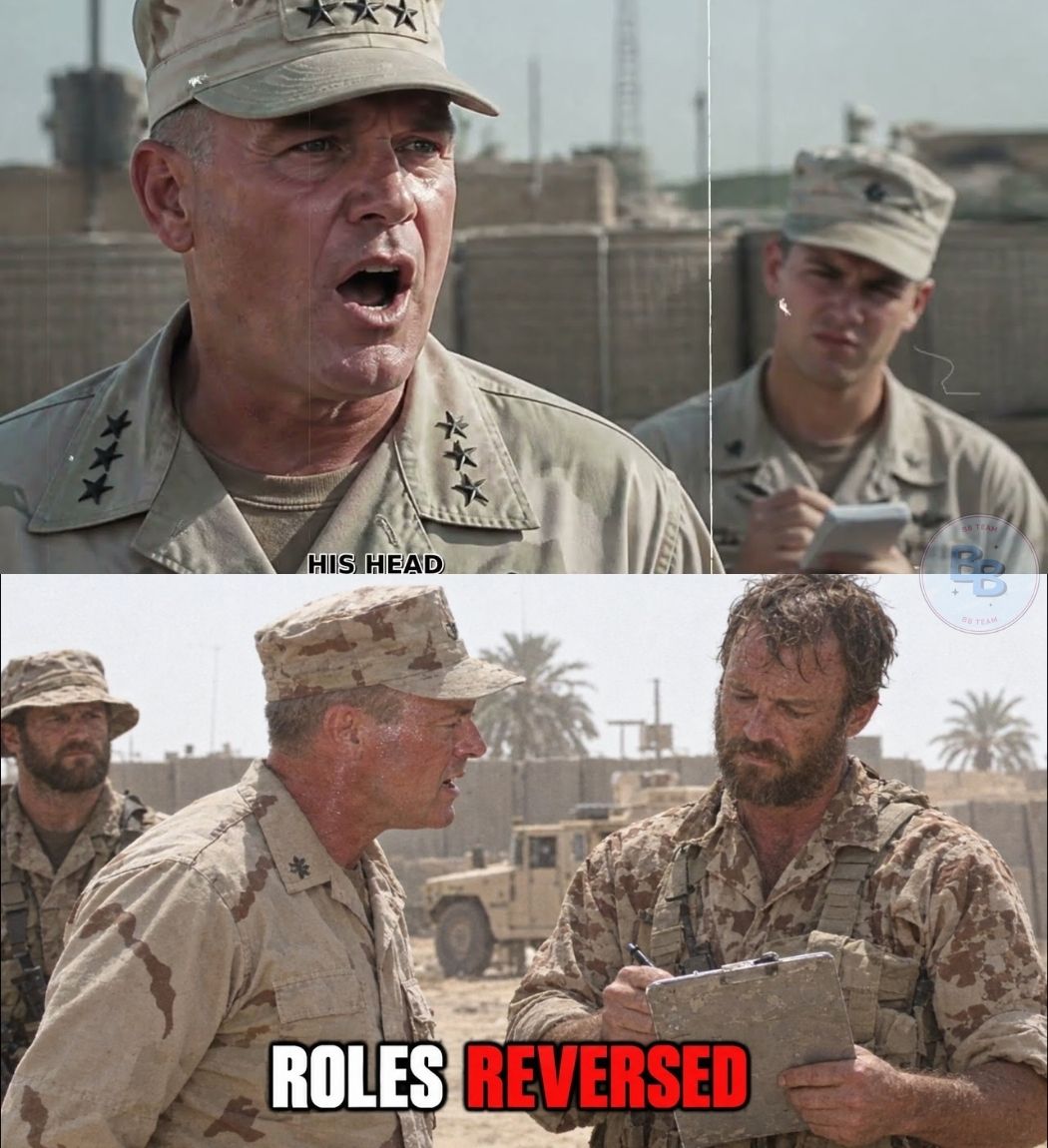
“You’re the One Being Graded, Sir” — The SAS Who Turned a US Colonel’s Inspection Into Their Test
1976, three children were discovered living in a root cellar beneath what the locals called the Fowler property.
They had no photographs, no medical records, no birth certificates. When state officials finally took blood samples, the results came back with a notation that would be sealed away for three decades.
Genetic markers inconsistent with any known human populations. 2 days later, the lab technician who processed the samples quit her job and never spoke publicly about what she had seen.
The children were separated. Their files were buried under layers of bureaucratic red tape and the Fowler property was burned to the ground by persons unknown.
This is not folklore. This is not a legend. This is a story that was deliberately erased from public memory. And tonight we are going to uncover the reason why….
There is a clipboard. It is a plain brown masonite board with a bulldog clip at the top and a printed sheet taped under the clip. And in a long hot afternoon on a coalition forward operating base in the southern desert, that clipboard will change hands twice. The second time it changes hands, the man receiving it will be a decorated United States Army colonel, and the number circled at the bottom of the sheet will be his.
You are standing on the pan at 9 in the morning. The rotors of a Chinook are still turning down a colonel in a desert patrol cap with a single silver star on his collar. A man who will tell you twice before noon that he was ranger tabbed before most of these men could shave steps off the ramp into a wall of heat he does not acknowledge looks down the line of bearded men in sand-colored smocks waiting to meet him and says loud enough that the loadmaster behind him flinches:
“You are not elite. You are a hobby club in sand goggles. I grade real soldiers and today I’m graded tea drinkers. Fine. Let’s see what you break first.”
Nobody answered him. That was the first thing to notice and the colonel did not notice it.
A squadron sergeant major in his late 40s in the same sand-colored smock holding a tin mug of tea that he did not put down inclined his head half an inch and said:
“Sir, the major’s expecting you.”
The colonel walked past him as if he were part of the Hesco wall. Behind the colonel, a captain with a West Point ring and a notepad already in his hand wrote something down and then did not know whether to tear the page out. Behind the captain, a senior sergeant with three tours’ worth of quiet in him said nothing at all and would say less and less as the day went on.
He would remember saying it later; he would be made to. He was a serious man. That is the part to carry forward because a clown’s humiliation is worth nothing and this one will be worth something.
Colonel Raymond Ellsworth Pike had earned the right to walk off a ramp like that in nearly every arena the United States Army kept. And the men he had just insulted were about to spend the next 10 hours proving without raising their voices, without laying a hand on him, without once stepping outside the inspection protocol he himself had brought with him, that the one arena he had never been tested in, was the one he had just walked into.
The clipboard was still blank. The sheet taped to it had 14 numbered criteria down the left margin and a column of empty boxes on the right. By last light, every box would be filled, and the name at the top of the sheet would not be the name he expected.
Colonel Raymond Ellsworth Pike was 56 years old on the morning he walked off that ramp, and the two years he had left before mandatory retirement were, by any sensible measure, the softest two years of a hard career. He had entered the United States Army in 1971 on the ragged edge of Vietnam, missed the war by months, and spent the rest of the 70s making certain nobody would ever again accuse an officer of his year group of having missed anything.
He went to Ranger school as a second lieutenant and finished tabbed. He went to jumpmaster. He went to Pathfinder. He commanded a rifle company in third ranger battalion during the Panama operation in December ’89 and came home with his first Bronze Star with V device for Valor under fire at Rio Hato airfield. The citation was specific about a cross-runway movement under light machine gun fire that nobody who read it afterwards felt inclined to query.
He deployed again to Saudi in ’90 and across the Berm in ’91, worked a special operations liaison cell out of Riyadh and came home with his second V. He had been a battalion operations officer, a brigade executive officer, a joint staff planner at Tampa and now, at the end of a career that had taken him almost everywhere the American military kept its best people, he had been handed one of the quiet jobs that the United States hands only to officers it trusts.
Liaison inspection authority to coalition special forces elements in theater with a signed letter from a two-star in his breast pocket authorizing him to grade in the two-star’s name the readiness of any such element he visited. The letter said he could grade them. It did not say they could not grade him back.
Inside his patrol cap, folded against the sweatband where it had sat for 11 years, was a laminated card the size of a playing card on which he had typed in his own hand the list of his commendations, decorations, and command appointments. He did not know anyone who had seen it. He took it out occasionally in rooms where he was alone, and read it the way other men read a prayer. It was not vanity exactly. It was ballast. It told him who he was in rooms where he was not sure.
He had been briefed on the detachment he was flying to inspect. He had read the briefing on the flight in: B Squadron, 22 Special Air Service Regiment, a detachment of roughly 32 men commanded by a Major Henry Thornycroft operating out of a shared coalition forward operating base in the southern desert on a mission profile the briefing described in the way British briefings describe such things as ongoing.
He had been given as a courtesy the officer commanding’s own staff list and the troop structure. Air troop, boat troop, mobility troop, mountain troop, four troops that had sounded when he read them on the Chinook slightly childish. Grown men in a desert and one of them was in boat troop. He had made a joke about it to his junior aide on the flight in.
Captain Vowels had laughed. Hollandbeck had not.
What Pike believed, with a conviction that had been earned in enough places to be worth something, was that the British Special Air Service was good at a certain narrow set of things—the Iranian Embassy, which had happened when he was a captain, and which he had taught on at Benning—and that around that narrow set of things they had been allowed by a credulous press and a flattering officer class to build a mystique that American officers of his generation were under no obligation to accept. He had served alongside Delta operators. He had been inside the compound at Fort Bragg where real selection happened. He knew what a tier-one American unit looked like. He had come to the quiet view over the years that the British equivalent was a smaller, poorer, scruffier version of the real thing. Competent, yes, but not the thing the mystique claimed.
He had said as much in a briefing room in Tampa four months earlier to a colonel of equal rank who had not disagreed. Among American officers of his age, this was not a fringe opinion.
So when he walked off the ramp at 9 that morning and saw the line of bearded men in sand-colored smocks who had not shaved in days and did not come to attention and did not call him sir until after he had spoken to them, every instinct in him said: hobby club. Hobby club in sand goggles.
He said it out loud because he had said it in his head on the flight in, and the gap between thought and speech in Colonel Pike at 56 had been closing for several years. He said it loud enough for his own aide to flinch. And then, having said it, he could not now unsay it. The men who had heard it would carry it, and he knew enough about soldiers to know that a line like that said on a pan at 9:00 in the morning is a bill that comes due before the sun goes down.
He did not that morning believe the bill would come due. He thought he had the authority of the clipboard in his hand and the letter in his breast pocket, and the two V’s on his Class A rack behind him, and that the men on the pan had the authority of their reputation and nothing else. He thought it was his inspection. That was the fulcrum error. Everything that followed turned on it.
Major Henry Thornycroft met the colonel at the edge of the pan under the shade of a range tent whose canvas was pale with sun. He was a short man, left-handed, a captain’s rank at 32, and a major at 36. And he carried, as he had carried in every arena from Sierra Leone onward, a green army notebook in his left thigh pocket, bent to the shape of his leg.
He offered his hand. The colonel took it briefly, and did not use his name.
“Colonel Pike, welcome to the forward operating base. The sergeant major has your schedule.”
“My schedule,” said Pike. “The inspection schedule, sir.”
“14 criteria as per your letter. We’ve broken it into stands across the day. Kit, live fire, vehicles, medical, communications, demolitions, and the night serial through the shoot house. Finishes at 2200. The sergeant major has it printed.”
Warrant Officer Class Two Dan Verity, standing one pace behind the major with the tin mug of tea still in his left hand, produced from his belt kit a folded sheet of A4 and offered it to Captain Vowels rather than to Pike. Vowels took it and then, uncertain, held it out to the colonel.
Pike glanced at it, saw his own 14 criteria set out in Verity’s handwriting with times and locations against each, folded it in half, and handed it back to Vowels.
“Fine,” he said. “We’ll do it their way for now.”
What Pike did not see, because he had already turned his head to look at the Chinook he had arrived on as if checking that it was still there, was Verity’s own notebook, a black notebook the size of a paperback, come out of his left-hand smock pocket, open to a fresh page and the pencil put behind his ear while he set the mug down on the Hesco. The pencil came back off the ear a moment later, and in a hand so small it looked almost printed, Verity wrote the day’s date, the colonel’s name, and underneath the words:
Arriv 0902, line not inspected, first speech delivered on pan.
He closed the notebook and put it back in his pocket. And nobody on the American side noticed because nobody on the American side thought there was anything to notice.
Mark that moment. The regiment, as any man who has served long enough in it will tell you if he feels like telling you anything, has a quiet institutional habit of grading everyone who crosses the wire. Not just enemies and not just candidates on selection. Everyone—visiting officers, attached signalers, the Royal Air Force loadmaster who flew the Chinook in, the journalist who came through once in 2003 and did not know he was being written down in three separate notebooks. It is not malicious. It is a hygiene. The regiment learned in the 60s and 70s and in all the quiet places afterwards that an outsider inserted into its perimeter can do more damage with a word in the wrong place than an enemy with a rifle. And so the squadrons grade them quietly under the hat without ever showing the page. Against the same standard they grade one another. The grading is not for show. It is almost never shown, but it is always done.
Colonel Pike had been graded from the moment the ramp came down. He did not know it. He would not know it for several hours yet.
Thornycroft walked him across the pan to the first stand. The forward operating base was not large: Hesco walls two courses high, a shade of range tent at the east, a prefabricated accommodation block whose air conditioning rattled, four Humvees on the American line and three pins and a Land Rover in mobility troop’s own. And at the back of the compound, built against the inside of the north wall by the detachment itself over the previous 6 weeks, a shoot house of 20ft ISO containers and timber frames, six rooms, two floors, a staircase in the middle.
The colonel looked at the shoot house as they passed and said:
“You built that yourselves?”
“Yes, sir.”
“With what budget?”
“With what we had, sir.”
Pike grunted. In his head, the grunt meant cheap. In Verity’s notebook, 2 minutes later, the grunt was recorded as criterion 11, resourcefulness: did not understand what he was looking at.
The first stand was the kit layout, which Pike had scheduled for 10:30. It was now 9:20.
“We’ll start it now,” said Pike. “Call them in.”
Thornycroft did not look at Verity. He did not need to. Verity turned, walked three paces to the lip of the range tent, said something in a conversational voice that did not sound raised, and inside of 90 seconds the 32 men of the detachment were walking—not running, walking—in from four separate parts of the compound, carrying their Bergens, their belt kit, and their primary weapons, and were laying them out on the pan in a line so straight that Captain Vowels, who had spent four years in a line infantry unit before he came to Pike, said quietly:
“Jesus, sir, look at the line.”
“I’m looking at it, Captain.”
He was looking at it. He was not seeing it. He was seeing beards and sand-colored smocks and L119 rifles with sand covers over the optics. He was seeing Glock 17s on thigh rigs. He was seeing Bergens whose weight he could estimate within 5 lb just by the way they settled, and the estimate he arrived at was higher than anything his own rangers had carried for an inspection in a long time.
He was not seeing the fact that every man in the line had laid his kit out in the exact same order in the exact same geometry without being told to. The magazines were up to the left of the rifle at the same angle in every case. The medical pouches were open and the contents visible and the contents were the same in every pouch. He was not seeing that the 32 men in the line, having laid out their kit, had taken one step back and were now standing in a posture that was not attention, but was something else, something older, something the regiment had that said: Ready when you are.
Staff Sergeant Ewan Bledin at the far left end of the line was counting under his breath in Welsh. He always did it on kit parades. He did not know why. He had done it since he was 19. Un, dau, tri. Four pouches, three magazines, two tourniquets, one spoon.
Trooper Rodri Maddox, three men down from Bledin, had the issue spoon from his selection course in the top flap of his Bergen. It had been in the same flap for 8 years, and he had never been without it on an inspection, and he had never been asked about it.
Pike walked the line once. He walked it quickly. He stopped at Sergeant Tomos Carrian’s layout. Carrian was mobility troop lead driver, and his demolition tin was open on the pan with its contents set out in the same precise geometry as everyone else’s.
Pike looked for a long moment at the lid of the tin, in which taped to the inside was a crayon drawing of a stick-figure father in a green hat signed in a seven-year-old’s handwriting: Daddy.
Pike looked at it, said nothing, and moved on.
Verity, two paces behind him, wrote in his notebook: Criterion two, attention to detail. Walked past the only item on the pan that would have told him anything.
Thornycroft watched the colonel walk his line and said nothing. He had opened his green notebook once at the start of the walk, and had written one line in it with his left hand. He closed it before Pike turned round.
The first blow was about to land. Pike did not know it had already been loaded.
Here is what Pike did not know about a kit layout in the regiment. And here is why not knowing it mattered. In the American army he had served in for 35 years, a layout inspection was a thing you prepared for. You were told in advance that it was coming. You had hours or days to set the kit out. And the inspection itself was the officer walking down the line and finding a magazine spring that had been oiled last week instead of yesterday. Pike had conducted hundreds of them as a company commander and as a battalion executive officer. He thought he was conducting one now. He was not.
Verity had called the detachment in 2 seconds after Pike had said, “Call them in,” and the layout he was now looking at had been assembled from scratch by 32 men coming in cold from four parts of the compound in less time than it had taken Pike to walk from the Chinook to the range tent. He did not know this because he had not asked. He assumed, as he had always assumed, that the layout had been set out at dawn, and the men had been standing at it when he arrived.
Captain Vowels, who had a wristwatch and a West Point habit of noticing things, knew differently. Vowels had looked at his watch when Verity had turned to call them in, and he had looked at his watch again when the last man had stepped back from his kit, and the difference between the two glances at his watch was 5 minutes and 51 seconds. Vowels stood at Pike’s shoulder with the number in his head, and did not know what to do with it.
Pike finished walking the line and came back to the top.
“Fine,” he said.
He was looking for something to criticize. He had not found it. The absence annoyed him in a way he did not examine.
“Fine,” he said again. “Let’s see them pack it properly this time.”
To the clock, Thornycroft said:
“To whose clock, sir?”
“Mine, Captain. Time it. Standard American pack. 7 minutes. We’ll see what they do.”
“Yes, sir.”
Vowels raised his wrist. He said:
“On your call, sir.”
Pike said:
“Go.”
What happened next took 6 minutes and 9 seconds, and Vowels counted every one of them.
32 men in sand-colored smocks packed their Bergens, restored their belt kit, reindexed their magazines, closed their medical pouches, and shouldered the lot—not for a march, but back to the postures they had been in before the layout—in 6 minutes and 9 seconds flat. They did it with the quiet, undramatic economy of men who had done this on worse ground, in worse weather, in the dark, which is what they were.
There was no shouting. Verity did not call a single time cue. Bledin did not look up from his own kit. The sound on the pan was the sound of nylon and canvas and the small metallic clicks of magazine well catches and nothing else.
At 6 minutes and 9 seconds, Vowels said—before he could stop himself, before he had decided to say it, in the voice of a man reporting a fact to his colonel, because that was what captains were trained to do:
“6 minutes 9, sir.”
The pan went very quiet. Pike turned his head and looked at Captain Vowels. He looked at him for a count that Vowels would later, back at Tampa, say he could not remember the length of but could remember the color of. The colonel’s face, which had been red from the heat, went a different, closer red, and the laminated card in the sweatband of his patrol cap seemed for a second to press against his forehead.
“Captain,” said Pike in a very level voice. “Be quiet.”
“Yes, sir,” said Vowels.
Hollandbeck three paces behind did not say anything. Hollandbeck’s face did not move, but something in Hollandbeck—the thing in a senior sergeant that notices when a colonel tells a captain to be quiet because the captain has told the truth—had just made its first entry of the day. It would not be the last.
Thornycroft said mildly:
“Was that under the time, sir?”
“It was under the time. Shall we do another criterion, sir?”
“Yes,” said Pike. “The live fire.”
Now, he had meant to do the live fire at 11:40. He moved it forward because the clock was wrong, and he wanted to be the man who called the clock. Verity, behind him, opened the notebook and wrote: Criterion 1, timekeeping: changed his own schedule to recover ground. 0947.
The detachment picked up their primaries without being told, formed on Bledin, and walked again—not ran, walked—to the improvised range at the east end of the compound. The range was 150 m of hard-packed sand with a backstop of Hesco two courses high, and at the 200 m mark, at the far end of the Hesco against a plywood baffle, were pinned the target cards Bledin had drawn up at dawn: credit-card-sized rectangles of white paper. Three to a frame, four frames.
“Credit card targets,” said Pike, as if the words were a question.
“Yes, sir. At 200, yes, sir. Standing, if you like, sir.”
The thing about a credit card target at 200 m is that it is not, in American doctrine, a reasonable thing to ask of a man standing. In American doctrine, you shoot a man-sized silhouette at 200 m standing and a credit card at 100 prone with a bipod. Pike knew this. He said standing because he wanted to see Thornycroft adjust the request.
Thornycroft did not adjust the request. He turned to Bledin and said:
“Staff. Pairs standing. Three rounds each. Your call.”
Bledin said:
“Sir.”
He turned to the pair with him, a corporal called Harris, whose first name nobody used, and said something in Welsh under his breath, and the pair stepped onto the firing point.
Pike said:
“I want them to—”
He got as far as them, to. Bledin and Harris had by then each fired three rounds—six rounds in 2 seconds and a quarter—standing at 200 m into cards the size of your driving license. The sound was flat and small on the pan, suppressed uppers, L119, and the gunsmoke drifted sideways on a hot wind.
Pike finished his sentence: “…two,” he said, and then stopped because the pair had already lowered their rifles.
Vowels looked at Hollandbeck. Hollandbeck looked at nothing.
“Spot the targets, Captain,” said Pike.
Vowels raised his binoculars. There was a long pause.
“6 for 6, sir.”
“At what group, sir?”
“They’re all in the cards.”
“At what group, Captain?”
“The cards are the group, sir.”
Pike did not say anything. Verity behind him did not write anything just then, because the thing he wanted to write he was going to write later when he had the whole shape of it. The first blow had landed in the colonel’s own hand on his own clipboard. Criterion three, marksmanship long gun, was still an empty box. Verity would fill it in that evening, and that was only the first time that day he would be wrong.
The colonel was not a stupid man, and he had been doing this for long enough to know that one unexpected result on a kit layout and one on a long gun serial was not yet a pattern. He wanted a pattern, or he wanted an exception. He decided, standing on the firing point with the heat climbing past 40, to design the next serial himself on the pan in front of them, so that there could be no accusation afterwards of a rigged stand.
“Change of plan,” he said. He said it loud enough that the men on the firing point, who were already walking back from the 200 m line, having policed their brass without being told, could hear him. “Captain, write this down. Pistol transition under medical stress. Two targets, one pistol. Primary rifle disabled on the whistle. Casualty on the ground. Treat the casualty. Service both targets. State the nine-liner. One pair. Pick them.”
He turned to Thornycroft.
“You pick.”
Thornycroft looked at the detachment. He said:
“Corporal Fenwick. Trooper Maddox.”
Fenwick was air troop. Breacher by trade, the Pashto speaker. Maddox was the trooper new to the detachment, four months in, carrying the selection spoon in his Bergen. The pairing was not accidental. Thornycroft wanted the newest man in the detachment on this serial because the newest man was the one Pike would assume to be the weak link, and because the newest man was not the weak link.
The hobby club, he had called them. In sand goggles.
Pike watched Fenwick and Maddox walk to the firing point. He said:
“Captain, you are the casualty. Lie down.”
Vowels blinked once. “Sir?”
“Lie down.”
Vowels lay down. He put his notepad on his chest and his hands at his sides. The sand under him was hot through his uniform.
“On the whistle,” said Pike. “Their primaries jam. They treat you. They service the targets. They state the nine-liner. If you hear the nine-liner before I count 3 minutes, I will apologize to this detachment on this pan in front of this sergeant major.”
He said it loud. He meant it. He also did not think it was going to happen.
“Sergeant Hollandbeck, you have the whistle.”
Hollandbeck, who had not spoken since the ramp came down, took the whistle Pike held out to him and said:
“Sir.”
He put the whistle in his mouth. He waited for Pike’s nod. The nod came. Hollandbeck blew the whistle.
Fenwick’s primary did not jam because nothing had actually been done to it. But Fenwick, who understood the serial Pike was running, and who was not going to argue, did the drill as if it had. His left hand came up to the ejection port, his right hand down to the thigh rig. The Glock 17 came out, and in the time it took Pike to blink twice, the pistol was up. Fenwick had put two rounds into each of the two target frames at 20 m—center of a credit card at that range from the Glock is not easy—and he did it under heat and under the stress of a stranger’s whistle, and had moved without stopping to Vowels on the ground.
Maddox was already there. He had not run. He had covered the 10 m between the firing point and the casualty in a controlled bent-knee move that put his primary across his back on the sling and his medical pouch open on the sand before his second knee touched down.
He went to the catastrophic hemorrhage first—a notional one, he announced it—arterial left thigh, slapped a tourniquet high and tight on Vowels’ left leg, cinched it, timestamped it with the marker clipped inside the pouch lid, and moved to airway. Vowels, who was supposed to be unconscious, found that he was holding his breath and let it out.
Fenwick, having serviced the two targets, dropped to one knee at Vowels’ head and took over airway and breathing while Maddox went to the radio.
Maddox pulled the handset to his cheek. His voice did not go up. His voice went down. He said:
“Slash-0, this is 31 Charlie. Nine-liner. Line one, grid will follow. Line two, this frequency. Line three, one Alpha, urgent surgical. Line four, one litter. Line six, no enemy. Line seven, mark by panel. Line eight, US military captain coalition. Line nine, nil contamination.”
He gave a grid. It was the grid of the pan they were standing on. He gave it in six figures. And then in eight.
Hollandbeck, with the whistle still in his mouth, looked down at the stopwatch in his left hand, which Pike had not told him to start, but which he had started anyway when he blew the whistle, because that was what senior sergeants with three tours did. Hollandbeck took the whistle out of his mouth and said:
“1 minute 48, sir.”
Pike said:
“Say that again.”
“1 minute 48, sir. From the whistle to the end of line 9.”
The pan went quiet in the way it had gone quiet after the kit layout. The heat was now past 42. Vowels on the ground had a tourniquet on his thigh that he could feel through his trousers, and he could taste salt. He did not sit up. Nobody had told him to sit up.
Thornycroft said:
“Was the colonel going to say something, sir, about an apology?”
Pike looked at Thornycroft. He did not answer at once. The hobby club in sand goggles. The words were in his mouth and in the air and in Verity’s notebook. And he knew enough about soldiers to know that a man who makes an offer like that on a pan and does not pay it is a man the pan remembers.
He said:
“Detachment, that was good work.”
He did not apologize. He said, “Good work.” And he said it to the air above the detachment’s heads rather than to any face in it. And he turned on his heel and walked back toward the range tent for water.
Verity behind him wrote: Criterion 4, integrity of word: offered an apology on the record, and did not pay it. 1021.
Captain Vowels was told by Fenwick to stay down for another 30 seconds while the drill was formally closed. He stayed down. He looked at the sky, which was white, and he thought about the fact that the tourniquet on his leg had been applied by a man he had met 40 minutes earlier with more care than the field dressings he had been taught at Benning.
Hollandbeck took the whistle off its lanyard and put it in his breast pocket. He did not give it back to the colonel.
By midday the colonel had changed. The change was not large. It was not something Thornycroft would have described as a change if Thornycroft had been asked at the time. He was too careful an officer to call a colonel changed in the middle of a serial. But Verity in the notebook had begun to write shorter entries:
1110: Did not speak at the water point.
1109: Took the laminated card out of his cap and put it back.
1113: Asked Vowels for the time twice in 90 seconds.
The vehicle serial was scheduled for 1300. Pike moved it to 12:30. He said when he moved it:
“I want to see them cold. I don’t want them ready.”
He said it to Thornycroft and he said it loud enough for the whole detachment to hear it, which was the point.
Thornycroft said:
“Of course, sir. Sergeant major, call the mobility troop in.”
Verity, who had already called the mobility troop in by virtue of Carrian’s radio having been live on the troop net all morning, said:
“Sir.”
Sergeant Tomos Carrian, short, broad, demolition tin in his webbing, brought the lead Pinzgauer up to the start point at the north end of the pan. The vehicle was already crewed: three men on it, one at the gun, one at the driver’s seat, one in the back with the Minimi. All three of them had their belt kit on and their primaries slung and the vehicle’s bonnet up.
“Why is the bonnet up?” said Pike.
“Routine check, sir,” said Carrian. “First halt of the day, fluids and belts. Close it, sir.”
Carrian closed it. He did not slam it. He pressed it down with his left hand until the catch took and he wiped his hand on his trousers.
“Here’s the serial,” said Pike. He was talking to Captain Vowels, who had his notepad back now, and whose uniform still had sand on the back of it. “I will call a contact. On my call, I want contact drill. Dismount, suppressing fire, casualty extraction, mounted withdrawal. I want two casualties, the gunner and the driver. One through-and-through, one head wound. I want the vehicle to break down 100 m into the withdrawal. I want them to self-recover under fire. If any part of that drill is not textbook, I will mark it. Captain, time it.”
Standard American benchmark on a drill of that complexity is 5 and a half minutes.
“Clear?”
Vowels said:
“Clear, sir.”
Pike said:
“Contact.”
He did not get to front.
Carrian had been reading Pike’s face. He had been reading it since Pike said, “I want to see them cold.” And he had read, in the way Pike’s jaw had set, the shape of the serial that was coming. He had passed one word on the troop net before Pike had opened his mouth to call it. The word was staged.
When Pike said contact, the Pinzgauer’s gunner was already dismounting. Not after the word—during it. The gunner was on the ground with his primary up and had identified an arc of fire by the time Pike’s second syllable was out. The driver was out of the cab in a controlled roll, pulling the man in the back—the notional head wound casualty—down by the drag handle on the back of his plate carrier. And the man with the Minimi was laying down a notional belt of suppressing fire into the northern Hesco, calling rounds down so that nobody who did not know it was notional would be in any doubt.
Pike said front. He said it on autopilot. He said it because his mouth had been going to say it.
By the time he said it, Carrian had the driver, a trooper called Prothero, on the ground beside the Pinzgauer with a tourniquet going on his notional through-and-through. And Fenwick, who had come up from the medical stand with his bag—because Fenwick was air troop, and air troop had the detachment’s lead medic—was already at the gunner, a corporal called Hamnet, with a chest seal in his left hand and a marker in his right.
The whole thing was taking place at a quiet, almost domestic pace. Nobody was shouting. The man on the Minimi had moved to the second arc. The vehicle had, as per Pike’s design, broken down. Carrian had opened the bonnet himself as he dismounted, which was why he had checked it when he arrived. Two of the detachment had the tow strap out of the second Pinzgauer, which had come up out of nowhere on the north flank by the time Pike had finished writing the word contact in his own head.
Hollandbeck, who had the stopwatch now because Vowels was trying to write, said:
“3 minutes 12, sir. Casualties stable, vehicle on the strap, mounted withdrawal in progress.”
Pike said:
“On what strap?”
“Theirs, sir.”
“The vehicle was supposed to break down.”
“It did, sir,” said Thornycroft quietly. “Sergeant Carrian opened the bonnet himself. He had already read the serial.”
Pike turned to look at Carrian, who was now at the driver’s seat of the second Pinzgauer, which was towing the first, which had Prothero and Hamnet in the back with Fenwick between them, and which was moving—not fast, at the controlled pace of a vehicle under tow—toward the south end of the pan, where the notional casualty collection point was.
Carrian did not look at Pike. He was watching the strap and the man beside him was watching the tow angle. And when the first Pinzgauer’s wheels crossed the line Pike had notionally set as the end of the withdrawal, Hollandbeck clicked the stopwatch and said:
“4 minutes 41, sir.”
Pike did not say anything. The benchmark, said Hollandbeck, was 5 and a half. Pike did not say anything.
Verity behind him wrote: Criterion 7, battle drills under uncertainty. Serial completed before it was called. 1234.
Thornycroft said:
“Shall we break for lunch, sir?”
Pike said:
“Yes.”
He said it the way a man says yes when he has decided to stop arguing with the air. He had not stopped grading the detachment. He had stopped expecting the grading to come out the way he had thought it would come out when he walked off the ramp.
He walked back toward the range tent. He walked slowly. The laminated card in his cap was pressing against his forehead, and he did not take it out this time because he did not want anyone to see him take it out. The decisive proof was coming. The clipboard was still in Vowels’ hand, and the first three criteria had in Vowels’ own small handwriting been marked.
The sun goes down fast in that part of the world.
By 2100, the forward operating base is black outside the generator lights, and the shoot house built against the inside of the north Hesco is lit only by the chem sticks the detachment have placed in each room. The chem sticks are green. The green is not for atmosphere. The green is because red bleeds through night vision in a way that white does not.
And the detachment are running the serial on night vision.
Pike is on the catwalk. The catwalk is a plank walkway the detachment have built along the top of the Hesco wall 4 m above the shoot house roof, and from it a man with a torch and a stopwatch can see down into every room of the shoot house through the open-topped ceiling.
Pike is there with Thornycroft on his right and Verity on his left, and Verity has placed the stopwatch into Pike’s own palm.
“Your clock, sir,” says Verity.
Pike takes it. His hand is dry. The heat has gone out of the day and the night is cold on the Hesco, and the laminated card in his cap, which has been pressing against his forehead for 12 hours, is quiet now.
“Benchmark on the sheet, sir,” says Thornycroft. “For a six-room clear with two live hostages and nine targets, night under night vision is 10 minutes.”
“I know what the benchmark is, Major. I signed the sheet.”
“Yes, sir.”
Hollandbeck is on the catwalk, too. Vowels is beside him. The clipboard is in Vowels’ left hand, the inspection sheet facing up with 11 of the 14 criteria marked in his small West Point handwriting and the three remaining criteria—the ones the night serial will settle—still blank.
Below, in the alley that leads to the shoot house door, eight men are stacked. They are Fenwick’s team, which means air troop, which means breaching. Bledin is on the catwalk with Pike. He is not running tonight; he ran the long gun serial this morning. Carrian is on the catwalk, too. The detachment is watching its own.
Thornycroft says:
“In your own time, sir.”
Pike looks at the stopwatch in his hand. He looks at the alley. He looks for a long moment at the back of Fenwick’s head, which is the head of a man he was told this morning was going to be graded by him, and which he is about to time.
He says:
“Go.”
The stopwatch starts.
The frame charge on the shoot house door blows at 0.4 seconds. A small controlled bang. White light inside the frame. The door off its hinges. And the stack is through at 1.1.
The green of the chem sticks and the green of the night vision are in Pike’s eye through the catwalk gap. The same green. Men move inside the green. Not fast. Fluent.
The first room is cleared at 11 seconds. Pike hears through the open ceiling two double taps and the called word clear. And the stack moves to the second room.
The second room is cleared at 24 seconds. Two targets, one hostage. The hostage not shot. The hostage, a role player, one of the detachment’s own, a trooper called Vaughn sitting zip-tied to a chair, is moved to the corner by Maddox and left there with a man on him.
Pike watches the stopwatch. He has forgotten that he is watching the stopwatch. He has forgotten the laminated card. He is watching as a soldier watches the thing he came to watch.
Third room: 40 seconds.
Fourth room: 1 minute 6.
Staircase: 1 minute 31. The stack flows up it in a shape Pike has seen taught and has rarely seen done. Two men up, two men covering, two men moving on the covering men—a shape like water finding its own level.
Fifth room: 2 minutes 4.
Sixth room, the final room—where the second hostage is, and where the last three targets are placed in a geometry designed to make the breacher choose between the hostage and a target in the same arc—opens at 3 minutes 12.
The sixth room takes 59 seconds. Pike counts it in his head without meaning to. The two shots that resolve the hostage and target geometry are fired from Fenwick’s rifle inside of two seconds of each other. And the called word is clear. Hostage safe. All targets down.
Pike’s thumb comes off the stopwatch. He has not told it to. He looks at it. The display reads 4 minutes 11.
He looks at it for longer than he looked at Vowels that morning. The green of the chem sticks is still coming up through the open ceiling of the shoot house. The night is cold. The laminated card in his cap, in his hand, is not saying anything.
4 minutes 11.
The benchmark was 10. His benchmark, signed by him, on his letterhead, taped to the clipboard Vowels is holding.
“Read that number again.”
“4 minutes 11, sir.”
Six rooms, nine targets, two hostages at night under night vision through a door breached by frame charge in a shoot house built out of ISO containers by the men who had just run it against a benchmark set by a United States Army colonel with two V’s and a Ranger tab who had called them, at 9 that morning, a hobby club in sand goggles.
Thornycroft says:
“Sir?”
Pike says:
“I heard it.”
Verity says:
“Would the colonel like me to call the clear?”
Pike says:
“Do.”
Verity leans over the catwalk and calls in a voice that is not raised:
“Serial complete. 4 minutes 11. All hostages safe.”
Below in the alley, the stack is already walking out of the shoot house with their rifles across their chests, and Fenwick is pulling his night vision up onto his helmet, and the chem sticks in the rooms behind them are still green.
Pike is holding the stopwatch. Vowels is holding the clipboard.
Thornycroft says:
“Captain Vowels, would you pass me the clipboard?”
Vowels looks at Pike. Pike does not say anything. Vowels passes the clipboard to Thornycroft.
Thornycroft takes out his green army notebook and he takes out from inside its back cover a single folded sheet of A4 paper. He unfolds it. On the sheet printed down the left margin are 14 numbered criteria. The same 14 criteria as on Pike’s own inspection sheet in the same order in the same wording.
The column of boxes on the right is not empty. In Thornycroft’s left-handed pencil, each box has a number in it. At the bottom of the sheet, in a hand that is small and clear and not large enough to be theatrical, is written a total. And beside the total, circled, is a figure: 41 out of 70.
Thornycroft removes Pike’s inspection sheet from the clipboard. He clips in its place the sheet from the back of his notebook. He turns the clipboard around. He holds it out to Colonel Raymond Ellsworth Pike.
He says:
“You’re the one being graded, sir. You have been since the ramp came down.”
The stopwatch in Pike’s left hand reads 4 minutes 11. The clipboard in his right hand reads 41. The two numbers are for a moment the only numbers in the world.
Verity behind him closes his notebook. He does not need to write anymore. The sheet in the colonel’s hand has the whole day on it, criterion by criterion, in a pencil whose lead is older than Captain Vowels. The debt is paid.
The clipboard was heavy. It had not been heavy that morning. It was the same clipboard—plain brown masonite, bulldog clip, one taped sheet—but at 21:00 on the catwalk above the shoot house in the cold of a desert night, it was heavy in a way Colonel Pike had not expected a clipboard to be.
He read the sheet. He read it twice.
Thornycroft did not help him. Verity did not help him. Nobody on the catwalk moved. Below in the alley, the stack had cleared and the chem sticks were being policed, and the detachment was going about the slow, undramatic business of unloading and declaring weapons clear, and the voices from the alley were conversational, and the words, “All weapons clear,” were called by Fenwick in a voice that was not raised.
The 14 criteria were in Thornycroft’s hand down the left margin of the sheet in the same words Pike had written on his own letterhead four weeks earlier when he had drafted the inspection letter in Tampa. Each criterion had a number beside it. The numbers ranged from 2 to 5 out of 5. Two of them were twos. Several were threes. A handful were fours.
One was a five. And the five was next to the criterion that read resourcefulness and improvisation of in-theater training infrastructure. And beside the five, Thornycroft had written in brackets in the same small handwriting: Shoot house built by the detachment out of ISO containers in 6 weeks with no budget line.
Pike remembered saying with what budget and he remembered the grunt he had made at the answer.
He went down the list.
Timekeeping: 3.
Attention to detail: 2.
Marksmanship, long gun: 5.
Integrity of word: 2.
Battle drills under uncertainty: 4.
Close quarter battle, night: 5.
Resourcefulness: 5.
Composure under reversal: 2.
He stopped at composure under reversal. He said:
“Who assessed this one?”
Major Thornycroft said:
“The sergeant major, sir.”
Pike said:
“On what basis?”
Thornycroft said:
“On the basis, sir, that you offered this detachment an apology on the pan this morning at 10:21 on a serial in which the benchmark was beaten by 1 minute 12 and you did not pay it. Composure under reversal is the ability to do what you said you would do when the ground moves. That was his assessment, sir.”
Pike did not say anything.
Hollandbeck on the catwalk, three paces behind, had not spoken all day except to call the two times. He now stepped forward one pace. He stepped forward in the way senior sergeants step forward when they have decided that a thing has to be said and that saying it is a part of their job that no captain or colonel can do for them.
He said:
“Sir.”
Pike said:
“Sergeant.”
Hollandbeck said:
“Sir, they’ve been grading you since the ramp came down. The sergeant major started his notebook when the Chinook was still turning down. I saw it. I didn’t say. I should have.”
Pike looked at Hollandbeck for a long moment. Hollandbeck did not look away. Hollandbeck was 51 years old and had three tours and had seen enough colonels on enough catwalks to know that the man in front of him had just received in one evening on a Hesco wall above an improvised shoot house the single most expensive piece of professional information he was ever going to receive, and that the kindest thing a senior sergeant could do for a colonel in that moment was to tell him the truth plainly and not pretend he had not seen it.
Pike said:
“Thank you, Sergeant.”
He said it low. He said it to the clipboard, not to Hollandbeck, but he said it.
Captain Vowels, who had been holding his notepad all evening with the first number of the morning, 6 minutes 9, written at the top of the first page, closed the notepad and put it in his breast pocket. He did not say anything. He had learned over 14 hours that saying things on this catwalk was not his job.
Thornycroft said:
“Sir, the sheet is yours. The sergeant major has signed it. If the colonel wishes, we can file it with your two-star under the inspection reference you flew in with, or the colonel can keep it as a personal copy. We will not transmit it either way without the colonel’s instruction.”
Pike said:
“You will not transmit it, Major. At all, sir.”
The clipboard stayed in Pike’s hand. Nobody took it.
The two V’s on his Class A rack, which were in a case in a pelican in the back of the Chinook, had not changed. He was the same man he had been that morning with the same Panama and the same Rio Hato and the same cross-runway movement under light machine gun fire. And he knew, because he was not stupid, which was the terrible thing, that none of that had been taken from him by what had happened on this base today.
What had been taken from him was his private certainty, held for 20 years in rooms where he was alone, that the men on this pan were a smaller, poorer, scruffier version of the real thing. That certainty was on the sheet in his hand in Thornycroft’s left-handed pencil in a figure of 41 out of 70, and it was not coming back.
He did not shake Thornycroft’s hand. Thornycroft did not offer it.
Verity, who had put his notebook away, picked up his tin mug from the Hesco, where it had been sitting all day, and found that the tea in it was cold. He drank it anyway. He drank it without milk. He had always drunk it without milk, and he was not going to be hurried about it tonight, either.
The Chinook came back for Colonel Pike at 10:00 the next morning.
He was on the pan when it came. He had slept or had not slept in the accommodation block whose air conditioning rattled, and he was in the same patrol cap he had worn the morning before, and in the sweatband of that cap the laminated card with his commendations was still folded against his forehead, where it had been for 11 years.
The detachment was not on the pan to see him off. They had another serial starting at 10:15 on the East Range, and Thornycroft had taken the view, correctly, that lining the detachment up to wave at a departing colonel would have been a form of comment, and the regiment did not comment.
Thornycroft was there, and Verity was there, and nobody else was there. And the mug of tea on the Hesco—the one Verity had drunk cold at the end of the serial the night before—was still there, washed now, upside down on the top course of the wire mesh, drying in the sun.
The clipboard was in Pike’s hand. He had kept it. He had not been asked for it back.
He said to Thornycroft:
“Major.”
Thornycroft said:
“Sir.”
Pike said:
“You will not transmit the sheet.”
Thornycroft said:
“I will not, sir. The sergeant major has already burned the carbon.”
Pike nodded. He walked up the ramp of the Chinook. Hollandbeck went up behind him. Vowels went up last, and Vowels at the top of the ramp turned and looked once briefly at the detachment’s shoot house on the north wall, and at the mug on the Hesco, and then he went inside and did not look again.
The ramp came up, the Chinook lifted, the sand came up with it in a wall, and the wall held for a moment, and then it fell.
He had been right about the tea. He had been wrong about the men who drank it. That is the whole thing. He had been right about the surface of it: the beards, the sand-colored smocks, the mug on the Hesco, the Welsh counting under the breath, the daughter’s drawing taped inside the lid of a demolition tin, the issue spoon in the top flap of a trooper’s Bergen 8 years after selection—right about all of it as surface, and catastrophically wrong about what any of it meant.
The surface he had read as a hobby club was from the inside the hygiene of men who had been grading everyone who came through the wire for 40 years because the alternative had, in places he had not been, got people killed. He had called them a hobby club in sand goggles. The sand goggles had been on their helmets that morning because the wind off the pan was coming hard from the north and the man with sand in his eyes does not shoot a credit card at 200 m standing.
The hobby, if there had been one, was the quiet notebook in a sergeant major’s left-hand smock pocket, open to a fresh page every time a stranger stepped off a ramp.
The clipboard went home with him. The number on it was 41. If stories told in this register are what you came for, there will be more of them.