A single father drove the CEO’s father home – and froze when he recognized his childhood home.
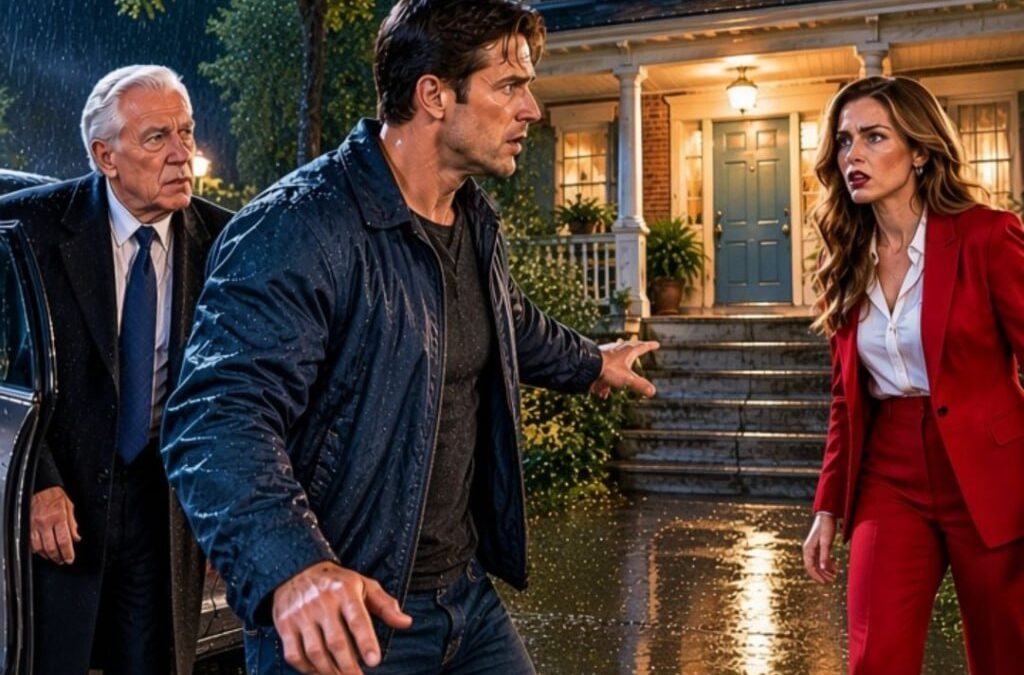
A single father drove the CEO’s father home – and froze when he recognized his childhood home.
Nolan Reed was a man easily overlooked. For nine years he had worked at Blackthornne Development, a large real estate company on the river. He arrived every morning at 6:40 a.m., solved problems others preferred to ignore, and went home in the evening. His gray car had 190,000 kilometers on the clock, and he changed his three jackets as needed. No one in the executive suite knew how he took his coffee. That no longer bothered him.
Nolan was the operations manager for the Eastern portfolio. He knew land records, permits, and old building plans better than many lawyers. In nine years, he had uncovered eleven errors that could have cost the company millions. He rarely received recognition. He was satisfied if something simply worked out in the end.
His daughter Sadi was fifteen. She had her late mother’s laugh and sometimes asked her father why he never wanted anything for himself. Nolan didn’t have a good answer. He had lost his father, Thomas, when he was eleven. After that, he had learned not to expect too much. Reliability seemed more certain to him than hope.
One Tuesday in October, Nolan attended a meeting about the Willow Crest Renewal project. The plan involved the redevelopment of 62 lots on the east side of the river, with an expected value of $90 million. Nolan was only supposed to review the technical infrastructure. But he discovered something odd in the documents: Eleven lots were missing crucial parts of the ownership chain.
“The land registry information is incorrect,” he said calmly. “Before we set a timetable, the legal department should review it.”
Preston Carrington, an influential project manager, smiled. “We invited you for the development work, not to teach the legal department how to read land records.”
Some men laughed. Evelyn Blackthornne, the managing director, said nothing. Nolan closed his folder, but one property wouldn’t let him go: 18 Willow Crest Road.
That’s where he grew up.
That same evening it rained heavily. Nolan stayed late at the office because a fire alarm system needed repairs. When he reached the lobby around seven o’clock, an elderly man was standing there. His driver had broken down, and a replacement car hadn’t arrived yet.
Nolan offered to drive him home.
The man introduced himself simply as Harrison. During the drive, they talked about everyday things. Harrison asked about Nolan’s work and his daughter. For the first time that day, Nolan didn’t feel like a function, but like a person.
Then Harrison gave his address: 18 Willow Crest Road.
Nolan fell silent. He knew every turn there.
Standing in front of the old brick house, he stared at the faded blue door, the maple trees, and the crack in the second step. He remembered a summer when his father had carried him into the house after a fall, leaving him with four stitches on his chin. “The step owes us an apology,” Thomas had said back then.
“You know this house,” Harrison said.
“I lived here.”
Harrison looked at him for a long time. “What is your full name?”
“Nolan Reed.”
The old man turned pale. “Thomas Reed. What was he to you?”
“My father.”
Harrison bent down to pick up his keys. His hand was trembling.
The next morning, almost everyone in the company knew that Nolan had driven the founder home. Preston made snide remarks. Evelyn called Nolan into her office and warned him to keep his distance from her father. Nolan explained that he had simply helped Harrison out in the rain. Before leaving, he placed Willow Crest documents on her desk.
“They should investigate why parts of the ownership history are missing for these properties.”
Evelyn read the marked pages. One address in particular stuck with her: 18 Willow Crest Road.
Her father had owned this house for decades. He had never sold it, never lived in it, and had it regularly maintained. Why?
Nolan also began to investigate. He finally found the crucial entry in the old land records. In June 1998, the house had been transferred to a private trust. The trustee and financier was Harrison Blackthornne.
At first, Nolan understood only one thing: the story his mother had told him was incomplete. He remembered how, after his father’s death, she had said the house had been a burden and a man had taken care of the matter.
Then his access to the archive was suddenly blocked.
Evelyn also began searching. She discovered that Preston had moved the permitting schedule for Willow Crest forward by five weeks. Eleven occupied houses were to be demolished. One of them was at 18 Willow Crest Road.
She confronted her father.
Harrison remained silent for a long time. Finally, he said: “This house was never really mine.”
On Sunday he asked Nolan to come.
In the living room of his parents’ house, Harrison placed three things on the table: a guarantee from 1979, the trust deed from 1998, and an old savings book.
“I want to tell you about your father,” he said.
Thomas Reed and Harrison met on a construction site when they were 23. They were poor, ambitious, and inseparable. In 1979, Harrison ran into financial difficulties. The bank would only help him if someone guaranteed a loan. Thomas signed for $62,000, even though he himself had hardly anything. He also gave Harrison his savings.
“Without your father, I would have lost everything,” Harrison said. “I have never forgotten that man.”
Years later, Thomas became seriously ill. Treatment costs rose, and the family could no longer afford the debts. Harrison offered to pay everything and return the house to Thomas. Thomas refused.
“He didn’t want his son to grow up feeling like he’d been rescued by a rich man,” Harrison explained. “He wanted you to build your own life.”
That’s why the trust was established. Harrison took over the debts and ensured the house was preserved. However, Thomas stipulated that Nolan should find out about it. Only when his son returned home one day under his own power would he receive the house.
Harrison handed Nolan a letter from his father.
Thomas wrote that money was no substitute for a life built by oneself. The house was neither a prize nor a gift. It was meant to be only one thing: a door that remained open for his son.
Nolan fought back tears.
“You both decided my fate,” he said. “For 27 years I believed someone had taken this house away from my family.”
“I know,” Harrison replied. “And I regret having remained silent for so long.”
But the past wasn’t the only problem. Preston still planned to sell Willow Crest. If the project went ahead, the house would be demolished in a few months.
The crucial board meeting took place on November 19th. Preston presented the project with great confidence. Then the door opened. Evelyn entered, followed by Harrison, slowly and carrying a cane. Those present stood up.
Harrison placed the trust deed on the table.
“I am the trustee,” he said. “And Nolan Reed is the beneficiary of the property at 18 Willow Crest Road. The trust prohibits its sale and demolition.”
Preston lost his composure. Evelyn presented further documentation. Nolan had reported the flawed chain of ownership weeks earlier. Preston had received the warning but ignored it and moved the schedule forward anyway. Victoria Ashbornne, the lead counsel, admitted that she was aware of a liability but had postponed its investigation due to the funding deadline.
An internal investigation ensued. Preston was suspended. Victoria retained her position but lost her independent decision-making authority over the Eastern Portfolio.
Evelyn offered Nolan a new position: Director of Property Integrity. In the future, he would be responsible for reviewing property ownership, residents’ rights, and potential displacement risks before any new project was approved.
Nolan accepted the offer without hesitation.
In December, Harrison handed him the key to 18 Willow Crest Road. Nolan opened the door and slowly walked through the rooms of his childhood. In the kitchen doorway, he still noticed the pencil marks his father had used to record his growth.
“You didn’t take away my past,” Nolan said quietly.
Harrison looked down.
“I was just trying to preserve them.”
“Too long,” Nolan replied. “But you preserved them.”
Later, they went for coffee together. It wasn’t a grand moment of reconciliation, but something simpler: two men who finally stopped looking at each other from a distance.
By spring, Willow Crest had been redesigned. The eleven apartment buildings were preserved. The families received improved leases instead of eviction notices. The project was scaled back and generated less profit, but it was completed without any displacement.
Nolan kept the house. He didn’t want to sell it. On weekends, he renovated it together with Sadi. She repainted the blue door, repaired the second step, and deliberately left the old crack visible.
One evening, Nolan stood on the porch and looked up at the maple trees. He thought about his father, about Harrison, and about the many years he had believed he had lost everything.
Now he understood the truth.
Thomas hadn’t simply left him a house. He had given him time to build his own life first. And Harrison, despite all his flaws, had watched over that one door for almost three decades.
Sometimes something we thought was long lost doesn’t come back because the past changes. It was there all along, just waiting for us to be strong enough to find it again.








