Billionaire Ian Wace ‘EVICTS’ Harry and Meghan? Prince William’s Alleged Final Break Could Change Everything!
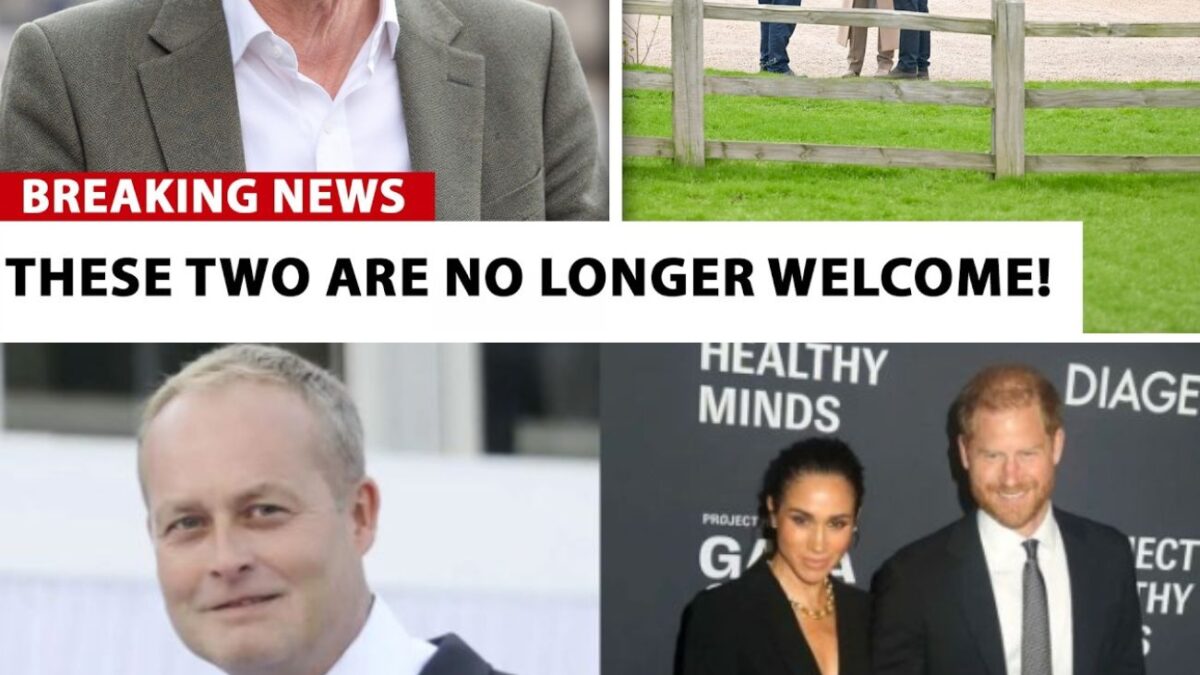
Billionaire Ian Wace ‘EVICTS’ Harry and Meghan? Prince William’s Alleged Final Break Could Change Everything!

The relationship between Prince Harry, Meghan Markle, and the British establishment has always been complicated. Yet a sensational account circulating in royal commentary has introduced another name into the controversy: billionaire financier Ian Wace. According to the narrative, an arrangement involving private accommodation, luxury travel, and an influential friendship allegedly unravelled after concerns about privacy and Prince William’s relationship with his younger brother came to a head.
If the claims are accurate, the story would represent more than an uncomfortable disagreement between guests and a wealthy host. It would raise questions about trust, discretion, and whether Harry’s remaining connections to Britain’s most influential circles could withstand another public controversy.
However, the allegations have not been independently established, and the details should be treated with caution.
An Unusual Connection Behind the Alleged Arrangement
The account portrays Wace as a wealthy businessman who values privacy and prefers to remain outside the glare of celebrity culture. Rather than presenting him as another socialite eager to associate with famous people, it describes a financier whose influence comes from business relationships and discretion.
According to the script, Harry and Meghan were said to have enjoyed access to a substantial countryside property, private flights, and an island retreat in Scotland. The arrangement was allegedly connected less to a personal friendship with the couple than to Wace’s longstanding relationship with Prince William.
That distinction forms the foundation of the entire story.
The narrative suggests Harry may have approached the billionaire by invoking his brother’s name and the possibility of easing tensions within the royal family. In this version of events, hospitality became connected to the hope that an old relationship might eventually help repair a damaged family bond.
There is no independently verified evidence presented in the supplied material to establish that this conversation took place or that Wace provided the reported benefits under those circumstances.
Nevertheless, the allegation introduces an uncomfortable question: what happens when a private favour becomes entangled with a public family dispute?
For someone who values discretion, even the perception of being drawn into a royal controversy could be enough to make an arrangement difficult to maintain.
The Personal Tragedy at the Heart of the Claims
The most emotionally charged part of the story concerns the tragedies the two men allegedly experienced in 1997.
Prince Harry lost his mother, Princess Diana, in August of that year. The supplied script also claims that Wace suffered the loss of his first wife and two children in a car accident during the same period.
It further alleges that Harry referred to these painful experiences when approaching the financier, presenting the proposed arrangement as an opportunity to protect William from further controversy and perhaps encourage reconciliation.
Such a conversation, if it occurred as described, would have carried extraordinary emotional weight. Shared grief can create a powerful sense of understanding between people, particularly when a loss has shaped their lives for decades.
Yet the claim that Harry deliberately used another person’s tragedy to obtain hospitality is serious and remains unsubstantiated by the material provided. It would be unfair to treat an alleged private conversation as proof of manipulation without reliable corroboration.
The larger point is that the narrative places emotional loyalty at the centre of the alleged agreement. Rather than depicting the arrangement as a straightforward business or social decision, it suggests that personal history and family ties influenced the choices involved.
That interpretation sets the stage for the alleged breakdown.
Warnings, Guests, and Growing Tensions
The script also introduces Saffron Aldridge, described as Wace’s former wife and a former supermodel. It claims that she had previously hosted Harry and Meghan and warned against inviting the couple into another private residence.
According to the account, Aldridge allegedly considered Meghan a difficult guest and expressed concerns about how staff might be treated. The narrative presents those supposed warnings as an early indication that the arrangement could become uncomfortable.
These descriptions have not been independently substantiated. They should not be mistaken for verified quotations or confirmed accounts from the people involved.
Still, the story uses them to establish a contrast between two competing expectations. One side is portrayed as seeking a comfortable base while spending time in Britain; the other is depicted as expecting a quiet household where boundaries, privacy, and established routines are respected.
The script alleges that Harry subsequently spent time away from the property while Meghan remained there with members of her wider circle, including people identified as Kelly and Marcus Anderson.
It portrays the presence of additional guests as a source of tension, particularly because the estate was allegedly intended to remain private.
If an arrangement really existed under those circumstances, the practical questions would have been straightforward: who was authorised to stay, what rules applied, and how much privacy could reasonably be expected?
Without independent confirmation, however, the claims about unauthorised visitors and staff disputes remain allegations rather than established facts.
The Instagram Video That Allegedly Changed Everything
The most dramatic turning point in the supplied script is a short Instagram video.
According to the narrative, Meghan shared footage of children walking through a misty landscape, with deer, a lake, mature trees, and part of a large country property appearing in the background. Online users allegedly compared the scenery with satellite imagery and attempted to identify the location.
The script claims that a subsequent video showed a private kitchen and a luxury cooker said to be worth approximately $20,000.
These details form the basis of the accusation that a private residence may have been exposed through lifestyle content.
The distinction between sharing a beautiful setting and revealing sensitive information is important. Images can sometimes disclose more than their creators intend, particularly when identifiable landmarks, windows, driveways, or landscape features appear in the background.
For any private estate hosting prominent visitors, the possible consequences could include unwanted attention, trespassing concerns, and additional security measures.
But the supplied script does not independently establish that the videos revealed Wace’s address, that the location was accurately identified, or that any security incident followed.
Nor does it establish that the alleged filming was the reason a host decided to end an arrangement.
The controversy nevertheless raises a broader question about modern celebrity culture: where should the boundary lie between personal branding and another person’s right to privacy?
For influencers and public figures, a home can become part of a carefully curated image. For a private property owner, the same location may represent a sanctuary intended to remain completely outside public view.
Those expectations can conflict, even without deliberate wrongdoing.
Prince William’s Position Becomes Central
The next major development in the script concerns Prince William.
The narrative refers to a report attributed to the Daily Mirror’s royal coverage and journalist Russell Myers, claiming that William had no intention of resuming contact with Harry. It presents the alleged position as decisive, leaving no meaningful possibility of reconciliation through mutual acquaintances.
The supplied material does not establish the exact report, its wording, or whether the claims attributed to people close to William accurately reflect his current position.
Nevertheless, William’s role is essential to the story’s central argument.
If Wace had genuinely offered assistance partly because he hoped to preserve a connection between the brothers, evidence that reconciliation was unlikely could have changed his understanding of the arrangement. What began as an act of goodwill might then have appeared to serve no purpose beyond providing accommodation and convenience.
That is the turning point imagined by the narrative.
It suggests that the alleged arrangement depended on an expectation that Harry’s relationship with William might eventually improve. If that expectation disappeared, the reason for continuing the arrangement would also disappear.
But a family relationship is not a commercial contract, and an outside observer cannot know the motives behind private decisions without credible evidence.
Any claim that William personally authorised, encouraged, or directly caused an alleged eviction would therefore require separate verification.
The Alleged Request to Leave
According to the script, Wace eventually decided that the Sussexes should leave the property. Rather than staging a confrontation, he allegedly communicated his decision through intermediaries and gave them until the end of the month to vacate the cottage.
The narrative also attributes a pointed remark to the financier, supposedly directing Harry to ask his wife about filming in the kitchen.
If authentic, such a message would suggest that the dispute centred on privacy and trust rather than a dramatic argument.
The script claims that representatives connected with Harry and Meghan subsequently presented their departure as part of a voluntary search for a substantial country home, allegedly valued at around £10 million and containing nine bedrooms.
That account, too, requires verification. The supplied material does not provide a confirmed statement from the couple or documentary evidence establishing either the alleged eviction or the property search.
Consequently, it would be premature to conclude that the couple were expelled, that they misrepresented their plans, or that the two events were connected.
The contrast between the competing versions is nevertheless central to the controversy. One portrays a host withdrawing an invitation after an alleged breach of confidence. The other presents a departure as an ordinary step towards finding a permanent residence.
Without reliable evidence, neither interpretation should be treated as the definitive explanation.
Wealth, Reputation, and the Cost of Losing Trust
The script goes further, connecting the alleged dispute to the Sussexes’ wider relationships with wealthy supporters and entertainment industry figures.
It references Tyler Perry, who provided assistance to Harry and Meghan during their early period in the United States, and suggests that other influential relationships may have become less close over time.
However, the narrative does not provide sufficient evidence to establish a pattern of falling-outs or to demonstrate that any particular friendship ended because of the reasons it alleges.
Its broader argument concerns the importance of discretion among wealthy and influential people.
In private social circles, access often depends on confidence that personal spaces will remain private. A guest may receive extraordinary hospitality, but that privilege does not automatically include permission to publicise every detail of the experience.
The same principle applies to ordinary friendships, professional relationships, and family visits. Trust is built gradually, while a perceived breach can change a relationship almost overnight.
For public figures, the stakes can be especially high because ordinary decisions become subjects of speculation, headlines, and competing narratives.
Yet reputation can also be damaged by unverified accusations. That is why allegations about hospitality, staff treatment, private conversations, and family disagreements deserve careful scrutiny before they are repeated as fact.
What This Story Really Reveals
At its heart, the supplied account is about the fragile relationship between influence and access.
Harry and Meghan have sought to establish an independent identity beyond their former roles within the royal household. That independence has brought opportunities, but it has also placed their relationships with British institutions and influential acquaintances under intense public examination.
Prince William, meanwhile, occupies a different position within the monarchy and has responsibilities that cannot simply be reduced to his personal relationship with his brother.
The suggestion that a billionaire’s hospitality depended on the possibility of reconciliation makes for a compelling narrative. It transforms an alleged accommodation dispute into a story about family loyalty, social standing, and the limits of goodwill.
But compelling storytelling is not the same as proof.
Until the central claims are supported by reliable reporting or statements from the people involved, the alleged eviction, the supposed Instagram-related security concerns, and the reported finality of William’s position should remain matters of speculation.
What can be said with confidence is that privacy and trust are difficult to restore once relationships become entangled with public controversy. Even a brief video, an ambiguous statement, or an unverified rumour can generate a story far larger than the original event.
For now, the question is not simply whether Ian Wace turned Harry and Meghan away. It is whether the dramatic account circulating about their supposed relationship accurately reflects what happened at all.
That distinction matters, especially when the people at the centre of the story have spent years navigating the difficult boundary between private life and public attention.
And until credible evidence clarifies the facts, the most consequential chapter of this alleged royal controversy remains unwritten.








