“DO NOT TOUCH MY BROTHER!” Princess Charlotte’s Dramatic Stand for Prince Louis Leaves the Royal Family Facing Difficult Questions
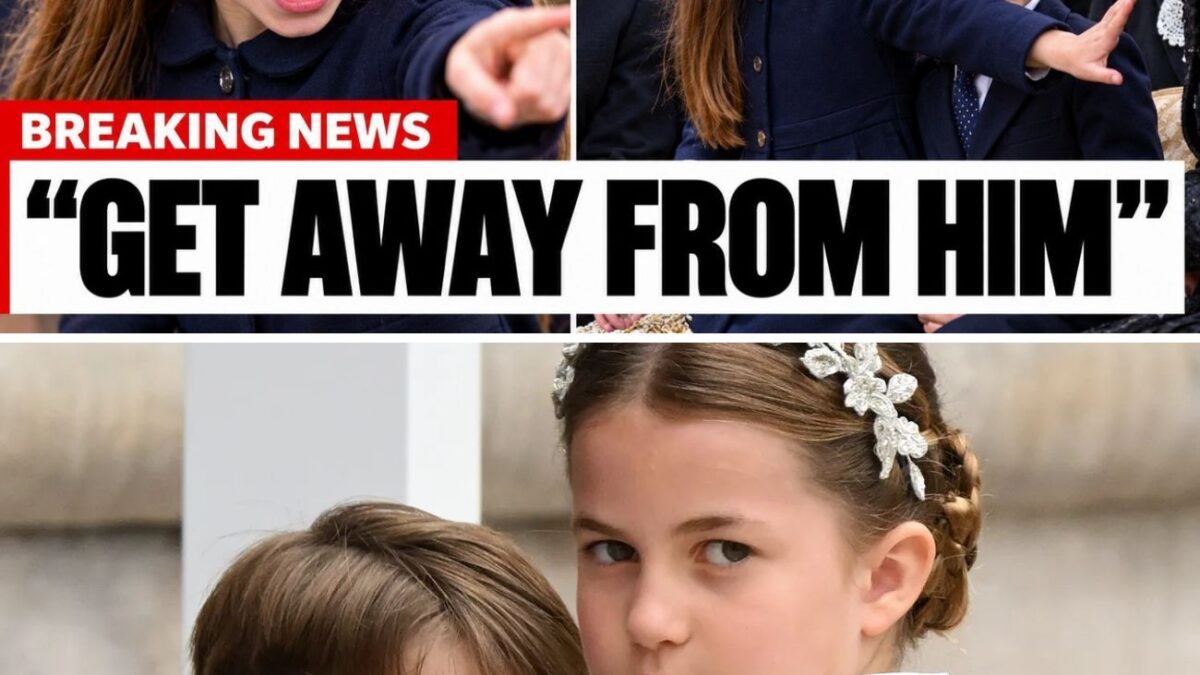
“DO NOT TOUCH MY BROTHER!” Princess Charlotte’s Dramatic Stand for Prince Louis Leaves the Royal Family Facing Difficult Questions
The atmosphere inside St. George’s Chapel at Windsor Castle was supposed to be one of solemnity and quiet reflection. King Charles and Queen Camilla had gathered with Prince William, Catherine, and their children for a formal Thanksgiving service. Every detail had been carefully arranged, from the order of the procession to the places where family members were expected to stand. Yet, in this imagined royal drama, one seemingly insignificant change threatened to overshadow the entire occasion.
Princess Charlotte stood beside her younger brother, Prince Louis, watching the adults move through the ceremony. She understood that formal events demanded patience and good manners. What she did not expect was to see her brother become visibly uncomfortable when Laura Lopes approached him.
Laura believed she was helping with the arrangements. She reached toward Louis’s shoulder, apparently intending to guide him to another position. Louis pulled back.
Charlotte reacted immediately.
“Do not touch my brother!”
Her words cut through the carefully maintained calm. For several seconds, nobody moved. Laura froze, while Charlotte tightened her grip on Louis’s hand. The young prince retreated behind his sister, his expression revealing a distress that startled the adults around them.
For William, the moment created an uncomfortable choice. He was a father watching his son become frightened, but he was also a senior member of a family accustomed to having every public gesture scrutinised. He could not allow appearances to take priority over his children’s well-being.
He moved closer.
“Let us understand what has happened,” he said firmly.
A child’s fear changes everything
Laura looked shocked by Charlotte’s response. She had not intended to frighten Louis, she explained. She believed the children were supposed to change positions during the service and thought she was simply following instructions.
But William had heard nothing about such a change. Neither had Catherine.
Across the chapel, Queen Camilla recalled an earlier discussion concerning the seating arrangements. What had sounded like a minor administrative adjustment now appeared to have reached the children without their parents’ knowledge.
King Charles recognised the danger of allowing confusion to become a family confrontation. He wanted an explanation before anyone made accusations, but Catherine’s attention remained fixed on Louis.
After the service, she knelt beside her son and gently asked why he had moved away from Laura.
At first, Louis struggled to explain. Charlotte stayed beside him, giving him time to find the words. Eventually, he admitted that someone had told him he might have to stand apart from his sister.
He had been worried about losing the person who made the unfamiliar ceremony feel manageable.
Catherine felt a pang of concern. Neither she nor William had approved any arrangement that would separate the children. When Louis explained that the conversation had happened before they entered the chapel, the family realised that the confrontation had begun long before Charlotte raised her voice.
The mistake behind the confrontation
Earlier that morning, Laura had received what she believed were the latest instructions for the ceremony. According to the fictional account, however, two versions of the seating plan were circulating among those helping organise the event.
One was an early draft. The other contained the final approved arrangement.
The difference mattered. The preliminary document suggested that Charlotte and Louis might briefly be separated during the procession, while the final version kept them together.
Laura had not realised that the original plan had been replaced.
When she spoke to Louis before the service, she explained that he might need to move away from his sister. To an adult, the instruction seemed straightforward. To a young child already anxious about making a mistake in front of a crowd, it sounded like something he had no choice but to obey.
Louis asked whether Charlotte could come with him.
Laura, believing the earlier instructions were still valid, answered too quickly. The arrangements had to be respected, she told him.
The conversation left Louis unsettled. When Charlotte later noticed his grip tightening around her hand, she remembered promising that they would stay together. Her warning in the chapel was not an attempt to embarrass an adult. In her mind, she was keeping that promise.
A ceremonial coordinator eventually confirmed the administrative error. The outdated document had not been withdrawn after the final arrangement was approved.
The discovery changed the nature of the dispute. Laura had not necessarily intended to disregard the children’s wishes; she had been acting on incorrect information. But the explanation did not erase Louis’s fear or answer the question of why his discomfort had not been recognised sooner.
William demands accountability
William listened carefully as the details emerged. He accepted that Laura had misunderstood the instructions, but he refused to let the conversation become solely about defending adult intentions.
“When Louis said he wanted to stay with his sister, why did nobody stop and listen?” he asked.
The question left Laura struggling to respond.
She could explain the document and the confusion surrounding the arrangements. What she found harder to explain was why she had continued when the boy was visibly uncomfortable.
Camilla wanted her daughter treated fairly. She knew Laura had not entered the chapel intending to upset a child, and she feared that one mistake could turn into a lasting accusation.
William understood her concern, but protecting Laura from unfair blame could not mean dismissing Louis’s experience.
King Charles reviewed both versions of the seating plan before making a decision. Any future change involving the children would have to be confirmed directly with William and Catherine. Staff would also be required to ensure that outdated instructions were withdrawn before an official event.
Laura would not be condemned for receiving the wrong document, but the boundary was clear: no ceremonial arrangement could override the children’s parents or justify ignoring a child who was visibly distressed.
The ruling settled the practical issue. The emotional consequences were more complicated.
Charlotte wonders whether she did the wrong thing
Later, Charlotte remained unusually quiet. She eventually asked Catherine whether speaking so firmly to Laura had made her a bad princess.
Her mother reassured her that protecting her brother was not wrong. Charlotte could learn to express herself calmly, Catherine explained, but she should never believe that good manners required her to remain silent when someone she loved was frightened.
At the same time, William reminded his daughter that keeping Louis safe was not a responsibility she had to carry alone. Parents and trusted adults were there to help.
Louis, meanwhile, surprised his father by making a simple request. He did not want Laura punished. He wanted adults to stop when he said he was uncomfortable.
His words shifted William’s anger into sadness. His son was not asking for revenge or special treatment. He was asking to be heard.
An apology without demands
Camilla eventually recognised that defending her daughter was not enough. Laura needed to acknowledge what had happened without insisting that her intentions should settle the matter.
A private conversation was arranged only after Catherine asked whether the children wanted one. Charlotte and Louis agreed on one condition: they would remain together.
Laura entered without the seating documents she had previously relied upon. She admitted that she had misunderstood the arrangements and had continued speaking when Louis needed reassurance.
She apologised to him for making him feel that he had no choice. Then she turned to Charlotte and acknowledged that the girl had been trying to protect her brother.
Charlotte listened quietly.
“I just didn’t want him to be scared,” she whispered.
For the first time, Laura understood the moment from the children’s perspective. Her intentions might have been harmless, but the impact had still been painful. She did not demand immediate forgiveness, and neither child was pressured to offer it.
Louis gradually relaxed beside his sister. The adults began to understand that repairing trust required more than correcting paperwork.
The lesson behind the royal drama
In the fictional aftermath, speculation begins to grow around the chapel confrontation. Some observers praise Charlotte’s courage, while others question the pressure placed on royal children during formal occasions. William and Catherine choose restraint, refusing to turn Louis’s distress into a public spectacle.
The family’s eventual clarification is simple: an outdated instruction caused confusion, the matter has been addressed privately, and the children deserve their privacy.
The most important moment is not Charlotte’s raised voice, Laura’s embarrassment, or the king’s decision. It is the moment the adults stop defending themselves long enough to listen.
Charlotte learns that courage does not mean carrying every burden alone. Louis learns that his discomfort deserves attention. Laura learns that good intentions do not remove the need to respect boundaries.
And the family learns that protocol can organise a ceremony, but it cannot replace compassion.
In the end, Charlotte needs no royal decree to understand why she stepped forward. She sees her brother reaching for her hand and stays beside him.
Sometimes, the most meaningful act of protection is also the simplest: listening when someone says they are afraid.








