“DO NOT TOUCH MY BROTHER!” Princess Charlotte’s Explosive Abbey Moment Leaves Camilla’s Family Stunned
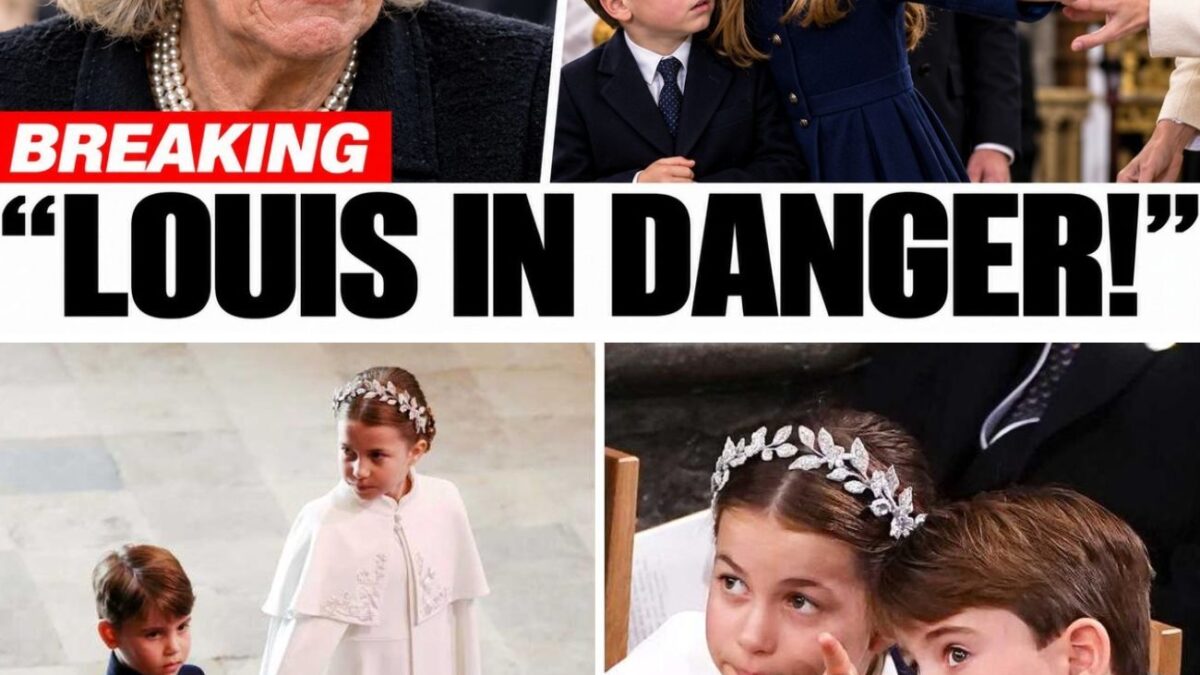
“DO NOT TOUCH MY BROTHER!” Princess Charlotte’s Explosive Abbey Moment Leaves Camilla’s Family Stunned
Westminster Abbey has witnessed coronations, royal weddings, solemn prayers, and moments that shaped British history. In this imagined royal drama, however, the most unforgettable moment of a family thanksgiving service begins with a child taking one small step forward—and refusing to move.
Prince Louis stands uncertainly near his sister, Princess Charlotte, as Laura Lopes approaches him during a change in seating arrangements. Laura believes the young prince needs assistance. But when Louis steps backward, Charlotte notices his discomfort and immediately places herself between them.
“Do not touch my brother!”
Her words cut through the quiet atmosphere. Conversations stop. Catherine, Princess of Wales, turns toward her children, while Prince William moves forward to understand what has happened. Across the gathering, Queen Camilla is left struggling to comprehend how an apparently innocent gesture has become such a painful family confrontation.
In this fictional account, nobody expected Charlotte to become the centre of attention. Yet her reaction exposes a disagreement that began days before the service.
An Innocent Gesture Becomes a Family Crisis
King Charles has gathered his family at Westminster Abbey for a thanksgiving service intended to celebrate unity and gratitude. Every detail has been carefully arranged, particularly the movements and seating of the younger royals.
Charlotte has always been protective of Louis. She knows that formal occasions can overwhelm her younger brother, and she has learned to recognise the small signs that he needs reassurance. When Laura reaches toward him, Charlotte believes she sees precisely such a moment.
Laura, meanwhile, insists that she is only trying to help the boy find his place. She does not understand why Charlotte reacts so strongly.
“He doesn’t want to go,” the young princess repeats.
Catherine hurries toward her children. William asks Louis what happened, but the little prince instinctively moves closer to Charlotte rather than returning to his seat. His father notices immediately.
For William, the most important detail is not the interruption of a solemn service. It is his son’s apparent discomfort.
Camilla wants to defend Laura, her daughter from her first marriage. She believes Laura never intended to frighten Louis and cannot understand why her attempt at assistance has been interpreted so negatively. Yet Catherine is equally determined that her children’s wishes must be respected.
The disagreement places the two women in an uncomfortable position. Both care deeply about their families, but their understanding of what happened is very different.
Princess Anne, Charles’s sister, observes the tension without rushing to blame anyone. She remembers that concerns about approaching the children without consulting their parents had already been raised. Suddenly, a seemingly minor misunderstanding appears connected to a more serious failure of communication.
The Warning Nobody Took Seriously
Three days earlier, Catherine had discussed the seating arrangements for the service. In this imagined story, she wanted Louis to remain beside Charlotte, with any changes coordinated through the children’s parents or designated attendants.
The arrangement was straightforward. Familiarity would help Louis feel secure, while clear instructions would prevent confusion during the ceremony.
Laura, however, understood a later conversation differently. After speaking privately with Camilla, she believed that helping younger relatives find their places would be welcomed as a family gesture.
Neither woman had received explicit permission to move Louis.
Catherine had also explained that unexpected changes could unsettle her son. Laura responded that children sometimes needed to accept assistance from relatives. Although Laura did not intend to dismiss Catherine’s concerns, the exchange left the Princess of Wales feeling that her instructions had not been fully understood.
Camilla interpreted the boundaries differently. To her, the careful arrangements seemed to suggest that her side of the family was not trusted around William and Catherine’s children.
King Charles listened to his wife’s concerns but reminded her that affection and parental authority were not the same thing. Family members could offer help, he explained, but they could not assume permission.
The issue was never properly settled.
Now, inside Westminster Abbey, Louis has stepped away from Laura, and Charlotte has intervened. William realises that the earlier discussion must be addressed before resentment spreads throughout the family.
William Demands an Explanation
Later, William joins Catherine, Charles, Camilla, and Laura for a private conversation. He is determined to understand what happened without turning the disagreement into a public humiliation.
He places the seating note on the table.
“Why did you reach for him after he stepped back?” he asks Laura.
She explains that she thought Louis was unsure where to stand and needed guidance. She had believed the family arrangements allowed her to help.
“He knew where he was supposed to be,” William replies. “He was staying with Charlotte.”
Laura admits that she did not check with Catherine before approaching him. She insists that she never intended to frighten the boy.
Catherine does not accuse Laura of deliberate cruelty. Instead, she makes the point that matters most to her: Louis had shown discomfort, and the adults had failed to recognise it quickly enough.
Camilla falls silent. She wants her daughter to be treated fairly, but she cannot ignore the possibility that Laura misunderstood the situation.
Charles asks who authorised the change in arrangements. Nobody can provide a clear answer. There had been a suggestion, but no confirmed instruction.
The king recognises the distinction immediately. A well-meaning gesture can still become intrusive when someone has not agreed to it.
William’s anger begins to give way to something more focused. He does not want Laura punished, nor does he want the family divided by a single mistake.
“I want my children listened to,” he tells his father.
That, he explains, is the entire point.
Charlotte Wonders Whether She Did Something Wrong
While the adults discuss responsibility, Catherine takes Charlotte and Louis somewhere quiet. She kneels beside her son and asks whether he is all right.
Louis explains that he only wanted to remain beside his sister. His answer confirms what Charlotte suspected, but the young princess is troubled by how loudly she spoke.
“Was I wrong to say it?” she asks her mother.
Catherine takes her hand. She reassures Charlotte that she was right to raise a concern when her brother appeared uncomfortable. Speaking up does not mean she has to manage every difficult situation herself, however. If something happens again, she can seek help from a trusted adult.
Louis thanks his sister for staying close to him. The simple exchange eases some of Charlotte’s anxiety.
Meanwhile, Camilla speaks privately with Laura. Her daughter is embarrassed and fears that everyone will assume she deliberately frightened Louis.
Camilla asks whether she noticed him moving away.
After a long pause, Laura admits that she did. She simply assumed he was confused about where to stand.
For the first time, she begins to understand why Charlotte reacted so quickly. Her intention may have been kind, but she had overlooked the child’s response.
A Rule That Protects Everyone
Charles eventually agrees to a practical solution. Future arrangements involving the children must be clearly communicated, and any changes to their supervision must be approved by their parents.
Relatives can offer assistance, but they must not assume that permission has already been granted.
Princess Anne supports the decision, adding that dignity cannot depend on silence alone. Laura deserves an opportunity to apologise, while Charlotte and Louis deserve an honest acknowledgement that their discomfort mattered.
The solution changes no titles and removes no privileges. Instead, it establishes a boundary intended to prevent the same misunderstanding from happening again.
Laura later approaches Louis with an apology.
“I’m sorry I reached toward you when you wanted to stay with your sister,” she tells him. “I thought you needed help, but I misunderstood.”
Louis hesitates before answering. “I didn’t want to move.”
“I should have listened,” Laura replies.
She then apologises to Charlotte for making her feel responsible for protecting her brother when an adult should have recognised his discomfort.
Camilla also speaks privately with Catherine, acknowledging that her own assumptions contributed to the confusion. Catherine accepts her words while making clear that the children should never be pressured to revisit the incident before they feel ready.
The Lesson Behind the Abbey Drama
In this imagined account, the confrontation at Westminster Abbey ends without punishment, public accusations, or a dramatic royal separation. The family instead learns a difficult lesson about listening, responsibility, and the limits of good intentions.
William and Catherine want their children to feel safe expressing discomfort. Camilla wants Laura to be treated fairly. Charles must balance the feelings of his wife, his son, and his grandchildren without allowing a private disagreement to become a lasting division.
Charlotte never intended to create a royal scandal. She wanted her younger brother to feel safe.
That evening, Louis sits beside her before bedtime.
“Thank you for staying with me,” he whispers.
Charlotte smiles and reminds him that they can always ask their parents for help if something feels wrong.
Westminster Abbey remains a symbol of royal tradition and ceremony. But in this fictional story, the moment that matters most has nothing to do with rank, titles, or protocol.
It is the moment when the adults finally understand what the children were trying to tell them: kindness must include listening, and family affection does not remove the need to respect boundaries.
Sometimes, the most powerful words in a royal household are not spoken by a king or queen. Sometimes, they come from a young sister who simply refuses to let her brother’s voice go unheard.








