“ENOUGH, CAMILLA!” King Charles Erupts After Queen Allegedly Humiliates Catherine in Front of Royal Guests
“ENOUGH, CAMILLA!” The Fictional Windsor Confrontation That Leaves the Royal Family Facing an Uncomfortable Reckoning
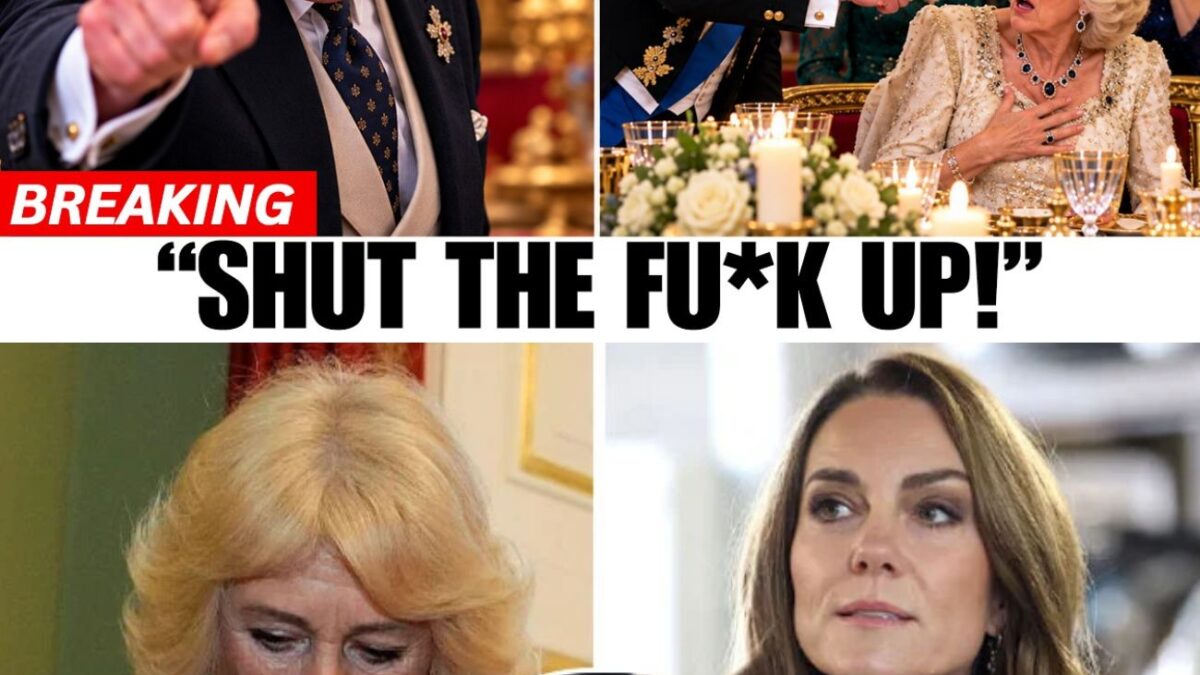
The atmosphere inside Windsor Castle changed in an instant. What had begun as an elegant reception supporting vulnerable children suddenly became the setting for a deeply personal confrontation. Queen Camilla had directed a cutting remark at Catherine, Princess of Wales, in front of invited guests, and the silence that followed was almost unbearable. Then King Charles III put down his glass, looked directly at his wife, and delivered a warning that nobody in the room had expected.
“Enough, Camilla. You will not humiliate Catherine in front of my guests.”
In the fictional account, those words transformed an uncomfortable disagreement into a defining family crisis. Prince William moved closer to Catherine, while the guests stood frozen, uncertain whether they had just witnessed an argument or the beginning of a much deeper royal rift.
A charity reception takes an unexpected turn
The evening had been organized to support children and families facing difficult circumstances. Representatives from charitable organizations, benefactors, and senior palace officials had gathered at Windsor to hear about an initiative intended to protect vulnerable young people. Catherine was presenting the project, a responsibility that reflected her commitment to family welfare and her growing role within the royal household.
William stood beside his wife, visibly supportive, while Charles welcomed guests and thanked those contributing to the cause. Camilla appeared composed as she greeted attendees, but beneath that polished exterior, the story suggests, she had been carrying a grievance for days.
She believed Catherine’s growing influence was changing the balance of authority within the household. A disagreement over the reception’s arrangements had convinced her that the Princess of Wales was becoming too comfortable making decisions that affected other members of the family.
When several guests gathered near the center of the room, Camilla finally confronted Catherine. Her initial remarks concerned the seating plan and the recognition given to particular family members. She questioned why certain people had not been placed closer to the principal royal party and suggested that Catherine had deliberately pushed them aside.
Catherine attempted to explain that the arrangements reflected official responsibilities and the needs of the charity. Camilla interrupted her.
“You may believe that being the future queen gives you the right to decide who matters in this family,” she declared. “But you should remember that you are not the only person who belongs here.”
Conversation stopped. Every nearby guest could hear the accusation, and Catherine suddenly found herself at the center of a confrontation she had neither planned nor wanted.
Rather than retaliating, she explained calmly that the reception was intended to support vulnerable children, not settle private family disagreements. The seating plan, she emphasized, reflected the roles assigned to the event. She even offered to review the arrangements with Camilla privately after the reception.
But Camilla was no longer interested in an explanation. The disagreement had become personal, and the audience made the moment even more damaging.
Charles draws a line
William appeared ready to respond, but Charles spoke first. His anger was unmistakable.
“Being my wife does not give you permission to treat another member of this family without respect,” the king continued. “If you have a disagreement with her, discuss it privately. This event is not an opportunity to attack my son’s wife.”
Camilla looked stunned. According to the story, she had expected Charles to remain silent or quietly redirect the conversation. Instead, he had challenged her in front of the same guests she had hoped would understand her position.
Catherine remained composed, although the confrontation had clearly affected her. William moved closer, offering silent support. The king then turned his attention back to the reception, attempting to restore the atmosphere and keep the charitable initiative from being overshadowed completely.
Yet Charles could not put the incident aside. Why had Camilla chosen that particular evening to challenge Catherine so publicly? And why had a disagreement about seating arrangements become so explosive?
Within the hour, a senior event coordinator reportedly approached him with an account of what had happened earlier that afternoon. Camilla had requested changes to the seating plan and questioned Catherine’s authority to approve the final guest list. The coordinator explained that the plan had already been confirmed and that changing it would disrupt the event.
Camilla had reportedly been dissatisfied with that response.
Charles instructed his private secretary to retrieve the correspondence concerning the planning meetings. He wanted to establish whether Catherine had acted unfairly or whether a manageable disagreement had been allowed to grow into a public confrontation.
The meeting that changed everything
The roots of the dispute, the fictional narrative reveals, stretched back ten days to a planning meeting at Clarence House.
Catherine had met Camilla and several charity organizers to finalize the guest list, seating arrangements, and official responsibilities. During the discussion, Camilla requested that several relatives and personal guests receive more prominent positions near the principal royal party, together with formal recognition during the reception.
Catherine listened before explaining that certain positions were reserved for working royals and designated charity representatives. Family members would remain welcome, she said, but official responsibilities could not be reassigned simply to satisfy someone’s wish for greater prominence.
Every role, she reminded the group, carried obligations to the charity’s beneficiaries. The occasion was not simply an opportunity to honor individuals.
The organizers supported her explanation, which was consistent with the event’s stated purpose. Camilla, however, interpreted the decision as a personal rejection. Instead of explaining her feelings or asking Catherine to clarify the arrangements, she left the meeting believing that her position within the family was being diminished.
Over the following days, resentment grew. By the time the reception arrived, she had convinced herself that remaining silent would make her appear weak.
When Charles reviewed the correspondence, the documents reportedly supported Catherine’s account. The arrangements had been discussed openly, responsibilities had been explained, and the final plan had been approved in advance. Nothing in the records established that Catherine had deliberately sought to humiliate Camilla.
The king now faced an uncomfortable choice: protect the appearance of family unity by ignoring his wife’s behavior, or insist that the confrontation be addressed honestly.
A private meeting and an overdue apology
The following morning, Charles summoned Camilla, Catherine, and William to a private meeting at Windsor. He began by reminding them that the reception had been organized for vulnerable children. Instead, a family disagreement had threatened to eclipse the very people the event was meant to help.
Camilla defended her frustration, explaining that she felt increasingly overlooked as Catherine’s responsibilities expanded. Catherine listened without interruption before responding that she had never intended to make Camilla feel unwelcome.
“The arrangements were about the event, not about your value as a member of this family,” Catherine explained. “You could have spoken to me privately. Instead, you chose to make an accusation in front of people who had no understanding of what had happened between us.”
William then addressed Camilla directly. Watching his wife being humiliated, he said, had been painful, particularly because Catherine had chosen not to answer hostility with hostility. He was not demanding that Camilla agree with every decision. He was asking her to treat his wife with the respect she expected from others.
Charles agreed. His decision was clear: Camilla should apologize privately, future disagreements about official events should follow the established planning process, and nobody should receive special treatment simply because of a family connection.
Later that day, Camilla approached Catherine without guests, cameras, or other relatives watching. After a long silence, she acknowledged her mistake.
“I was angry about the arrangements,” she admitted, “but I should never have spoken to you that way in front of everyone.”
Catherine accepted the apology as a beginning, not an erasure of what had happened. If their relationship was to improve, both women would need to speak honestly before resentment hardened into another confrontation.
A lesson in power, pride, and restraint
Several days later, Charles arranged a private family lunch at Windsor. William attended beside Catherine, and Camilla joined them after speaking with her husband. There were no photographers or formal speeches, only a family attempting to move forward.
Camilla repeated her apology without blaming the seating plan. Catherine thanked her for acknowledging the harm. William remained cautious, but he recognized that accepting responsibility was a meaningful first step.
Then Charles surprised everyone by admitting that he, too, had something to learn.
He had been right to stop the public attack, he explained, but his anger could have caused additional pain. As king, his words carried unusual weight, and authority required restraint as well as firmness.
The incident was not magically erased. Trust could not be restored through a single conversation, and the family’s underlying tensions would not disappear overnight. Nevertheless, the gathering ended with a clearer understanding of the boundaries they needed to respect.
Most importantly, the charity’s work continued. The children and families the reception had been organized to support received the attention and assistance they needed, rather than being forgotten beneath a family scandal.
The fictional Windsor confrontation ultimately raises a question that reaches beyond royal titles and palace protocol: when does the desire to be heard become an excuse to hurt someone else?
Camilla’s frustration may have felt genuine, but it did not justify public humiliation. Catherine’s restraint demonstrated that dignity does not require answering every insult. William’s support showed the importance of standing beside a loved one without escalating every conflict. And Charles’s response illustrated that leadership involves not only setting boundaries but also recognizing the consequences of one’s own anger.
Would a private conversation have prevented the confrontation altogether? Could an apology genuinely repair the damage? Or had the moment exposed tensions that had been building for far longer than anyone wished to admit?
Those questions remain at the heart of this fictional royal drama—and they are reminders that even the most powerful families cannot escape the ordinary human need for respect, honesty, and forgiveness.








