HARRY AND WILLIAM MAKE HEADLINES ON THE SAME DAY! King Charles’s Private Warning Could Change the Royal Rivalry Forever
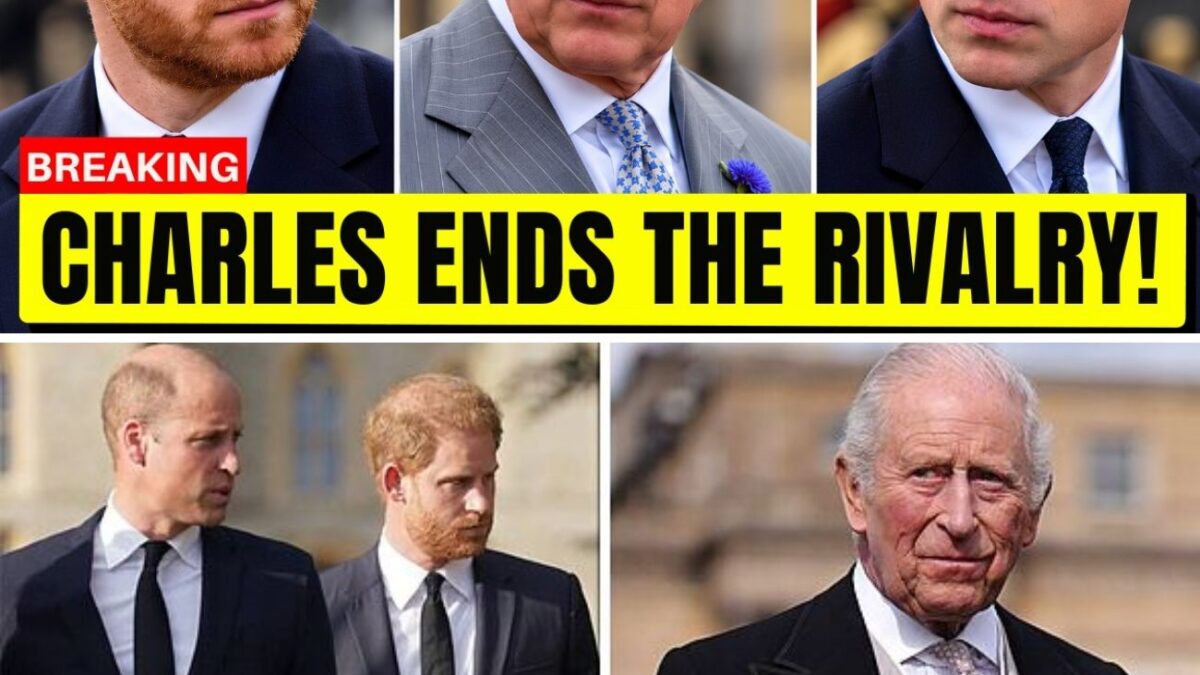
Harry and William Make Headlines on the Same Day — King Charles’s Private Warning Could Change Everything
The same day, two princes stepped into the public eye, and once again, the world began comparing them.
Prince Harry was in London for the Invictus Spirit Awards, an event connected to a cause that had become deeply personal to him. Thousands of miles of emotional distance, years of family disagreements, and a new life outside the working monarchy had not erased his commitment to wounded veterans. When he appeared before the audience, he seemed comfortable, animated, and entirely at home.
Meanwhile, Prince William and Catherine were carrying out royal duties in Scotland. Their appearance was quieter and more formal, reflecting the responsibilities William had gradually assumed since King Charles became monarch. Catherine stood beside her husband with her familiar composure, while William increasingly looked like a man preparing not merely for a future role, but for the weight of a crown he would one day inherit.
Both brothers had reasons to feel satisfied with their day. Yet, in this fictional royal story, their simultaneous appearances created a problem for their father.
To the public, it was another opportunity to ask the same questions. Who connected more naturally with people? Who had moved forward? Who still mattered most to the monarchy? And could two brothers succeed independently without being turned into rivals?
King Charles had watched this pattern repeat itself for years. Now he feared that even when Harry and William were not speaking to one another, the comparison surrounding them could continue to damage their relationship.
A king grows tired of the rivalry
That evening, Charles requested a private briefing on both events. His staff expected him to ask about attendance, press coverage, and public reaction. Instead, he posed a surprisingly simple question.
“How are they being compared?”
The answer confirmed his concerns. Commentators were already presenting the day as a contest between two different royal worlds: Harry representing Invictus and charitable work outside the institution, while William and Catherine embodied the future of the working monarchy.
Old photographs of the brothers resurfaced. Familiar arguments returned. Every successful appearance seemed to become evidence in an imaginary competition.
Charles listened without interrupting.
Camilla noticed his mood and sat beside him. She understood that his concern was not simply about headlines. He was thinking about his sons.
Charles explained that he wanted Harry to succeed. He wanted William to succeed, too. What troubled him was the way one brother’s achievements were continually measured against the other’s.
Harry could appear in public, and people immediately wondered what William thought. William could take on additional responsibilities, and the conversation turned toward what Harry had supposedly lost.
The brothers did not even have to meet for the rivalry to remain alive.
“What are you going to do?” Camilla asked.
Charles paused before answering.
“Something they will both dislike.”
The following morning, William received a request to meet his father. He suspected Harry would be part of the conversation before he even arrived.
William receives an unexpected warning
When William entered the room, Charles wasted little time.
“Yesterday was good for both of you,” the king told him.
William frowned. “Both of us? You mean Harry?”
“Yes. You and Harry.”
William insisted that they had been doing entirely different things. Charles agreed, pointing out that this was precisely the problem: despite their separate commitments, the public insisted on comparing them.
William was quick to deny that he was competing with his brother. Charles did not accuse him of doing so deliberately. Instead, he raised a more uncomfortable possibility.
“I believe you,” Charles explained. “I am not sure everyone around you does.”
William understood what his father meant. Royal advisers watched public reactions, staff monitored headlines, and every Sussex appearance could trigger discussions about how the Prince and Princess of Wales should respond.
Even without anyone openly describing the situation as a competition, the atmosphere could make it feel like one.
Charles wanted the cycle to end. He could not prevent newspapers from comparing his sons, but he could stop the family from behaving as though every appearance by Harry demanded a response from William.
Harry would be free to continue supporting Invictus and other charitable causes as a private individual. William would continue his official responsibilities. The palace would not treat Harry’s work as a challenge to the monarchy, and William would not be expected to react to every public appearance his brother made.
Charles also wanted Harry to stop framing his public appearances through the question of reconciliation. If the brothers were to have separate lives, neither should feel obliged to turn every public moment into a statement about the other.
William remained skeptical.
“What happens when they cross?” he asked.
“Then we deal with what actually happens,” Charles replied, “not what we fear might happen.”
Before William left, his father delivered the message he most needed to hear: Harry’s success did not diminish him, and his own achievements did not diminish Harry.
Harry is given the same message
Later that day, Harry received his own invitation to speak with Charles. He expected congratulations for the Invictus event, and his father offered them. But the conversation soon moved to the same subject.
“You do not need to compete with your brother,” Charles told him.
Harry immediately insisted that he was not doing so.
“Then this should be easy,” the king answered.
Harry understood the difficulty. Whenever he appeared publicly in Britain, people questioned whether he was returning to royal life. If William appeared on the same day, the two events became a contest. If Harry mentioned his family, speculation about reconciliation followed. If he said nothing, the silence was interpreted as another sign of tension.
He was tired of the comparisons, but he remained suspicious of his father’s intentions.
“Is this William’s idea?” he asked.
Charles shook his head. He had not been sent by William, nor was he carrying a message from one brother to the other. The king wanted both men to stop interpreting every family decision through the other person’s reaction.
He supported Harry’s work with Invictus and did not want him to hide his charitable efforts simply because William was performing royal duties elsewhere. However, he also made clear that Harry’s departure from the working monarchy had not been reversed.
Harry listened carefully.
“So you want me visible, but not too royal?”
Charles offered a small smile. He wanted Harry to be himself without pretending that the arrangements made after his departure had somehow changed.
Harry eventually accepted the distinction. Invictus was his work, and he wanted to continue it without every appearance becoming an argument about his place in the family.
When he asked what William had said, Charles refused to provide an answer.
“Your brother’s reaction cannot be the measure of every decision you make,” he told him.
The words stung, partly because Harry recognized their truth.
Catherine sees the problem differently
Meanwhile, Catherine had been discussing the situation with William. When he explained that Charles wanted the palace to stop reacting internally to every Sussex appearance, her response was immediate.
“Good.”
William was surprised by her certainty. Did she not see the risks?
Of course she did, Catherine explained. But there were risks in acting threatened by everything, too. If William’s staff treated every appearance by Harry as a strategic challenge, William could eventually begin to feel that it was one.
Catherine did not want their family life organized around headlines about the Sussexes.
“Let Harry have Invictus,” she told her husband.
William insisted that he had never tried to take the cause away from his brother. Catherine gently reminded him that he did not have to answer for something he had never opposed.
Yesterday had been a good day for William. It had also been a good day for Harry. One achievement did not have to cancel out the other.
For once, William had no immediate response.
The first signs of change
The real test arrived sooner than expected. Harry had another public appearance connected to a charity he supported, while William had an official engagement scheduled for the same day.
Almost immediately, headlines began describing the events as another royal clash. Someone suggested adjusting the timing of William’s social media posts to prevent his engagement from being overshadowed.
William considered the proposal before pushing it aside.
“Post it when we normally would.”
The aide warned that Harry’s event might receive more attention.
“Then there is more attention on his event,” William replied.
Across the country, Harry faced a reporter who asked whether his charity appearance proved there was still a place for him in British public life alongside William.
Rather than turning the question into a discussion about the past, he offered a simple answer.
“There’s room for everyone to do useful work.”
Then he moved on.
Charles watched both developments quietly. Neither son had made a dramatic announcement. Neither had publicly praised the other. Yet both had refused to feed the comparison.
Weeks later, the king arranged a private family lunch. Harry accepted first; William took longer to agree. Catherine gently reminded her husband that kings were allowed to make a point.
When the brothers finally met, the atmosphere was awkward. Harry stood when William entered. William nodded. There was no embrace, but there was no open hostility either.
Charles kept the conversation light, discussing family matters and the grandchildren. For several minutes, the brothers spoke normally. Then the king deliberately left the room.
Harry glanced toward the door.
“He did that on purpose.”
“Obviously,” William replied.
The small exchange brought a smile to Harry’s face. The tension eased just enough for a more honest conversation.
Harry admitted that he did not want his work in Britain to become something directed against William. William responded that he simply wanted Harry not to make it a competition.
Then William offered an unexpected acknowledgment: Invictus had been good.
Harry looked up, surprised that his brother had followed the coverage.
William immediately became defensive, insisting he had merely seen reports. Harry smiled and let the matter rest.
For a few seconds, they had recognized each other’s achievements without turning them into an argument.
Two brothers, two paths, one family
The lunch did not erase years of disagreement. Harry remained outside the working monarchy, while William continued moving toward his future role. Their experiences, priorities, and interpretations of the past were not suddenly identical.
But Charles was beginning to understand that reconciliation could not be forced through carefully arranged meetings or public gestures. Sometimes, the most useful thing a parent could do was stop feeding the rivalry and allow his children room to make their own choices.
In this story, even the grandchildren offered a reminder of what mattered. When Archie asked Harry why his father and Uncle William appeared at different events, Harry explained that they helped people in different ways.
“So you both help people?” Archie asked.
“Yes,” Harry replied.
“Then why is everyone mad?”
The question stayed with Harry. Later, when Charles heard about it, he recognized the uncomfortable simplicity of a child’s perspective.
The family did not need to become inseparable again to move forward. William did not have to abandon his responsibilities, and Harry did not have to surrender his independent life. Their successes could coexist.
Eventually, the brothers exchanged private messages wishing each other well before separate engagements. No announcement followed, and no public reconciliation was declared. The significance lay in the fact that neither man needed an audience to acknowledge the other.
The headlines continued to compare them. The cameras continued to watch. But they no longer had to accept the contest imposed upon them.
Charles’s greatest hope was never that Harry and William would live identical lives. It was that they would stop treating their relationship as a competition that one brother had to win.
For a family shaped by public duty, history, and relentless attention, that was no small ambition.
Two princes could follow different paths. Two men could disagree about the past. And still, they could recognize that one brother’s success did not make the other less valuable.
That was the lesson Charles wanted his sons to learn—not that their differences no longer mattered, but that their relationship did not have to be governed by them.








