HARRY & MEGHAN’S ALLEGED 11-MONTH CLUB BILL SCANDAL! Kevin Costner’s Reported Snub Sparks Royal Showdown as Princess Anne Takes Action
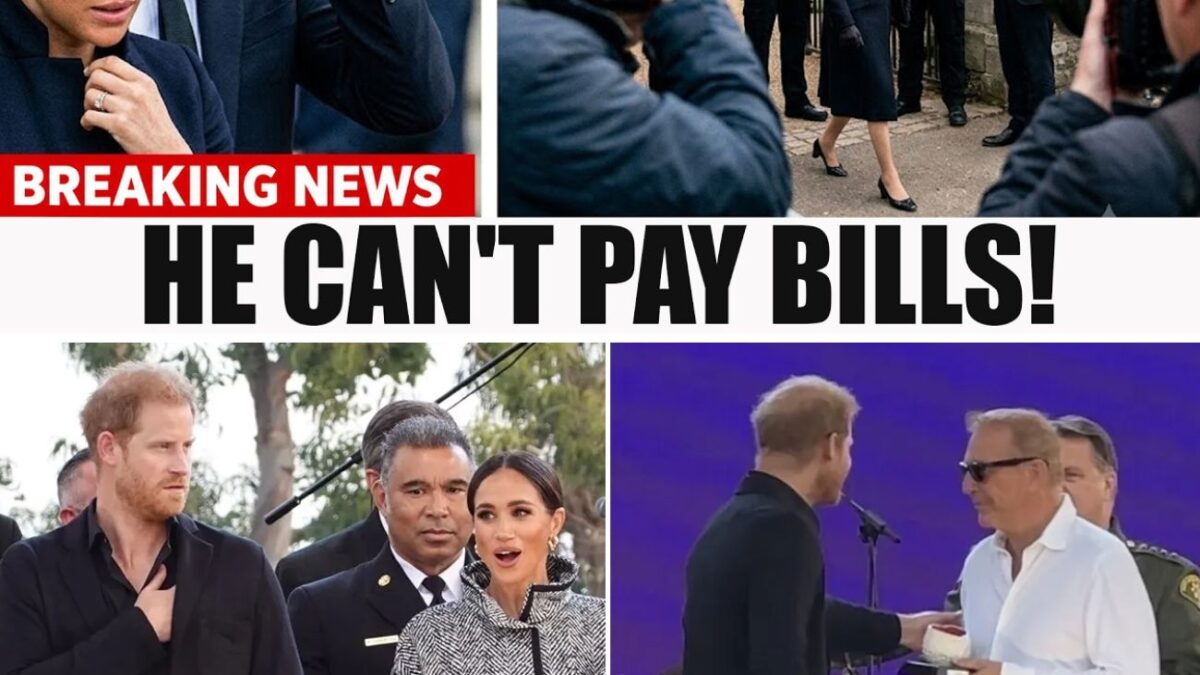
Harry and Meghan’s Alleged Club Bill Controversy: Kevin Costner’s Snub and Princess Anne’s Dramatic Royal Response
An explosive online narrative links alleged unpaid membership fees in California to a supposed private dispute within the royal family. The claims remain unverified, but the story imagines a confrontation with consequences reaching from Santa Barbara to Windsor.
California’s Exclusive Social Circles
The story begins in the wealthy coastal communities of California, where reputation, discretion, and personal connections can matter as much as money. Prince Harry and Meghan Markle, who stepped back from their senior royal roles in 2020 to pursue an independent life, are portrayed as facing an unexpected social setback.
According to the video’s allegations, several exclusive private clubs in the Santa Barbara area became frustrated over membership payments supposedly left outstanding for months. The narrative claims that one account had remained unpaid for eleven months, while another establishment had allegedly flagged its records for even longer.
These claims are not independently substantiated, and no verified evidence is provided to establish that the Sussexes were blacklisted from the clubs described. Nevertheless, the story builds its drama around a pointed question: what happens when a famous name no longer guarantees a place among influential people?
The controversy then turns toward Hollywood actor Kevin Costner. The video portrays him as a powerful local figure whose philanthropic connections allegedly helped determine whether Harry and Meghan would be welcome at a major charity gathering associated with emergency services.
The Alleged Confrontation with Kevin Costner
The most theatrical scene unfolds on a private lawn during a charity event in coastal California. In the video’s version of events, Meghan approaches Costner confidently, expecting a warm greeting in front of other guests and photographers.
Instead, the story depicts Costner stepping back, keeping his hands in his pockets, and offering only a brief nod. Harry, following behind his wife, supposedly attempts to explain the alleged outstanding membership payments as an administrative problem that their management team is handling.
The narrative attributes a cutting response to Costner: “Pay what you owe and stop asking other people to clean this up for you.”
The exchange is presented as a defining moment. Rather than a shouting match, the imagined confrontation is quiet and uncomfortable. Costner supposedly turns away to speak with another guest, while nearby security personnel create distance between the Sussexes and other attendees.
For the story, that silence is more damaging than any public argument. Harry and Meghan are depicted as discovering that social influence depends on relationships that must be maintained, not simply on titles or celebrity.
Yet this alleged encounter should not be mistaken for established fact. The video offers no independently verified record confirming that Costner confronted the couple over unpaid bills or personally arranged their exclusion from an event.
Blame Shifts Toward Kensington Palace
The narrative next moves from California to the British royal family. Rather than quietly resolving the alleged financial dispute, Harry and Meghan are portrayed as launching a public-relations response that redirects attention toward Prince William and Catherine, Princess of Wales.
According to the script, stories begin circulating that Harry had offered his brother a private apology, hoping to repair their relationship. The alleged account suggests that William and Catherine rejected the approach, allowing the Sussexes to portray themselves as victims of continuing family hostility.
The video argues that this explanation would shift attention away from the disputed club accounts and toward the familiar tensions between the brothers.
Catherine’s health makes the accusation particularly sensitive. The story invokes her serious medical treatment and her wish to protect her children’s privacy, suggesting that private family difficulties should not become instruments in a public dispute.
However, the claims that the Sussexes circulated this narrative as a deliberate distraction, or that William and Catherine rejected a specific reconciliation offer under these circumstances, are not substantiated by the material provided.
The central question nevertheless gives the story its emotional force: can a private apology remain sincere if it is accompanied by expectations of public support?
The Alleged Letter That Changes Everything
The plot reaches its turning point when the video introduces a confidential communication supposedly sent by Harry to William through legal representatives.
According to the narrative, the communication included a three-page memorandum outlining several conditions for reconciliation. The first allegedly called for a joint public appearance before the end of the year, accompanied by a palace statement suggesting that family relations had improved.
The script claims that such an appearance would help restore the Sussexes’ commercial standing in North America. It also alleges that the document sought renewed state-funded security arrangements during Harry’s visits to Britain and financial assistance for expenses in the United States.
The most serious accusation concerns Catherine’s medical privacy. The video alleges that the memorandum contained a warning about possible future disclosures involving private family conversations from her treatment period if the palace refused to cooperate.
This is an extraordinary allegation, and the video provides no verified document establishing that such a memorandum exists or that Harry or Meghan threatened to disclose Catherine’s confidential information. It should therefore be treated as an unverified element of the dramatic narrative, not as a factual account of their conduct.
Within the story, however, the supposed document transforms a family disagreement into an institutional crisis. The question is no longer simply whether William will reconcile with his brother. It becomes whether the monarchy should respond to demands that allegedly combine family reconciliation, financial assistance, and sensitive personal information.
That is when Princess Anne enters the center of the plot.
Princess Anne’s Countermove
The video portrays Princess Anne as the royal family’s decisive enforcer: practical, unsentimental, and unwilling to allow institutional boundaries to be challenged.
In the script, Anne reviews the alleged memorandum and responds without a public confrontation. She supposedly contacts senior royal administrators and representatives responsible for estate matters, then moves to clarify Harry and Meghan’s access to royal property.
Frogmore Cottage becomes the symbol of this imagined confrontation. The residence, which Harry and Meghan previously occupied, represents a remaining physical connection to Britain and the royal household.
The narrative claims that Anne orders any residual access arrangements to be terminated and that security procedures around royal property are tightened. It also depicts royal solicitors preparing a formal response concerning any unauthorized disclosure of private family information.
These specific directives and communications have not been established by evidence in the video. The portrayal of Anne personally ordering the measures should not be understood as a verified description of her official actions.
As a dramatic character, however, Anne represents a clear principle: family affection does not require an institution to surrender its boundaries. The script casts her not as someone seeking revenge, but as someone determined to prevent a personal conflict from becoming a source of pressure on other family members.
Three Signals of a Royal Divide
The next section relies on visual symbolism rather than speeches.
First, the video returns to the charity gala, portraying Costner as relaxed and surrounded by supporters while Harry and Meghan are conspicuously absent. Their absence is presented as evidence that the social world around them has moved on.
Second, the story shifts to Windsor, where locksmiths supposedly replace locks at Frogmore Cottage and remove the couple’s remaining identifying details. The scene is designed to make an administrative change feel like the closing of a historic door.
Third, the narrative imagines William, Catherine, and Anne appearing together at a public engagement. Their composed body language becomes a message of unity, contrasting with the turmoil allegedly unfolding across the Atlantic.
The video supplies no verified evidence connecting these supposed scenes to a coordinated royal response. Still, the symbolism is unmistakable: one side is depicted as seeking recognition, while the other is shown carrying on without responding to public pressure.
King Charles Refuses the Alleged Financial Appeal
With the supposed access restrictions in place, the story turns to King Charles III.
Harry is portrayed as making a final appeal to his father, arguing that negative headlines about the alleged club debts threaten the reputation of the wider royal family. The script claims that he requests confidential financial assistance to cover legal expenses, security costs, and overdue membership fees.
Charles is depicted as listening before delivering the line that defines the scene: “I love you, Harry, but I am not a bank.”
The video uses this imagined exchange to contrast a father’s affection with a monarch’s institutional responsibilities. In its telling, Charles refuses to use royal resources to support the private lifestyle of a family living independently overseas.
No verified evidence is provided for this specific telephone conversation, the quoted words, or the alleged request for a bailout. The scene should therefore be understood as part of the video’s dramatic narrative, rather than a confirmed private exchange.
Within the plot, the refusal is decisive. Harry can no longer expect his father to resolve the alleged California crisis, and the story suggests that potential commercial partners become more cautious as a result.
A Final Administrative Break—and a Question About Family
The final chapters describe Princess Anne taking further steps to remove any special administrative arrangements for the Sussexes. The video alleges that responsibilities concerning the couple are transferred away from the private royal household and that Frogmore Cottage is designated for future institutional use.
Again, the specific administrative instrument described in the script is not substantiated. The story’s broader premise also needs context: Harry and Meghan ceased being senior working royals in 2020, and they were asked to vacate Frogmore Cottage in 2023. Those established events do not, by themselves, verify the additional measures alleged in the video.
The conclusion compares two approaches to royal life. Harry and Meghan are portrayed as seeking independence while continuing to hope for family recognition. Anne, William, and Catherine are presented as representing continuity, public service, and restraint.
The contrast is deliberately sharp, but real family relationships are rarely as simple as a dramatic video makes them appear. Public silence does not prove hostility, just as a reported disagreement does not establish a person’s motives.
Ultimately, the story raises a question larger than club memberships or access to a residence: what does independence mean when family ties remain important?
Harry and William may have a difficult relationship, but reconciliation, if it ever comes, would require more than a carefully staged photograph. It would depend on trust, honest communication, and respect for personal boundaries.
And Princess Anne’s role in this narrative offers a final symbolic lesson. Institutions cannot survive on prestige alone; they depend on responsibility and consistent standards. Families, meanwhile, need something more complicated than rules: the willingness to listen, the humility to acknowledge hurt, and the patience to rebuild trust.
Whether the video’s most dramatic allegations withstand scrutiny is another matter entirely. Until reliable evidence emerges, its supposed secret memorandum, Hollywood confrontation, and private royal ultimatum remain unverified claims—not established facts.








