HARRY SENDS THE PALACE A $5 MILLION BILL — AND BEGS CHARLES TO PAY! William’s SHOCKING RESPONSE Changes Everything
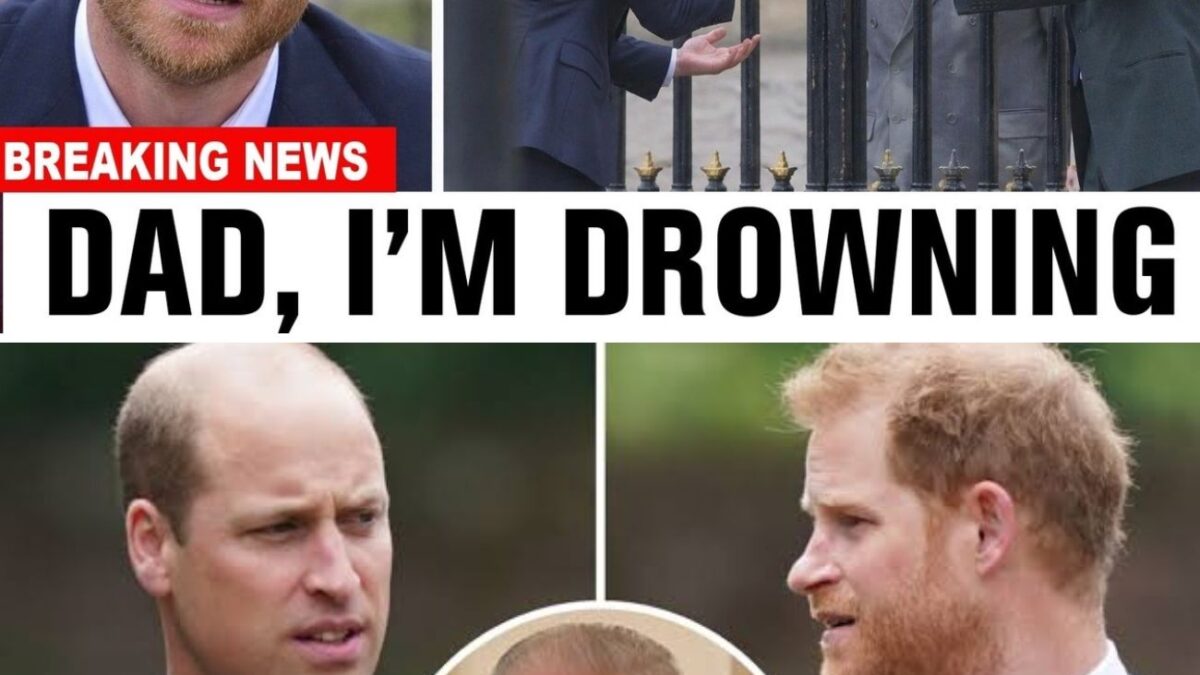
Harry Sends a Nearly $5 Million Bill to the Palace — and William’s Answer Changes Everything
The request arrived quietly, but its implications were explosive. In this imagined account of royal tensions, Prince Harry approaches King Charles with an extraordinary proposal: the Palace should assume responsibility for his mounting private security expenses. In exchange, Harry would consider resuming a limited number of royal duties and adopting a lower public profile. The figure attached to the request is staggering, and Prince William is determined that the answer must not be decided by family sentiment alone.
For Harry, the issue is about safety, fatherhood, and the difficult consequences of building a life outside the monarchy. For William, it is about the institution he expects to lead one day. Between them stands Charles, a father who may long for reconciliation but understands that any financial arrangement involving public funds could provoke a fierce backlash.
A family dispute rooted in the past
The imagined crisis reaches back to the Sandringham discussions of January 2020, when Harry and Meghan announced their intention to step back from their roles as senior working royals. Their departure reshaped the family’s public life and raised difficult questions about security, financial independence, and the responsibilities that accompany royal status.
In February 2021, Buckingham Palace confirmed that the couple would not return as working royals. Harry subsequently pursued legal challenges concerning his security arrangements in Britain. In May 2025, after losing an appeal, he spoke publicly about his concerns and expressed a wish to reconcile with his family.
Against that real background, the fictional story imagines Harry searching for a compromise. He would undertake selected duties, avoid some public disputes, and make a renewed effort to cooperate with the Palace. In return, he wants his security costs covered.
But William sees a problem. If the monarchy agrees to pay one family member’s private bills in exchange for a partial return, critics could reasonably ask whether royal service is being treated as a transaction rather than a public responsibility.
The Prince of Wales, in this imagined narrative, refuses to let that question disappear beneath the language of reconciliation.
William studies the numbers
William does not immediately confront his brother. Instead, he asks his staff to examine the proposal and the financial principles behind it. A folder begins to fill with notes, correspondence, and questions about what the Crown could legitimately pay for.
The fictional account places particular emphasis on the distinction between private wealth and public resources. Income associated with the Duchy of Cornwall supports William’s household and official work; it is not simply a personal account available to resolve any family emergency. Public funding for official royal duties also comes with expectations of transparency and accountability.
William’s objection is therefore presented as more than sibling resentment. He fears that approving Harry’s request could undermine public confidence in the monarchy. If a private security debt were paid quietly, the eventual discovery could create a scandal far larger than the original bill.
At Forest Lodge, after the children have gone to bed, Catherine asks whether there is any way to help Harry without compromising those principles. William considers the question carefully. He understands that his brother’s security concerns are deeply personal, especially given their mother’s death and Harry’s repeated statements about the dangers he believes his family faces.
Yet sympathy, he concludes in this dramatized account, cannot automatically justify transferring private expenses to the institution.
The cost of security keeps growing
The story then moves to Harry and Meghan’s life in California and their complicated relationship with security arrangements in Britain. Private protection can involve specialist personnel, secure transport, advance planning, and extensive staffing. International travel adds further expense, while legal disputes can create a separate and substantial financial burden.
For a parent who fears for his children’s safety, the temptation to spend whatever is necessary can be powerful. The fictional Harry believes that hiring experienced private professionals will provide reassurance. But the arrangements he imagines for Britain prove more complicated than expected.
British law and policing practices differ from those in the United States. Private guards cannot simply assume the powers or privileges of armed police officers, regardless of their previous experience or the amount they are paid. A security plan that works in one country may therefore be unsuitable in another.
As the imagined bills accumulate, Harry becomes increasingly anxious. Meghan, meanwhile, is frustrated by the disruption to their family life. They came to Britain hoping to reconnect their children with Harry’s home country, but the visit becomes dominated by logistical worries, privacy concerns, and the financial pressure of maintaining protection.
The story does not portray those fears as trivial. Instead, it asks whether a genuine security concern can become entangled with expectations that other people will repeatedly solve the financial consequences.
An old friend refuses another advance
In the most dramatic fictional turn, Harry seeks help from a wealthy American friend who previously assisted the couple during their transition away from royal life. Rather than asking the Palace first, he requests a short-term advance of $1.5 million to cover immediate security deposits.
The friend initially listens without committing himself. When Harry calls again, the request has become urgent. Contractors want payment, and the family needs a workable plan.
But the friend decides that a sum of this size cannot be transferred on the strength of a telephone conversation. He asks his business managers to review years of expenses that his companies allegedly covered or guaranteed.
The resulting fictional review produces a startling total: £4.95 million. The imagined records include security arrangements in Canada and California, professional retainers, and costs associated with a visit to British Columbia. The column marked “repaid” is empty.
That figure changes the conversation. What Harry remembers as friendship and generosity, the friend now sees as a collection of unresolved obligations. Both interpretations carry emotional weight, but neither can erase the question of what was actually agreed.
When Harry protests that their friendship was never supposed to operate like a business contract, the friend asks him a question that cuts through the argument:
“Tell me the last time you rang this house to ask how I was.”
In the fictional account, Harry cannot find an answer. The silence is painful because the question is not really about money. It is about whether affection has survived beneath years of requests, introductions, and emergencies.
The friend ends the financial assistance and demands that the outstanding amount be addressed. Harry is left confronting the possibility that a relationship he considered unconditional has reached its limit.
The Palace receives Harry’s proposal
With that door apparently closed, the story returns to London. Harry submits his proposal to Charles, asking the Crown to take responsibility for his private debts and provide a more comprehensive security arrangement during future visits. He presents the idea as a possible route towards reconciliation and limited renewed service.
Charles faces a difficult choice. He is Harry’s father, and the prospect of another family rupture is deeply distressing. But the request raises questions about public money, private liabilities, and whether the monarchy could explain such an arrangement to taxpayers.
William meets his father privately. He argues that paying the bill could establish a dangerous precedent and leave the family open to accusations of special treatment. The monarchy, he insists, cannot promise fairness to the public while appearing to make exceptions for relatives behind closed doors.
In this imagined confrontation, Charles listens rather than immediately answering. The next morning, a written response rejects the proposed financial arrangement, the suggested return to selected duties, and the request for publicly funded armed protection on the terms Harry had sought.
William’s position has prevailed—not because every concern Harry raises is dismissed, but because the proposed solution is judged unacceptable.
A closed door and an unresolved future
The fictional story ends with the decision becoming public and a furious debate erupting over royal privilege. Some observers sympathize with Harry’s concerns for his family; others argue that financial independence must mean accepting private responsibility for private expenses. William remains silent, believing that the written decision speaks for itself.
Harry, meanwhile, is portrayed as facing two separate disappointments: the Palace will not assume the bill, and his wealthy friend will no longer provide the assistance he once expected. Neither outcome automatically resolves the underlying security question, and neither guarantees reconciliation.
The deeper conflict is not simply whether a prince should pay his own bills. It is whether a family can repair its relationships when money, institutional responsibility, fear, and old grievances have become inseparable.
In this dramatized version, William’s answer shocks Britain because it draws a boundary that family affection cannot erase. Charles must balance his love for a son with his duty to the Crown. Harry must decide what independence means when the costs become overwhelming.
And the final question remains: if reconciliation is truly the goal, can it begin with a financial demand—or must it start with a conversation in which nobody is expected to pay for the other person’s forgiveness?








