“HE IS A PRINCE OF THE BLOOD!” Princess Anne Defies Royal Protocol to Restore Louis’s Uniform — Charles Left Facing Awkward Questions
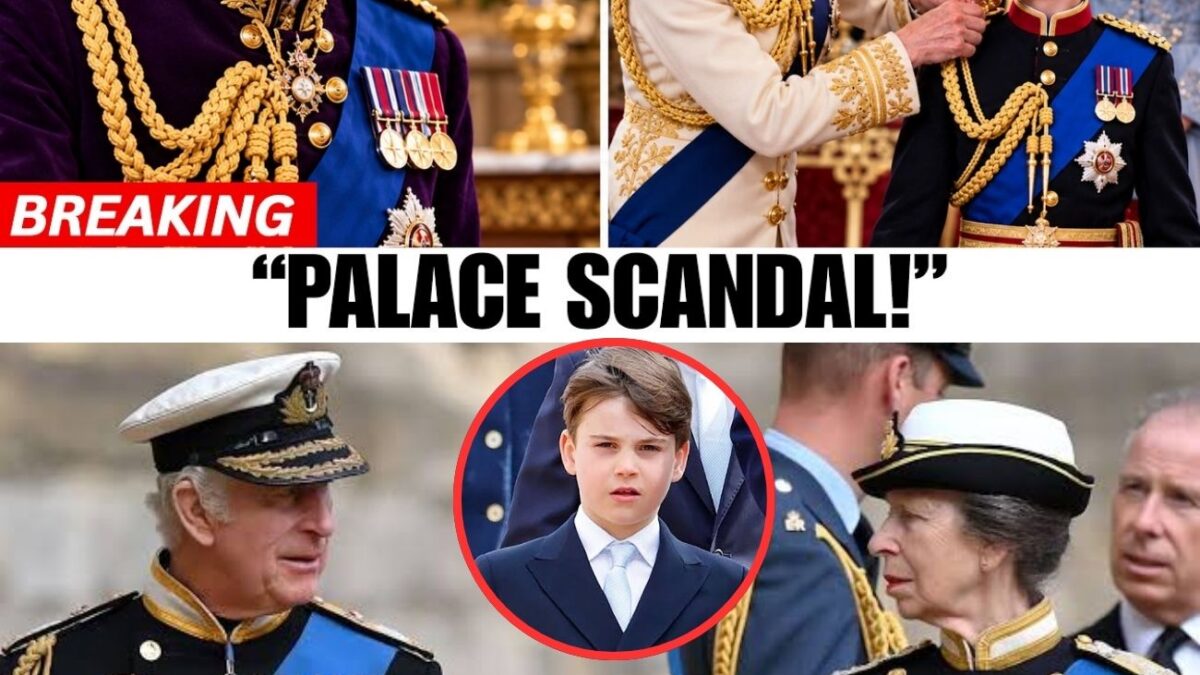
“HE IS A PRINCE OF THE BLOOD!” Princess Anne’s Dramatic Intervention Leaves the Royal Court Stunned
The atmosphere inside Windsor Castle’s grand reception room changed in an instant when Princess Anne stepped forward and reached for Prince Louis’s ceremonial uniform. Senior courtiers watched in disbelief as she began restoring the insignia that palace officials had removed only hours earlier. Then Anne delivered six words that cut through the silence: “He is a prince of the blood!”
In this fictional royal drama, the declaration was more than a defense of a young prince. It was a direct challenge to the way authority had been exercised inside the royal household, raising uncomfortable questions about protocol, accountability, and the responsibility adults have to protect a child’s dignity.
Prince Louis stood beside his aunt, visibly confused. He had been looking forward to the family heritage ceremony, an occasion intended to celebrate generations of royal service. His specially prepared jacket had already passed its final fitting. Yet, shortly before the gathering, its embroidered family symbols and decorative shoulder pieces had mysteriously disappeared.
Louis looked down at the altered garment and quietly asked his father, Prince William, whether he had done something wrong.
William placed a reassuring hand on his son’s shoulder, but finding the right words was difficult. Catherine moved closer, struggling to conceal her distress. Across the room, King Charles and Queen Camilla watched as the situation unfolded, while officials appeared increasingly uncomfortable.
Anne, however, did not wait for another explanation. She lowered herself to Louis’s eye level, told him firmly that he had done nothing wrong, and took a silver fastening pin from her own attire. With careful hands, she secured the first emblem against the damaged seam.
A senior official immediately objected. The decorations, he insisted, could not be restored without authorization.
Anne looked directly at him.
“Then tell me who authorized their removal.”
Nobody answered.
A uniform, a missing order, and a child’s painful question
For Louis, the dispute was not about royal distinctions or ceremonial traditions. It was about belonging. The previous evening, he had proudly shown Catherine the embroidery on his jacket. Now the empty stitching seemed to tell him that something about him was no longer acceptable.
“Do I have to leave?” he asked during the uncomfortable pause.
William knelt beside his son. He reminded Louis that he belonged with his family and had done nothing to deserve the treatment he had received. Catherine took his hand and promised that his dignity was not something anyone had the right to bargain away.
Yet the parents could not ignore the central question: who had decided that Louis’s approved uniform was suddenly unsuitable?
A wardrobe attendant eventually confirmed that the jacket had passed its final inspection intact. The decorations had been removed afterward, following a new instruction attributed to the palace’s ceremonial office.
William demanded to see the written order. No one produced it.
Anne recognized the markings on a sealed protocol folder placed beside the king’s chair. She had already questioned a similar interpretation of the rules earlier that week, only to have her concerns dismissed as interference. Now, she feared that a bureaucratic decision had placed a child in the middle of an unnecessary humiliation.
The previous afternoon, during a rehearsal at Windsor Castle, the master of ceremonies had received an amended instruction warning against children wearing insignia that could be mistaken for senior royal distinctions. He interpreted the wording broadly and instructed the wardrobe supervisor to remove Louis’s decorations.
The supervisor hesitated because the jacket had already been approved. But the instruction carried an official-looking approval stamp, and challenging it seemed risky.
Louis arrived unexpectedly and watched as an attendant detached the final emblem and placed it on a velvet tray. When he asked whether he was still allowed to attend the ceremony, he received permission to remain—but no meaningful explanation for what had happened.
The boy’s silence stayed with Anne long after the rehearsal ended.
Princess Anne challenges the king’s household
Anne had spent decades respecting royal duty and ceremony. But, in this story, she believed discipline had become an excuse for adults to avoid responsibility.
Before the reception, she had tried to alert Charles to the problem. An aide told her the matter had already been settled. Now, with Louis standing before the court, she refused to let the issue disappear behind another polite assurance.
She turned toward her brother.
“Did you personally order his decorations removed?”
Charles hesitated.
That pause unsettled William almost as much as the missing insignia. If the king had not personally authorized the decision, someone might have acted in his name without his knowledge. If he had known, the family needed an explanation.
William stepped beside Anne and insisted that his son had done nothing to deserve such treatment. Catherine led Louis a short distance away, reassuring him that he was not in trouble.
At last, the master of ceremonies produced a printed summary of the disputed instruction. Anne demanded the original signed document. When it arrived, she placed the two papers side by side.
The difference was decisive.
The original restriction concerned unauthorized military decorations and rank badges. The revised summary had extended that restriction to include Louis’s approved family embroidery, which was not intended to confer military rank.
The broader prohibition had been added by the ceremonial office. It was not a direct command from the king.
Charles read the original document twice. His expression changed as he understood that a routine interpretation had been presented as though it carried the full authority of the Crown.
“This is not the instruction I approved,” he said.
He ordered the ceremony suspended and directed his private secretary to investigate who had authorized the wider restriction. The amended rule would be withdrawn, and the original approval for Louis’s uniform would stand.
Anne lowered the silver pin, but she was not prepared to let the family treat the matter as a simple paperwork error.
“You are discussing documents,” she reminded Charles. “That child will remember how he felt.”
William made the same point in different words. Correcting a document could not erase the moment his son had stood before the court wondering whether he belonged.
The decision that mattered most
When an aide asked whether the ceremony could resume, William refused to rush his son back into the reception room merely to protect the palace from embarrassment.
“Not until my son is ready,” he said.
Inside a private family room, Catherine sat beside Louis and examined the repaired shoulder of his jacket. She asked whether he still wanted to wear it. He admitted that he had once been excited about the occasion, but now felt embarrassed.
Catherine drew him close and told him that he was loved with or without the decorations. Even so, Louis continued glancing at the uniform, searching for an answer that no official document could provide.
Anne understood that returning to the ceremony immediately might teach him to hide his hurt. Staying away without explanation, however, could leave him believing that the court had rejected him.
She sat beside her nephew with the repaired jacket resting between them.
“Was I naughty?” Louis asked.
Anne’s anger softened into sadness. She told him that the adults had made a mistake, not him. People entrusted with important decisions could misunderstand rules, she explained, but real strength meant acknowledging the harm and finding the courage to correct it.
“You do not have to go back,” she told him. “Only if that is what you want.”
After a long silence, Louis reached toward the jacket and asked whether he could wear it again and stand with everyone.
Anne smiled, fastened the final silver clasp, and gently covered his hand with hers.
“You never lost your place. Not for a single moment.”
When William and Catherine returned, their relief was unmistakable. Charles promised that Louis would face no pressure to resume the ceremony before he felt ready.
Eventually, the young prince chose to return.
An apology beyond royal protocol
In the fictional account, the palace later acknowledged that the ceremonial instruction had been interpreted too broadly. An internal review would examine how changes to approved attire had been authorized, while the official responsible was removed from the event pending further review.
But the most important moment came privately, when Charles approached his grandson.
“The adults made a mistake,” the king admitted. “We should have protected you from it.”
He gently straightened the restored decoration on Louis’s shoulder and told him that he should never have been made to doubt his place in the family.
Louis stepped forward and embraced his grandfather. William accepted the apology but made clear that meaningful change would require more than corrected paperwork. Catherine thanked Anne for standing up for their son when he was too young to understand how to defend himself.
Anne simply explained that she could not allow Louis to believe he was less important because somebody had misunderstood a rule.
Her intervention had not been about undermining her brother’s position. It had been about reminding the household that authority comes with responsibility.
In this dramatic story, the restored insignia became a symbol of belonging rather than privilege. The ceremony could continue, the uniform could be repaired, and the documents could be corrected. More importantly, Louis could return to his family knowing that the adults had acknowledged their mistake.
Anne’s declaration—“He is a prince of the blood!”—therefore carried a meaning beyond titles and tradition. It was a demand that the people entrusted with protecting the royal family should never forget the human beings standing behind the formal uniforms.
A crown may represent authority. But when a child is frightened, confused, or made to feel unwelcome, authority proves its worth not through ceremony, but through compassion.








