JENNIFER ANISTON’S LEGAL WARNING? Alleged Meghan Markle Messages to Jim Curtis Spark Explosive Celebrity Drama

Jennifer Aniston, Meghan Markle and Jim Curtis: The Alleged Messages Behind a Hollywood Showdown
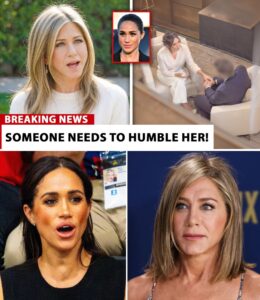
In Hollywood, silence can be more revealing than a public argument. A missed invitation, an unanswered message or a carefully maintained distance can say more than a thousand words. But what happens when that silence is no longer respected? A dramatic online narrative involving Jennifer Aniston, Meghan Markle, Jim Curtis and Prince Harry imagines precisely that situation, turning an alleged series of private communications into a controversy with potentially serious legal implications.
The central claim is that Jennifer Aniston, protective of her privacy and personal relationships, has reached the end of her patience with Meghan. According to the storyline, messages allegedly sent to Jim Curtis prompted a private warning that further contact could lead to an application for a restraining order.
There is, however, an important distinction between the story being circulated and independently verified reporting. The script does not establish that Aniston has filed legal papers or that the alleged correspondence and incidents occurred as described. Nevertheless, its account builds a tense celebrity drama around one question: where does persistence end and an unwanted intrusion begin?
The Message That Allegedly Changed Everything
The story opens on an ordinary Tuesday evening. Jennifer Aniston is at home when a message from her partner, Jim Curtis, reportedly draws her attention to something he believes she should know.
Curtis, described in the narrative as a hypnotherapist and writer, allegedly shows Jennifer messages attributed to Meghan Markle. The communications are presented as professional inquiries, with Meghan supposedly expressing interest in his work and suggesting a conversation about public attention, personal habits and the pressures of living under constant scrutiny.
On the surface, there would be nothing extraordinary about a public figure approaching a professional to discuss a possible collaboration. The alleged problem, according to the script, is the broader context.
It suggests that Jennifer had never established the close friendship Meghan supposedly hoped to develop, despite earlier invitations and proposed opportunities to meet. The messages to Curtis are therefore portrayed not as an isolated professional inquiry but as an attempt to establish a connection through someone close to Jennifer.
The narrative claims that Curtis chose to show Jennifer the correspondence rather than keep it private. That decision becomes the turning point, transforming what might otherwise have remained an ordinary business exchange into a deeply personal dispute.
Yet the actual content of the alleged messages has not been independently established in the material provided. Without authenticated correspondence, the intentions attributed to either woman remain speculation.
Six Years of Alleged Unanswered Invitations
The script traces the supposed tension back several years, describing repeated invitations to meet at Meghan and Harry’s California home. It also alleges that Meghan expressed interest in having Jennifer appear on a podcast.
According to the narrative, Jennifer did not accept the invitations or respond to the proposals. Her silence is portrayed as a deliberate boundary rather than an invitation to keep trying.
That interpretation forms the emotional core of the story. In celebrity circles, a connection between two famous women can quickly become a headline in its own right. A photograph together, a dinner invitation or a shared interview can generate public interest far beyond the original meeting.
The script argues that Jennifer would have understood the implications of such an association and had no desire to participate in a relationship she had not chosen.
But an unanswered invitation alone cannot establish harassment or prove that the person sending it understood it to be unwelcome. The crucial questions would be what was communicated, how frequently contact occurred and whether an explicit request to stop was ignored.
Those distinctions matter, particularly when a story assigns motives to real people without presenting independently verifiable evidence.
The Alleged Incident on a Film Set
One of the most provocative parts of the narrative takes readers back to 2011, when Meghan reportedly appeared in a small role in Horrible Bosses, the comedy featuring Jennifer Aniston.
The script describes an alleged encounter in which Jennifer witnesses Meghan speaking harshly to an assistant over a delay. Jennifer is portrayed as intervening and warning that the behavior must stop.
The account further suggests that the brief appearance became a source of resentment because Meghan allegedly felt slighted by the limited time her character received on screen.
It is an effective dramatic scene: an established Hollywood star confronts a less prominent performer, and a moment that might have been forgotten becomes the supposed beginning of a lasting personal conflict.
But the script offers no independently authenticated testimony establishing that this confrontation occurred. Nor does it demonstrate that the two actresses have maintained a private feud since the film’s production.
The same caution applies to the narrative’s additional claim that Meghan once expressed an ambition to marry Brad Pitt while he was married to Jennifer. No reliable evidence is supplied to substantiate that allegation.
Such claims may heighten the drama, but they should not be mistaken for confirmed details of either woman’s personal history.
A Car Near the Property?
The story becomes more unsettling when it introduces reports of a car allegedly slowing down on a road near Jennifer’s property.
According to the script, neighbors or members of the household staff noticed a vehicle on more than one occasion, with Meghan supposedly sitting in the passenger seat. The narrative suggests that the sightings were recorded and later brought to Jennifer’s attention.
If a person were repeatedly monitoring another individual’s home after being told to stay away, the situation could raise legitimate concerns about privacy and safety. But the account does not provide independent documentation identifying the occupants, establishing the purpose of the journeys or confirming that any formal complaint was made.
A vehicle passing a residence is not, by itself, proof of surveillance. Context, corroboration and reliable evidence would be essential before drawing conclusions about anyone’s intentions.
Nevertheless, within the script, the alleged sightings give the dispute a more serious dimension. What began as a question about messages and social invitations becomes a story about whether a private boundary has been crossed.
Jim Curtis and the Professional Connection
Curtis occupies a crucial position in the narrative because he is presented as the person connecting the two women without either having directly established a relationship with the other.
The script suggests that Meghan’s interest in his professional work might have offered a route into Jennifer’s social circle. It portrays the proposed collaboration as a possible opportunity for greater visibility, while depicting Curtis’s decision to disclose the messages as a rejection of that possibility.
Yet there is another reasonable interpretation: a professional inquiry can be exactly what it appears to be, without any hidden personal agenda. Establishing otherwise would require evidence of intent rather than assumptions based on the identities of the people involved.
The narrative also brings Harry into the dispute, suggesting that he hoped a meeting between the couples might eventually take place. His role is portrayed as secondary, with the story claiming that he viewed the situation as a misunderstanding that could be resolved through conversation.
Again, those alleged conversations and motivations have not been independently verified.
The Legal Warning at the Center of the Drama
The climax arrives when Jennifer allegedly decides that silence is no longer sufficient. The script describes a private warning demanding that Meghan stop contacting Curtis about Jennifer, stop approaching her through mutual acquaintances and stay away from her property.
It further claims that a restraining order could be sought if additional unwanted contact occurred.
The distinction between a warning and a court order is essential. A person can consult a lawyer or communicate a boundary without having filed a legal application, and a restraining order is not automatically granted merely because one party requests it.
The script does not provide court documents confirming that Jennifer has initiated such proceedings. Its headline therefore goes further than the evidence presented.
Still, the proposed ultimatum supplies the story with a decisive ending. There is no dramatic confrontation in front of cameras, no public argument and no carefully staged reconciliation. Instead, the narrative imagines a private decision to end contact and refuse further negotiations.
When Silence Becomes the Final Answer
Ultimately, the story is less about a celebrity friendship than about the meaning of personal boundaries.
Jennifer Aniston has spent decades living under public scrutiny, and the narrative presents her as someone who values control over her private life. Meghan Markle, meanwhile, is portrayed as seeking a connection that the other woman allegedly does not want.
But without verified messages, reliable corroboration of the alleged sightings or evidence of legal action, it would be premature to conclude that the events happened as described.
The most important question remains a broader one: when does an attempt to connect become an unwanted intrusion, and who gets to decide when enough is enough?
In the version of events presented by the script, Jennifer’s answer is unmistakable. No more invitations, no more indirect approaches and no more attempts to turn professional proximity into a personal relationship.
Whether that dramatic account reflects reality remains unproven. What it illustrates, however, is why stories involving celebrity, privacy and alleged private messages can ignite such fierce public debate. In a world where every association can become a headline, sometimes the most consequential decision is the refusal to participate at all.








