KING CHARLES’ BOMBSHELL DECISION! Catherine Receives the Rare “Queen of Windsor” Title — And Harry Is Left Stunned
King Charles’ Stunning Decision: Catherine’s Rare Title Leaves Harry Facing Uncomfortable Questions
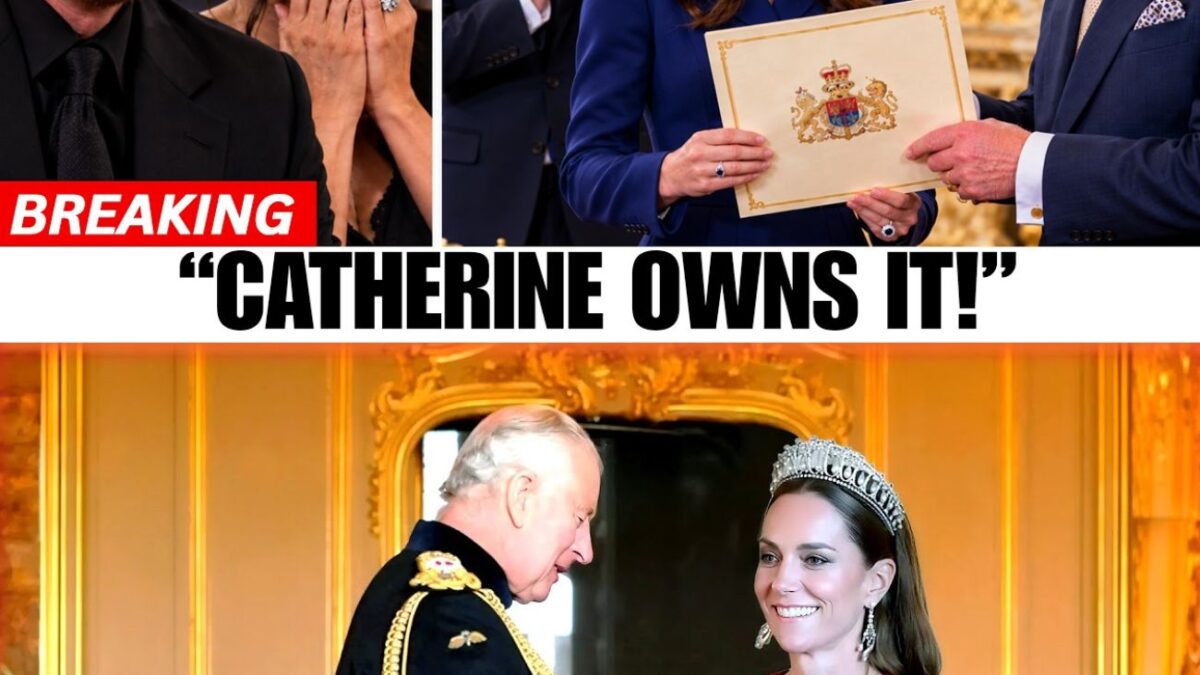
In this fictionalized royal drama, King Charles makes a decision that transforms an ordinary family gathering into one of the most emotionally charged moments imaginable. With a single signature, he grants Catherine a rare symbolic designation: Queen of Windsor. The announcement is presented as recognition of her dedication, yet its timing and carefully chosen wording leave Prince William surprised and Prince Harry struggling with what the decision might mean for his place in the family.
For Catherine, the honor arrives without warning. For Harry, it raises questions that go far beyond a title.
An Unexpected Announcement at Windsor
The gathering had been expected to be brief and uneventful. A formal statement, a few polite exchanges, and an early return to the day’s ordinary business seemed likely. Instead, King Charles placed a signed declaration before the family and announced that Catherine would receive the revived designation, Queen of Windsor.
The title was not intended to change the constitutional order or alter the line of succession. Its significance lay in its symbolism, connecting Catherine’s name with Windsor, a place deeply associated with the history and continuity of the British monarchy.
Catherine did not immediately smile. She looked down at the document, then turned toward William. His expression remained composed, but his silence suggested that he, too, had not fully anticipated the announcement.
Charles removed his glasses and addressed Catherine directly.
“This is not a reward. It is a responsibility.”
The words changed the atmosphere in the room. What might initially have seemed like a spectacular personal honor suddenly carried a more serious meaning. Catherine understood that the distinction could strengthen her public standing, but it could also bring greater scrutiny and expectations she had never asked to shoulder.
The king insisted that the title was not intended to elevate her above other members of the family. He described it as recognition of the work she had already undertaken and a reminder of the service expected from those who represented the Crown.
Yet even as Charles explained his reasoning, the announcement had already begun to acquire a meaning of its own.
Why Harry Was So Troubled
Far from Windsor, Prince Harry read the announcement on his phone. One phrase caught his attention: the declaration’s reference to Catherine and the enduring future of the House of Windsor.
He read it again before putting his phone down.
According to the storyline, Harry’s reaction was not driven by resentment toward Catherine. He understood that she had worked hard and had not demanded special recognition. What unsettled him was the timing and the symbolism surrounding the honor.
For years, his relationship with the royal institution had been complicated. Distance, disagreements, and unresolved family tensions had changed his connection with the household where he had once belonged. Now, Catherine was being publicly associated with the monarchy’s future in unusually powerful language.
To Harry, the announcement raised an uncomfortable question: was his father simply recognizing Catherine’s service, or was he also defining who would stand closest to the institution in the years ahead?
He could not know the king’s intentions from a written statement alone. But the words touched an old wound, making the announcement feel more personal than Charles might have expected.
For the king, the decision represented continuity. For William, it meant protecting his wife from unnecessary pressure. For Harry, it reopened the question of belonging.
And the answer, as the story unfolds, began months before the declaration was signed.
The Private Conversation That Changed Charles’s Mind
Months earlier, Catherine had accompanied Charles during a quiet visit to Windsor. There were no cameras or crowds, no elaborate ceremony, and no carefully prepared speeches. The conversation turned instead to the meaning of royal service.
Catherine spoke candidly. A title, she argued, mattered only when it reflected a genuine commitment to duty, compassion, and the people a royal served. A name on a document meant little if the person carrying it was unwilling to do the work.
Charles listened.
Her words reminded him of lessons he had learned throughout his own life, including the importance of service and the danger of confusing status with character. Later that evening, he asked his aides to retrieve historical records concerning rarely used Windsor-related designations.
The search remained private. Several ceremonial possibilities were considered, but Charles rejected anything that seemed decorative or designed merely to attract attention.
He wanted an honor that represented obligation rather than applause.
Eventually, the designation Queen of Windsor emerged as the choice within this fictional account. To Charles, it represented continuity, responsibility, and the contribution Catherine had made to the family. He believed she embodied the attitude he wanted the title to express: service before celebration and responsibility before privilege.
When Harry later learned that the decision had grown out of this private process, his frustration did not disappear. Instead, he wanted to hear the explanation directly from his father.
A Difficult Conversation Between Father and Son
When Charles and Harry finally spoke, neither could hide behind a public statement or ceremonial language.
Harry placed a printed copy of the declaration between them and pointed to the wording that had troubled him.
“Did you understand what that would sound like to me?” he asked.
Charles did not look away. He explained that Catherine’s designation concerned her own responsibilities and was not an attempt to diminish his younger son. The monarchy, he said, had to prepare for the future while recognizing those actively carrying out its duties.
Harry remained unconvinced. If the title was simply about service, why revive something so symbolically powerful at this particular moment? Why use language that could sound like a judgment on someone whose relationship with the institution had changed?
Charles answered that service should be recognized while it was being given, rather than decades after the person had carried its weight.
Then came another revelation: William had been consulted before the announcement.
Harry was unsettled by the news. He had believed the matter stood between himself and his father. Now he knew his brother had also been involved in shaping the decision.
But William’s role was more complicated than Harry first imagined.
Charles had asked whether the title might place unnecessary pressure on Catherine or create an impression that some family members represented the future while others had been left behind. William agreed that Catherine deserved recognition, but he was concerned about what the distinction might become in the public imagination.
He did not want his wife praised for destiny rather than character. Nor did he want a royal honor to become a weapon in an already strained family relationship.
William eventually supported the decision on one condition: Catherine would not be burdened with an immediate expansion of duties or an accelerated ceremonial schedule simply because of the title.
Charles accepted.
The designation, he insisted, must stand on its own meaning, without being used to compare Catherine with Harry or any other member of the family.
Catherine Refuses to Become a Symbol of Division
As news of the announcement spread, Catherine began to understand that the honor had changed more than the way people addressed her. It had altered the way the family itself was being discussed.
She learned that Harry had been deeply affected by the wording. Rather than celebrating the controversy, she worried that the family’s disagreements would overshadow the work she had devoted herself to.
She had not sought the title to prove anything to anyone. She did not want it to become another reason for resentment.
William supported her completely. Together, they agreed that the decision should be explained carefully, without expecting Catherine to defend herself against interpretations she had never intended.
Harry, too, gradually began separating his feelings about the monarchy from his relationship with Catherine. He did not suddenly agree with every decision his father had made, nor did the announcement erase years of complicated family history.
But he recognized that Catherine was not responsible for all the choices that had shaped his relationship with the institution.
She was a member of his family who had been asked to carry a new responsibility. Treating her as the author of his disappointment would only create another unnecessary conflict.
When questions arose about whether he resented her honor, Harry’s response was brief: she deserved support, not another family battle.
It was a small but significant choice. He could disagree with the symbolism without turning Catherine into the target of his frustration.
The Headlines—and the Meaning Behind the Title
By the following morning, the announcement had become a subject of intense public debate within the story. Newspapers presented Catherine as the face of the monarchy’s future, while commentators questioned whether the distinction risked deepening existing family divisions.
One prominent headline described her as “The Windsor Future.” The phrase transformed a symbolic designation into a broader argument about succession, loyalty, and belonging.
William worried that the coverage was placing his wife under pressure far sooner than anyone had intended. Catherine feared that a recognition of service was being turned into a contest over who mattered most.
Charles responded by emphasizing continuity and responsibility rather than rivalry. Privately, he reminded Catherine that the real value of the honor would depend on how she carried its obligations, not on how dramatically the public reacted.
That evening, Catherine read the declaration again. The words that had unsettled Harry sounded different when considered as instructions for her own conduct. She could not control every interpretation, but she could decide what the title would mean through her actions.
The next time Charles gathered the family privately, he presented her with the signed declaration once more.
He reminded her that no document could guarantee respect. Preparation, humility, service, and the ordinary responsibilities of family life would still matter long after the headlines had disappeared.
Catherine accepted the declaration without triumph. William stood beside her, supporting the conditions he had insisted upon from the beginning. Harry remained thoughtful, but he had decided not to turn her recognition into another public confrontation.
The decision did not repair every fracture within the family. It did, however, leave room for a different response.
Charles had intended the title to connect Catherine with the monarchy’s future. Instead, it also forced the family to confront a more difficult question: how could duty be honored without making personal relationships feel like a competition?
In the end, the title’s meaning could not be settled by a signature, a newspaper headline, or a royal declaration. It would depend on Catherine’s conduct, the family’s choices, and whether they could resist turning symbolism into a measure of affection.
Was Charles’s decision a meaningful recognition of Catherine’s service, or did its powerful wording risk creating another division within the House of Windsor?
That question remains at the heart of this fictional royal drama. Because a title may change how the world sees a royal, but it cannot determine whether a family learns to understand one another. That responsibility belongs to the people behind the crown.








