KING CHARLES BREAKS HIS SILENCE ON ARCHIE AND LILIBET — THE ROYAL DECISION THAT LEFT HARRY AND MEGHAN STUNNED
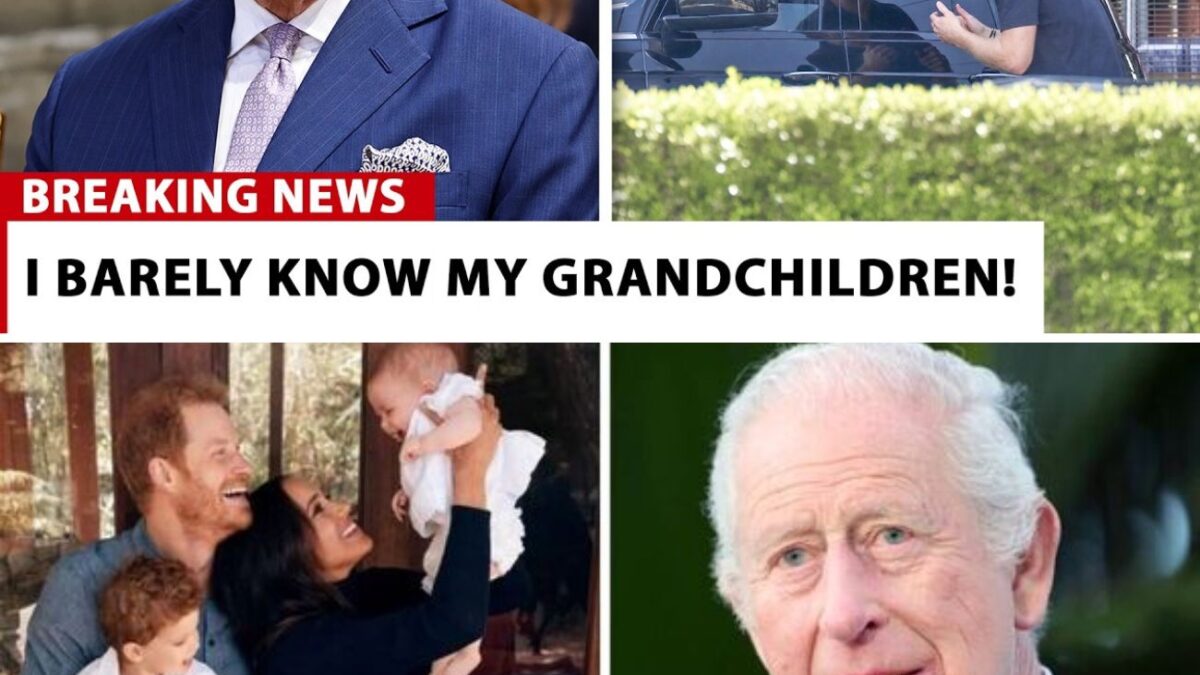
KING CHARLES BREAKS HIS SILENCE ON ARCHIE AND LILIBET — THE ROYAL DECISION THAT LEFT HARRY AND MEGHAN STUNNED
For years, the dispute surrounding Prince Harry, Meghan Markle, and the British royal family has unfolded through interviews, documentaries, memoirs, legal battles, and carefully worded statements. King Charles, however, has largely avoided turning the conflict into a public conversation.
According to the supplied account, that silence has now taken on a different meaning.
The story is not about a dramatic interview or an explosive palace announcement. Instead, it centers on the way the Crown has handled Archie Harrison Mountbatten-Windsor and Lilibet Diana Mountbatten-Windsor — two children born into the royal family but raised thousands of miles away in California.
For Harry and Meghan, the question has never been merely about titles. It has also involved security, family access, royal status, and whether their children might eventually have a meaningful connection to the institution their father was born into.
When Queen Elizabeth II died in September 2022 and Charles became king, Archie and Lilibet became grandchildren of the reigning monarch. The 1917 Letters Patent issued under King George V are central to the story because they established rules concerning the styles of grandchildren of the sovereign in the male line.
For a period, the official royal website continued to list the children without the prince and princess styles. That changed in 2023. Following the announcement of Lilibet’s christening, the Sussexes publicly used the title Princess Lilibet, and the royal website subsequently identified the children as Prince Archie of Sussex and Princess Lilibet of Sussex.
There was no grand ceremony at Buckingham Palace. No balcony appearance followed. The titles simply appeared in the official record.
That development was widely interpreted through the complicated history between Harry and the institution he had left behind. Yet the distinction that matters in the supplied story is between possessing a royal title and being a working member of the monarchy.
Those are not necessarily the same thing.
A title does not automatically create a working royal role, public funding, taxpayer-provided security, or a place on the official schedule of royal duties. The modern monarchy has repeatedly demonstrated that members of the wider royal family can hold royal connections without becoming working representatives of the Crown.
That history reaches back to Princess Anne.
When Anne’s children, Peter Phillips and Zara Tindall, were born, they did not receive royal titles. Their lives developed outside the formal structure of working royal duties. Zara eventually became an Olympic equestrian silver medalist, while Peter pursued his own professional career.
The example has frequently been discussed whenever the question of royal titles, privilege, and duty arises.
But the Sussex situation is different in one important respect: Archie and Lilibet received their titles under the rules governing grandchildren of a reigning sovereign.
The more difficult question concerns what those titles actually mean in practice.
The issue became even more complicated after King Charles was diagnosed with cancer in February 2024. Prince Harry immediately traveled from California to Britain to see his father. Their meeting was brief, and Harry soon returned to the United States.
That episode highlighted a contradiction at the heart of the family story. Harry remained Charles’s son. Archie and Lilibet remained Charles’s grandchildren. Yet the relationship between the Sussex household and the institution of the monarchy had become increasingly separate.
At the same time, Harry was engaged in a long-running legal dispute concerning his security arrangements in Britain. The security issue was separate from the children’s titles, but it became part of the larger argument about what royal status does and does not guarantee.
The supplied narrative presents these developments as evidence of a broader institutional boundary: family access could remain possible even when official royal duties did not.
That distinction is crucial.
Behind the palace walls, the emotional question is much simpler than the constitutional one.
Charles is a grandfather.
Archie and Lilibet are his grandchildren.
Whatever disagreements exist between adults, the children themselves did not choose the circumstances surrounding their birth, their titles, or the distance between their homes and the United Kingdom.
The story becomes particularly poignant when considering how rarely Charles has been able to spend ordinary family time with them. Archie was born in May 2019 and spent his earliest months in Britain before the Sussexes relocated permanently to North America. Lilibet was born in California in June 2021.
Unlike Prince George, Princess Charlotte, and Prince Louis, Archie and Lilibet have not grown up regularly appearing alongside the royal family at British public events.
That difference has fueled endless speculation about their future.
Would they ever become working royals?
Would they return to Britain regularly?
Could they have official roles?
Or would their lives remain entirely separate from the monarchy?
The answer presented by the supplied account is that Charles has not changed the fundamental structure of the institution simply to resolve the family dispute.
The monarchy operates according to rules that existed long before Harry and Meghan’s conflict.
The same principle can be seen in the so-called “half-in, half-out” debate that surrounded Harry and Meghan’s decision to step back from senior royal duties in 2020. Their departure established a practical boundary between private life and official service.
The security dispute reinforced another boundary. Royal status alone does not automatically determine what protection the British state provides.
And the title issue revealed another distinction: having the style of prince or princess does not automatically mean having a role within the working monarchy.
This is where the supplied story reaches its central conclusion.
Charles did not need a televised confrontation with Harry or Meghan. He did not need to publicly criticize them. He did not need to withdraw Archie and Lilibet’s titles.
Instead, the message was supposedly contained in what the institution did — and did not do.
The children could remain Prince Archie and Princess Lilibet.
They could remain members of the royal family.
The family door could theoretically remain open.
But that does not mean the Crown is obliged to create future working positions for them, provide automatic public funding, or redesign the monarchy around the Sussex household.
That distinction may be the most consequential part of the entire dispute.
For Harry and Meghan, the story has always involved personal experience as much as constitutional structure. They have publicly described serious problems with life inside the monarchy and have built a new life in California.
At the same time, the titles attached to their children remain an unmistakable connection to the family they left.
That tension is unlikely to disappear quickly.
And perhaps the most human part of the story is that Archie and Lilibet are not responsible for any of it.
They are two children growing up in California, carrying titles connected to a family whose history stretches across centuries. Their grandfather sits at the center of a centuries-old institution. Their father has built a life outside it.
Between those two worlds stands a complicated family relationship that cannot be solved by a title alone.
According to the supplied narrative, King Charles’s message is therefore less about rejecting Archie and Lilibet than about defining the limits of the institution around them.
The titles can remain.
The family relationship can remain.
But royal service is a separate matter.
And that quiet distinction — rather than any dramatic speech — is what gives the latest chapter of the Sussex story its enduring tension.








