KING CHARLES CUTS HARRY OFF! The Royal Directive That Could Destroy His Last Financial Lifeline
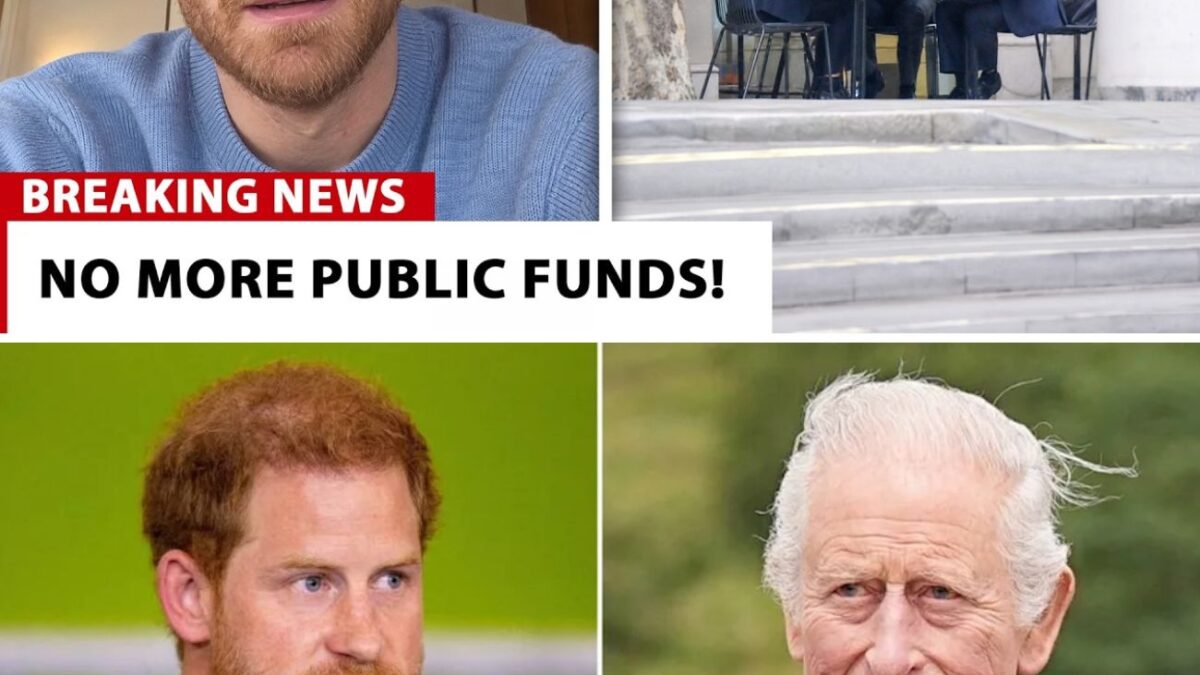
King Charles Draws the Final Line as Harry’s Royal Lifeline Collapses
For six years, Prince Harry and Meghan Markle presented their California life as the ultimate declaration of independence. They had stepped away from royal duties, entered the American entertainment world, and insisted that their future would be built on their own terms. Yet the script provided for this story presents a darker picture: a $16.7 million Montecito mansion, Tyler Perry’s financial involvement, and an alleged royal directive from King Charles that could permanently close the door to public support.
The first shock concerns the mansion. According to the script, Tyler Perry—not Harry—held the primary financial position connected to the Montecito property. That detail transforms the house from a symbol of Sussex independence into evidence of a relationship in which a wealthy benefactor allegedly carried major financial responsibility.
The timing is presented as devastating. As Harry and Meghan faced increasing costs, Perry supposedly decided that the arrangement could no longer continue. The script describes years of carrying expenses, security bills, legal retainers, and other obligations. Friendship, it suggests, had gradually become an informal credit facility.
The numbers were severe. Maintaining the Sussex lifestyle was estimated at between $4 million and $5 million a year. Property taxes, insurance, groundskeeping, staff, maintenance, and private security all demanded enormous sums. Security alone was portrayed as costing roughly $3 million annually after Harry lost his state-funded protection when he stepped back from official duties.
That was where Tyler Perry allegedly became crucial.
Then Harry and Meghan allegedly tried to return to Britain.
By late summer 2026, the script says the couple prepared a strategy involving a long-term property lease in Oxfordshire, close to celebrity allies. Archie and Lilibet were reportedly being considered for an exclusive school. Publicly, the message was about family healing and reconnecting the children with their English heritage.
Privately, the strategy was presented as more calculated. By placing the family in Britain, Harry’s team supposedly believed that security concerns surrounding Diana’s grandchildren would create political pressure. The state might be forced to provide protection, and that renewed official role could become leverage for financial negotiations.
Harry reportedly contacted King Charles’s private office. He allegedly spoke about the children, family unity, and reconciliation rather than money. But the script argues that this emotional appeal concealed a larger objective: obtaining financial assistance without making it look like a bailout.
Then came the alleged royal directive.
The script claims that, in early September, an administrative order was transmitted through the Lord Chamberlain’s office rather than a personal letter from Charles. It supposedly established three restrictions.
First, Harry and Meghan were classified as non-working members of the royal family. Their HRH styles remained in abeyance, and officials were instructed to treat them as private citizens during overseas travel and public engagements.
Second, the financial door was allegedly closed. The directive supposedly prohibited taxpayer funding, sovereign grant support, Duchy allocations, and institutional subsidies connected to the Sussex household.
Third, the security firewall was allegedly activated. Harry would have no automatic entitlement to state-funded armed protection. Any request would have to be assessed under ordinary legal standards, with Harry responsible for the cost.
The script identifies Prince William and Princess Anne as the forces behind the decision.
William’s intervention was even more decisive. The script points to the Oprah interview, Netflix documentary, and Harry’s memoir as examples of private family experiences becoming commercial material. William allegedly feared that another compromise would eventually become content for another media project.
To prevent Charles from reversing course during an emotional moment, William supposedly demanded that the decision become formal administrative policy. Once recorded inside the government machinery, it could not quietly disappear after a private family conversation.
Then came the public test.
At the Three Horseshoes, a country pub in Oxfordshire, Meghan arrived with celebrity friends Ellen DeGeneres and Porsche D. Rossi. The visit was intended to symbolize a glamorous return to English life. Instead, the script describes armored security vehicles blocking the narrow village road and disrupting local traffic.
Inside the pub, the reaction was reportedly colder. Staff did not clear the room or provide special treatment. Meghan and her companions were treated as ordinary customers. The contrast was unmistakable: without royal authority, private wealth and security could not recreate the privileges of an official royal visit.
Soon afterward, the school plan for Archie and Lilibet reportedly collapsed amid complaints over security arrangements.
Then Tyler Perry allegedly made his decision.
Watching the British developments from Atlanta, Perry supposedly concluded that the monarchy was not going to rescue Harry financially. When Harry reportedly asked for more time and appealed to family concerns, Perry refused. His lawyers were instructed to move forward with the sale of the Montecito property. According to the script, proceeds would cover mortgages, carrying costs, and other obligations rather than finance another Sussex reinvention.
The final institutional blow involved Frogmore Cottage. The script says Prince William, acting with King Charles and the Privy Council, authorized its permanent reallocation and removed the remaining physical and ceremonial links connecting Harry to the royal establishment.
Meanwhile, Charles, Camilla, William, Catherine, and Anne appeared together publicly, carrying out royal duties without acknowledging the unfolding crisis. The contrast could not have been sharper.
The script ultimately frames the saga as more than a family feud. It becomes a story about the price of independence.
Harry and Meghan wanted freedom from the monarchy. But according to this narrative, that freedom depended heavily on commercial contracts, wealthy friends, and the belief that royal support might remain available during a crisis.
Tyler Perry allegedly stopped carrying the financial burden. King Charles supposedly closed the institutional door. William and Anne ensured it could not easily be reopened.
The mansion may be sold. Frogmore may be gone. Royal links may be redistributed. But the most damaging loss is the assumption that Harry could always return when circumstances became difficult.
In the story’s final image, the royal family moves forward while Montecito falls silent. The message is brutally simple: independence has a price, and this time, the bill has finally arrived, with no obvious path back to the institution.








