KING CHARLES DELIVERS A DEVASTATING FINAL LETTER! Harry and Meghan’s Montecito Mansion Faces an Explosive Sale as Tyler Perry Takes Center Stage
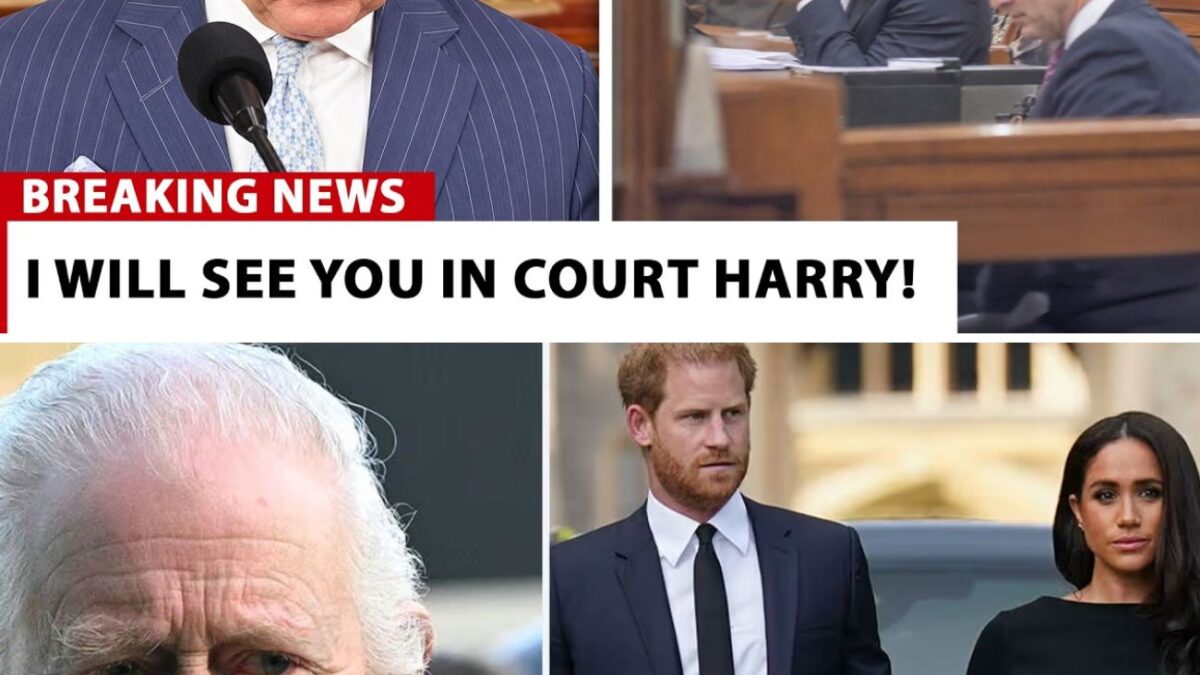
King Charles’ Alleged Final Letter and the Montecito Mansion Controversy: Is Tyler Perry’s Role the Missing Piece?
For years, Prince Harry and Meghan Markle’s life in California has represented a new beginning: freedom from royal expectations, greater privacy, and the promise of building an independent future. But a dramatic online narrative now threatens to turn that image upside down. At its center are an alleged mansion sale, Tyler Perry’s reported role in the property’s ownership, and a purported letter from King Charles drawing a firm boundary around royal support.
The claims have generated a sensational story about money, loyalty, and the limits of friendship. However, the allegations about the property documents, financial arrangements, and private royal correspondence have not been independently verified. They should not be treated as established facts.
The Mansion That Became a Symbol
The Montecito estate has long been associated with the Sussexes’ departure from royal life. Its secluded setting, substantial grounds, and security arrangements appeared to offer the couple the privacy they had sought after leaving Britain.
Yet the circulating account makes a startling allegation: that Tyler Perry, rather than Harry and Meghan, holds the decisive authority over a potential sale.
According to the narrative, the person supposedly handling the transaction told Rob Lowe that Perry was the one arranging the sale. The story further attributes claims about the property’s ownership to a source associated with Lady Colin Campbell.
If accurate, such an arrangement would complicate the public perception of the mansion as a straightforward symbol of the couple’s financial independence. But no verified property records have been provided here to establish that Perry owns the estate or controls its sale. The account’s central assertion therefore remains unconfirmed.
Still, the allegation provides the foundation for a much larger drama: what happens when a home representing independence may depend on the generosity of someone outside the family?
Tyler Perry’s Early Help
Perry’s place in Harry and Meghan’s American story is significant. Following their departure from senior royal duties, he reportedly offered them accommodation at his Beverly Hills estate and helped arrange security during their transition to California. He also became godfather to their daughter, Princess Lilibet.
Those gestures suggest a relationship that, at least publicly, appeared deeply personal rather than merely professional.
The narrative now circulating portrays that early generosity as the beginning of a much more complicated financial arrangement. It alleges that Perry’s assistance extended beyond temporary accommodation, potentially involving expenses and arrangements connected with the couple’s subsequent lifestyle.
In this telling, individual acts of support gradually accumulated into an obligation that could no longer be ignored. What began as a refuge for a young family allegedly became a financial position Perry eventually decided to close.
That is a powerful storyline, but it is not proof of an undisclosed ownership agreement, outstanding debt, or dispute between Perry and the Sussexes. Without documentation or direct confirmation, the precise nature of their private arrangements remains unknown.
Montecito and the Price of Privacy
The account paints a vivid picture of life around the Montecito estate. Security vehicles, production crews, cameras, and heightened privacy measures supposedly transformed the surrounding neighborhood into an environment where ordinary routines became complicated.
It describes residents allegedly returning to their usual lives only after learning that the mansion might be sold. Some are portrayed as relieved by the prospect of fewer vehicles, less disruption, and greater quiet.
The narrative also recounts an alleged incident in which a neighbor’s wine and handwritten welcome note were returned unopened. Other details describe complaints about security arrangements and the presence of filming activity.
These stories are presented as evidence of a widening gap between the couple’s desire for privacy and the public attention surrounding their lives. However, the specific incidents and residents’ reactions have not been independently established here.
The larger point remains understandable: maintaining privacy as an internationally recognized public figure can require substantial resources. Security, staff, property upkeep, and professional commitments can all carry continuing costs.
But those expenses alone cannot establish that a household is financially distressed or that a property must be sold.
The Alleged Letter From King Charles
The story takes a more dramatic turn when Harry and Meghan are portrayed as returning to Britain after leaving California.
According to the script, King Charles sends a letter clarifying that the couple are not working royals and will not receive the funding or institutional support associated with official royal duties. The letter is described as a definitive statement rather than a temporary expression of frustration.
In the narrative, Harry reads the message repeatedly, struggling with the implications. His position as the king’s son, the history of the family, and the hope of reconciliation are portrayed as insufficient to reopen the institutional door.
The letter’s alleged significance lies in the boundary it represents. Family relationships may remain emotionally complicated, but they do not automatically determine who pays for a private household’s expenses.
However, the specific letter described in this account has not been verified. Its wording, timing, and alleged connection to a property transaction should not be presented as confirmed royal news.
A Request for More Time?
The script then describes Harry contacting Perry after the alleged letter from Charles. Rather than immediately discussing a sale, Harry supposedly frames his request in terms of flexibility, the children’s stability, schooling, and the difficulty of maintaining two households.
Perry is portrayed as listening before concluding that the arrangement cannot continue. The narrative claims he decides that the property should be sold under his authority and that the proceeds should be directed toward the obligations associated with the transaction.
Meghan, meanwhile, is depicted as wanting to manage how the development would appear publicly. The account suggests that a move to Britain might be presented as a planned family decision rather than a response to financial pressure.
These private conversations are allegations within the dramatic narrative, not verified accounts of what Harry, Meghan, or Perry actually said. There is no confirmed evidence presented here that Perry issued such an instruction or that the Sussexes are being forced to sell the property.
Nevertheless, the contrast between public presentation and private financial arrangements forms the story’s central tension. A carefully managed announcement can influence how an event is perceived, but it cannot establish who owns a property or who has authority to sell it.
The Difference Between Family and Financial Responsibility
The account uses the alleged royal letter and Perry’s supposed decision as parallel turning points. Charles represents the institutional boundary; Perry represents the personal one.
Both are portrayed as refusing to let earlier support become an indefinite obligation.
That distinction reaches beyond royal controversy. Helping someone during a difficult period does not necessarily mean agreeing to support them permanently. Likewise, family reconciliation does not automatically require financial assistance.
At the same time, refusing to fund someone’s lifestyle does not prove that the person has behaved improperly. The underlying agreements, expectations, and circumstances matter, and they cannot be reliably reconstructed from speculation.
What Happens Next?
The Montecito mansion has become the centerpiece of a story about independence, gratitude, and trust. The dramatic version suggests that a benefactor’s generosity may have been misunderstood, that royal support is no longer available in the way some might expect, and that a change of country cannot erase existing obligations.
But the essential questions remain unanswered. Who legally owns the property? Is a sale actually underway? Has Tyler Perry asserted control over a transaction? And has King Charles sent the letter described in the story?
Until credible documentation or direct statements establish those details, the allegations should remain allegations.
For Harry and Meghan, the broader challenge of sustaining an independent life outside the monarchy is a legitimate subject of public discussion. Yet the claim that their mansion is being sold by Perry, or that a final letter from Charles has forced their hand, requires evidence rather than dramatic narration.
Ultimately, the story’s most compelling theme is not the mansion itself. It is the fragile boundary between generosity and obligation, and the question of what independence really means when a life depends on resources, relationships, and arrangements that the public may never fully see.








