KING CHARLES HANDS WILLIAM THE POWER? Camilla’s Sarah Ferguson Ties Ignite a Royal Showdown as Kate Steps Into the Spotlight
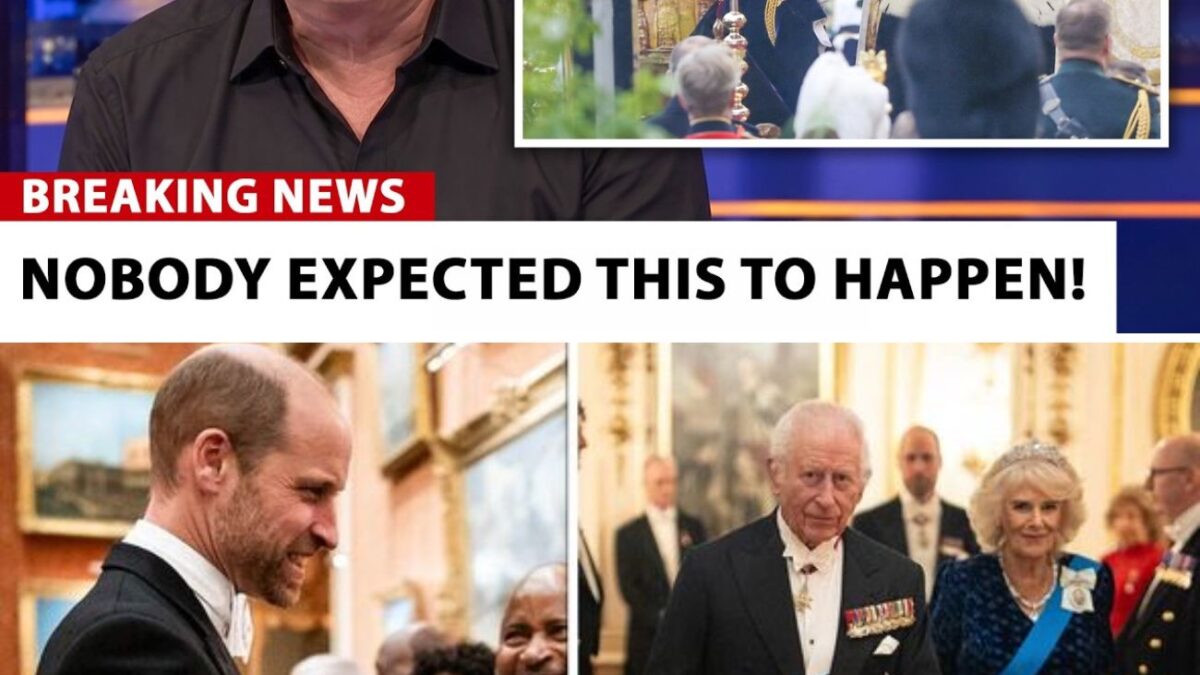
King Charles, Prince William and Camilla Face a Royal Power Struggle as Andrew Scandal Deepens
The British royal family is confronting one of its most uncomfortable periods in years, and the pressure is raising a question that Buckingham Palace cannot easily escape: who is shaping the monarchy’s future while King Charles remains on the throne? Prince William is increasingly viewed as a central figure in the institution’s response to controversy, while Queen Camilla’s reported friendship with Sarah Ferguson has become a potential source of tension. Behind the public ceremonies and carefully measured statements, competing ideas about loyalty, reputation and accountability are colliding.
Andrew’s Arrest Changes the Atmosphere
February 19, 2026, marked a dramatic turning point when Andrew Mountbatten-Windsor was arrested on suspicion of misconduct in public office. Thames Valley Police confirmed that a man in his sixties had been arrested and that searches were taking place in Norfolk and Berkshire. Andrew was subsequently released under investigation. The allegations relate to claims concerning his conduct while serving as a British trade envoy and his association with Jeffrey Epstein. Andrew has denied wrongdoing in relation to Epstein, and the police investigation must be distinguished from any finding of guilt.
The arrest intensified scrutiny of a royal family that has spent years trying to distance itself from the controversy surrounding Andrew. King Charles expressed concern and emphasized that the legal process should take its course. Yet the crisis also revived an older question about the institution: should family loyalty influence decisions when the monarchy’s public credibility is at stake?
For William, whose future role depends partly on public confidence in the Crown, this is precisely the kind of challenge that could shape his eventual reign.
Is William Already Taking the Lead?
Reports and royal commentary have suggested that Charles has increasingly relied on his eldest son to help prepare the monarchy for the future. Some commentators interpret William’s growing responsibilities as evidence that practical influence is shifting toward the next generation, although claims that the king has surrendered final authority to his heir have not been officially established.
William has long been associated with a more streamlined approach to royal life. His work with Catherine through the Royal Foundation reflects an emphasis on defined objectives, organized management and measurable public benefit. He has also spoken about the need for change while acknowledging that an institution built around continuity cannot transform overnight.
His position has become particularly significant amid the Andrew controversy. The argument attributed to William in the reports surrounding the crisis is straightforward: the monarchy cannot expect public trust if it appears to place private relationships above institutional responsibility.
That approach could make William look decisive to supporters. To critics, however, it risks making the royal family appear calculating, especially when personal relationships become part of a public relations strategy.
Camilla and Sarah Ferguson: The Friendship Under Pressure
The most personal dimension of the reported dispute concerns Camilla’s longstanding friendship with Sarah Ferguson, Andrew’s former wife.
According to reports cited in the original commentary, William has questioned whether Camilla should maintain such close ties with Sarah while the Andrew controversy continues. Some accounts portray William as demanding a clear separation, warning that continued association could create further reputational problems for the monarchy. However, the precise details of any ultimatum have not been independently established, and there is no confirmed public statement proving that William ordered Camilla to end the friendship.
The underlying disagreement is nevertheless easy to understand. Sarah and Camilla have known one another for decades, long before their present positions within royal circles. From Camilla’s perspective, abandoning a longstanding friend because of another person’s alleged misconduct could seem unfair. Friendship does not automatically establish complicity, and association alone is not proof of wrongdoing.
Sarah’s name has appeared in material associated with Epstein, prompting renewed questions about past contacts. That connection does not, by itself, establish criminal conduct by Sarah. Any claims about her actions must be assessed on their own evidence rather than through her relationship with Andrew.
William’s reported position reflects a different calculation. In a climate of intense public scrutiny, even an innocent personal association can become a damaging headline. He may believe that visible distance is necessary to demonstrate that the institution takes accountability seriously.
The clash, therefore, is not simply about whether two women should remain friends. It is about how far public duty should reach into private life.
Kate Middleton’s Growing Role
Catherine, Princess of Wales, also features prominently in accounts of the changing royal dynamic. Reports have portrayed her as working alongside William to help maintain stability and coordinate the family’s response to difficult circumstances. Her presence beside William at public engagements reinforces the image of a future royal partnership built around cooperation and long-term planning.
Some entertainment and celebrity publications have suggested that Camilla feels uncomfortable with Catherine’s growing influence. These accounts remain allegations rather than established facts, and there is no independently verified evidence confirming every reported confrontation or private disagreement.
Nevertheless, the contrast between the two generations provides compelling material for royal observers. Camilla entered the monarchy through a complicated personal history and has had to navigate intense public judgment. Catherine, meanwhile, represents a newer generation expected to communicate differently with a public accustomed to constant news coverage and immediate online reactions.
If William increasingly takes responsibility for strategic decisions, Catherine could become an important partner in shaping how the monarchy presents itself. That possibility does not establish that she is undermining Camilla. It simply highlights how changing responsibilities can create uncertainty within an institution where status and influence are closely watched.
Two Visions of the Monarchy
At the heart of the reported tensions are two competing philosophies.
The traditional approach values discretion, continuity and the protection of private family relationships. Supporters argue that the monarchy cannot function if every disagreement becomes a public confrontation. Maintaining personal loyalty may also prevent a crisis from becoming an even larger family rupture.
The alternative approach, associated with William’s reported priorities, emphasizes accountability, professional management and a clear separation between the institution and individuals whose actions generate controversy. Under this model, royal status should not automatically shield anyone from consequences.
Both approaches carry risks. Excessive secrecy can deepen public suspicion, while overly aggressive distancing can make the family appear cold or opportunistic. The challenge is to demonstrate fairness without sacrificing credibility.
Charles occupies a particularly difficult position. He must preserve the authority of his reign while preparing William for the responsibilities that will eventually become his own. His health history has added attention to questions about the future, but reports of a specific timetable for transferring the throne should not be mistaken for a confirmed succession plan. William remains heir, not king.
What Happens Next?
The monarchy’s immediate challenge is to show that it can respond to the Andrew investigation without prejudging the outcome or allowing private loyalties to dictate its public position. Charles has emphasized the importance of allowing the legal process to proceed. William’s long-term reputation may depend on whether the institution can combine that principle with credible standards of accountability.
Camilla, meanwhile, faces the difficult task of maintaining her public role amid continuing scrutiny of her relationships. Whether she and William have clashed as dramatically as some reports suggest remains uncertain. The alleged ultimatum should therefore be treated cautiously, not as an established palace decision.
What is clear is that the crisis has renewed debate about the future shape of the British monarchy. A smaller working royal family, clearer responsibilities and stronger professional oversight are possibilities frequently associated with William’s approach. Yet any lasting reform will require more than a decisive heir or a dramatic headline.
The royal family has survived previous scandals, public disputes and periods of profound change. Its next chapter will depend on whether it can learn from the present crisis while respecting due process and avoiding the appearance of special treatment.
Charles still wears the Crown. William is preparing to inherit it. Camilla and Catherine occupy different positions in a family whose public responsibilities are changing. Whether the reported tensions become a lasting rupture or prove to be exaggerated remains to be seen.
For now, the central question is not simply whether William has gained the upper hand over Camilla. It is whether the monarchy can rebuild confidence without losing the human relationships that exist behind its public image.








