KING CHARLES III’S SHOCKING MOVE AGAINST CAMILLA? The Alleged Palace Secret That Could Change Prince William’s Future Forever
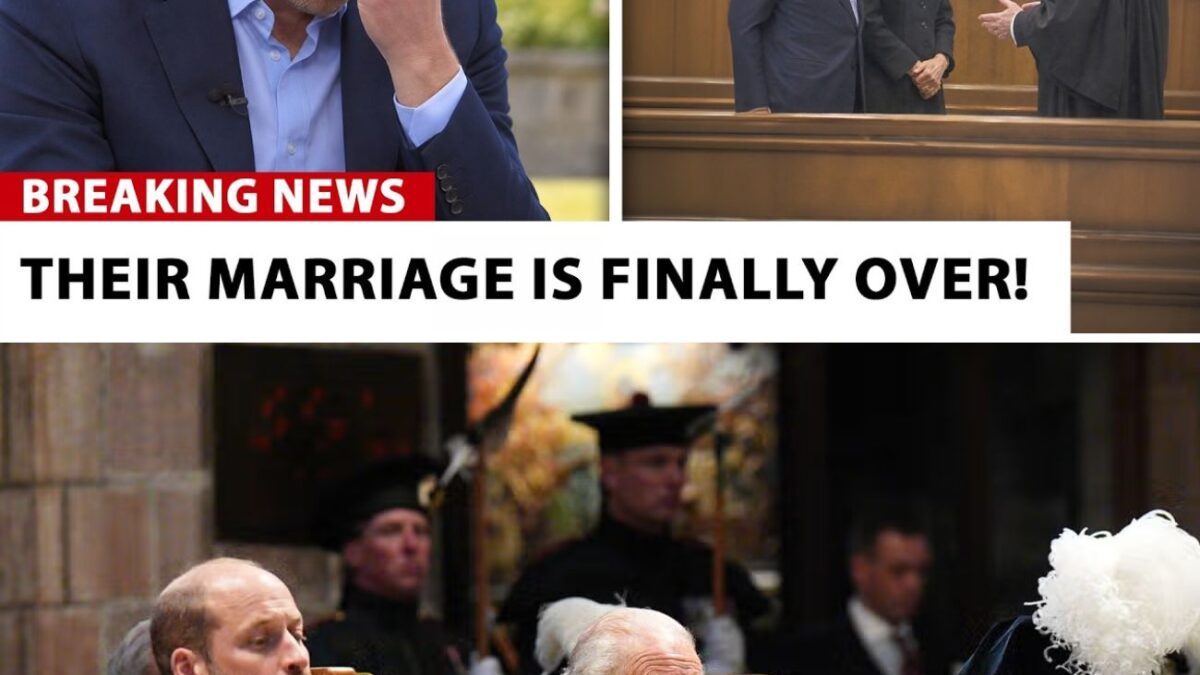
King Charles III and Queen Camilla: The Explosive Palace Story Raising Questions About the Monarchy
A Confidential File That Allegedly Changed Everything
Imagine King Charles III sitting alone in his private study, a thick folder resting on the desk before him. Its label reads “Confidential Internal Review.” According to the dramatic scenario described in the circulating story, the monarch has just received findings that could reshape the relationships inside his household and complicate the future reign of Prince William.
The story does not begin with a public argument or an announcement of divorce. Instead, it imagines a quiet decision behind closed doors, followed by a series of administrative changes that supposedly leave Queen Camilla facing an uncertain future.
The most striking allegation is that Charles authorizes the separation of their working households. Separate schedules, independent staff arrangements, and divided travel plans would replace the coordinated system that had long presented the couple as a united royal partnership.
If such a decision were real, its implications would extend far beyond the personal lives of the king and queen. Yet the central claims remain unverified, and there is no established evidence that Charles has ended his marriage to Camilla.
More Than a Marriage?
The fictional account portrays the alleged split as a struggle over influence, property, and the future organization of the monarchy.
For years, Charles and Camilla have been presented publicly as partners who share important royal duties. Their relationship also carries a complicated history, having survived decades of public scrutiny before their marriage in 2005 and Charles’s accession to the throne in 2022.
The script imagines that this partnership reaches a breaking point after questions emerge about proposed arrangements involving royal properties, staffing budgets, and long-term privileges.
In this version of events, a confidential review supposedly examines legal documents drafted by outside advisers. The alleged concern is that certain agreements could restrict the choices available to Prince William when he eventually becomes king.
These details form the dramatic heart of the narrative. They suggest that a disagreement presented as routine estate planning could become a confrontation over who should have authority over the monarchy’s future.
However, the specific review, agreements, and alleged financial arrangements have not been substantiated by reliable public evidence.
Prince William Enters the Picture
Prince William occupies a central role in the story. Rather than portraying him as an angry heir demanding immediate control, the script imagines him approaching his father with a carefully measured argument.
His supposed concern is institutional continuity. The next monarch, the narrative suggests, should not inherit arrangements that were established without proper consideration of his future responsibilities.
Catherine, Princess of Wales, is also portrayed as offering private advice. In the imagined conversation, she encourages William to approach Charles as a son first, rather than allowing a disagreement over royal administration to become a personal confrontation.
The distinction is important. William is not depicted as demanding revenge against his stepmother. Instead, he is presented as insisting that family loyalty cannot take precedence over the responsibilities attached to the crown.
That tension gives the story its emotional force. Charles must supposedly confront a difficult question: how can he protect a marriage built over decades without compromising the institution he has sworn to serve?
The narrative offers no verified evidence that such a confrontation occurred. Nevertheless, it draws on a genuine constitutional reality: the monarchy must distinguish the sovereign’s public responsibilities from the private relationships that shape royal life.
The Dinner That Allegedly Changed the Atmosphere
The script places a pivotal confrontation at a private family dinner at Windsor Castle.
King Charles, Queen Camilla, Prince William, and Princess Anne are imagined sitting around a table discussing future household arrangements. What begins as an ordinary conversation supposedly becomes uncomfortable when Camilla raises the possibility of securing certain staff appointments and residential privileges before William’s accession.
In the story, William falls silent. Princess Anne carefully puts down her glass, while Charles asks his wife to explain precisely what she means.
The alleged remark becomes the turning point because it is interpreted as an attempt to limit the future king’s discretion. Camilla is portrayed as defending continuity for her trusted staff, while others in the room supposedly see a more troubling possibility.
The scene is constructed around a simple but powerful conflict: protecting familiar people from uncertainty versus preserving the next monarch’s freedom to make independent decisions.
Princess Anne subsequently becomes the voice urging Charles to look beyond his personal feelings. According to the script, she recommends an independent examination of the relevant paperwork.
No reliable evidence establishes that this dinner, exchange, or subsequent investigation took place.
The Alleged Discovery in the Royal Archives
The story’s biggest revelation arrives through an imagined discovery among historical royal records.
Auditors supposedly locate an old memorandum associated with the final months of Queen Elizabeth II’s life. The document allegedly contains objections to proposals that would guarantee long-term residential privileges or restrict the future sovereign’s authority over royal properties.
In the script, the late queen has supposedly crossed out provisions and insisted that future residential decisions remain within the discretion of the Prince of Wales once he succeeds to the throne.
The alleged handwriting changes everything for Charles. What might previously have appeared to be overenthusiastic planning is recast as an attempt to revive proposals that had already been rejected.
The narrative suggests that Charles feels betrayed, not simply because the documents could affect William, but because they allegedly conflict with his mother’s wishes.
It is a powerful dramatic device, transforming an administrative disagreement into a personal reckoning involving three generations of the royal family.
Yet the memorandum, its supposed wording, and the surrounding allegations are unverified elements of the supplied story, not established historical facts.
Charles’s Imagined Countermove
The fictional account then presents Charles taking decisive action.
Rather than staging a public confrontation, he supposedly orders disputed draft agreements set aside and introduces tighter oversight of future property arrangements and household expenditure. William is portrayed as receiving a stronger role in decisions affecting the eventual transition of power.
The king’s supposed response is deliberately restrained. He does not make a speech accusing Camilla of wrongdoing. Instead, the narrative depicts him choosing institutional safeguards over personal assurances.
This is where the headline’s suggestion of a royal marriage ending becomes more complicated. The script does not actually establish a divorce. Its imagined final decision concerns the separation of working arrangements and the limits of Camilla’s operational influence.
That distinction matters. A royal household can undergo administrative changes without a marriage ending, and sensational descriptions of a “split” should not be treated as proof of a marital separation.
A Public Display of Distance
The story’s next scene takes place at a grand diplomatic reception at Buckingham Palace.
Charles supposedly arrives separately, walks ahead without offering Camilla his arm, and enters the ballroom accompanied by senior officials. Camilla appears later, while William and Catherine stand close to the king during the formal proceedings.
The imagined photographs quickly become the focus of public speculation. Every glance, seating arrangement, and step across the ballroom is interpreted as evidence of a changing balance of power.
In the narrative, Camilla’s advisers attempt to portray the separation as a temporary response to the king’s health and demanding schedule. The palace, however, supposedly refuses to engage in a public exchange of accusations.
The scene captures the peculiar intensity of royal symbolism. A few feet of distance can become the subject of endless commentary when the people involved occupy the highest levels of public life.
But no verified evidence supports the reception sequence as described in the script.
The Quiet Ending
The final chapter imagines Charles and Camilla meeting privately at a country residence. There are no cameras, formal declarations, or dramatic arguments. Charles supposedly tells her that she will retain her title, security, and public respect, while their working arrangements will remain separate.
Camilla, in this fictional account, recognizes that challenging the decision publicly could deepen the damage. Later, personal belongings are quietly transported from one residence to another, providing the story with a visual ending rather than a courtroom battle.
The monarchy, the narrative concludes, has survived another internal crisis, but only by placing institutional continuity above personal comfort.
The emotional message is unmistakable: love may endure for decades, yet royal duty can impose limits that even a monarch cannot ignore.
Still, the supplied script does not establish that Charles and Camilla have separated, that Camilla has been removed from the royal household, or that Prince William has received the extraordinary powers described.
For readers, the real question is not whether every dramatic detail should be believed. It is why stories of royal conflict attract such intense attention. The monarchy exists at the intersection of family, tradition, public duty, and constitutional responsibility.
When those forces collide in a compelling narrative, speculation can quickly resemble fact.
Until credible evidence confirms the allegations, the story of Charles, Camilla, and William should be understood as an unverified dramatic scenario—not a confirmed royal breakup.








