KING CHARLES’ SHOCK DIVORCE BOMBSHELL! Prince Louis’ Discovery Allegedly Exposes Camilla’s Secret Dossier — William’s Royal Ultimatum Changes EVERYTHING!
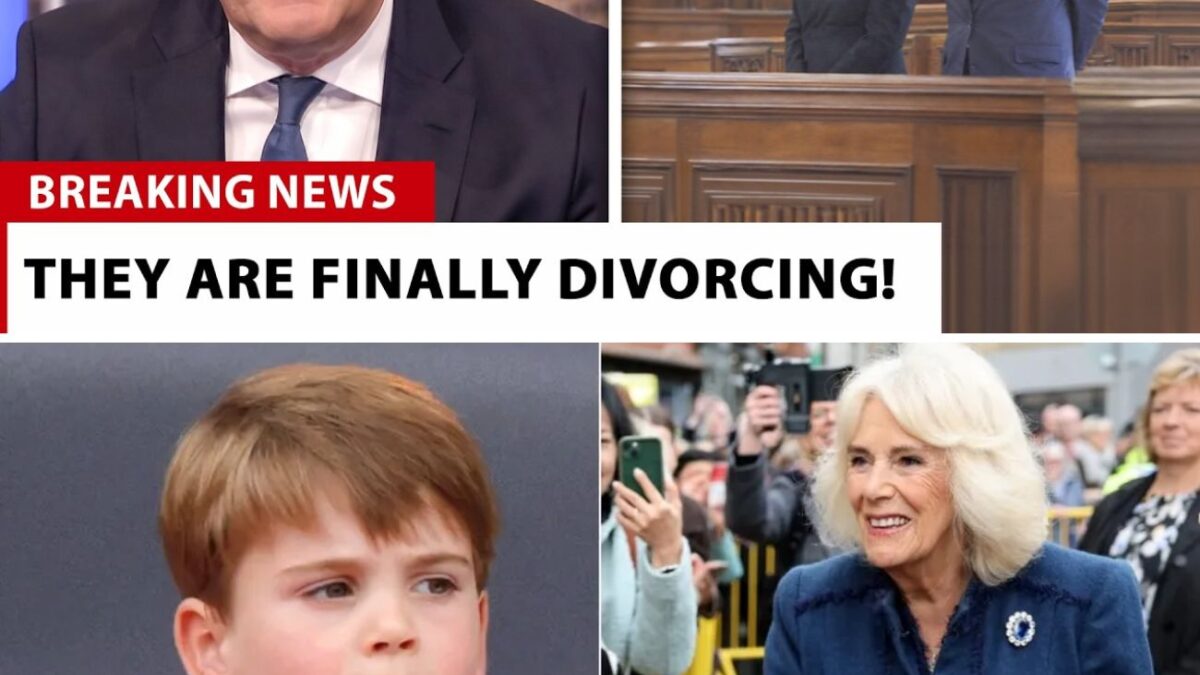
King Charles Faces a Royal Family Crisis After Prince Louis’ Alleged Discovery of Camilla’s Secret Dossier

A seemingly ordinary afternoon at Windsor Castle becomes the starting point of an extraordinary royal drama in this fictionalized account of palace intrigue. Young Prince Louis discovers a confidential-looking leather portfolio, Princess Catherine opens its pages, and Prince William is confronted with allegations that strike at the heart of his family. What follows is a dramatic chain of accusations, confrontations, and decisions that could transform the monarchy forever.
The story’s most explosive claim is that documents inside the portfolio describe a strategy to weaken the public standing of the Wales family, including their youngest son. The allegations remain unverified and should not be mistaken for established facts about the royal family.
The Discovery That Changes Everything
According to the dramatic narrative, Prince Louis is playing hide-and-seek in Windsor Castle when he wanders into a quiet room near the private archives. There, on a walnut side table, he notices a leather portfolio secured with black ribbon and marked with the words “Confidential Domestic Actions.”
Unaware of its significance, the eight-year-old picks it up and carries it to his mother.
Princess Catherine initially assumes the papers belong to an archivist. But when she begins reading, the atmosphere changes. The documents allegedly outline a communications strategy targeting her household, with particular attention given to Louis’s energetic public appearances and spontaneous gestures.
The supposed briefing recommends presenting his behavior as evidence of emotional instability and gradually reducing his participation in prominent royal ceremonies before his eleventh birthday. It also raises the possibility of limiting his future ceremonial prominence.
For Catherine, the idea that a child could become the subject of such a strategy is deeply disturbing. When William enters the room, he sees the papers spread across the desk and immediately understands why his wife is upset.
The documents remind him of the damaging media narratives surrounding his mother, Princess Diana. He fears that the same machinery of palace gossip and strategic briefings could once again place a member of his family under an unforgiving spotlight.
William decides that the matter cannot be settled through another quiet conversation among advisers.
The Confrontation at Balmoral
William and Catherine travel to Balmoral, taking the portfolio directly to King Charles.
In the story, William enters his father’s private study and places the dossier on the desk. Rather than begin with accusations, he demands that Charles examine the evidence and explain how such material could have emerged from within the royal household.
His message is uncompromising: his father must decide whether personal loyalty should outweigh his responsibility to protect the future of the monarchy.
Charles initially struggles to understand the seriousness of the situation. As he reads the alleged strategy papers, however, the implications become increasingly troubling.
The dossier supposedly describes plans to cultivate relationships with sympathetic newspaper editors, commission favorable material about Camilla, and circulate damaging portrayals of William and Catherine. It also refers to meetings with international media figures that would allegedly establish a communications network operating independently of the palace’s normal channels.
The documents, if authentic, would raise serious questions about authorization, accountability, and the use of royal resources. But their existence alone would not prove who commissioned them or whether the proposed actions were ever carried out.
For Charles, the emotional consequences are nevertheless immediate within the story. He must consider whether the woman he has defended for decades could be connected to an operation that threatens the trust between him and his son.
William gives his father until sunrise to decide how to respond.
A Long Night of Doubt
Charles spends the night reviewing the papers. He remembers years of defending Camilla against criticism and trying to secure stability within his family.
Now, the possibility that the household itself could become a source of damaging leaks leaves him deeply unsettled.
The alleged strategy also raises questions about Diana’s legacy. William believes that his mother’s experience taught him the dangers of allowing private briefings to shape public perceptions without scrutiny.
By dawn, Charles has decided that the allegations require a formal examination. He contacts senior advisers and legal representatives, instructing them to review the documents and determine what action would be appropriate if the claims could be substantiated.
The fictional account then takes a dramatic turn: instead of limiting the response to an internal inquiry, Charles considers a formal separation from Camilla and the restructuring of her private office.
Such a decision would carry enormous personal and institutional consequences. It would affect not only their marriage but also the monarchy’s public image, the allocation of responsibilities, and the relationship between the king and the future sovereign.
The Alleged Legal Crackdown
At Clarence House, senior legal advisers are portrayed examining the dossier and preparing documents intended to separate Camilla’s household operations from the monarchy’s central administration.
The proposed measures include reviewing discretionary spending, restricting access to confidential communications, and reassessing the duties of staff members connected to the disputed briefings.
The story depicts Charles as determined to prevent any unauthorized communications operation from using royal resources to influence perceptions of his family.
Camilla, meanwhile, is portrayed as initially unaware of the scale of the response. When members of her communications team receive notices concerning their positions and security access, she demands an explanation.
The fictional narrative describes her attempts to contact Charles being redirected through official representatives. Her previously trusted network appears to be dissolving around her.
Eventually, arrangements are made for her to return to Ray Mill House in Wiltshire, her private country residence.
The account presents the move as a symbolic break with palace life. However, its dramatic claims about a divorce, financial penalties, and restrictions on Camilla’s public statements are not verified reports of actual royal decisions.
Princess Anne Steps Into the Crisis
Princess Anne becomes a decisive figure in the unfolding drama.
When she meets Charles, she argues that the monarchy cannot allow personal relationships to undermine its responsibilities. She urges her brother to establish clear boundaries, protect the institution’s credibility, and ensure that allegations involving the Wales family receive proper scrutiny.
Anne’s response is practical rather than theatrical. The story portrays her reviewing the official engagement calendar, reconsidering Camilla’s scheduled appearances, and offering to take on additional public duties.
Her intervention gives Charles a way to restore a sense of order while the allegations are examined.
Anne also reminds him that William’s concerns cannot simply be dismissed as a family disagreement. If the future king believes his children’s interests are threatened, the palace must provide convincing answers rather than rely on tradition and silence.
Diana’s Portrait Sends a Message
One of the story’s most striking scenes takes place in Buckingham Palace’s picture gallery.
According to the narrative, curators remove Camilla’s official portrait from a prominent position and replace it with a painting of Princess Diana. The portrait is placed near images of William and Catherine, creating a powerful visual association between Diana’s memory and the family’s future.
The change is presented as a symbolic restoration of Diana’s place in royal history and a declaration that the Wales family will not be marginalized.
Diplomats and visitors are said to notice the altered gallery almost immediately. The image becomes a metaphor for a monarchy attempting to reconcile its past with its future.
Yet a portrait cannot establish the truth of the allegations in the dossier. Its significance in this story lies in the emotions it represents: grief, loyalty, inheritance, and the continuing influence of Diana’s memory.
A New Chapter for the Monarchy?
The fictional account concludes with Charles facing the consequences of a family crisis that began with a child’s accidental discovery.
William has demanded accountability. Catherine has been forced to confront the possibility of a campaign against her household. Anne has pressed for institutional discipline, while Charles has been left to weigh his marriage against his obligations as monarch.
At the center of everything stands Prince Louis, whose innocent game of hide-and-seek becomes the unlikely catalyst for a confrontation among the adults responsible for protecting his future.
The story’s central question is ultimately larger than any individual royal: what happens when loyalty, public image, and family responsibility collide?
The answer, in this dramatic retelling, is that silence becomes increasingly difficult to maintain. Documents demand examination, decisions require accountability, and even the most established institutions must confront uncomfortable questions.
Whether the monarchy can emerge stronger depends not on the drama of a headline or the symbolism of a portrait, but on evidence, transparency, and the willingness to distinguish verified facts from speculation.








