KING CHARLES’ SHOCK SUCCESSION MOVE: William Steps Forward as Harry’s Royal Future Quietly DISAPPEARS
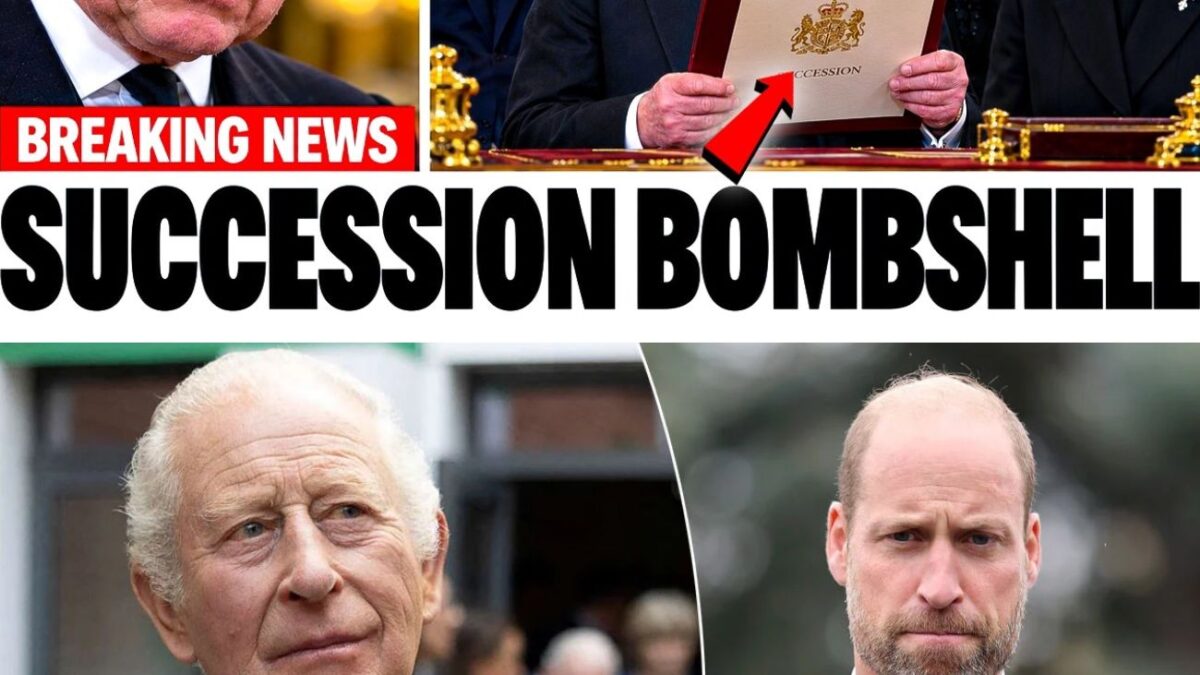
KING CHARLES’ SHOCK SUCCESSION MOVE: William Steps Forward as Harry’s Royal Future Quietly DISAPPEARS
King Charles’ Quiet Decision That Changed the Royal Family
There was no televised announcement. No abdication speech. No dramatic ceremony at Buckingham Palace.
Instead, according to the scenario presented in the script, King Charles III made a private decision that could prove far more significant than a public declaration.
Behind closed doors, the king approved a new succession preparation plan designed to prepare the monarchy for the eventual transition from his reign to that of Prince William.
The document was administrative in appearance, covering duties, ceremonies, patronages and emergency continuity arrangements. But its implications were deeply personal.
William would be drawn further into responsibilities traditionally associated with the sovereign. Catherine would become more deeply involved in long-term continuity planning. And Harry and Meghan would no longer occupy a meaningful place in the machinery being designed for the next reign.
Charles signed the directive quietly.
Yet after the papers were returned, the king reportedly remained alone for several moments, staring at his signature.
He understood what the document represented.
A monarch must prepare for the future before uncertainty becomes a crisis. But for Charles, preparing for the next reign also meant acknowledging something every father eventually struggles to accept: his own reign would one day end.
William felt the weight immediately.
When the future king received the document, he reportedly read the section expanding his responsibilities twice. He did not celebrate. Instead, he closed the folder.
To William, the new authority did not feel like a promotion.
It felt like a reminder that his father’s time on the throne was finite.
Another section carried an even more painful message.
Harry and Meghan remained members of the family, but they were increasingly absent from the operational structure of the future monarchy.
Their names could still appear in family contexts, but they were no longer central to the planning that would shape the next reign.
That distinction mattered.
Royal influence is not based only on titles. It is also built through access, responsibility and expectation.
All three were now moving toward William.
Queen Camilla, according to the scenario, sensed the emotional significance before the wider family discussed it. When she asked Charles whether everything had been decided, his answer was restrained.
“Enough has been decided to begin.”
The words reportedly carried a finality that needed no explanation.
For William, the responsibility was complicated by one fear.
He did not want his growing role to look like Harry’s erasure.
Catherine understood that immediately. She reportedly reminded her husband that he needed to remain Harry’s brother even as everyone around him increasingly treated him as the future king.
That warning would stay with William.
The origins of the decision reached back months earlier, to a tense family discussion at Windsor.
Charles had gathered William, Catherine, Anne, Edward, Harry and Meghan to discuss future ceremonies and continuity arrangements.
The conversation began calmly.
Who should represent the monarchy overseas? Who could assume ceremonial responsibilities during illness? Which family members needed preparation for the next reign?
But Harry reportedly noticed a pattern.
William appeared at the center of almost every future pathway.
Harry and Meghan, meanwhile, were increasingly described as family participants rather than working royals.
The tension intensified when Meghan saw a draft schedule showing Catherine repeatedly included in future state occasions while her own name was absent.
She reportedly asked whether the decision had already been made.
Charles attempted to separate family relationships from institutional responsibilities.
Harry refused to accept the distinction so easily.
He argued that the palace could not demand loyalty through family language while using institutional decisions to exclude him.
William eventually responded.
Emergency planning, he argued, could not depend upon people who were not regularly performing royal duties.
The room reportedly fell silent.
Charles looked from one son to the other and understood something painful.
The possibility of Harry returning to a meaningful working role could no longer serve as the foundation of the monarchy’s future planning.
Later that night, Charles ordered a new version of the continuity documents.
When Harry eventually confronted his father about the change, there were no advisers present.
Only a father and his son.
Harry placed a copy of the revised plan between them and asked whether the decision was truly about strengthening the monarchy—or whether Charles had finally decided that his younger son no longer belonged in its future.
Charles remained calm.
He explained that the monarchy could not postpone structural decisions indefinitely while waiting for damaged relationships to heal.
The future required people who were available, active and prepared.
Harry heard something different.
He asked whether he was still Charles’s son when the crown was involved.
That question reportedly changed the atmosphere completely.
Charles told him that nothing in the document changed their relationship as father and son.
Harry, however, argued that it changed almost everything else.
William’s expanding position became another source of pain.
Harry believed his brother was being drawn deeper into power while his own family was gradually becoming part of royal history.
Charles rejected the idea that William had engineered the change.
The king accepted full responsibility.
Then came the most difficult admission.
Charles acknowledged that he had delayed the restructuring because part of him had continued to believe Harry might someday return to regular royal duties.
The Windsor confrontation ended that assumption.
From then on, the king would plan around reality rather than possibility.
William’s responsibilities soon expanded.
He began receiving briefings earlier. Senior family members were asked to coordinate future planning with him. He was brought into discussions involving continuity, estates, ceremonies and senior family affairs.
But Anne warned him not to mistake preparation for impatience.
William understood.
During one briefing, an official reportedly moved the central chair toward him before Charles arrived, assuming the new structure made the symbolism appropriate.
William quietly moved the chair back.
When Charles entered and noticed what had happened, he reportedly smiled.
The message was clear.
William was preparing for authority, not trying to claim it.
Catherine’s role also expanded, particularly around ceremonial continuity and charitable responsibilities.
Harry and Meghan, meanwhile, remained family members but were increasingly outside the operating circle.
Then came the emotional conversation between Charles and William.
With advisers gone and official papers put aside, the king finally spoke to his eldest son not as monarch to heir, but as father to son.
Charles explained that succession preparation was necessary because uncertainty could damage the monarchy faster than change.
William admitted something he had kept hidden.
The growing responsibilities frightened him.
Every new briefing reminded him that his father’s time would eventually end.
Charles did not dismiss the fear.
He told William that confronting that emotion privately was part of becoming ready for the enormous responsibility that would eventually come.
William then asked about Harry.
Had reducing his brother’s institutional role truly been necessary?
Charles answered carefully.
It was not punishment.
The plan simply had to reflect who was performing royal duties now rather than who might someday return.
William made his own promise.
He could not guarantee Harry a restored royal role, but he would never allow institutional distance to become an excuse for abandoning the family relationship.
That distinction became the heart of the new arrangement.
The public eventually noticed the changes.
William’s responsibilities increased. Harry’s institutional presence diminished. Charles continued as king.
There was no abdication.
No crown changed hands.
Yet inside the palace, the future had been reorganized.
The final decision was perhaps the most revealing of all.
Charles sent handwritten notes to both sons. William’s spoke about preparation and trust. Harry’s contained no discussion of royal status, only an invitation to meet his father privately.
In that gesture, Charles appeared to separate two things that had become painfully intertwined: succession and family.
William could prepare without treating his father’s reign as a countdown.
Harry could remain Charles’s son without being promised a future royal position.
And Charles could continue as king while finally acknowledging that one day another man would inherit the crown.
The throne had not changed hands.
But according to the scenario, the Royal Family had quietly accepted where the future was heading—and for Harry, that realization may have been the most painful change of all.








