KING CHARLES’ SHOCKING RESPONSE! Harry’s GQ Interview Sparks Royal Crisis as William Takes Center Stage
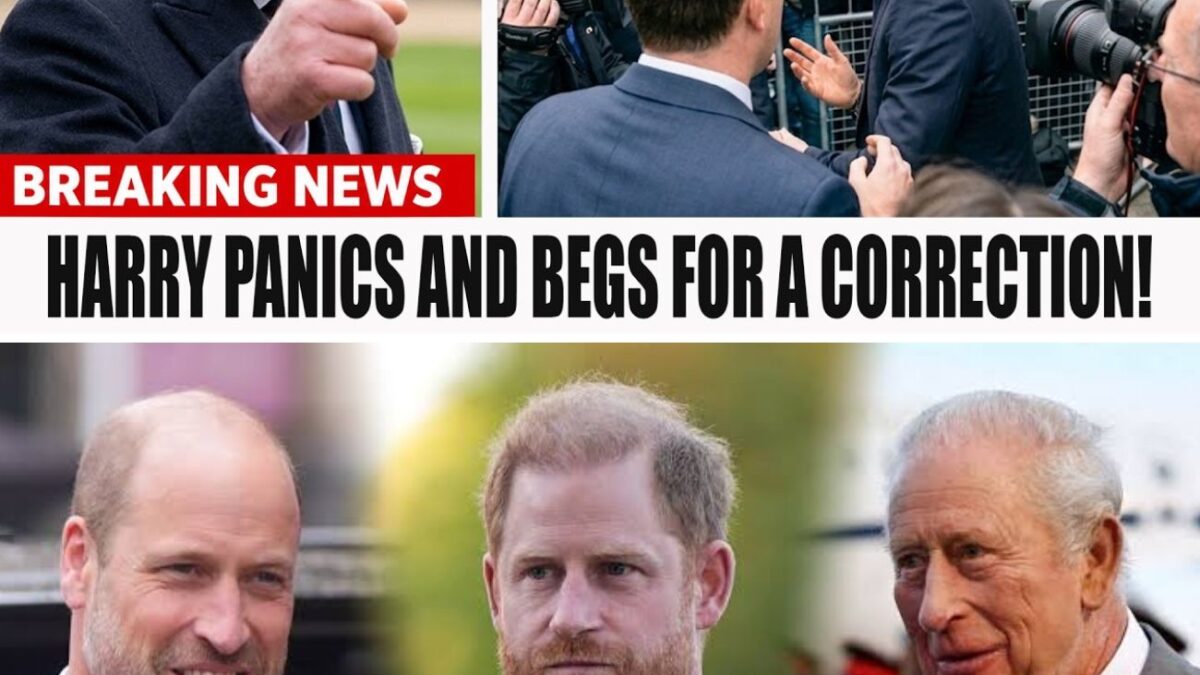
King Charles’ Dramatic Response to Harry’s GQ Interview: How William Became the Center of a Royal Storm
The British royal family has weathered countless public controversies, but few subjects attract attention as intensely as the strained relationship between Prince Harry, King Charles III, and Prince William. In this dramatized account, a GQ interview becomes the spark for a much larger confrontation, placing family grievances against the backdrop of international diplomacy and a solemn moment of national remembrance.
The story begins at Windsor Castle, where King Charles and Prince William are preparing to welcome Oman’s Sultan Haitham bin Tariq. The visit represents an important opportunity to strengthen relations between Britain and a strategically significant Gulf nation. Yet, just as the royal household prepares for the cameras, headlines surrounding Harry’s interview threaten to dominate the news cycle.
During the interview, Harry reportedly reflects on the difficulties of reconciliation with his family, saying that “some people do not want it to work out.” The remark is ambiguous, but its timing invites speculation. Observers could interpret it as another expression of his longstanding frustration with the institution, while others might see it as a general reflection on the challenges of repairing broken relationships.
In the script’s account, the interview quickly overshadows coverage of the diplomatic engagement. A promotional video connected with the Invictus Games also appears during the same news cycle, adding to the impression that several stories are competing for public attention.
The result is an imagined palace atmosphere charged with frustration. The central question is no longer simply what Harry meant. It is whether a family dispute can interfere with the public responsibilities carried by the King and the Prince of Wales.
A diplomatic occasion under pressure
The script places the controversy against a wider backdrop of energy security and Britain’s international relationships. Oman occupies an important geographical position near the Strait of Hormuz, a vital maritime passage for global energy supplies. Maintaining stable relations with Gulf partners is therefore a significant concern for governments seeking reliable trade and secure shipping routes.
In this fictionalized scenario, the state visit represents months of diplomatic preparation. The King’s role is largely symbolic and constitutional, but royal engagements can provide an important platform for demonstrating respect and strengthening international relationships.
That is why the imagined timing of Harry’s interview becomes such a powerful element of the narrative. A family disagreement, normally confined to celebrity coverage, is presented as competing with an event involving national interests.
However, the script goes further by suggesting that Harry deliberately arranged the timing to undermine his father and brother. It also alleges that he hoped to obtain assistance with his entertainment ambitions. These are serious claims, and no independently verified evidence is provided in the supplied material to establish that such a plan existed.
Nevertheless, within the story, suspicion grows as the palace prepares to respond—not with an angry public statement, but through the conduct of its senior working royals.
The memory of Aberfan
The emotional center of the narrative shifts from Windsor to Wales and the memory of the Aberfan disaster.
On October 21, 1966, a coal-waste tip collapsed above the village of Aberfan, sending a devastating wave of slurry into the community. The disaster killed 144 people, including 116 children at Pantglas Junior School. Its legacy remains deeply painful for survivors, relatives, and generations of Welsh residents.
Queen Elizabeth II eventually visited Aberfan after the tragedy, and her relationship with the community became an enduring part of the disaster’s history. In the script, William is portrayed as determined to honor that legacy through a solemn visit alongside his father.
The proposed joint appearance represents more than a ceremonial engagement. It symbolizes continuity between generations of the royal family and acknowledges the importance of listening to communities carrying memories of profound loss.
Against this background, the story presents Harry’s interview as a competing media event. The dramatic contrast is deliberate: one royal figure is portrayed as speaking publicly about family grievances, while Charles and William are depicted preparing to meet people whose grief has endured for decades.
Yet remembrance should not become a weapon in a family dispute. There is no verified evidence in the supplied script that Harry intended to overshadow the Aberfan commemoration or that his interview was coordinated for that purpose.
William brings the evidence to his father
The narrative then introduces its most consequential turning point: a confidential dossier allegedly delivered to William at Adelaide Cottage.
According to the script, the documents contain a chain of emails suggesting that the GQ interview’s publication date was changed to coincide with the Omani state visit. The alleged correspondence supposedly contradicts the explanation that the timing was accidental.
The story offers no independently verifiable documents, named sources, or authenticated communications to support this claim. It should therefore be understood as a plot device rather than established reporting.
Within the dramatization, however, the discovery changes William’s response. Instead of launching a public attack against his younger brother, he takes the dossier to King Charles.
The scene is deliberately intimate. Charles does not immediately erupt in anger. He asks William how he is coping, placing his son’s emotional well-being ahead of the controversy itself.
William, in turn, refuses to let the alleged provocation dictate his day. He insists that the state visit and the responsibilities attached to it must come first.
It is this decision that shifts the story’s balance of power. Rather than competing with Harry through another interview, William focuses on the work expected of the heir to the throne.
Charles makes his move
The script portrays William as taking an active role in the preparations for the Sultan’s arrival, paying attention to protocol and helping ensure that the delegation receives an appropriate welcome.
It also depicts him proposing that the diplomatic engagement be followed by a visit to Aberfan. The juxtaposition is intended to connect international representation with the monarchy’s responsibility to remember those who have suffered.
King Charles is said to be impressed by his eldest son’s judgment. In the narrative, the King consequently decides to emphasize William and Catherine’s importance as representatives of the monarchy’s future.
The dramatic climax arrives during a state banquet at Windsor Castle. Beneath the hall’s elaborate roof, Charles raises his glass and speaks about the importance of relationships being passed from one generation to the next.
The script interprets the toast as a pointed message: William is being entrusted with greater responsibility, while Harry receives no public acknowledgment.
But a speech about generational continuity does not, by itself, prove that the King is retaliating against his younger son. Nor does the supplied material establish that Charles made a formal decision transferring diplomatic authority to William and Catherine in response to Harry’s interview.
The power of the scene lies instead in its symbolism. The King is portrayed as choosing restraint over confrontation and public duty over a highly personal dispute.
Silence becomes the final statement
As the fictionalized story continues, Harry’s communications team is portrayed as scrambling to clarify his remarks. The narrative imagines attempts to persuade journalists that his comments were not directed at Charles or William.
It also describes a wave of criticism and claims that the Sussex camp attempted to redirect attention through other promotional material. These allegations remain unverified, and no reliable evidence in the supplied script establishes the supposed behind-the-scenes campaign.
Meanwhile, Charles and William travel to Aberfan. The story’s final images are quieter than its opening confrontation: the two men stand together, bow their heads, and pay tribute to the victims and their families.
There are no dramatic speeches between brothers, no televised argument, and no direct public rebuttal. Instead, the narrative presents the visit as a demonstration of continuity, compassion, and responsibility.
That contrast provides the story with its central message. A public controversy can dominate headlines for a day, but the obligations attached to public office continue long after the news cycle moves on.
For Harry, the imagined episode becomes a warning about how easily personal grievances can be interpreted as political statements. For William, it becomes an opportunity to demonstrate composure. For Charles, it offers a portrait of a father and sovereign attempting to protect both his family and the institution he represents.
Whether the alleged confrontation happened as described is another matter entirely. The private meetings, leaked emails, motives, and dramatic royal decisions in this script have not been independently substantiated.
What remains compelling is the underlying question: when family conflict collides with public duty, should a monarch answer with anger—or allow his actions to speak instead?
In this dramatized account, Charles chooses the second path. And that quiet choice, rather than any imagined act of revenge, delivers the story’s final message: the strongest response to controversy may be to remain focused on the responsibilities that matter most.








