Laura Lopes SILENT After Alleged DNA Bombshell — Claims About King Charles Send Shockwaves Through the Royal Family
Laura Lopes SILENT After Alleged DNA Bombshell — Claims About King Charles Send Shockwaves Through the Royal Family
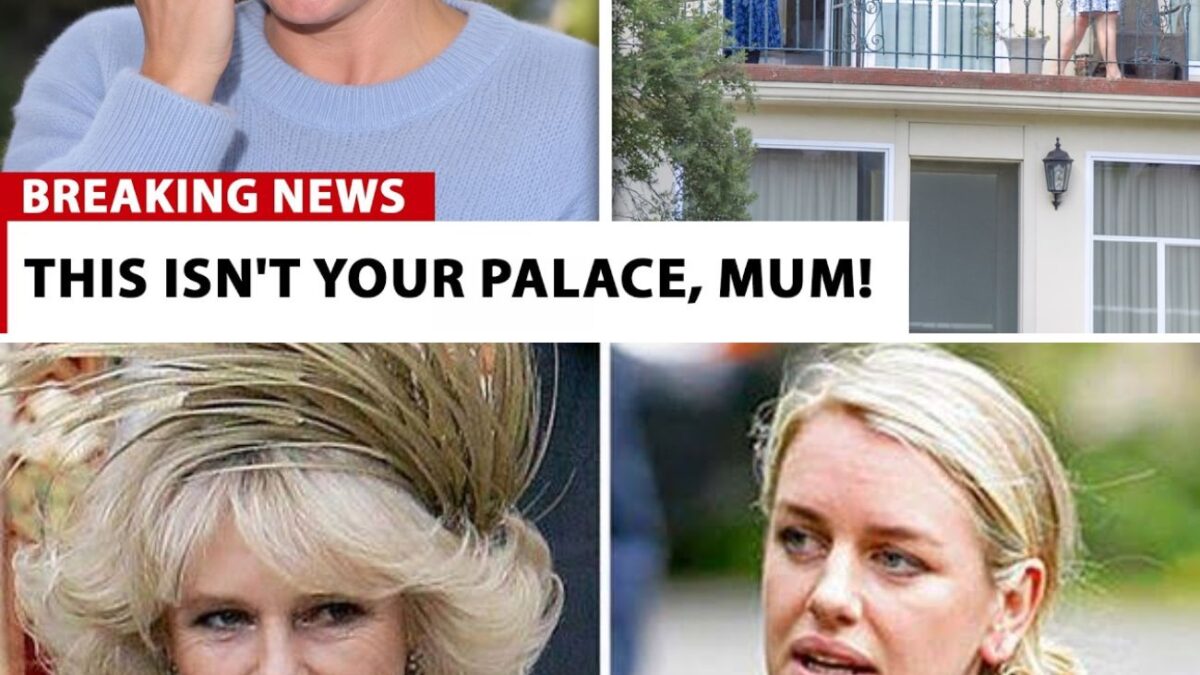
A sensational story circulating online has placed Laura Lopes, Queen Camilla’s daughter, at the center of an extraordinary alleged royal DNA controversy. The story claims that a genetic test supposedly raised questions about Laura’s biological father and pointed toward King Charles. There is, however, an important distinction between the circulating narrative and established fact: no credible public evidence has confirmed such a DNA discovery. Official royal biographies identify Laura as the daughter of Camilla and Andrew Parker Bowles.
Still, the dramatic scenario has captured attention because it combines some of the most emotionally charged themes surrounding the British royal family: secrecy, marriage, loyalty, identity and the complicated history between Camilla and Charles.
According to the fictionalized account circulating online, Laura supposedly discovered the alleged revelation through an advanced genetic screening. What should have been a routine medical procedure allegedly became something far more personal. The story claims that the results supposedly questioned the identity of the man Laura had always known as her father.
Instead of immediately contacting lawyers or speaking to journalists, the narrative says Laura returned home and examined the information alone. The imagined scene is striking: a woman sitting at her own kitchen table, holding a document that appears to challenge decades of family history.
The story then takes its most dramatic turn.
It claims that Laura supposedly confronted Queen Camilla at Clarence House. Rather than arranging a meeting through royal officials, she allegedly arrived unexpectedly, carrying the document that had changed her understanding of her past.
In the story, Laura refuses to approach the confrontation gently. She allegedly places the file on the table and demands an explanation.
The fictional account portrays Camilla as initially attempting to explain the circumstances by referring to the pressures of another era. Laura, however, supposedly refuses to accept any explanation that sounds like an excuse.
The emotional center of the story is not the monarchy itself. It is Andrew Parker Bowles.
Laura, according to the narrative, has always regarded Andrew as her father because he was the man who raised her. He was present during her childhood, supported her and remained part of her life. The story therefore presents an important distinction between biological parentage and fatherhood.
Even if a DNA result changed someone’s biological identity, the narrative argues, it could not erase decades of love and family memories.
That idea becomes particularly powerful when the story turns toward King Charles.
According to the alleged scenario, Charles eventually enters the room and realizes that Laura is confronting him with a question that could completely change the family’s understanding of the past: Did he know?
If Charles supposedly knew, the story suggests, he would have to confront the possibility that a daughter had been raised outside his immediate family. If he did not know, then the alleged deception would have involved him as well.
The narrative imagines Charles reading the supposed document and becoming overwhelmed by emotion.
It is an intensely dramatic scene, but it is also precisely the point at which readers should distinguish storytelling from documented history. There is no credible public evidence establishing that such a confrontation happened, that Charles received such a DNA report, or that he broke down after discovering Laura was supposedly his biological daughter.
In reality, the publicly documented family history is considerably simpler. The Royal Family’s official biography states that Camilla was previously married to Andrew Parker Bowles and that they had two children, Thomas Henry and Laura Rose. Laura was born in 1978. ABC News likewise identifies Tom and Laura as Camilla’s children with Andrew Parker Bowles.
Yet the fictional narrative continues with another explosive moment.
Laura supposedly tells Camilla and Charles that she wants nothing from the monarchy. No title. No money. No position. No place within royal life.
That detail gives the story its emotional hook.
Rather than presenting Laura as someone desperate to claim royal status, the narrative portrays her as someone rejecting it entirely. Her supposed position is that biology cannot automatically determine who deserves to be called a father, just as a royal title cannot automatically create a mother-child relationship.
The story then imagines Laura leaving Clarence House.
There is no grand royal announcement. No press conference. No public confrontation.
She simply walks away.
That ending is what makes the fictional account so compelling. The supposed threat is not that Laura wants something from the palace. The threat is that she allegedly wants nothing from it.
The story also introduces another layer of intrigue by questioning how such a DNA discovery could supposedly have happened. It claims that Laura’s genetic information was compared with restricted royal records and that a match was somehow discovered.
But this element is particularly difficult to substantiate. There is no reliable public evidence establishing the existence of the alleged database described in the story, nor evidence that Laura’s medical screening produced such a match.
That has not stopped online speculation.
A recent YouTube video used an almost identical premise, describing an alleged DNA report involving Laura and Charles, but its own description explicitly warns that the material may contain rumor and fiction and should not be interpreted as established fact.
And that distinction matters.
Royal stories can spread rapidly because real historical events provide a dramatic backdrop. Charles and Camilla’s relationship has been publicly scrutinized for decades, and their eventual marriage in 2005 is a documented part of modern royal history. Laura and her brother Tom are also well-known as Camilla’s children from her first marriage.
But a real and complicated family history does not automatically validate every new allegation attached to it.
For Laura, the central question in the fictional story is therefore not really about a crown.
It is about identity.
Imagine discovering that the person you thought you understood as your father might not be your biological father. Imagine then being told that the alleged biological connection reaches into one of the world’s most famous families. The emotional consequences would be enormous, regardless of titles or inheritance.
That is why the story has generated such intense interest.
It takes a familiar royal family and introduces an extraordinary hypothetical: What if a secret that had supposedly remained hidden for decades suddenly appeared on a DNA report?
What would happen to the people involved?
What would happen to the memories of an entire childhood?
And perhaps most importantly, what would happen to the meaning of family?
For now, the public record does not establish the dramatic DNA revelation described in the circulating story. Official sources continue to identify Laura Lopes as Camilla’s daughter with Andrew Parker Bowles.
So the alleged bombshell remains just that—an unverified story.
But it has nevertheless created a powerful piece of royal drama, built around one question that continues to drive the narrative:
What if the truth about a person’s identity arrived not through a palace announcement, but through a single piece of paper?








