“NO JET. NO PASS!” Princess Anne’s Stunning Move Against Camilla’s Children—And the Four Forms That Changed Everything
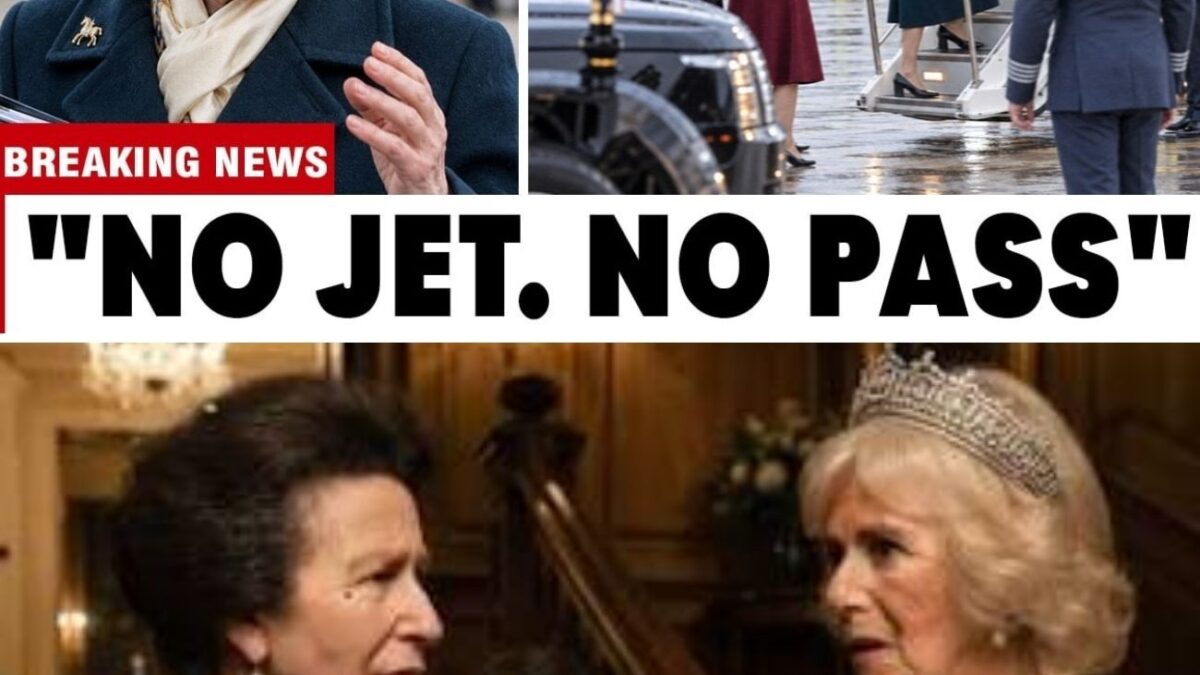
“NO JET. NO PASS!” Princess Anne’s Decision That Put Camilla’s Family Under Pressure
The controversy began not with a public argument, but with three words beside a passenger’s name: “Not authorized. Cancelled.”
In this dramatic account, Laura Lopes, Camilla’s daughter, arrived at Cardiff Airport expecting to board a flight to RAF Northolt. She carried a small overnight bag and a white Royal Travel Office pass, a card she believed would allow her to board an aircraft arranged for the royal household.
Instead, an airport official asked her to wait.
The passenger manifest had changed. Laura’s name was still there, but her booking had been withdrawn. When the officer checked with the relevant offices, he reportedly received an explanation that left little room for negotiation: the cancellation had been ordered by Princess Anne.
Worse still, another booking, scheduled for the following week, had also been cancelled. That flight was intended for Laura and her brother, Tom Parker Bowles.
For Laura, the immediate question was simple: why had nobody told her before she arrived at the airport?
A royal pass that suddenly meant nothing
Cardiff Airport was hardly the setting for a spectacular royal confrontation. The private aviation area was quiet, and the aircraft was preparing to depart. Yet the situation described in the script carried consequences far beyond a missed journey.
Laura reportedly contacted Princess Anne’s office and asked whether the decision could be explained. The response was firm: the bookings had been withdrawn, and the decision was not open for discussion.
The message associated with Anne’s decision became the story’s defining phrase: “No jet. No pass.”
According to the account, Laura watched the aircraft depart without her, collected her belongings, and arranged to travel to London by train.
She then called Tom, who had not yet realized that his own booking had been cancelled. When Laura told him what had happened, he reportedly asked who had authorized the decision.
The answer was Princess Anne.
For anyone unfamiliar with the family dynamics portrayed in this story, Anne represents a particularly formidable figure. She has spent decades undertaking royal duties and is often associated with a practical, disciplined approach to public service. The script presents her as someone willing to make an uncomfortable decision when she believes established rules are not being followed.
But the real issue, as the story unfolds, was not simply whether two people should have been allowed onto a royal aircraft.
It was why they had been booked onto those flights in the first place.
The spreadsheet that raised uncomfortable questions
The script places the turning point several days earlier, when Anne requested a review of royal travel expenses.
The review reportedly followed renewed scrutiny of the monarchy’s travel costs. Anne was said to have requested a spreadsheet covering journeys made on aircraft operated or chartered for the royal household during the previous eighteen months.
Most entries concerned official engagements, overseas visits, security personnel, and members of the working royal household.
One column, however, listed guests who had travelled without being part of an official royal party.
The account claims that fewer than thirty guest entries appeared on the spreadsheet, with eleven attributed to Tom and Laura.
Their journeys reportedly included travel associated with family gatherings, racing events, and visits connected with royal residences. The script emphasizes that these trips were not necessarily unlawful and that allowing family members to travel on aircraft already operating was not inherently unusual.
Anne’s question was more direct: what justified these particular bookings?
The comparison that allegedly caught her attention involved her own children, Peter Phillips and Zara Tindall. According to the script, neither had travelled on a royal aircraft during the period being reviewed.
They had built their adult lives without royal titles or the same level of institutional support available to some other members of the extended family.
To Anne, as portrayed in the narrative, the contrast raised an uncomfortable question about consistency. If the rules were intended to govern guest travel, should those rules apply equally to every branch of the family?
She reportedly wrote that guest travel should be permitted only for official occasions when authorized by the sovereign, with every booking reviewed beforehand.
Then she examined the future reservations.
Two remained.
Both involved Tom and Laura.
Anne cancelled them.
Four forms that changed the argument
Camilla’s response, according to the story, was initially focused on the paperwork rather than confrontation.
She reportedly asked for photographs of Laura’s travel pass and confirmation of the cancellation. She also wanted to understand what Anne had found and whether the decision had been approved by King Charles.
The question was understandable. Tom and Laura had not necessarily arranged their own flights. If household staff had offered them seats, why should the passengers alone face the consequences of an arrangement that officials had previously permitted?
That argument becomes more complicated in the script when attention turns to the travel forms.
The documents allegedly included written justifications for the eleven bookings. Each reportedly used the same wording: “accompanying Her Majesty.”
But the story claims that on four journeys, Camilla was not actually aboard the aircraft.
If accurate, that discrepancy would raise questions about how the bookings had been authorized and whether the written explanations reflected the circumstances of the trips.
The distinction matters. Accepting an invitation is not automatically evidence of wrongdoing. Equally, a system that relies on accurate explanations for publicly funded travel cannot function properly if its records do not match what happened.
The script portrays Charles as being shown the documents and responding that he wanted the practice to stop, rather than seeking to identify one individual to blame.
His alleged silence after Anne’s initial decision is also presented as significant. He had reportedly not ordered the cancellations himself, but neither did he reverse them.
That left Camilla facing an increasingly difficult situation: the decision had been made, the bookings were gone, and the king was not intervening to restore them.
The passes are withdrawn
The next step was more decisive.
In the account, Anne’s office sent letters requesting the return of Tom and Laura’s Royal Travel Office passes. The explanation was that, following the review, passes issued to people outside the official royal party were being withdrawn.
Laura reportedly returned hers within two days. Tom, said to be more upset by the symbolism than the practical inconvenience, took longer.
For him, the card represented years of familiarity with royal events and family occasions. Being asked to return it could feel less like an administrative adjustment and more like a public declaration that his position had changed.
Camilla was reportedly concerned about how any protest might be interpreted. The script says she advised her son to return the pass rather than allow the disagreement to grow.
The review also allegedly prompted wider changes. Prince William, shown the spreadsheet, reportedly supported applying the new rule to his own household. That would make the policy more consistent and harder to dismiss as a dispute directed at Camilla’s children.
The story further describes a note of support from the Duke of Kent and an unsuccessful appeal by Andrew Parker Bowles, Tom and Laura’s father. He reportedly asked Anne whether the passes could be retained for exceptional family occasions.
Anne’s answer, as presented in the script, remained firm: any genuine invitation could come directly from the sovereign, but the general rule would not be relaxed for one family.
Was Anne right to draw the line?
The most compelling part of this account is also its central moral dilemma.
Anne’s supporters, within the narrative, argue that she addressed a problem with a rule rather than attacking two individuals. They point to the alleged discrepancies in the forms and the need for consistent standards when public resources are involved.
Her critics have a different concern. If the bookings had been arranged and approved by officials, was it fair to cancel them at short notice without ensuring that the passengers were informed? Laura’s experience at Cardiff Airport, as described in the script, raises a legitimate question about whether a firm decision could have been handled with greater courtesy.
Both arguments deserve consideration.
The story ultimately portrays the royal household adopting stricter controls over guest travel, with future exceptions requiring written approval from the sovereign. It ends by turning attention to another journey: the annual flight to Sandringham for Christmas.
Would Tom and Laura appear on the passenger list as family guests, invited personally by Charles? Or would their names remain absent?
That question supplies the final dramatic image: a manifest with empty spaces waiting to be filled.
Yet the larger issue is not whether two people receive seats on a particular aircraft. It is whether rules are applied consistently, whether records accurately explain decisions, and whether privilege carries an obligation to accept scrutiny.
Princess Anne’s alleged intervention, if the events occurred as described, would be a striking example of administrative discipline colliding with family loyalty. But without independent confirmation of the private documents and conversations, the details remain an unverified narrative rather than established royal news.
The question remains powerful even without a confirmed scandal: when family privilege and public accountability collide, should loyalty come first—or should the rules apply to everyone?








