“NOT MY GRANDFATHER’S HOUSE!” Prince William Allegedly Kicks Camilla’s Daughter Out of Philip’s Farm After 41 Nights
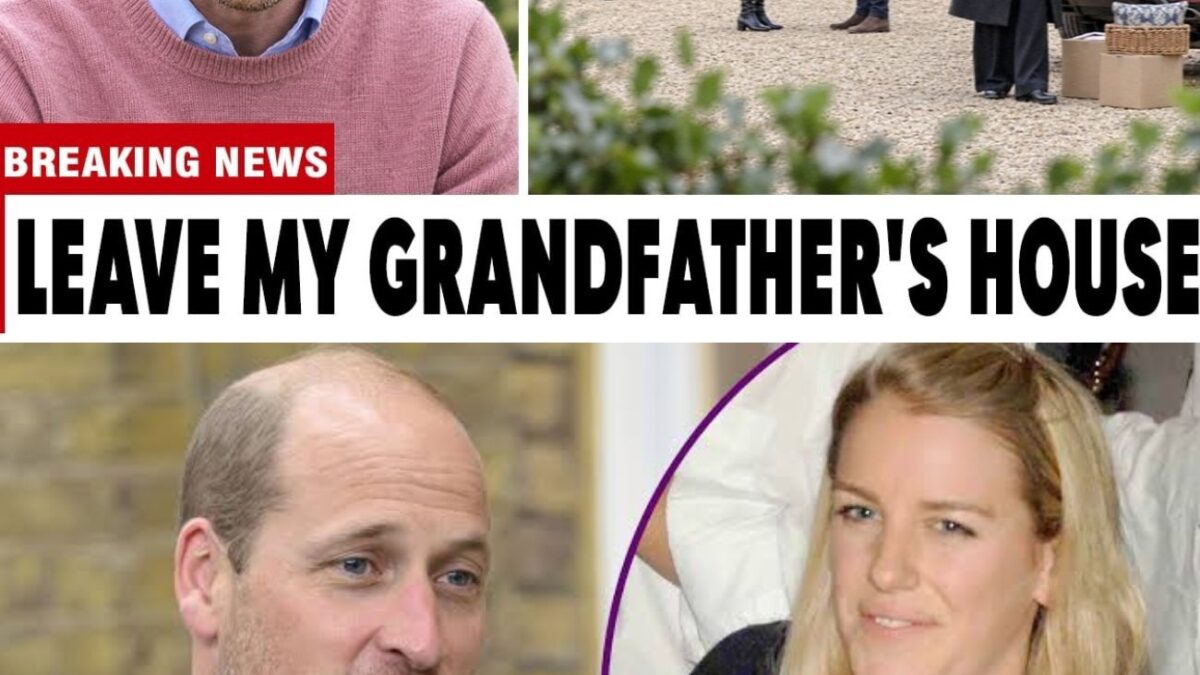
“Not My Grandfather’s House!” The Alleged Wood Farm Decision That Put William, Camilla, and Charles on Opposite Sides
For years, Wood Farm has carried a special meaning within the royal family. Tucked away on the Sandringham estate in Norfolk, the modest farmhouse offered Prince Philip something increasingly rare in royal life: privacy, simplicity, and a place where he could live without the constant machinery of official duties. Now, an unverified story claims that a dispute over who could stay there brought Prince William, Queen Camilla, and King Charles into an uncomfortable family confrontation.
At the center of the account is Laura Lopes, Camilla’s daughter, and her husband. According to the narrative, their use of Wood Farm had gradually expanded over three winters until a proposed accommodation schedule allegedly allocated them 44 nights at the property. William supposedly intervened after discovering the arrangement, ultimately rejecting the request and ordering the farmhouse restored to the way Prince Philip had left it.
The alleged turning point came through a simple email.
An email that changed the winter plans
On the morning of October 2, Laura reportedly received a message from the Sandringham estate office. Its subject line was said to read “Collection of personal effects.” Rather than receiving a personal explanation from her mother or the king, she was allegedly being asked to arrange the return of belongings kept at Wood Farm.
The accompanying list supposedly included boots, a wax jacket, two dog beds, a case of red wine, paperbacks, and framed family photographs. The account places particular emphasis on those photographs, said to have stood on a windowsill where Philip once kept his binoculars.
When Laura reportedly contacted her mother, Camilla allegedly called the estate office to question the decision. The response, according to the story, was that the winter accommodation schedule had been revised and that responsibility for the Sandringham arrangements now rested with William.
That detail transformed what might have seemed like an ordinary housekeeping matter into a question of authority. Why was the Prince of Wales managing the arrangements, and why had Charles apparently failed to warn his wife?
Why Wood Farm meant more than a bedroom
To understand the emotional weight of the alleged dispute, the story returns to Philip’s retirement. In 2017, after decades of public service, he stepped back from official duties and chose Wood Farm as his quiet retreat. Rather than living amid palace ceremony, he could read, paint, and enjoy his interest in carriage driving.
The farmhouse became associated with a more private version of the Duke of Edinburgh. The narrative also recalls that Queen Elizabeth II stayed there during a visit to Sandringham in early 2022, shortly before the final months of her life.
In this telling, Wood Farm was not simply another guest property. It represented the private world Elizabeth and Philip had built together. The question was therefore not only who would sleep there, but whether the house’s original purpose would be respected after Philip’s death.
According to the unverified account, Laura’s stays began modestly. A weekend visit allegedly developed into longer periods, eventually extending through much of January. Personal belongings accumulated, and the farmhouse increasingly functioned as a regular winter residence for Camilla’s family.
The story suggests that what began as a favour had gradually become an expectation.
The study and the missing paintbox
The most emotional episode involves Lady Sarah Chatto, Princess Margaret’s daughter and the late queen’s niece. The narrative claims that she visited Wood Farm and asked to see Philip’s paints, hoping to find the materials associated with his landscape painting.
Instead, she allegedly discovered that his former study had been repurposed, with a television, armchairs, and a drinks tray occupying the room. Philip’s easel and paintbox were reportedly stored in an outbuilding, with the paintbox placed inside a cardboard carton.
Disturbed by what she had seen, Lady Sarah supposedly wrote a handwritten letter to Charles. The letter allegedly described the condition of the study and asked whether he knew what had happened to his father’s belongings.
The account claims that the letter remained unanswered for months.
It is an especially powerful detail within the story because it shifts the dispute away from competing family preferences and toward the preservation of a deceased relative’s personal space. If the episode happened as described, the question would be whether practical changes to an underused property had crossed a line into disregarding Philip’s wishes.
However, neither the alleged letter nor its contents have been independently verified.
The proposal that reportedly alarmed William
The narrative then introduces a more ambitious plan. In late summer, Camilla’s private office allegedly requested a permanent winter allocation for Wood Farm, running from December 20 to February 10. Under the proposed arrangement, Laura and her husband would receive the property for 44 nights each winter without having to request permission anew.
A second request reportedly concerned Philip’s study. The proposal allegedly called for removing bookshelves and a desk, opening the space into an adjoining pantry, and creating a larger sitting room. The estimated cost was said to be £38,000, potentially paid from the estate’s maintenance budget.
Supporters of such a plan might argue that an empty house requires upkeep and that regular occupancy can help keep it in use. But the story portrays William as seeing a more consequential issue: a temporary family arrangement could become an established entitlement, continuing long after its original justification had disappeared.
The distinction between permission and permanent allocation became central to the alleged dispute.
Elizabeth’s handwritten instruction
According to the account, the key document was a note supposedly written by Elizabeth on April 26, 2021, nine days after Philip’s funeral. It allegedly instructed that Wood Farm should be kept as the Duke had left it and used by family members only when invited in writing by the reigning sovereign.
The narrative claims that the estate office had retained this instruction, but no written invitation authorizing Laura’s stays could be found.
That discovery supposedly changed William’s approach. Rather than simply ordering his stepmother’s daughter to leave, he allegedly asked Charles whether he wished to issue the required invitation for the coming winter.
The account says Charles returned the document without signing it, leaving William to make the accommodation decision. At a subsequent meeting, William reportedly rejected the permanent allocation and the proposed renovation.
When the property was described as underused, he allegedly answered with four words: “Not my grandfather’s house.”
The line became the emotional center of the story—not because it established any verified royal decision, but because it expressed the principle the narrative attributes to William: preserving Philip’s private retreat mattered more than making it available for routine family use.
Forty-one nights and a final decision
The account claims that an occupancy ledger recorded Laura, her husband, and their guests staying at Wood Farm for 41 nights during the previous winter. It further alleges that William approved a revised schedule assigning the farmhouse’s main bedroom to Princess Anne and her husband for the week surrounding February 6, an anniversary connected in the story to the royal family’s history at Sandringham.
Other rooms were reportedly reserved for family use, while one bedroom remained unassigned.
The narrative also describes a photograph supposedly showing estate workers loading belongings into a vehicle as Anne carried Philip’s paintbox back into the farmhouse. The image, if authentic, would offer a striking visual contrast between personal possessions leaving and the Duke’s belongings returning to their former place. No independently verified photograph establishing these events is provided in the account.
A later inspection supposedly saw the television removed from Philip’s study, the desk returned to its original position, and the books and painting materials restored according to an inventory. William, the land agent, and the housekeeper were said to have signed the completed record.
What the story leaves behind
In the narrative’s final scene, Camilla reportedly asks whether Laura might at least receive a room in the main house. The request is allegedly declined on the grounds that the winter accommodation list has already been finalized.
Charles, meanwhile, is portrayed as having delegated responsibility to his son rather than personally intervening. That decision could be interpreted in different ways: as trust in William’s judgment, as an attempt to avoid a family confrontation, or simply as a practical division of responsibilities.
Ultimately, the alleged Wood Farm dispute raises a broader question about royal family life. When does hospitality become an expectation, and how should a family preserve the wishes and belongings of someone who has died?
Until reliable evidence emerges, the specific claims about William, Camilla, Charles, Laura Lopes, and the supposed documents should be treated cautiously rather than as established fact. But the central tension is unmistakable within the story: a small farmhouse becomes a symbol of inheritance, memory, and the difficult boundary between welcoming relatives and protecting a family legacy.
Was William right to put Philip’s home first, or should Charles have intervened on behalf of Camilla’s daughter? That is the question at the heart of this dramatic—and still unverified—royal tale.








