“NOT UNDER MY ROOF!” King Charles Allegedly Removes Camilla’s Children From Sandringham After Explosive Clash With Catherine
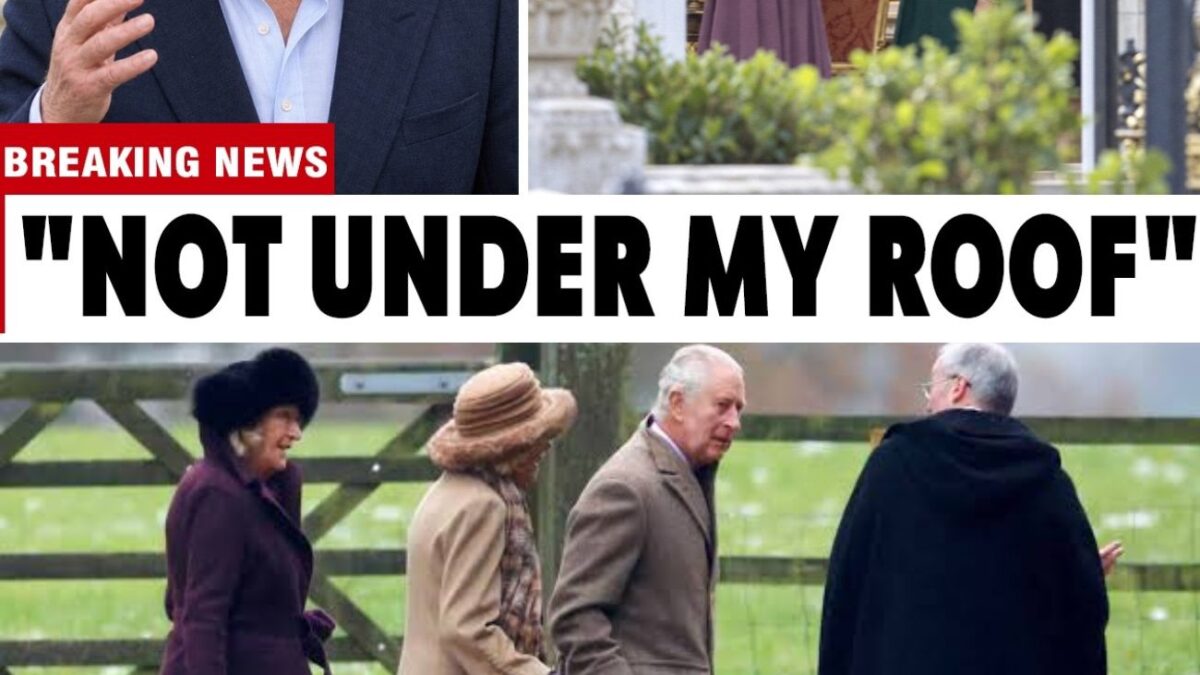
“Not Under My Roof!” The Alleged Sandringham Decision That Put Charles, Camilla, and Catherine at the Center of a Royal Storm

A royal Christmas invitation may seem like a small privilege, but inside a family where every gesture carries symbolic weight, even a bedroom can become a statement. In a dramatic, unverified account of tensions between King Charles III, Queen Camilla, and Catherine, Princess of Wales, two rooms at Sandringham allegedly become the center of a dispute involving family loyalty, public respect, and the boundaries of royal hospitality.
The story claims that Charles withdrew Christmas accommodation previously planned for Camilla’s children, Tom Parker Bowles and Laura Lopes, after an alleged confrontation at Windsor Castle. The details have not been independently verified and should not be treated as established reporting. Nevertheless, the narrative presents a compelling question: when personal relationships collide with royal responsibilities, where should a monarch draw the line?
The Windsor Reception That Allegedly Changed Everything
The account begins at a charity reception at Windsor Castle, an event supposedly organized around a children’s welfare initiative associated with Catherine. Benefactors, charity representatives, and senior household members are gathered when Queen Camilla allegedly confronts her daughter-in-law.
According to the story, Camilla challenges Catherine’s position within the family, telling her that being the future queen does not give her the right to decide who belongs. She is also alleged to have added that Catherine was not the only person entitled to feel at home among the royals.
The remark, as described in the narrative, leaves the room uncomfortable. Catherine does not respond publicly. Instead, she remains composed, refusing to allow a charity event to become an open family argument.
Prince William is said to turn toward his stepmother, but Charles intervenes first. He sets down his glass and reportedly tells Camilla that her behavior is unacceptable and that the reception is not an opportunity to humiliate his son’s wife.
The moment is presented as a turning point. Charles has often faced public commentary about the delicate balance between his marriage and his responsibilities to the wider royal family. In this telling, he decides that maintaining peace cannot mean allowing Catherine to be publicly undermined.
The Paperwork Behind the Christmas Rooms
The following morning, the narrative moves to a small office at Sandringham. Charles allegedly requests the household’s Christmas accommodation plan, a document that assigns rooms to guests staying at the royal residence.
Two names appear on the list: Tom Parker Bowles and Laura Lopes, Camilla’s adult children from her first marriage. The account says rooms had been allocated to them in the West Wing, continuing a family arrangement that Camilla hoped would become an established part of Christmas.
Charles is portrayed as studying the document before drawing a line through both names. Beside the rooms, he writes that they are no longer allocated, signs the page, and returns it to his private secretary.
The alleged decision is swift and quiet. There is no public announcement or dramatic confrontation in the household corridors. Instead, the amended plan is passed through the relevant offices, and Tom and Laura are reportedly informed that their accommodation arrangements have changed.
The story emphasizes the symbolism of the gesture. The rooms were not permanent entitlements; they were invitations extended by the king. Yet withdrawing them immediately after the alleged Windsor confrontation inevitably invites speculation about whether Charles is punishing Camilla through her children.
That interpretation is complicated by another detail in the account: neither Tom nor Laura was supposedly present at the reception or directly involved in the alleged disagreement with Catherine.
The Dispute Began Before the Reception
According to the narrative, the roots of the confrontation stretch back approximately ten days to a planning meeting at Clarence House. Catherine is portrayed as the principal host of the charity evening, while Camilla allegedly asks for Tom and Laura to receive more prominent recognition.
The event organizers are said to have explained that the main table was reserved for working members of the royal family and individuals selected by the charity. Family members could attend without necessarily being given formal roles in the program.
Catherine reportedly supports that arrangement, explaining that the reception is a charity event rather than a private family gathering. The organizers agree, and the decision is recorded in the meeting notes.
The account then introduces a more consequential alleged request. On the afternoon of the reception, Camilla’s office supposedly asks organizers to move Catherine to a secondary table so Tom and Laura can occupy places at the king’s table.
The request is reportedly refused because Catherine is hosting the event. When Charles later receives the relevant paperwork, he is said to realize that the public confrontation was not simply a spontaneous disagreement. In the narrative, he sees it as an attempt to reverse a decision that had already been made through the proper planning process.
That alleged discovery changes the meaning of the evening for him. The question is no longer whether Camilla felt slighted. It is whether her frustration led her to seek a change that would publicly diminish Catherine’s role.
“Not Under My Roof”
The account describes a private conversation between Charles and Camilla at Windsor later that night. Charles allegedly places the relevant paperwork between them and asks whether she requested that Catherine be moved to make room for her children.
Camilla supposedly explains that Tom and Laura have spent much of their lives facing public scrutiny because of their mother’s relationship with Charles. She feels that they have repeatedly been treated as outsiders and says she wanted them to be recognized as family.
Charles, in this version of events, acknowledges that they have endured difficult circumstances and that he has wanted his marriage to bring the wider family closer together. But he draws a distinction between welcoming relatives and using their position to challenge someone else’s place.
He reportedly tells Camilla that Catherine was hosting her own charity event and should not have been displaced to make a point about family belonging. When Camilla allegedly argues that her children should not be considered welcome at Christmas if they cannot be properly included at the reception, Charles delivers the response that gives the story its headline: “Not under my roof.”
The narrative presents his words not as an impulsive threat, but as a decision made with deliberate calm. The next morning, he allegedly signs the amended Sandringham room list.
Two Rooms, Two New Guests
The changes supposedly extend beyond the bedroom plan. The account claims that Tom and Laura’s overnight car passes are cancelled and their places are removed from the Christmas lunch seating arrangement.
The two rooms do not remain empty. One is allegedly assigned to Catherine’s parents, Carole and Michael Middleton, who had expected to travel to Sandringham for Christmas Day. The other is reportedly offered to a representative of the children’s charity involved in the Windsor reception.
The symbolism is difficult to miss within the story. Accommodation previously intended for Camilla’s children is reassigned to Catherine’s family and someone connected to the charitable work at the center of the dispute.
Camilla allegedly receives a copy of the revised plan and says little. Catherine, meanwhile, is portrayed as uncomfortable with the consequences. She reportedly worries that her refusal to alter the charity’s seating arrangements will now be associated with a wider family conflict.
The narrative says Catherine later sends Camilla a carefully worded private letter, thanking her for her involvement in the planning process and leaving open the possibility of working together again.
A Difficult Conversation at Highgrove
The story’s final private scene takes place at Highgrove, where Camilla allegedly asks Charles for a conversation away from Windsor and the household staff.
She speaks about her children’s experiences and asks whether the rooms might be restored if she apologizes to Catherine. Charles is portrayed as listening without interruption. He acknowledges his affection for Tom and Laura, but insists that an apology should not become a transaction in which good behavior is exchanged for a privilege.
According to the account, Camilla eventually apologizes to Catherine privately, and Catherine accepts the apology graciously. The Christmas accommodation plan, however, remains unchanged.
The narrative closes with a broader reflection on royal authority. Charles is presented as a husband who still cares for Camilla’s family but refuses to let that affection justify an attempt to undermine Catherine’s role.
Whether this alleged sequence of events occurred cannot be confirmed from the account itself. But its central tension is recognizable: family members may deserve compassion without being entitled to every privilege, and defending one person’s dignity should not automatically mean punishing another.
Ultimately, the story turns two guest rooms into a symbol of a much larger struggle over belonging, respect, and responsibility. Its most important question is not who sleeps at Sandringham, but whether a family can preserve its unity when personal grievances begin to shape public duties.








