NOTTINGHAM SHOCKER! Harry and Meghan Allegedly Snubbed by Local Officials as Claims of a Royal Showdown Rock the Palace
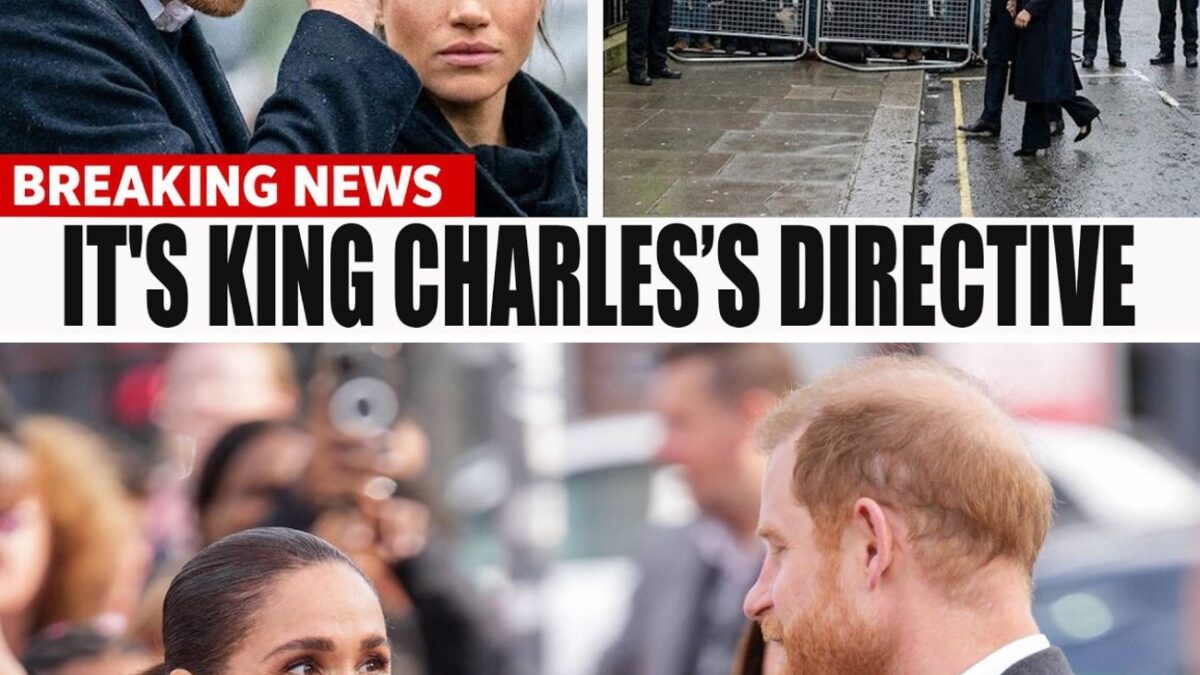
The Nottingham Controversy: Harry and Meghan Face Questions Over an Alleged Royal-Style Visit
A rainy day in Nottingham becomes the setting for a dramatic royal controversy in this fictionalized account of Prince Harry and Meghan Markle. The story imagines a visit that begins with ambitious expectations and ends with uncomfortable questions about public support, royal protocol, security arrangements, and the complicated relationship between the Sussexes and the British monarchy.
At the center of the narrative is a fundamental question: can Harry and Meghan return to Britain on their own terms while remaining separate from the institution that once defined their public roles?
A Visit That Allegedly Failed to Meet Expectations
According to the supplied script, Harry and Meghan arrive in Nottingham for a series of community engagements. The itinerary reportedly includes a youth recording studio, a food bank, and an educational center. Their team allegedly prepares a substantial media operation, complete with private security, crowd barriers, photographers, and carefully arranged press access.
The appearance is presented as an opportunity to demonstrate that the couple still commands considerable public attention in Britain. Yet the scene described in the script is far less impressive than the organizers supposedly anticipated.
Rather than thousands of enthusiastic supporters, the pavement allegedly holds only around 40 people. Some are described as schoolchildren, while others are curious residents who happen to pass the scene. Journalists and photographers appear to outnumber the members of the public who have gathered voluntarily.
The contrast provides the central dramatic image of the story: a large media presence surrounding a comparatively small crowd.
For Harry, who spent much of his life as a prominent member of the Royal Family, such a reception would make for an uncomfortable public moment. Meghan, meanwhile, is portrayed as determined to maintain a confident smile despite the disappointing turnout.
However, crowd estimates and descriptions of the event in the supplied script should not be mistaken for independently confirmed reporting.
An Awkward Encounter in Front of the Cameras
The narrative becomes more personal when Harry approaches a blonde woman near the barriers and greets her with a kiss on the cheek. The gesture is described as an ordinary European greeting, but Meghan allegedly reacts with a sudden change in expression.
According to the script, her smile disappears and she looks visibly uncomfortable. The cameras supposedly capture the moment, allowing commentators to interpret her reaction as jealousy.
A female assistant then approaches to take a floral bouquet from Meghan’s hands. Instead of simply passing the flowers over, Meghan allegedly pulls them back and tells the assistant to step away.
In the story, these brief interactions become major talking points. What might otherwise have been unremarkable moments are transformed into supposed evidence of tension behind the couple’s carefully managed public image.
Yet facial expressions alone cannot establish what a person is feeling. Without reliable footage and context, claims of jealousy, anger, or deliberate disrespect remain interpretations rather than proven facts.
The episode nevertheless serves an important purpose in the dramatic account: it shifts attention away from the charitable engagements and toward the couple’s behavior in front of the cameras.
King Charles and the Question of Royal Authority
The script places the Nottingham appearance against the backdrop of a major royal engagement involving King Charles III in Wales. It alleges that the timing of the Sussexes’ visit was deliberately chosen to compete with the monarch’s constitutional duties.
That accusation forms the most serious political element of the story.
The narrative suggests that the couple intended to create competing television coverage, placing their own public appearance alongside the King’s official proceedings. In this interpretation, the visit becomes more than a charitable outing: it represents an attempt to demonstrate that personal celebrity can rival institutional authority.
The script further claims that Charles had issued a warning through palace channels approximately 48 hours beforehand. Harry and Meghan were allegedly told not to present their activities as an official or semi-official royal tour.
No independently verified evidence is supplied here to establish that such a warning occurred or that the couple deliberately sought to undermine the King.
Nevertheless, the fictionalized scenario explores a genuine tension surrounding the Sussexes’ public identity. They remain internationally recognizable figures because of their former royal roles, while pursuing independent projects outside the working monarchy.
That distinction can become especially complicated whenever a public appearance combines charitable activity, royal associations, commercial interests, and intense media attention.
Sophie and Anne Become Symbols of the Palace’s Position
The account also introduces Sophie, Duchess of Edinburgh, and Princess Anne as figures who supposedly represent a more traditional understanding of royal duty.
Sophie is portrayed as rejecting the Nottingham appearance’s claimed royal legitimacy. The script contrasts it with Harry and Meghan’s December 2017 visit to Nottingham, when Harry and his then-fiancée appeared as working members of the Royal Family.
In the narrative, the earlier visit symbolizes institutional support and public service, while the later appearance represents an attempt to recreate royal prestige without the same official framework.
The account then reaches further back, invoking Meghan’s first joint engagement with Queen Elizabeth II in Cheshire in June 2018. It alleges disagreements over dress conventions, seating arrangements, and physical etiquette.
Those anecdotes are used to suggest a longer-running conflict between Meghan’s personal style and traditional expectations. However, the script’s negative interpretations of these incidents should not be treated as established findings about her character or private relationships.
Princess Anne’s role becomes more significant as the story develops. She is portrayed as a practical defender of institutional boundaries, concerned that former working royals might use the monarchy’s reputation to strengthen independent commercial ventures.
The Alleged Sandringham Agreement
The most elaborate revelation in the supplied script concerns a supposedly confidential provision in the Sandringham discussions of January 2020.
The narrative calls it a civic coordination clause. According to the story, Princess Anne insisted on language intended to prevent unauthorized royal-style tours from being used for commercial purposes.
The script then alleges that a production memorandum circulated among entertainment executives described the Nottingham itinerary as footage for a proposed lifestyle and philanthropy project.
If such a document existed, its contents and context would require careful verification. The supplied material does not establish the existence of the alleged clause, memorandum, or legal mechanism described.
Within the dramatic narrative, however, these supposed documents transform an embarrassing visit into a calculated institutional confrontation.
King Charles is depicted as facing a difficult choice between protecting his relationship with his younger son and maintaining the boundaries of the monarchy. Princess Anne supposedly advises him to respond quietly rather than through a public denunciation.
The result, according to the account, is a withdrawal of official coordination.
Security, Local Officials, and a Difficult Departure
The script claims that regional authorities receive instructions to withhold ceremonial assistance. It describes the absence of civic dignitaries, official welcomes, and police escorts, leaving Harry and Meghan to travel with private security.
It also claims that Nottingham City Council refuses to endorse the appearance and that no police escort is provided.
These are allegations in the supplied narrative, not independently confirmed facts. The absence of a ceremonial welcome would not, by itself, establish that a council had formally rejected the couple. Likewise, police protection decisions depend on applicable security assessments and official arrangements, not simply on royal status.
The account’s emotional turning point comes outside a community food bank. An elderly woman is described as waiting for more than an hour with flowers she purchased for Harry.
According to the script, venue representatives tell the small group to keep waiting. Instead of emerging through the main entrance, the couple allegedly leave through a rear exit near service bins and recycling containers.
A photographer supposedly informs the woman that they have already departed. Her disappointment becomes the story’s most poignant image: an ordinary supporter who has given her time and money, only to miss the encounter she hoped for.
The scene is designed to contrast the grandeur associated with royalty against the simple expectation that public figures should acknowledge people who have come to see them. Whether this incident occurred as described cannot be established from the supplied script.
Public Relations Under Pressure
The narrative then depicts a communications battle. Friendly outlets allegedly describe the appearance as a triumphant homecoming, while videos shared by local residents supposedly show sparse pavements and confused onlookers.
Two moments dominate the imagined online reaction: Meghan’s expression during Harry’s greeting and Harry’s alleged awkward response to a reporter’s question.
The story argues that polished publicity cannot overcome footage that appears to contradict an official narrative. It also draws a distinction between people who consume royal controversy online and those willing to attend a public event in person.
That distinction is central to the script’s interpretation of celebrity. International attention does not necessarily translate into local enthusiasm, and online popularity does not automatically establish public support.
What the Story Ultimately Suggests
In its closing scenes, the account imagines Charles reviewing a dossier with Princess Anne and Prince William before approving a formal restriction on future official assistance for the Sussexes. It portrays the Nottingham visit as the final break in an already strained relationship.
The script also invokes the abdication of Edward VIII in 1936 as a historical parallel, suggesting that royal prestige cannot simply be separated from the institution that gives it meaning. The comparison is dramatic, although the historical circumstances are substantially different.
Ultimately, this fictionalized account presents Nottingham as a test of identity, loyalty, and public perception. Its central conflict is not merely whether a crowd appeared, but whether Harry and Meghan can define their own roles while navigating the expectations attached to their former positions.
The allegations surrounding the council, police protection, palace warnings, and supposed agreement remain unverified. They should not be understood as confirmed news.
What remains compelling is the broader question at the heart of the story: when public figures leave an institution but continue to draw attention from its history, where does personal independence end and institutional responsibility begin?








