OPRAH WINFREY’S SILENCE SPEAKS VOLUMES: The Meghan Markle Interview Controversy That Hollywood Cannot Ignore!
Oprah Winfrey, Meghan Markle, and the Interview That Changed Everything: Has Hollywood Finally Turned the Page?
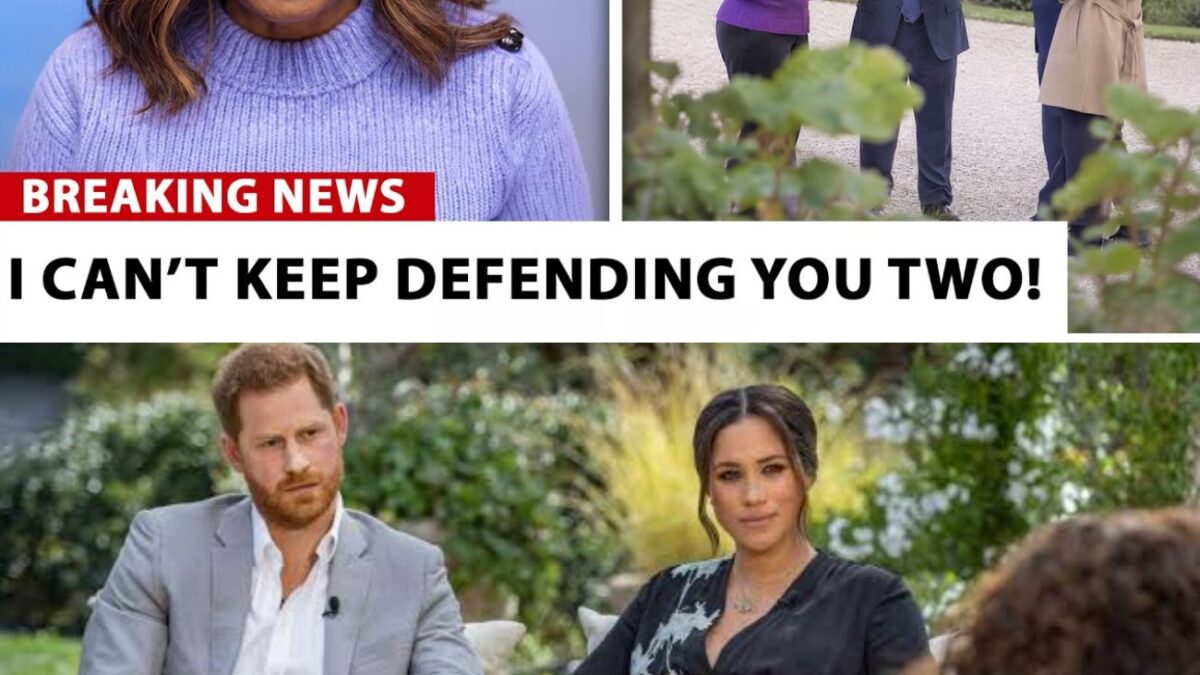
When Meghan Markle sat down with Oprah Winfrey in March 2021, the conversation became a global event. Millions watched as the Duchess of Sussex described her experience within the British royal family, discussing emotional distress, family tensions, and concerns surrounding her son Archie. For many viewers, the interview was a powerful account of a woman who felt abandoned by an institution she had married into. For others, it raised questions that have continued to fuel debate years later.
But the most intriguing question today concerns Oprah herself. The legendary television host helped deliver one of the most consequential interviews of Meghan’s public life. Yet speculation about the state of their relationship has grown as the Sussexes have pursued new commercial ventures, faced professional setbacks, and navigated increasingly complicated public reactions. Has a once-important media connection simply faded, or does the story reveal something deeper about celebrity, trust, and the price of controlling one’s own narrative?
The Interview That Captured the World
The March 2021 interview presented Meghan and Prince Harry with an extraordinary opportunity to explain their departure from royal duties. Meghan described feeling isolated and said she had experienced suicidal thoughts during her time as a working royal. She also recounted tensions involving Catherine, Princess of Wales, surrounding the wedding preparations.
The interview’s most explosive moment came when Meghan and Harry discussed concerns allegedly raised within the royal family about the potential skin colour of their unborn child. They did not publicly identify the person involved during the broadcast, and the palace subsequently issued a carefully worded response stating that recollections could differ.
For viewers, the emotional impact was undeniable. Yet the interview also created a lasting dispute over what could be independently established, what represented personal recollection, and what remained contested.
Meghan’s account of entering royal life with limited knowledge of the institution also attracted scrutiny. A childhood friend, Ninaki Priddy, had previously described Meghan as interested in the royal family and fascinated by Princess Diana. Critics interpreted those earlier accounts as inconsistent with Meghan’s later description of her own naivety. Supporters, however, could argue that childhood fascination does not necessarily mean understanding the realities of becoming a working royal.
That distinction matters. A television interview can reveal someone’s personal experience without resolving every historical disagreement surrounding it.
The Questions That Followed
Several details discussed during the broadcast became subjects of public debate. Meghan recalled a warm moment during a joint engagement with Queen Elizabeth II, describing how the monarch had helped her feel comfortable. Online commentators later scrutinised footage of the occasion, disputing the interpretation of the blanket incident.
The couple’s account of a private wedding ceremony three days before their public wedding also attracted attention. The Archbishop of Canterbury subsequently clarified that the legal marriage took place at Windsor on May 19, 2018. The distinction between a private exchange of vows and a legally recognised wedding became central to the controversy.
Questions were also raised about newspaper headlines presented during the interview. Critics argued that some examples required additional context, including whether they concerned race, whether they had been accurately represented, and whether they predated the couple’s decision to step back from royal duties. The production’s defenders maintained that the interview should be understood in the broader context of the press coverage experienced by Meghan.
These disputes helped transform the broadcast from a conversation about one couple’s experiences into a much wider argument about media responsibility. What happens when a deeply personal account becomes a global political and cultural event? And how much scrutiny should a producer accept when the interview itself becomes part of the controversy?
Hollywood’s Business Reality
The questions surrounding the Sussexes did not end with their royal departure. Their subsequent commercial agreements placed them under pressure to deliver projects capable of attracting audiences and satisfying business partners.
Their Spotify partnership, announced in 2020, eventually ended in 2023. Meghan released her podcast, Archetypes, while the broader ambitions surrounding the deal generated considerable discussion. Spotify executive Bill Simmons publicly criticised the couple, using language that intensified the debate about celebrity contracts and production expectations.
The Netflix partnership also became a focus of attention. Their projects included a documentary series about their lives, the polo documentary series, and Meghan’s lifestyle programme, With Love, Meghan. In 2025, Netflix and the couple moved from an exclusive arrangement to a different agreement, widely described as a first-look deal.
In Hollywood, such contractual changes can carry significant implications. An exclusive agreement signals a deeper commitment, while a first-look arrangement gives a company the opportunity to consider projects without promising to finance or distribute them. Nevertheless, a change in contract alone does not prove that a celebrity’s career is collapsing.
The same caution applies to reports about projects that do not proceed. Producers and studios weigh many factors, including creative direction, budgets, distribution strategies, and the commercial prospects of a film. Rejection can be revealing, but it is not automatic proof that an entire industry has turned against someone.
Still, for a couple whose post-royal future depends partly on commercial independence, every deal attracts attention.
Has Oprah’s Friendship With Meghan Changed?
The suggestion that Oprah has distanced herself from Meghan has become a particularly compelling part of the story. In celebrity culture, relationships are often judged through photographs, public acknowledgments, birthday appearances, and social media posts. When a familiar face is absent, speculation can quickly fill the silence.
Commentary surrounding Oprah’s later public appearances and her list of close friends has fuelled questions about whether her relationship with Meghan remains as close as it once appeared. The absence of a public endorsement, however, is not conclusive evidence of a private falling-out. Neither silence nor an omitted name can establish what two people have discussed behind closed doors.
The more interesting issue is what their relationship represented in the first place. Oprah was not simply a famous interviewer. Her involvement gave Meghan and Harry access to a global audience at a moment when they wanted to explain their break with the monarchy. The interview became a defining chapter in the Sussexes’ public identity.
If their relationship has changed, that would not necessarily mean Oprah believes the original interview was dishonest. Friendships evolve, professional relationships shift, and public figures frequently choose to keep private matters out of the spotlight.
The Bondi Beach Controversy
The most emotionally charged episode in the supplied narrative concerns the Sussexes’ visit to Australia in 2026 and their reported meeting with survivors of the Bondi Beach terrorist attack.
According to the account, Meghan embraced Jessica Chapnik Kahn, a survivor who had shielded her five-year-old daughter during the attack. The encounter was presented as a compassionate moment involving people whose lives had been profoundly affected by violence.
The controversy arose from claims that Meghan’s clothing appeared for sale on the fashion platform OneOff shortly after the encounter. The account alleges that Meghan had an investment interest in the platform and could receive a commission from purchases made through her profile. It identifies a blue-and-white striped shirt, jeans, trainers, sunglasses, and a suede bag among the items listed.
If the timing and commercial arrangements were as described, critics could reasonably question whether a moment involving grieving survivors should have been connected to shopping links. The juxtaposition would be uncomfortable: an encounter intended to demonstrate compassion appearing alongside a commercial opportunity.
However, the specific listing, its timing, the financial arrangements, and Meghan’s knowledge of the promotion require independent verification before conclusions can be drawn. The existence of a shopping link would not, by itself, establish that the meeting was staged for profit or that Meghan personally directed the listing.
The distinction between a documented commercial arrangement and an allegation about someone’s motives is essential, particularly when a story involves survivors of a terrorist attack.
A Reputation Still Being Written
Meghan and Harry have faced criticism from royal commentators, entertainment figures, and sections of the public. Their supporters, meanwhile, argue that intense scrutiny has followed them regardless of the decisions they make. Neither perspective can be reduced to a single interview, business deal, or controversial photograph.
The larger question is whether the couple can build a sustainable public identity beyond the royal conflict that first brought their story to a global audience. Their commercial ventures require audiences, partners, and a reputation for delivering worthwhile projects. Their charitable work requires public trust. Their personal lives, meanwhile, remain under extraordinary scrutiny.
Oprah Winfrey’s role in this story remains significant because her interview helped define the conversation. Yet there is no verified basis here to conclude that she has publicly exposed Meghan or confirmed a dramatic private rupture.
Five years after that famous garden conversation, the most enduring lesson may be less sensational than the headlines suggest. Public narratives can be powerful, but they are rarely permanent. The people who help create them may eventually move in different directions, while audiences reconsider what they once believed.
The real question is not simply whether Oprah and Meghan are still friends. It is whether the public can separate documented events from speculation—and whether celebrity reputations can survive when every silence, business decision, and photographed embrace becomes another chapter in an endless media drama.








