PALACE BOMBSHELL: Princess Anne Replaces Camilla at State Banquet — What Made King Charles Make This Stunning Decision?
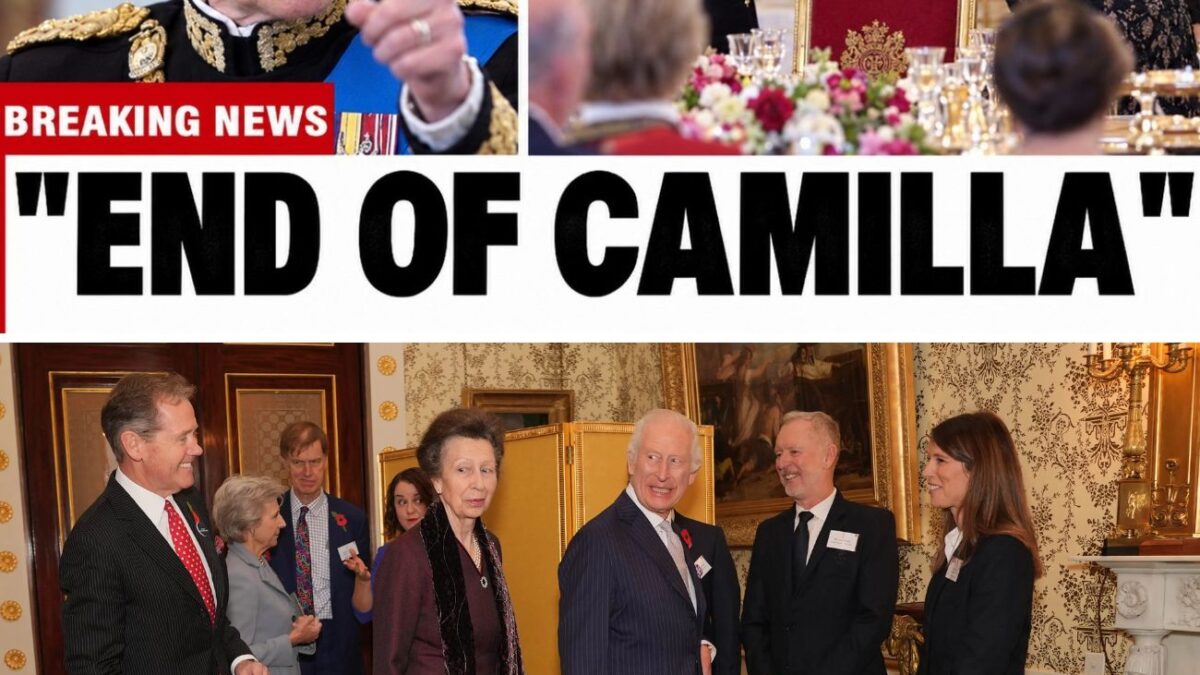
Princess Anne Replaces Queen Camilla at State Banquet: The Palace Decision That Left the Royal Family Reeling

A state banquet is meant to represent the dignity, stability, and unity of the British monarchy. Every detail matters, from the placement of the guests to the order in which members of the royal family welcome visiting dignitaries. But in this imagined royal drama, one unexpected decision threatens to overshadow the entire evening: Princess Anne is asked to take Queen Camilla’s expected ceremonial position beside King Charles.
The announcement comes without the kind of explanation that might soften its impact. The seating arrangements are changed, the receiving line is rewritten, and palace staff begin preparing for a ceremony that suddenly looks very different from the one originally planned. For Camilla, the change feels deeply personal. For Anne, it brings an uncomfortable responsibility. And for Charles, it creates a problem that no formal statement can easily resolve.
A decision that changes the atmosphere
In this fictional account, Buckingham Palace confirms that Anne will undertake the principal ceremonial greeting duties at the upcoming state banquet. The reassignment is temporary, but its symbolism is impossible to ignore.
Camilla’s name is no longer beside the king’s in the principal arrangement. Instead, Anne’s appears in its place.
When a senior household official presents Camilla with the revised programme, she studies the document in silence. Then she asks a question that immediately exposes the personal cost of the decision.
“Did Charles approve this himself?”
The official confirms that he did.
Camilla thanks the official and dismisses the conversation, maintaining her composure. Yet the discovery leaves her wondering why her husband made such an important decision without speaking to her first.
Her title has not been removed. Her marriage remains unchanged, and the arrangement does not alter the monarchy’s constitutional structure. Nevertheless, losing a prominent ceremonial position in front of an international audience could easily be interpreted as a public rejection.
Anne, meanwhile, receives a private message requesting her immediate attendance. She wants to know whether the decision has already been announced before she accepts the assignment.
Once she learns that Charles has approved it, her response is characteristically direct.
“I will do my duty,” she says. “But I need to know why.”
No immediate explanation follows.
The king caught between duty and family
Charles understands that his decision will be scrutinised. He has spent years balancing the demands of public office with the complicated relationships inside his family. In this imagined scenario, he believes the banquet must proceed without confusion, particularly because foreign dignitaries will be attending.
Anne is a trusted choice. She is experienced, disciplined, and familiar with the demands of royal ceremony. Her reputation for putting responsibility before personal comfort makes her a natural candidate to steady an uncertain situation.
Yet Charles also understands that his wife may see the change differently.
To him, the reassignment is an administrative measure intended to protect an important diplomatic occasion. To Camilla, it feels like a judgment delivered before she has been given the opportunity to explain herself.
When they finally meet privately, she places the revised programme in front of him.
“Why is Anne taking my responsibilities?” she asks.
Charles hesitates before explaining that problems emerged during the banquet preparations. Instructions concerning the receiving line and access arrangements had apparently changed, and officials could not clearly establish who had authorised the revisions.
“This is not about your title,” he insists.
“Then why does it feel like punishment?” Camilla replies.
Her question forces Charles to confront an uncomfortable possibility: even if the decision is justified administratively, the way it has been handled may have caused unnecessary humiliation.
The paperwork behind the controversy
The dispute becomes more serious when Prince William receives a confidential written summary of the arrangements. Expecting a disagreement over seating, he instead discovers references to amended guest protocols and access permissions.
During a final rehearsal at Windsor, a ceremonial secretary had compared the instructions circulated to staff with the original version approved by the king. The documents did not match.
Anne’s assigned position had disappeared from the revised list, while additional access permissions connected to Camilla’s private office had appeared. Neither change was reflected in the signed original.
Such discrepancies matter during a state banquet. The receiving line determines how royal hosts greet visiting leaders, while access instructions help security staff understand who may enter restricted areas. Conflicting documents can create confusion and risk embarrassing the hosts before international guests.
William therefore asks a difficult but reasonable question: who changed the instructions, and were those changes properly authorised?
Charles admits that the problem is not simply a question of who sits beside him. The household needs to establish how official directions were altered and why the approval process failed.
Camilla maintains that her office had requested adjustments to simplify a crowded schedule. She says the intention was to coordinate arrivals more efficiently, not to undermine Anne or interfere with the king’s authority.
When Charles asks who approved the final version, however, the explanation remains incomplete.
The review eventually reveals confusion between household offices, overlapping responsibilities, and missing confirmation of royal approval. Crucially, the documents do not establish a deliberate conspiracy or prove that Camilla personally intended to remove Anne from her position.
That distinction complicates the entire affair.
If the problem resulted from administrative failure, has Camilla been treated unfairly? And if the king acted before the facts were fully established, could his attempt to protect the banquet end up damaging his own family?
Anne refuses to become a weapon
Anne understands that her appointment could be interpreted as a victory over Camilla. She refuses to allow that interpretation to shape her conduct.
In a private conversation with Charles, she agrees to carry out the duties but insists that the temporary nature of the arrangement must be made clear. She does not want the public to mistake a ceremonial reassignment for a permanent change in royal status.
She also warns her brother against turning an administrative problem into a personal contest.
Anne’s position is firm: she will serve where needed, but she will not use the situation to humiliate another member of the family.
William shares her concern. He questions whether the officials involved have been properly heard and reminds his father that a decision can be necessary while still being handled unfairly.
Charles initially reacts defensively, but the questions force him to reconsider how quickly the announcement was made.
He ultimately confirms Anne’s temporary appointment while ordering a fuller review of the administrative procedures. The palace clarification makes clear, within the fictional narrative, that Camilla remains queen and that the change concerns only the specific ceremonial duties for the evening.
The explanation protects the formal position of both women, but it cannot immediately repair the damage between husband and wife.
The conversation that changes everything
As the banquet approaches, Charles requests one final private meeting with Camilla. This time, he sets aside the formal language of royal administration.
Camilla arrives without the anger that marked their earlier confrontation. Instead, she explains what hurt her most.
“I could have accepted the change,” she tells him. “What I couldn’t accept was learning about it after everyone else.”
Charles listens without interrupting.
He had believed he was protecting the evening from confusion. Now he recognises that he failed to protect his wife’s dignity while trying to protect the institution.
He does not reverse Anne’s assignment simply to make the controversy disappear. Instead, he promises that future changes affecting Camilla’s office will be discussed with her first and processed through a clear approval system.
The promise does not erase the humiliation, but it gives Camilla something she felt had been taken away: the assurance that her voice matters.
After a long silence, she agrees to attend the banquet.
Anne receives the news with relief, although she remains conscious of the responsibility she has been given. She intends to complete the assignment without allowing the evening to become a celebration of her own position.
A state banquet without a royal victory
On the night of the event, every gesture carries meaning. Observers are watching to see whether the women will acknowledge each other and whether Charles can maintain an appearance of unity.
Camilla hesitates before leaving for the banquet and asks her husband whether he is certain he wants her there.
“Of course,” he assures her. “You belong beside me.”
The reassurance steadies her, even though she knows the questions will follow her into the evening.
Anne, too, understands that her behaviour will be closely watched. She has no intention of making Camilla feel smaller simply because she has been assigned a more prominent ceremonial role.
When the women finally meet, Anne offers a quiet, respectful acknowledgement. Camilla returns it.
The exchange is brief, but it changes the atmosphere. Neither woman pretends that the disagreement never happened. Neither allows it to destroy the responsibility they share.
The banquet proceeds without disruption. Anne performs the duties entrusted to her, while Camilla attends despite her disappointment. Charles sees the evening through, but the experience leaves him with a lesson that no official report could have taught him.
Authority can settle an arrangement. It cannot automatically restore trust.
Afterward, the review leads to clearer approval procedures designed to prevent similar confusion. Anne returns to her established responsibilities, while Camilla retains her position and other ceremonial duties.
In this dramatic story, there is no permanent exile, no stolen crown, and no defeated queen. Instead, a single changed place at a banquet exposes how easily duty can become entangled with pride, misunderstanding, and hurt feelings.
The central question is not whether Princess Anne has replaced Queen Camilla permanently. She has not. It is whether a royal family can protect its public responsibilities without forgetting the people who must carry them.
And that may be the most important lesson of all: a monarchy can survive a rearranged seating plan, but restoring confidence requires honesty, fairness, and compassion long after the guests have gone home.








