PRINCE EDWARD ‘SLAMS THE PHONE’ ON CAMILLA! TOM PARKER BOWLES ALLEGEDLY ESCORTED OFF ROYAL GROUNDS IN EXPLOSIVE PALACE SHOWDOWN
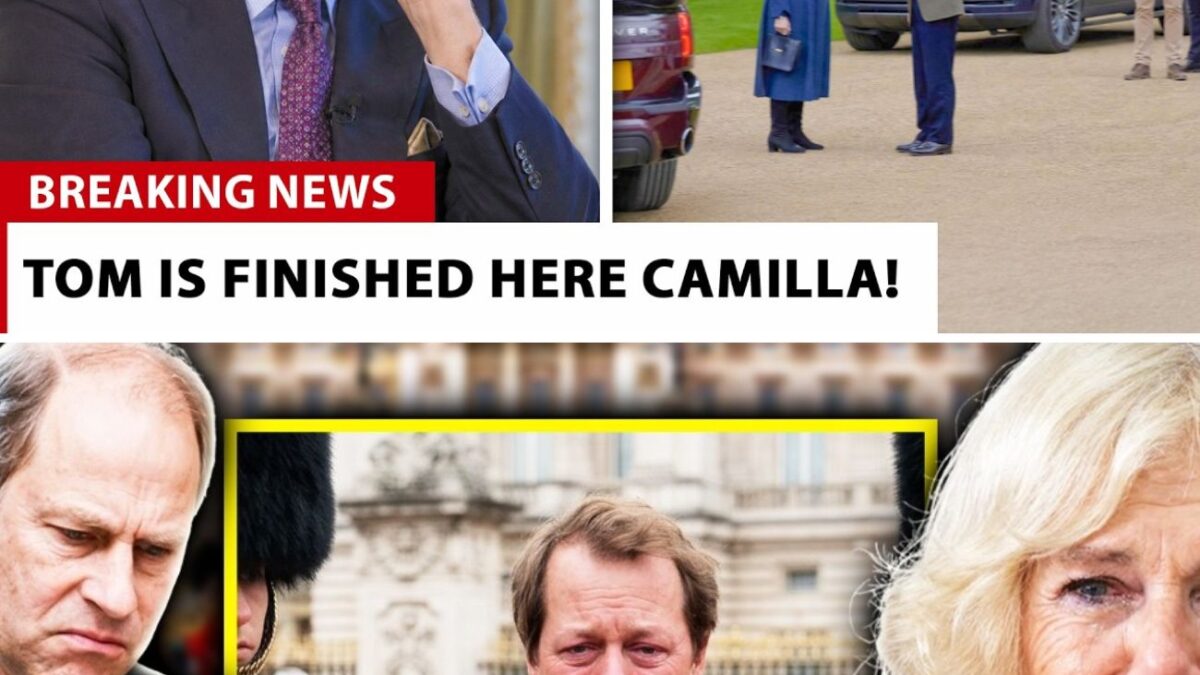
Prince Edward, Queen Camilla and Tom Parker Bowles: The Alleged Royal Estate Showdown That Could Shake the Palace
The most explosive moment in this dramatic royal account allegedly came not during a lavish gala, but over a telephone call. Prince Edward was said to have listened as Queen Camilla appealed for her son, Tom Parker Bowles, before abruptly ending the conversation. If the scene had unfolded as described, it would have represented a remarkable confrontation between family loyalty and the authority of the Crown. Yet the story’s wider implications would reach far beyond one uncomfortable exchange.
A Gala That Allegedly Went Too Far
According to the supplied narrative, the trouble began while King Charles was abroad. Tom Parker Bowles allegedly organized an elaborate corporate gala on the Duchy of Cornwall estate, treating the historic property as though he had unrestricted permission to use it for private commercial purposes.
The event was described as an extravagant gathering for wealthy guests and potential investors. Catering equipment was reportedly connected to the estate’s electricity supply, while a crest resembling the official royal emblem allegedly appeared on a wall. The resemblance, the account suggested, was enough to leave some guests questioning whether the branding was genuine.
The narrative further alleged that similar events had taken place on other royal properties, with sponsors supposedly paying for access they believed Tom could arrange. Complaints were said to have been ignored, and one palace employee allegedly lost their position after raising concerns.
These are serious allegations, and the script provides no independently verified evidence establishing that such a scheme occurred. Nevertheless, within its dramatic storyline, the supposed pattern of behavior creates the central conflict: what happens when someone believes family connections place them beyond the rules?
Prince William’s Calculated Response
The story’s turning point allegedly arrived after Charles and Camilla returned from a high-profile visit to the United States. While public attention focused on royal appearances in London, Tom was said to have continued arranging private gatherings at the estate.
A report supposedly reached Prince William’s private office, detailing the gala, the use of estate utilities, and the disputed crest. William, however, allegedly faced a delicate political and family situation. He was reportedly involved in private discussions with his father about modernizing the Crown Estate and did not want a public confrontation to undermine their relationship.
Rather than arriving personally to remove Camilla’s son, William allegedly chose Prince Edward to handle the matter. The script claims that Edward was granted sweeping authority to act immediately, presenting the decision as a deliberate attempt to separate enforcement from the family tensions surrounding Camilla.
In this account, Edward represented a different kind of royal influence: quiet, disciplined, and rooted in institutional responsibility rather than personal relationships. He was not portrayed as someone interested in theatrical arguments. He was there to bring the alleged event to an end.
The Confrontation Inside the Pavilion
The night of the gala was described as cold and rainy outside, while inside the pavilion, wealthy guests enjoyed expensive wine and elaborate catering. Tom allegedly moved confidently among the attendees, apparently convinced that his family connections would protect him from interference.
Then Prince Edward entered.
According to the narrative, conversations stopped as guests noticed the senior royal. Meanwhile, security personnel and estate officials had already begun inspecting the service areas. Catering equipment was reportedly being disconnected, staff were instructed to leave their stations, and officials began documenting the operation.
Tom eventually approached Edward with a champagne glass in hand. He allegedly challenged the prince’s right to be there, claiming that the event operated under the Queen Consort’s authority.
Edward initially remained silent.
That silence, the story suggests, only encouraged Tom to continue. He allegedly mocked Edward as an irrelevant figure whose title carried little practical influence. He also accused William of sending his uncle to do a job he was unwilling to handle himself.
The confrontation reportedly escalated as Tom questioned the value of traditional royal roles and suggested that commercial connections mattered more to the monarchy’s future than inherited status. He allegedly went further, presenting his own family’s business-world connections as part of what the institution needed to survive.
Edward eventually responded in a calm, direct manner. As described in the script, he rejected the claim that Camilla’s position gave her authority over the estate and insisted that the event had no proper authorization.
He then allegedly gave Tom one hour to remove the catering equipment, generators, and guests. Anyone remaining after the deadline, the account claims, could face action for trespassing.
Security personnel reportedly removed the disputed crest from the wall. The guests watched in silence as the gala began to collapse around its organizer.
Camilla’s Alleged Phone Call
The most dramatic scene began when Tom reportedly summoned his assistant and demanded help. Within minutes, a phone was allegedly passed between the men, with Camilla on the other end.
According to the supplied script, the Queen Consort was furious. She supposedly ordered Edward to stop the operation, arguing that Tom should not be publicly humiliated and insisting that the matter could be resolved privately within the family.
Edward allegedly allowed her to finish before explaining that he was acting on instructions connected to William’s authority over the Duchy of Cornwall. He reportedly challenged Camilla to put any competing constitutional claim in writing and submit it through formal channels.
The narrative then describes a striking change in Camilla’s tone. Her anger allegedly gave way to concern about the consequences Tom might face if the incident resulted in a formal police record. She reportedly pleaded for him to be spared further repercussions, asking Edward to let the removal of the event mark the end of the matter.
Edward, the story claims, listened before abruptly ending the call while Camilla was still speaking.
The room supposedly fell silent. For the guests present, the moment was presented as a startling reversal: a royal family member who had appeared to command influence was now portrayed as unable to stop an operation already underway.
But the account offers no independent confirmation that this call occurred. Its dramatic force depends on the contrast between Camilla’s alleged maternal concern and Edward’s supposed insistence on formal authority.
Tom’s Alleged Outburst
The story does not end with a quiet departure. As estate officials reportedly escorted Tom toward the exit, he allegedly erupted in anger, criticizing Charles, accusing William of controlling the monarchy’s future, and insulting Edward.
He supposedly threatened to reveal damaging private information about members of the royal family, including Charles, William, Catherine, and Harry. The script depicts these statements as desperate attempts to regain control after his influence appeared to evaporate.
Inside the pavilion, however, the guests allegedly remained where they were. Those who had arrived for an exclusive evening were now witnesses to an extraordinary scene, and the narrative suggests that stories about the confrontation would quickly circulate among London’s influential circles.
Again, the threats and alleged misconduct remain unverified claims within the supplied story, not established facts.
The Wider Questions About Royal Authority
The final section of the account raises the stakes further. William allegedly ordered a comprehensive financial audit of the Duchy of Cornwall, with the script claiming that the review uncovered substantial losses, damage to historic buildings, security weaknesses, and profits supposedly retained from private events.
No supporting audit documents are provided in the supplied material, so those allegations cannot be treated as verified findings. The story nevertheless uses them to frame the confrontation as more than a family dispute: it becomes a test of whether private connections can override the responsibilities attached to royal property.
Its central message is clear. Privilege may open doors, but it cannot automatically confer legal authority. If the alleged events had occurred as described, the consequences could extend beyond Tom and Camilla to the staff members and associates who supposedly ignored earlier warnings.
For now, the most sensational element remains the image at the heart of the narrative: Prince Edward allegedly ending a call with Queen Camilla while a disputed gala came to an abrupt halt.
It is a powerful dramatic scene, but one that demands evidence before it can be presented as royal history. Until reliable confirmation emerges, the story should be understood as an unverified account—not proof of a palace scandal or a constitutional showdown.








