PRINCE WILLIAM BARS CAMILLA FROM KENSINGTON PALACE! King Charles Stays Silent as a Family Showdown Changes Everything
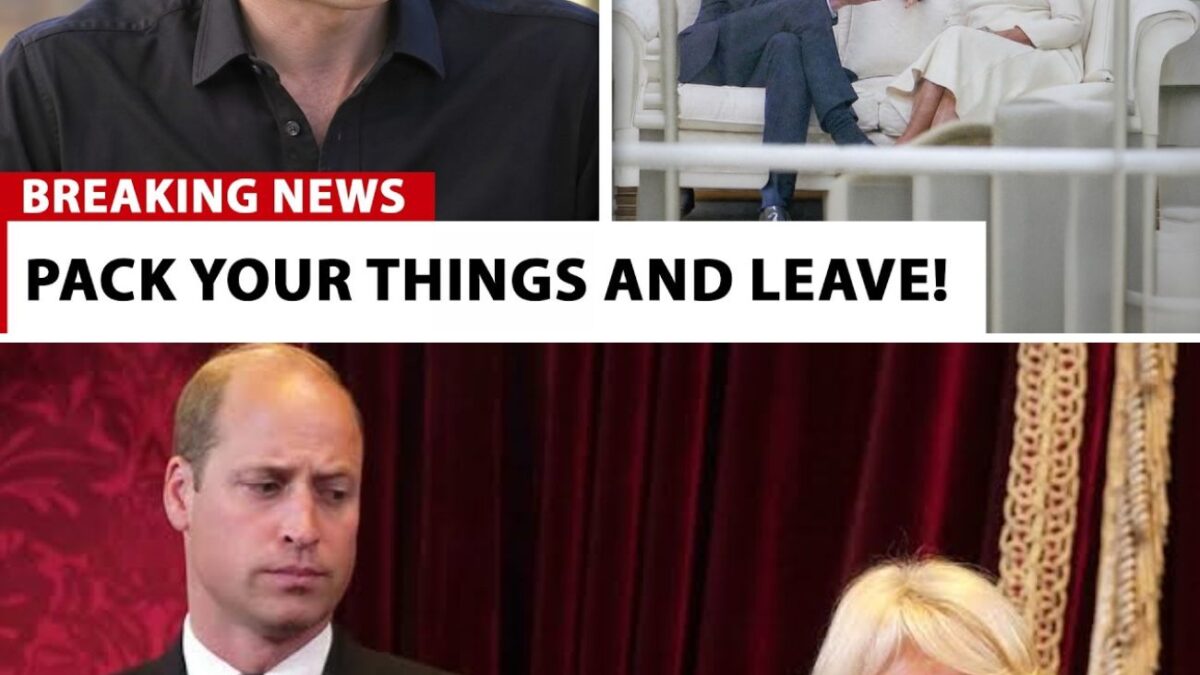
Prince William’s Dramatic Showdown With Queen Camilla: The Painting That Exposed a Royal Family Rift
Rain poured over Kensington Palace as Prince William reportedly faced Queen Camilla with an unmistakable refusal. Inside, Catherine, her parents, Michael and Carol Middleton, and King Charles had gathered for what was supposed to be a peaceful afternoon. Outside, a confrontation was unfolding that would expose a much deeper family conflict. At its center was a small watercolor painting, and the king’s silence would prove more significant than anyone’s words.
The painting depicted the hills of Balmoral, rendered years earlier by Charles himself. He had given it to Catherine, and it hung above the fireplace in her private sitting room. Its purple hills and muted sky seemed harmless enough. Yet Camilla allegedly believed the artwork had been intended for Clarence House, where she had already chosen a place for it.
A Peaceful Afternoon Takes an Unexpected Turn
Earlier that day, Charles had accepted William’s invitation to Kensington Palace. Arriving in an ordinary car with one protection officer, he removed his coat and settled into the relaxed atmosphere. There were no formal ceremonies, no elaborate arrangements, and no crowd of courtiers. Catherine served tea while her parents listened to the king discuss his painting technique.
Charles explained how he approached the landscape, laying down the hills first and resisting the temptation to retrace a line once it had been made. Michael Middleton listened thoughtfully, while Carol admired the finished work above the fireplace.
Then a protection officer appeared in the doorway. William stepped into the corridor, returning moments later with a seriousness that changed the mood.
“Did you tell Camilla where you would be this afternoon?” he reportedly asked his father.
Charles admitted that he had. During lunch, Camilla had asked about his plans, and he had mentioned the visit, including the presence of Catherine’s parents. According to the account, Camilla had seen the information as an opportunity to retrieve the watercolor.
William immediately questioned why she had not contacted Catherine privately. If the disagreement concerned ownership, a conversation could have settled it without involving the entire family.
But William suspected that the timing was deliberate. Camilla knew the Middletons would be present, and her unexpected arrival would place Catherine’s parents in an uncomfortable position.
The Painting Becomes a Symbol of Something Bigger
Charles reportedly acknowledged that Camilla had previously expected the painting to hang at Clarence House. He had even allowed her to select a wall for it. However, he ultimately gave the artwork to Catherine without explaining the change to his wife.
The misunderstanding might have been resolved quietly. Instead, the approaching confrontation threatened to turn a private disagreement into a public humiliation.
When Carol suggested taking a walk to avoid the awkwardness, Catherine reportedly insisted that her parents remain where they were. Michael made his position clear without saying a word. He moved his armchair closer to the fireplace, directly beneath the painting, and sat down.
It was a small gesture, but its meaning was unmistakable. He would not leave his daughter’s home simply because someone had arrived expecting to remove something from its wall.
William noticed. Charles noticed, too, although he looked away.
Outside, Camilla’s limousine pulled into the courtyard. A young assistant sat in the front passenger seat carrying a folded gray blanket and a padded case large enough for the watercolor. The preparations suggested that Camilla had expected to leave with the painting.
William stepped into the rain without his overcoat. When the limousine window lowered slightly, Camilla reportedly greeted him with a pleasant remark about the weather before explaining that she had come to collect the artwork.
William refused.
The painting, he argued, had been given to Catherine. Whatever expectations Camilla had previously held, Charles’s gift had established where it belonged.
Camilla reportedly countered that the painting had been promised to her and that she had already selected its place at Clarence House. But the conversation soon moved beyond competing recollections of a gift.
According to the account, Camilla indicated that she did not want the painting admired in Catherine’s sitting room by Michael and Carol Middleton.
That alleged admission transformed the confrontation. William believed the visit was not simply about recovering an artwork. He saw it as an attempt to assert authority over his wife’s family in their own home.
“I know,” he reportedly replied, making clear that this was precisely why he would not allow the painting to be removed.
The King Is Called Upon to Intervene
The courtyard doors opened, and Charles appeared at the top of the steps. Catherine stood a short distance behind him, composed but silent. Upstairs, Carol watched through the rain-streaked glass while Michael remained beside her.
Camilla called to her husband, expecting him to settle the dispute. When he did not respond, she reportedly called again, this time more sharply.
Charles remained silent.
He neither contradicted William nor openly supported Camilla. His stillness left the queen facing a refusal she had expected her husband to help overcome.
William then instructed the chauffeur to take Camilla back to Clarence House. He made his position unmistakable: she was not welcome that day.
Camilla reportedly warned him that he would remember the encounter. William answered that he certainly would, before adding that she should return when invited.
The limousine window rose, and the vehicle departed with the padded carrying case still empty. William remained in the courtyard until it had disappeared.
No one applauded. Above him, Michael and Carol watched quietly as the prince stood soaked by the rain, having refused Camilla’s request on behalf of his wife and her family.
William Challenges His Father’s Silence
When William returned to the steps, Charles attempted to explain himself. He suggested that William had been better placed to deliver the refusal because Kensington Palace was his home.
William was not satisfied.
His father could have spoken, he argued. Charles had known where Camilla was going and had allowed the confrontation to develop without taking responsibility for its consequences.
Charles reportedly defended his silence by explaining that Camilla was his wife. William’s answer cut directly to the heart of the matter: he already understood that relationship. What troubled him was his father’s unwillingness to make a clear decision.
William suggested that Charles should have chosen a position openly rather than allowing his son to bear the consequences.
The king, in this telling, had avoided a difficult confrontation and left William to handle it. The prince’s anger was not simply about the watercolor. It was about the burden of protecting others when the person with the greatest authority refused to act.
Catherine finally spoke, expressing regret that her father-in-law had not addressed the situation himself. Then, rather than prolonging the argument, she invited everyone back inside.
Her father still wanted to understand how Charles had painted the sky.
The Watercolor Remains in Place
Back in the sitting room, Charles looked at the painting above the fireplace. When the protection officer asked whether his car should be brought around, the king reportedly declined.
It was a small decision, made late, but everyone heard it.
Michael gently encouraged Charles to continue explaining his technique. William gave his father a nod toward the painting, inviting him to finish what he had started.
Charles raised his hand and traced the purple ridge in the air, explaining how a confident stroke could define a landscape without being repeated. Carol finally smiled. Catherine exchanged a glance with William, and the afternoon slowly returned to something resembling normal family life.
Meanwhile, Camilla was left to consider what had happened. The empty carrying case was a reminder that her visit had not achieved its apparent objective. More importantly, Charles had failed to intervene when she called for him.
The story’s deeper tension lies in that silence. William drew a boundary, Catherine supported her family’s right to remain in their home, and Michael refused to move from beneath the painting. Charles, meanwhile, confronted the consequences of avoiding a difficult choice.
The watercolor remained above the fireplace at Kensington Palace. The space reportedly reserved for it at Clarence House remained empty.
Whether this dramatic account reflects real events is unverified; it should be understood as a reported narrative rather than confirmed royal news. Nevertheless, its central question is compelling: when family loyalty and personal boundaries collide, can silence truly remain neutral, or does refusing to choose become a choice of its own?








