Prince William’s FINAL VERDICT Leaves Camilla’s Family STUNNED — The Royal Privileges He Allegedly Cut Off
Prince William’s FINAL VERDICT Leaves Camilla’s Family STUNNED — The Royal Privileges He Allegedly Cut Off
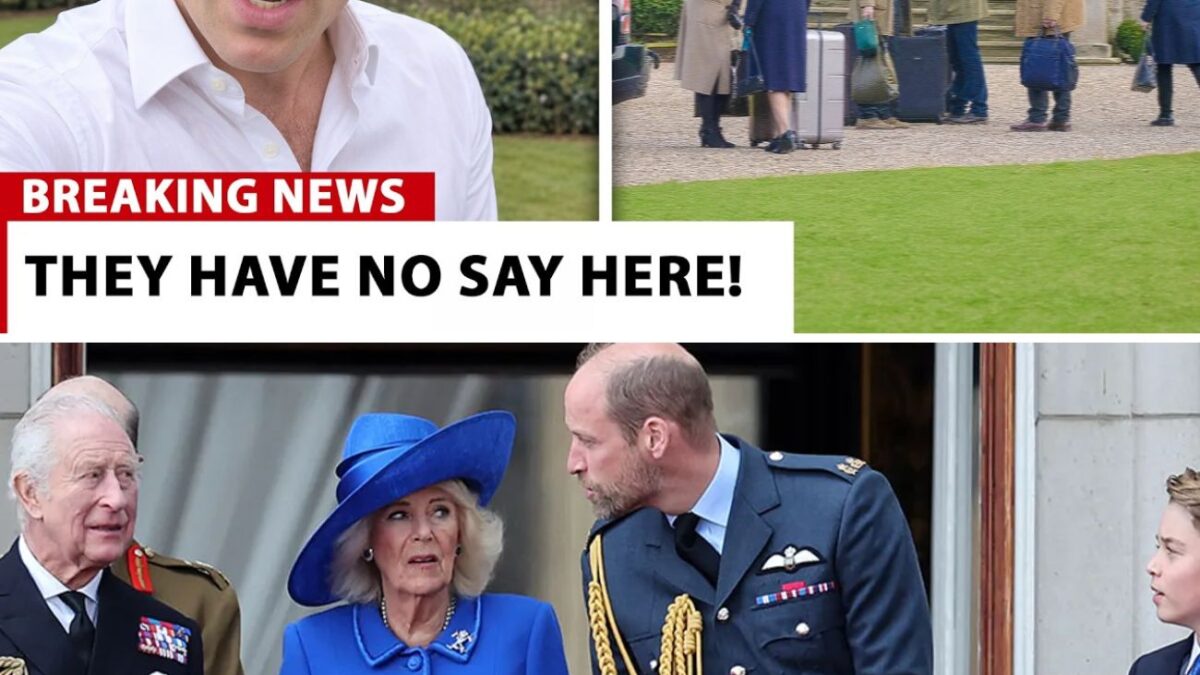
A dramatic story circulating around the British royal family claims that Prince William has made a decisive move against the extended family of Queen Camilla, using administrative and financial measures rather than a public confrontation. The allegations describe a sweeping attempt to separate royal resources, access and privileges from relatives who, according to the scenario, had become increasingly comfortable operating within the orbit of the Crown.
It is important to stress that the specific audit, dismissals, revoked privileges and private confrontations described in this story have not been independently established as factual events. They form the basis of the circulating scenario. Yet as a royal drama, the story raises a fascinating question: where does family loyalty end and institutional responsibility begin?
According to the scenario, William’s alleged power move began not with a speech, a confrontation or a headline-making announcement, but with paperwork.
The story claims that an extensive review of the Duchy of Cornwall uncovered questionable patterns involving members of Camilla’s wider family. At the center was Annabel Elliot, Camilla’s sister, whose design work was allegedly connected to contracts and spending through royal circles.
In the fictionalized account, William was presented with figures that immediately raised concerns. Instead of treating the matter as a family disagreement, he allegedly approached it as an institutional problem. The story says an emergency meeting was called and Annabel Elliot’s contract was terminated.
That was supposedly only the beginning.
The larger controversy involved an alleged ambition to secure a more permanent place for Camilla’s children within the aristocratic establishment. The scenario claims that Camilla had supported the idea of her son, Tom Parker Bowles, receiving a hereditary title.
That possibility would have represented something much bigger than a personal honor.
A hereditary title could potentially carry implications lasting beyond Charles’s reign, permanently changing how Camilla’s family was perceived within British society. According to the story, supporters of the idea viewed it as recognition for a family that had spent decades living under intense public scrutiny. Critics, however, would see it as another example of privilege being extended through personal connections.
William, the scenario claims, saw it differently.
The future king allegedly believed that giving Tom Parker Bowles a hereditary title simply because of his connection to Camilla could create a serious public-relations problem. More importantly, it could blur the line between the royal family and relatives who hold no constitutional position.
That distinction becomes the heart of the entire story.
According to the narrative, William eventually confronted King Charles privately. Rather than pleading with his father, he allegedly arrived with financial and administrative documents and delivered a blunt message: royal resources could no longer be treated as an extension of family privilege.
The scenario portrays the moment as a turning point between father and son.
Charles was allegedly placed in an uncomfortable position. On one side stood his wife, Camilla, whose family William was supposedly challenging. On the other stood William, heir to the throne, insisting that the institution had to come first.
The story then takes an even more dramatic turn.
It claims Charles ultimately chose not to fight William’s position. Instead, he allegedly withdrew from the dispute, leaving Camilla without the protection she had expected from her husband.
That supposed retreat would have been devastating for Camilla.
For years, the Queen’s family has attracted public interest precisely because of its relationship to the monarchy. Camilla’s children remain private citizens, yet their connection to the Queen naturally places them close to the royal world. The scenario argues that William wanted to draw a firm boundary between personal relationships and official royal privilege.
Then came the alleged final administrative briefing.
According to the story, William did not personally appear. Instead, senior legal and financial representatives allegedly met with Tom Parker Bowles and Laura Lopes and delivered a series of decisions.
The scenario claims that royal protection arrangements, access to royal vehicles and eligibility for certain Crown Estate properties were withdrawn.
There was supposedly no dramatic argument.
No shouting.
No public humiliation.
Just documents.
That detail is what makes the story particularly compelling. The alleged message was not that Camilla’s children were being punished for who they were. It was that proximity to the Crown could no longer automatically translate into institutional benefits.
The story describes this as the end of a so-called “shadow dynasty” — a network of relatives, friends and associates who supposedly benefited from proximity to royal power without having an official constitutional role.
Whether such a sweeping reform has actually occurred is unconfirmed. But the underlying argument touches on a genuine tension surrounding modern monarchies: how should royal institutions balance family relationships with public accountability?
The scenario also connects William’s alleged approach to the memory of his mother, Princess Diana.
William grew up watching the intense pressures surrounding Diana’s life inside the royal institution. The story suggests that these experiences shaped his attitude toward secrecy, influence and informal power.
In this telling, William does not see himself as taking revenge against Camilla.
He sees himself as preventing history from repeating itself.
That distinction is crucial to the narrative.
The story portrays William as deliberately avoiding emotional confrontation. Instead of publicly attacking Camilla, he allegedly relied on financial reviews, legal procedures and administrative decisions. The message was supposedly simple: if someone has no official role within the institution, there should be no automatic expectation of institutional privilege.
For Camilla, however, the consequences described in the scenario are enormous.
She would remain Queen, but her ability to influence the future of her family would allegedly be sharply reduced. Her children would remain private citizens. Her sister’s supposed royal-connected work would disappear. Any possibility of hereditary titles would be blocked.
And Charles would supposedly have chosen not to intervene.
That leaves William as the central figure in the story.
His alleged decision represents more than a family disagreement. It symbolizes a different vision of monarchy — one based on tighter boundaries, fewer informal arrangements and greater scrutiny of how royal resources are used.
The scenario claims that this is precisely the kind of monarchy William intends to build when he eventually becomes king.
A smaller institution.
A clearer hierarchy.
Less ambiguity.
And fewer opportunities for relatives to benefit simply because they happen to be close to the throne.
The most dramatic part of the story, therefore, is not any single contract or privilege. It is the alleged change in philosophy behind them.
For generations, royal families have existed somewhere between private families and public institutions. William’s supposed position is that the balance must shift toward institutional responsibility.
Camilla’s family, meanwhile, becomes the symbol of everything he allegedly wants to change.
The final image presented by the story is therefore deliberately striking: William does not shout, threaten or publicly attack anyone. He simply allows the paperwork to speak.
And if the scenario is to be believed, that paperwork sends an unmistakable message.
Being close to the Crown is not the same as belonging to the Crown.
Camilla may still wear the crown. Charles may still sit on the throne. But according to this dramatic account, William has already begun drawing the boundaries of the monarchy he intends to inherit.
Whether that represents necessary reform, an exaggerated family feud, or simply a sensational royal narrative remains a matter of interpretation.
One thing, however, makes the story impossible to ignore: the alleged battle is not really about one contract, one title or one family.
It is about who gets to benefit from royal power — and who gets left outside the palace gates when the future king decides that the old rules no longer apply.








