Prince William’s SHOCKING Succession Move: Charles Steps Back, Catherine Rises—and Camilla Is Suddenly OUT of the Future Plan?
Prince William’s SHOCKING Succession Move: Charles Steps Back, Catherine Rises—and Camilla Is Suddenly OUT of the Future Plan?
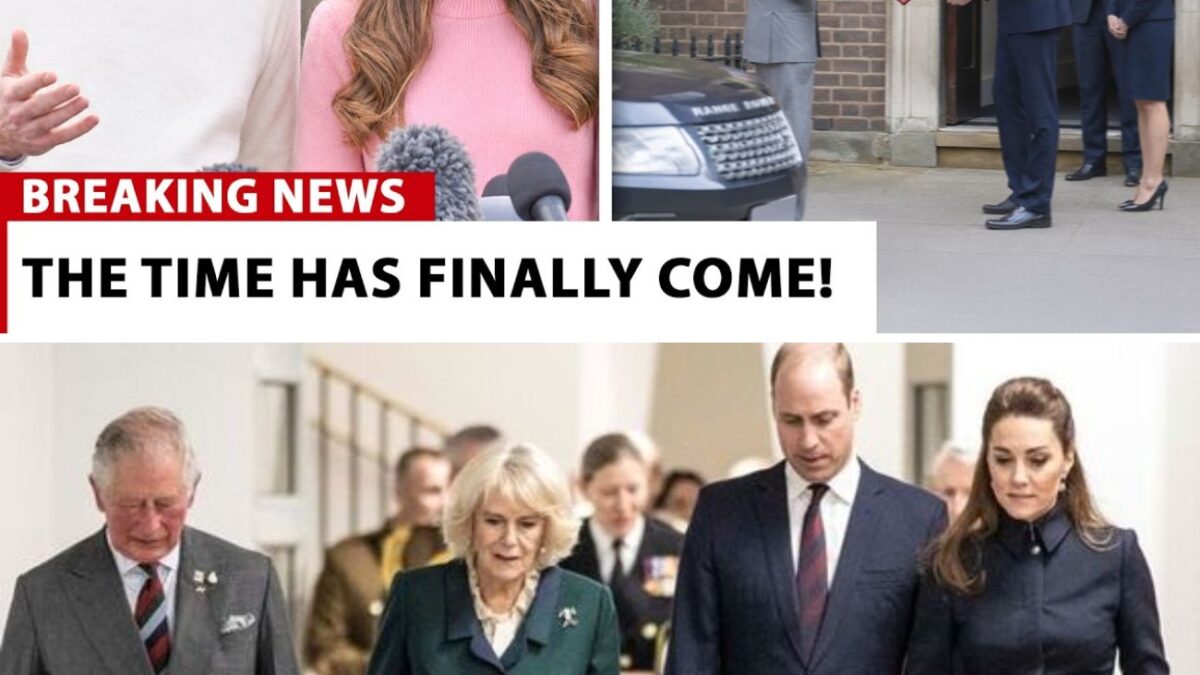
Something extraordinary is supposedly taking shape behind the walls of Kensington Palace. According to the scenario outlined in the original script, Prince William has been preparing a sweeping succession framework that could fundamentally change how the monarchy operates long before he officially becomes king.
At the center of the story is a reported document described as the “Kensington Palace Transition and Succession Protocol.” Rather than presenting it as a distant proposal, the script portrays the framework as a detailed blueprint for the next era of the monarchy—one that places William and Catherine at the heart of royal decision-making.
The most striking element is the location. Buckingham Palace has traditionally represented the institutional center of the sovereign’s power, while Kensington Palace has been associated with the Prince of Wales and the heir. But this scenario imagines that balance changing dramatically.
Under the reported framework, William would no longer function simply as a patient heir waiting for his turn. He would become an active administrator of the crown, taking a much more direct role in government communication, strategic planning and the long-term direction of the institution.
The script even describes William as receiving information traditionally associated with the monarch and establishing closer channels with government officials. If such an arrangement existed, it would represent an extraordinary shift in the practical balance between the reigning monarch and the future king.
But William is not portrayed as the only royal gaining influence.
Catherine’s position is transformed just as dramatically.
The Princess of Wales is described as becoming the central figure responsible for the family’s domestic and public-facing strategy. Her authority would reportedly extend to the public appearances and media exposure of George, Charlotte and Louis.
That part of the scenario carries particular emotional weight because Catherine has faced her own period of serious health difficulties and intense public scrutiny. The script presents her return to public life as a turning point, suggesting that her experience strengthened her position within the family.
Most importantly, the framework supposedly gives Catherine a powerful role in protecting her children.
Prince George, as the future king, would allegedly receive extraordinary privacy protections. The proposed system would limit official appearances and prevent the young prince from being used as a convenient public-relations tool during difficult periods.
For William, this is more than palace strategy. It is personal.
He knows what it was like to grow up under relentless media attention. He remembers the cameras surrounding his family and, most painfully, the public funeral of his mother, Diana, Princess of Wales.
The scenario suggests that William has no intention of allowing George, Charlotte or Louis to experience the same level of exposure.
Instead, the three children would supposedly be treated as one protected unit. Their education, private lives and public appearances would be carefully controlled, with Catherine’s office playing a central role.
That vision directly challenges the traditional expectations placed upon royal children.
And then comes the most controversial part of the alleged restructuring: the people who may be losing influence.
Queen Camilla is portrayed as one of the biggest casualties of the new arrangement.
According to the scenario, Camilla’s office had expected to retain significant influence after Charles’s reign. Yet the alleged succession framework contains no meaningful operational role for her.
The dramatic implication is clear: Camilla could remain an important member of the royal family while having little influence over the machinery of the next reign.
That would be a remarkable reversal.
The scenario does not describe a public confrontation between William and Camilla. Instead, it presents something much quieter—and potentially more powerful. She is simply absent from the future chain of command.
In palace politics, the story suggests, exclusion can be more devastating than confrontation.
The same principle supposedly applies to Prince Harry and Prince Andrew.
The script presents William’s future monarchy as significantly smaller and more disciplined. Harry’s life outside the United Kingdom would remain separate from the working institution, while Andrew’s exclusion would become permanent.
Princess Anne and Prince Edward, meanwhile, would supposedly retain their working roles, but within a more centralized structure directed from Kensington.
The financial side of the imagined transformation is equally significant.
William is portrayed as favoring a smaller monarchy with fewer publicly funded households and clearer accountability. The revenues associated with the Duchy of Cornwall would be directed toward long-term projects rather than a sprawling collection of ceremonial commitments.
The message is simple: the monarchy must justify its existence by becoming more efficient, more focused and more visibly useful.
But perhaps the most emotional scene in the entire story comes privately, between William and his father.
The scenario imagines William entering King Charles’s study carrying a leather-bound folder containing the new framework.
Charles, reportedly weakened by his medical treatment, recognizes immediately what the folder represents.
For decades, Charles had waited for the crown. Yet now, according to the story, he must confront the possibility that his son is already preparing to carry much of its future weight.
There is no dramatic argument.
Instead, the scene is portrayed as quiet and deeply personal.
Charles looks at William and tells him: “You have the watch.”
William responds by accepting the responsibility rather than celebrating it.
It is presented as a symbolic passing of responsibility from one generation to another—not necessarily a formal transfer of the crown, but a recognition that the future is approaching faster than either man expected.
And that is ultimately what makes this scenario so explosive.
The alleged transformation is not portrayed as a traditional coup or rebellion. William is not supposedly taking the throne by force. He is preparing the institution around him before the moment arrives.
Catherine is strengthened. George, Charlotte and Louis are protected. Harry and Andrew remain outside the working monarchy. Camilla’s alleged influence is reduced. Government communication moves closer to Kensington. The royal household becomes smaller.
Most importantly, the future king is no longer waiting passively for his reign to begin.
The story ends with a powerful image: a monarchy under pressure, a king facing illness, an heir preparing for unprecedented responsibility, and a family attempting to protect itself from the mistakes of previous generations.
Whether this reported framework represents genuine palace planning or remains a dramatic scenario built around speculation, one question makes the entire story impossible to ignore:
What happens when the future king starts preparing for his reign before the present one has ended?
For Prince William, the answer may determine not only his own future, but the shape of the monarchy itself.








