PRINCESS ANNE FINALLY ACTS? The Sussexes’ Alleged Royal Status Shake-Up Leaves Harry and Meghan Facing New Questions!
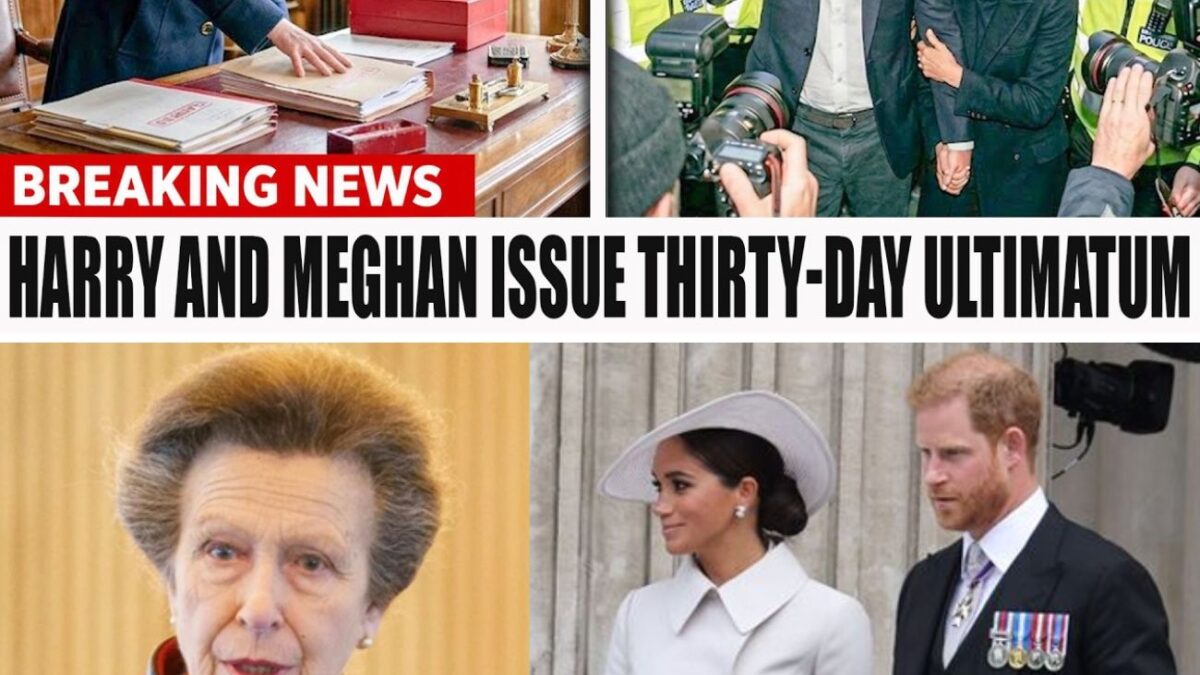
Princess Anne Finally Acts? The Sussexes’ Royal Status Controversy Puts Harry and Meghan Under Fresh Scrutiny
The British royal family has weathered years of disagreements, unexpected departures, and public revelations. Yet whenever Prince Harry and Meghan Markle become the focus of a new royal controversy, attention inevitably turns to the senior royals who have chosen to remain firmly committed to duty. This time, Princess Anne is at the centre of a provocative question: could her famously direct approach to royal responsibilities influence the way the monarchy handles the Sussexes’ position?
The suggestion has fuelled speculation about a potential royal status shake-up. But the confirmed facts tell a more complicated story, one involving institutional boundaries, family relationships, and a decision that continues to shape Harry and Meghan’s lives.
Princess Anne: The Royal Who Rarely Seeks the Spotlight
Princess Anne has spent decades establishing a reputation for hard work, discipline, and a preference for getting on with the job rather than discussing it publicly.
As the Princess Royal, she undertakes a demanding programme of engagements and supports numerous organisations across Britain and beyond. Her approach to public service has often contrasted with the attention surrounding other members of the royal family.
For royal watchers, that reputation makes Anne an intriguing figure whenever questions arise about the monarchy’s future.
She is not known for turning family disagreements into public performances. Instead, her public image has been shaped by consistency, a strong sense of responsibility, and an apparent reluctance to indulge unnecessary drama.
That does not mean she has announced a new policy concerning Harry and Meghan. No verified statement establishes that Anne has personally initiated a change to their royal status.
Nevertheless, her position within the family makes her an obvious subject of speculation whenever royal relationships become strained.
The crucial distinction is between Anne’s established commitment to royal duty and the unconfirmed suggestion that she has taken a new, decisive step against the Sussexes.
Harry and Meghan’s Royal Status: What Has Actually Changed?
To understand the latest controversy, it is necessary to return to January 2020, when Harry and Meghan announced their intention to step back from their roles as senior working royals.
Their decision represented a turning point. They wanted greater independence, including the opportunity to develop their own professional projects while continuing to pursue charitable interests.
The arrangement eventually confirmed by Queen Elizabeth II meant they would no longer perform official royal duties or represent the monarch in the same capacity as working members of the family. Their honorary military appointments and royal patronages were also returned for redistribution.
In February 2021, Buckingham Palace confirmed that the couple would not return as working members of the Royal Family.
Importantly, stepping away from official duties did not mean that Harry ceased to be the King’s son or that the couple’s ducal titles automatically disappeared.
That distinction has repeatedly been misunderstood in discussions about their future.
The Sussexes retained their Duke and Duchess of Sussex titles, while their His and Her Royal Highness styles were not to be used in accordance with the arrangements established after their departure.
These decisions were institutional, not the result of a newly announced intervention by Princess Anne.
King Charles Reinforces the Boundaries
The question of the Sussexes’ position returned to the headlines in September 2026, following their reported return to the United Kingdom.
According to Reuters, King Charles authorised a letter to senior government and military officials confirming that Harry and Meghan remained non-working members of the Royal Family. The letter reiterated that their status had not changed and that their charitable work was undertaken in a private capacity.
The message was significant because it removed room for confusion about whether a return to Britain would automatically restore their former responsibilities.
It would not.
The distinction between being part of the royal family and carrying out official duties on behalf of the monarch remained central to the arrangement.
For the institution, that distinction helps separate official representation from private business interests, personal charitable work, and independent public appearances.
For Harry and Meghan, it means that geographical proximity to the royal family does not, by itself, amount to a return to their former roles.
The clarification was attributed to the King and the royal household’s established arrangements. It was not announced as a decision made by Anne.
Even so, the developments provide a credible backdrop for speculation about how senior royals view the future of the monarchy and the boundaries surrounding official service.
Why Anne’s Reputation Fuels the Speculation
Princess Anne’s appeal as a central character in this story comes from the contrast between her approach to royal life and the Sussexes’ increasingly independent public identities.
Anne has continued to undertake official engagements over many decades. Harry and Meghan, meanwhile, have built careers outside the traditional structure of the working monarchy.
Their choices reflect different approaches to public life, but those differences do not establish that Anne has personally challenged them or sought to remove their remaining titles.
Still, the contrast invites questions about what the institution expects from those who represent it.
For traditional royal observers, duty is closely connected to continuity, discretion, and a willingness to place official responsibilities above individual ambitions.
For supporters of the Sussexes, independence can be understood as a legitimate response to the pressures of royal life and an opportunity to develop charitable and commercial work on their own terms.
The disagreement is therefore about more than personalities. It reflects competing ideas about what it means to belong to a modern monarchy.
Anne’s long record of service makes her an appealing symbol of the traditional approach. But symbolism should not be confused with evidence of a new royal decision.
Could Harry and Meghan Lose Their Remaining Status?
The phrase “new Sussex royal status” naturally raises a more dramatic question: could Harry and Meghan lose their titles or face further restrictions?
At present, the established position must be distinguished from speculation about what might happen next.
The 2020 and 2021 announcements addressed their departure from working royal life and the non-use of their HRH styles. The September 2026 clarification reinforced that arrangement after their return to Britain.
None of those announcements establishes that Princess Anne has launched a new process to strip the couple of their remaining titles.
Nor does the confirmed information demonstrate that Anne has been given a new role in determining the Sussexes’ status.
A change to their formal position would require an identifiable decision through the relevant royal or constitutional processes. It cannot be inferred simply from the fact that a senior royal is associated with duty and tradition.
That distinction matters because sensational headlines can turn an ordinary clarification into the appearance of a dramatic institutional confrontation.
The genuine story is already consequential: the couple’s return to Britain has not restored their former working roles, and the King has made that position explicit.
The Family Rift Behind the Headlines
Beyond titles and official duties lies the more personal question of family relationships.
Harry has spoken publicly about difficulties with members of his family, while his relationship with Prince William has remained a subject of sustained public attention.
A return to Britain may create opportunities for family contact, but it does not guarantee reconciliation.
Nor does it automatically resolve disagreements about the past, privacy, public criticism, or the responsibilities associated with royal life.
Princess Anne occupies a different position in this family dynamic. Her public responsibilities and long experience of the institution may make her an influential figure in the wider royal environment, but there is no verified evidence that she has intervened to end a relationship or impose a new punishment on Harry and Meghan.
It is equally important not to assume that every disagreement within the family reflects a coordinated campaign by senior royals.
Private relationships are more complicated than the simple divisions often presented in headlines.
The monarchy must maintain its public responsibilities, while individual family members must navigate their own relationships and differences. Those obligations can overlap, but they are not necessarily identical.
A Royal Institution Protecting Its Boundaries
The continuing Sussex controversy also highlights the challenges facing a monarchy that must balance tradition with changing public expectations.
Harry and Meghan have pursued independent careers, charitable projects, and commercial interests since stepping back from royal duties. Their public profile remains closely associated with their former royal roles, even as the institution maintains a clear distinction between them and working members of the family.
That tension is unlikely to disappear overnight.
For the Palace, clarity about official status can prevent confusion over representation, patronages, and the use of royal styles.
For the Sussexes, independence offers opportunities but also means that their activities do not automatically carry the authority of an official royal engagement.
These boundaries may appear formal, yet they influence how the public interprets almost every development involving the couple.
This is why any suggestion that Anne has finally acted against them attracts attention. It fits a familiar narrative of a traditional royal figure confronting a difficult family situation.
But the available evidence supports a more measured conclusion: the King has reaffirmed the existing arrangement, while claims of a separate intervention by Anne remain unverified.
What Happens Next?
For now, the most important question is not whether Princess Anne has secretly changed the Sussexes’ status. It is how Harry and Meghan will continue to define their relationship with Britain and the royal institution under the existing arrangements.
Their future may involve further charitable work, private family visits, commercial projects, and public appearances. None of those activities, on its own, would establish a return to working royal life.
Likewise, Anne’s continuing commitment to duty does not prove that she intends to confront the couple or influence their formal standing.
The confirmed developments are significant enough without adding unsupported claims. Harry and Meghan remain outside the working Royal Family, and King Charles has reiterated that their status has not changed.
The possibility of further family reconciliation remains separate from that official position.
Ultimately, the story of Princess Anne, Harry, and Meghan illustrates how easily royal speculation can become entangled with established fact. A dramatic headline may suggest a decisive showdown, but the evidence must determine what can responsibly be said.
Until a verified announcement establishes otherwise, there is no confirmed new royal status imposed on the Sussexes by Anne.
The larger question remains whether the royal family can preserve its institutional boundaries while allowing its personal relationships to evolve. That challenge has defined the Sussex story for years, and it is likely to remain at the heart of the debate for some time to come.








