Princess Anne Reportedly Strips Camilla’s Son of Royal Ascot Privileges After Explosive Clash With Prince William
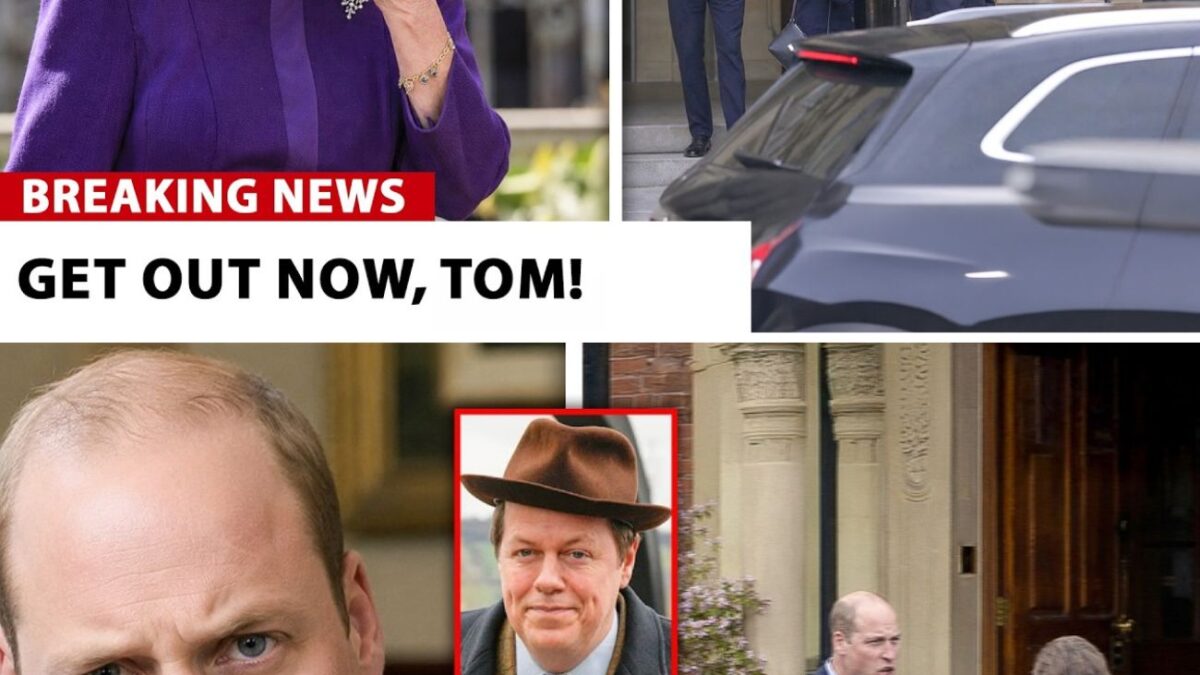
The Windsor Dinner That Allegedly Changed Everything: Princess Anne, Tom Parker Bowles, and Prince William
A private dinner at Windsor Castle, an accusation directed at Prince William, and a decision allegedly made by Princess Anne the following morning: the ingredients of this extraordinary royal family story have sparked questions about loyalty, privilege, and the boundaries between family relationships and royal responsibilities.
At the center of the controversy is Tom Parker Bowles, Queen Camilla’s son, whose relationship with the royal family has long attracted attention despite his lack of an official royal title. According to the dramatic account, an argument involving William ultimately led Anne to reconsider Tom’s access to the exclusive Royal Ascot enclosure.
Yet the alleged confrontation was only the beginning.
Nine Words That Changed the Atmosphere
The story begins with a private dinner at Windsor Castle, supposedly arranged to give King Charles III an opportunity to spend a peaceful evening with family before a demanding autumn schedule.
Among those present were Charles, Camilla, William, Catherine, Princess Anne, and relatives from Camilla’s side, including Tom Parker Bowles.
Initially, the gathering was described as relaxed. Conversation reportedly moved between horses, upcoming engagements, and family matters. Then, during the main course, Tom allegedly turned toward William and delivered a pointed accusation:
“You decide who matters because you will be king.”
The words, as presented in the account, transformed the atmosphere around the table.
Tom allegedly continued by suggesting that William had treated his mother’s relatives as outsiders and that a future monarch should not determine which members of the extended family deserved respect.
William reportedly remained silent. Catherine watched her husband, while Camilla attempted to intervene by quietly addressing her son.
Then came the moment that would become central to the story.
As Tom gestured during the heated exchange, his hand allegedly struck the stem of a wineglass. The glass tipped toward William, striking his hand before spilling wine across his sleeve and the white tablecloth. It eventually cracked against a plate.
Importantly, the supplied account portrays the incident as accidental rather than an intentional physical attack.
What allegedly provoked Anne was not simply the broken glass, but Tom’s failure to pause or apologize before continuing the argument.
Anne reportedly leaned forward and challenged him, insisting that his words had crossed a line. The king eventually brought the dinner to an end.
William, meanwhile, offered no public response within the gathering. His silence would later be interpreted as an attempt to prevent a private family dispute from becoming a confrontation between rival royal camps.
The Decision Behind the Royal Ascot Badges
According to the account, Anne’s response came the following morning.
The Princess Royal allegedly reviewed the household register containing the names of people allocated personal badges for the Royal Enclosure at Royal Ascot, one of Britain’s most prestigious racing events.
For years, Tom had reportedly received two badges: one for himself and another for a guest. The privileges were described as a courtesy associated with the king’s personal allocation, rather than an entitlement Tom could claim independently.
Anne allegedly drew a line through both entries, marked them as withdrawn, and instructed the household office to confirm the change in writing.
The decision raised an immediate question: why respond so decisively to a single uncomfortable dinner?
The supplied narrative suggests that Anne believed the argument had exposed a deeper issue involving the use of royal hospitality.
William, upon learning what had happened, reportedly felt uneasy about the decision. He had remained silent during dinner partly because he did not want the dispute to be portrayed as a future king punishing his stepmother’s family.
Anne’s reported reasoning was different. She believed that someone other than William needed to establish a boundary.
A Dispute That Allegedly Began Days Earlier
The background to the confrontation supposedly involved a private reception Charles was planning at Windsor.
Tom had allegedly asked William to include several of his guests on the invitation list. William declined, explaining that the arrangements had already been agreed with his father and that reopening the list for one person could create difficulties.
Tom reportedly took the refusal personally.
According to the account, he subsequently approached Camilla, explaining that he felt her family was welcomed only when it suited others. Camilla, whose own history within the royal family has involved years of intense public scrutiny, allegedly sympathized with her son’s concerns.
She reportedly asked Charles to reconsider the guest list, but the king also declined.
Anne supposedly learned about the disagreement before the dinner and warned her brother that unresolved resentment could surface during a family gathering.
The situation became more complicated when William allegedly showed Anne a message from Tom requesting another reconsideration of the invitation list.
The key detail, according to the narrative, was the identity of the proposed guests: they were not simply relatives or old friends, but people connected to Tom’s professional life.
The Business Connection
The account then introduces a second controversy involving a previous Royal Ascot meeting.
While reviewing earlier registers, Anne allegedly discovered that one of Tom’s guest badges had been allocated to a businessman associated with his work in food and restaurants.
There is an important distinction here. The supplied story does not establish that the badge was sold, that money changed hands, or that a law was broken. Instead, the alleged concern was whether a privilege intended for the king’s family and personal friends had been used to accommodate a commercial contact.
For Anne, the distinction between a personal courtesy and a professional advantage supposedly mattered.
The discovery also offered a possible explanation for why she considered the dinner argument more serious than a simple disagreement over family invitations.
Tom had allegedly accused William of deciding who mattered while benefiting from access granted through the king’s own hospitality.
Whether that interpretation was fair is another question. A single guest’s professional connections would not, by themselves, prove that a royal invitation had been improperly used.
Nevertheless, in the story, the discovery became the turning point.
The Confrontation With Camilla Present
Anne reportedly arranged a meeting with Camilla and Tom, placing two documents on the table: the current register showing the withdrawn badges and the previous year’s record containing the businessman’s name.
She allegedly asked Tom directly whether he had given the king’s badge to the man.
Tom reportedly argued that the guest had attended for only one day, that nobody had objected at the time, and that professional connections were common among people attending Ascot.
Anne, according to the narrative, insisted that the issue involved both the previous allocation and the confrontation with William.
Camilla supposedly asked whether a warning might be sufficient. Anne declined to reverse her decision.
The account describes Tom leaving Windsor that evening, while Camilla remained behind, distressed by the situation.
The household subsequently formalized the withdrawal, and William was reportedly asked to countersign the decision so that it could not be dismissed as Anne acting out of anger.
He initially hesitated but eventually signed, accepting that the matter had become a question of responsibility for the king’s personal allocation.
An Unexpected Change of Fortune
In a final twist, the two badges were allegedly reassigned to people whose connection to royal life was very different from Tom’s.
One reportedly went to a retired royal groom who had spent decades working with carriage horses but had never stood on the exclusive lawn as a guest. The other was supposedly allocated to a charity representative connected with support for injured stable staff.
The contrast supplied the story with its central message: royal hospitality should recognize genuine personal relationships and service, rather than function as an extension of professional networking.
Tom, meanwhile, was said to have apologized privately to William for his words at dinner and for the wineglass incident. William reportedly accepted the apology but did not ask Anne to restore the badges.
The account also portrays Charles as refusing to overrule his sister, despite Camilla’s alleged disappointment. Reversing the decision simply because it affected his wife’s son, the story suggests, would have undermined the principle that the same standards should apply to everyone.
What the Story Ultimately Reveals
The alleged dispute is compelling because it combines a family disagreement with a question about institutional privilege.
Tom’s frustration, as portrayed in the narrative, reflects the complicated experience of living in the public shadow of a royal parent without holding a royal position himself. William’s silence reflects the pressures surrounding his future role, while Anne’s reported response represents a determination to separate personal affection from responsibility.
But the most dramatic details remain unverified. There is no independent confirmation in the supplied material that this dinner took place as described, that the badges were withdrawn, or that the conversations attributed to the royals occurred.
For that reason, the account should not be treated as established news about the royal family.
Its underlying question, however, is clear: when family loyalty collides with questions of fairness and privilege, should personal relationships outweigh the rules, or should the rules apply regardless of whose feelings are hurt?
In this telling, Princess Anne chooses the latter—and the consequences reach far beyond one dinner table at Windsor.








