PRINCESS ANNE STRIKES BACK! Camilla’s Son Tom Parker Bowles Allegedly Loses Royal Ascot Privileges After Explosive Clash With Prince William
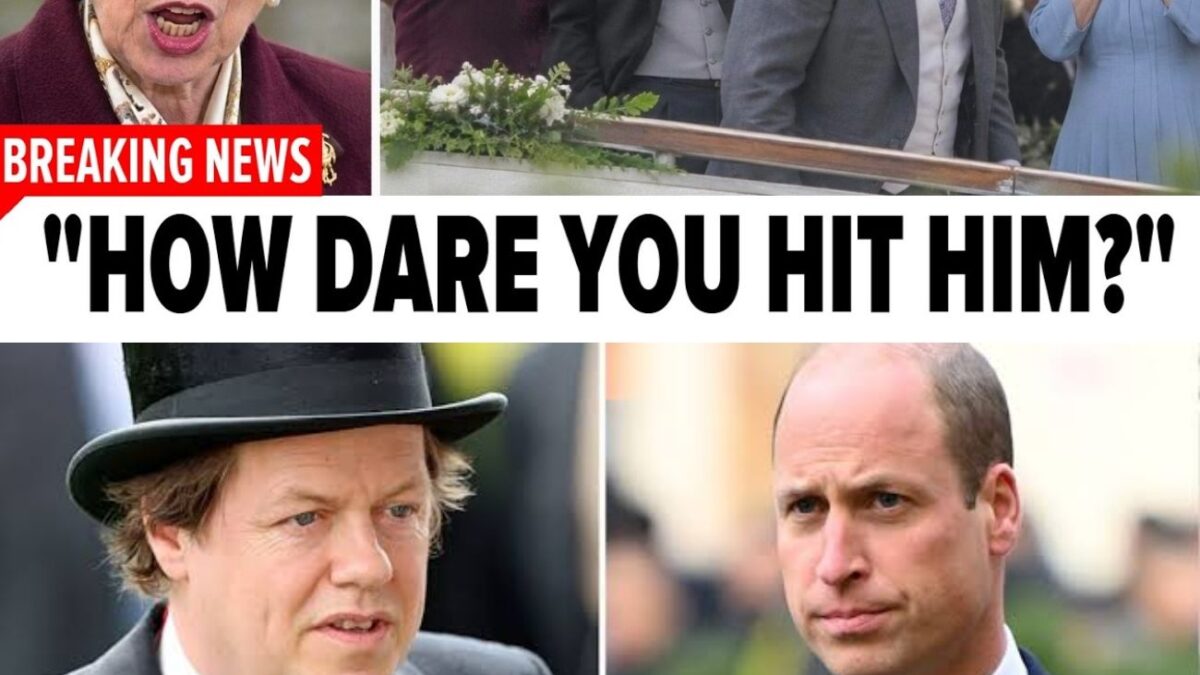
Princess Anne’s Alleged Royal Showdown: The Dinner Dispute That Could Put Camilla’s Family Under the Spotlight
Nine Words That Changed the Mood at Windsor
The most explosive family disputes do not always begin with shouting. Sometimes, according to the dramatic story circulating about the British royal family, they begin with a sentence spoken across a dinner table.
The setting was supposedly Windsor Castle, where King Charles III had arranged a quiet family gathering before a demanding period of royal engagements. Among those present were Queen Camilla, Prince William, Catherine, Princess of Wales, Princess Anne, and Camilla’s son, Tom Parker Bowles.
For the first hour, everything appeared peaceful. Conversation reportedly moved between horses, family matters, and the king’s upcoming commitments. Then Tom allegedly turned toward William and challenged his attitude toward Camilla’s relatives.
The words attributed to him were cutting: “You decide who matters because you will be king.”
In the story, William did not respond with an angry speech. He remained seated, his hands beside his plate, while Catherine watched closely. Camilla reportedly tried to quiet her son, but the tension continued to rise.
Then came the moment that supposedly transformed an uncomfortable exchange into a full-blown family confrontation. As Tom gestured, his hand struck a wineglass, sending it against William’s hand and spilling wine across his cuff and the tablecloth.
The script explicitly portrays the incident as accidental, despite more sensational versions suggesting a deliberate attack.
What allegedly happened next was even more striking. Princess Anne leaned forward and challenged Tom, asking how he could treat William that way. She reportedly insisted that the future king should never be addressed with such hostility at the family table.
Charles eventually ended the dinner.
Nobody needed a public argument to understand that the evening had taken a troubling turn. Yet the story’s biggest revelation supposedly came the following morning.
The Two Royal Ascot Badges
According to the narrative, Anne requested the household register used to record invitations allocated through the king’s family arrangements for Royal Ascot.
The prestigious racing meeting occupies a special place in royal tradition. Its famous carriage procession, formal dress, and royal enclosure make it one of Britain’s most recognizable summer events.
The story claims that Tom had received two royal enclosure badges for years: one for himself and another for a guest. These passes represented an invitation through the king’s personal allocation, rather than an entitlement attached to a royal title.
On the morning after the dinner, Anne supposedly located Tom’s name in the register and drew a line through both entries. Beside them, she wrote one word: “Withdrawn.”
By lunchtime, the fictional account says, the change had been confirmed in writing.
The decision was deliberately narrow. Anne did not publicly condemn Tom, demand that Camilla apologize, or call for a family meeting. She simply removed a privilege that had previously been extended to him.
That restraint is what makes the story compelling. Was Anne responding to a single heated exchange, or did she believe the dinner had exposed a more serious problem?
Why William’s Silence Mattered
The narrative presents William’s reaction as more complicated than simple gratitude.
He supposedly disliked the idea that his aunt’s decision could be interpreted as retaliation on his behalf. He had remained quiet during the confrontation because anything he said could turn a private family disagreement into a public story about the future king disciplining his stepmother’s son.
Anne, however, allegedly argued that someone other than William needed to establish a boundary.
Catherine’s role is quieter but emotionally significant. In the supplied story, she has watched her husband absorb criticism without responding publicly. Anne’s decision therefore brings a measure of relief, even though the consequences threaten to deepen tensions within the family.
For William, the accusation that he decides who matters because he will become king carries an additional emotional weight. The script connects his reaction to the loss of his mother, Princess Diana, and the scrutiny he endured as a teenager.
It portrays him as someone determined not to use his future position to humiliate others. His silence is therefore presented as restraint, not weakness.
These private reactions, however, remain elements of the unverified narrative rather than confirmed accounts of the family’s conversations.
The Business Guest Who Allegedly Changed Everything
The story takes a surprising turn when Anne supposedly reviews earlier Royal Ascot registers.
According to the script, she finds an unfamiliar name beside one of Tom’s previous guest allocations. The person is described as a business contact associated with Tom’s professional life in food and restaurants, rather than a personal friend of the king or a member of the royal family.
That discovery allegedly changes Anne’s interpretation of the badges.
The central concern is not that Tom broke the law or sold access. The narrative specifically says there is no evidence that he made money from the invitation. Instead, the issue is whether a personal royal courtesy was used to accommodate someone connected to business.
A badge granted by the king is a privilege, the story argues, not a permanent possession. If it is intended for family and personal guests, using it to entertain a commercial contact could blur the distinction between private hospitality and professional networking.
Anne supposedly circles the unfamiliar name and writes three words beside it: “Give them back.”
Those words become the emotional center of the story. They suggest that the dispute is no longer merely about Tom’s remark at dinner. It is about the purpose of the privilege he had been given.
Nevertheless, the alleged register and handwritten note have not been independently verified.
Camilla’s Difficult Position
For Camilla, the imagined consequences are deeply personal.
The narrative portrays her as a mother who believes her son has spent much of his life being judged through the controversy surrounding her relationship with Charles. She supposedly interprets Tom’s complaints about being excluded as an echo of her own experiences of rejection.
When she learns that Anne has withdrawn his badges, Camilla allegedly asks Charles to reconsider.
The king is presented as sympathetic to his godson but unwilling to reverse his sister’s decision. According to the script, he fears that doing so would create the impression that ordinary rules cease to apply when a privilege benefits the queen’s family.
That is the story’s central contradiction. Camilla wants her son to be treated fairly, while Anne insists that fairness requires the same standards for everyone.
Neither position is inherently unreasonable. The difficulty lies in deciding whether Tom’s behavior justified the consequences described in the account.
An Apology, but No Reversal
In the final stages of the narrative, Tom supposedly visits Kensington Palace to apologize privately to William. He acknowledges that his remarks were unfair and expresses regret about the wineglass incident.
William accepts the apology but does not ask Anne to restore the badges. The decision, he reportedly explains, belongs to his aunt.
Meanwhile, Charles declines to intervene on Camilla’s behalf. The script presents this as a rare moment when the king refuses to soften an uncomfortable decision simply to protect a family relationship.
The two badges are then reassigned. One supposedly goes to a retired royal groom who spent decades working with carriage horses; the other goes to a charity director supporting injured stable staff.
The symbolism is deliberate: access once enjoyed by a well-connected guest is redirected toward people whose work has long remained behind the scenes.
The story concludes with a quiet family church service at Windsor. William and Anne arrive together, while Camilla remains beside her husband. No dramatic confrontation follows, and Camilla’s title is unaffected in the narrative.
What the Story Really Asks
The alleged dispute raises a question that extends beyond royal gossip: when does a personal favor become an expectation, and when does that expectation become unfair?
Tom’s defenders might argue that a single argument should not erase years of family goodwill. Others might insist that invitations to exclusive royal events remain discretionary and should never be treated as guaranteed benefits.
Princess Anne, as portrayed in the script, represents the second position. Her response is not a speech or a public accusation, but a change in a register.
The distinction between dramatic storytelling and verified reporting remains essential. There is no independently established evidence that this dinner confrontation, the alleged business guest controversy, or the withdrawal of Tom Parker Bowles’s Royal Ascot badges occurred as described.
Still, the narrative’s enduring appeal lies in its final question: in a family where tradition and privilege carry extraordinary symbolic weight, should personal loyalty ever outweigh the rules?
For the monarchy, that question is bigger than two badges. For this story, it is the detail that turns an alleged dinner-table argument into a dramatic examination of family, fairness, and royal responsibility.








