PRINCESS ANNE’S 34-WORD BOMBSHELL! Queen Camilla REPORTEDLY Loses Control as King Charles’ Sister Makes the Royal Move He Never Dared to Make!
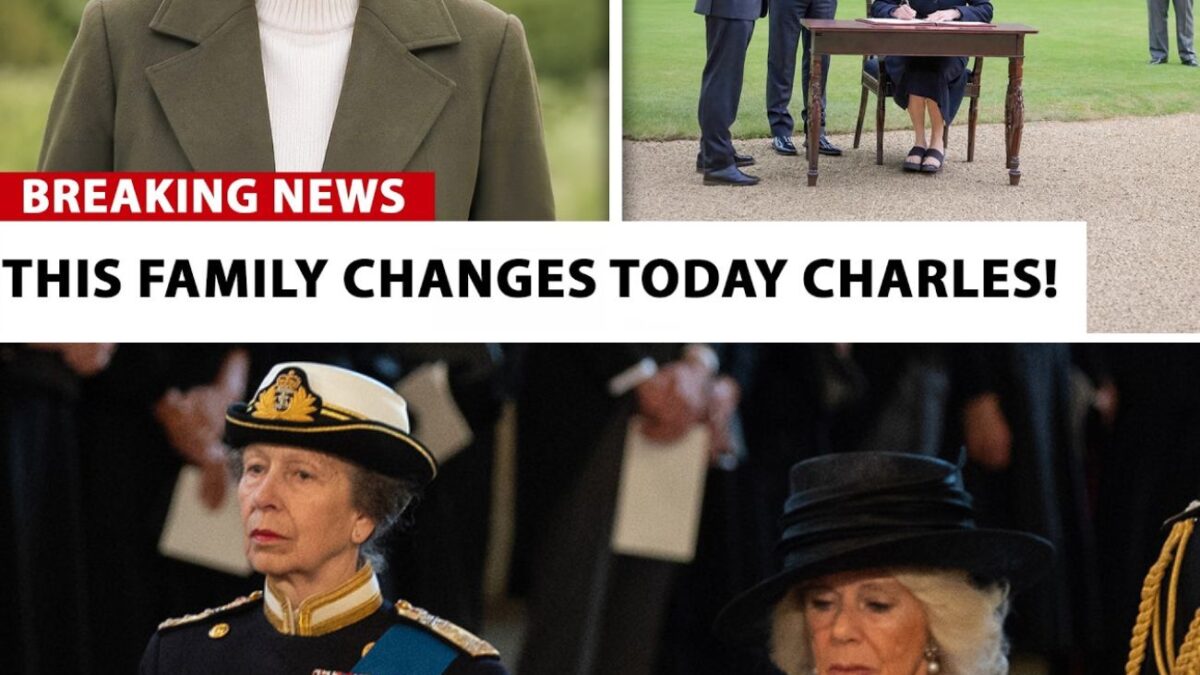
Princess Anne’s 34-Word Decision Rocks the Palace: Queen Camilla Faces an Extraordinary Royal Power Struggle
A Royal Announcement That Allegedly Changed Everything
Princess Anne has reportedly become the central figure in an extraordinary royal controversy after allegedly signing a document that King Charles had repeatedly declined to approve himself.
The dramatic account describes a London event where Anne appeared holding a single sheet of cream-coloured paper. Queen Camilla was reportedly sitting in the front row when the Princess Royal revealed its contents. According to the story, Camilla appeared visibly distressed, stood up before Anne had finished speaking, and left the hall.
By that evening, several engagements associated with Camilla’s office were allegedly cancelled. Neither Buckingham Palace nor the two royal women offered an explanation.
At the centre of the controversy was supposedly a 34-word clause that could significantly change how Camilla’s private household handles appointments, residences, and honours.
Why Charles Left His Sister With Such Responsibility
The story begins with King Charles’s reported Caribbean tour, which started on October 27. His itinerary included the Bahamas, Guyana, and Antigua and Barbuda, where he was expected to attend a Commonwealth meeting.
Camilla was reportedly scheduled to join him in Antigua on November 1 rather than accompany him throughout the earlier stages.
Whenever a monarch travels abroad, constitutional arrangements allow designated Counsellors of State to perform certain official duties. The system dates back to 1911 and was placed on a statutory footing through the Regency Act 1937.
These representatives can undertake routine constitutional responsibilities, including signing certain documents and receiving ambassadors. However, their powers have important limitations. They cannot independently exercise every authority belonging to the monarch, and certain decisions require the monarch’s direct instruction.
The account identifies Sir Clive Alderton, Charles’s private secretary since September 2022, as an important figure in the arrangements.
It also recalls the Counsellors of State Act 2022, which added Princess Anne and Prince Edward permanently to the list. The change was intended to ensure that sufficient working royals could assist when the King and Queen were travelling.
Anne’s suitability was hardly surprising. She has long been recognised for her extraordinary dedication to royal duties, maintaining an exceptionally demanding schedule even when other members of the family have reduced their engagements.
Camilla’s Position and the Family’s Complicated History
The controversy becomes more sensitive when Camilla’s position within the monarchy enters the discussion.
Her status as Queen Consort followed her marriage to Charles and the late Queen Elizabeth II’s public expression of support for that title in February 2022.
The narrative portrays Camilla as particularly conscious of her standing within the Royal Family, especially because her position differs from that of someone born into the monarchy.
It also brings Princess Diana into the story.
A longstanding account repeated among royal commentators suggests that Anne was among the family members who treated Diana with considerable seriousness during her difficult years as a royal wife. Although the precise details of those private relationships remain difficult to establish, Diana’s legacy continues to influence how the public interprets disagreements involving Charles, Camilla, and their children.
The central question is whether Anne’s reported decision was simply an administrative intervention or something much more personal.
The Document Charles Allegedly Refused to Sign
The most intriguing part of the account concerns a folder supposedly kept in Charles’s study at Buckingham Palace.
According to the narrative, the document had been prepared after repeated requests from Camilla’s household involving appointments, residences, and honours. Some requests allegedly concerned her adult children, Tom Parker Bowles and Laura Lopes.
The proposed clause reportedly required Camilla’s private office to answer to the King’s private secretary on these matters.
The account claims that the folder had been presented to Charles three times: in March, June, and September. Each time, it allegedly returned unsigned.
The alleged dispatch log contained the same two words beside each entry: “Returned unsigned.”
When Charles departed for his Caribbean tour, the constitutional arrangements reportedly allowed two Counsellors of State to handle relevant matters in his absence.
Princess Anne allegedly arrived at Buckingham Palace shortly before 9 a.m. and began working through the King’s official papers.
The narrative then describes an uncomfortable incident involving a member of Camilla’s staff who allegedly attempted to deliver documents to the King’s study but was told that access was restricted.
Camilla reportedly arrived shortly afterward and requested a private conversation with Anne.
Prince Edward Becomes the Deciding Voice
According to the account, Camilla asked whether Charles knew about the proposed document.
Anne allegedly replied that the King had personally signed the letters patent establishing the arrangements for his absence.
Camilla reportedly offered to sign the document herself but requested changes to two sections first.
Anne’s alleged response was uncompromising: the wording had already been considered three times, and she would not allow another delay.
However, there was a constitutional obstacle. One Counsellor of State could not simply act alone.
The story claims that Prince William was approached first but declined to place his signature on a document involving his stepmother while his father was overseas.
Anne then reportedly contacted her younger brother, Prince Edward.
The Duke of Edinburgh allegedly travelled from Bagshot Park to Buckingham Palace, examined the document, and asked whether the King’s private secretary’s office had approved its wording.
After receiving confirmation, Edward supposedly took a pen from the King’s desk and signed beneath Anne’s name.
The reported signing took place shortly after noon.
The clause was described as follows:
“From the day of signature, the queen’s private office answers to the king’s private secretary. No one may propose an appointment, residence, or honor in her name or her families without his written consent.”
Its significance, according to the narrative, was not that Camilla would lose her royal title. Rather, it would place greater administrative oversight over requests originating from her private household.
The Moment Camilla Allegedly Walked Out
The story then moves from the private study to a public conference in central London.
Anne reportedly carried the signed document with her, determined that nobody could later dismiss it as an unfinished proposal.
Camilla was also scheduled to attend the event and allegedly arrived shortly before proceedings began.
After speaking about volunteers, public service, and the importance of fulfilling responsibilities, Anne reportedly removed the cream-coloured paper from her folder.
She explained that Charles was overseas and that she and Edward had exercised their responsibilities as Counsellors of State.
Then she read the 34-word clause aloud.
According to people supposedly present, Camilla rose from her chair before Anne had finished. Her expression changed, and she left through a side aisle as other guests watched in silence.
The scene became the defining image of the alleged confrontation: Anne standing at the lectern with the signed document while Camilla departed from the front row.
The account further claims that the palace later described the matter as an exercise of constitutional authority concerning household administration, while Camilla’s office declined to comment.
Charles Faces a Difficult Decision
The final part of the story concerns what happens next.
Camilla reportedly contacted Charles during his Caribbean tour, asking him to reconsider the document. The conversation allegedly lasted eleven minutes.
According to the account, Charles listened but did not promise to reverse the decision.
Meanwhile, questions about the future of the royal household and the role of Sir Clive Alderton reportedly became increasingly important.
The narrative also looks ahead to Prince William’s eventual reign and the responsibilities awaiting the next generation, including Prince George.
For Anne, the alleged decision represents something particularly significant. Her position within the monarchy has often been defined by duty rather than personal ambition. She has spent decades carrying out public engagements without seeking the spotlight enjoyed by other members of the family.
Yet this story portrays her as someone prepared to take a firm position when she believes the institution requires it.
Whether the alleged document, its wording, and the dramatic public confrontation happened as described remains unverified. No independently established evidence in the supplied account confirms the reported private exchanges or the 34-word clause.
Nevertheless, the underlying question is fascinating: how much authority should a monarch’s private household exercise, and who should oversee decisions made in the King’s name?
For Charles, the reported controversy presents an uncomfortable choice between personal relationships and institutional control.
For Camilla, it raises questions about the boundaries of her household’s influence.
And for Princess Anne, it reinforces the image of a royal who places duty above sentiment.
If the account is accurate, the most consequential moment was not when Anne raised the document before the audience. It was when she and Edward allegedly put their signatures beneath words that Charles had repeatedly left unsigned.








