ROYAL BOMBSHELL! Princess Anne’s Alleged Last-Minute Move Stops Charles as Harry and Meghan Face a Frogmore Cottage Setback
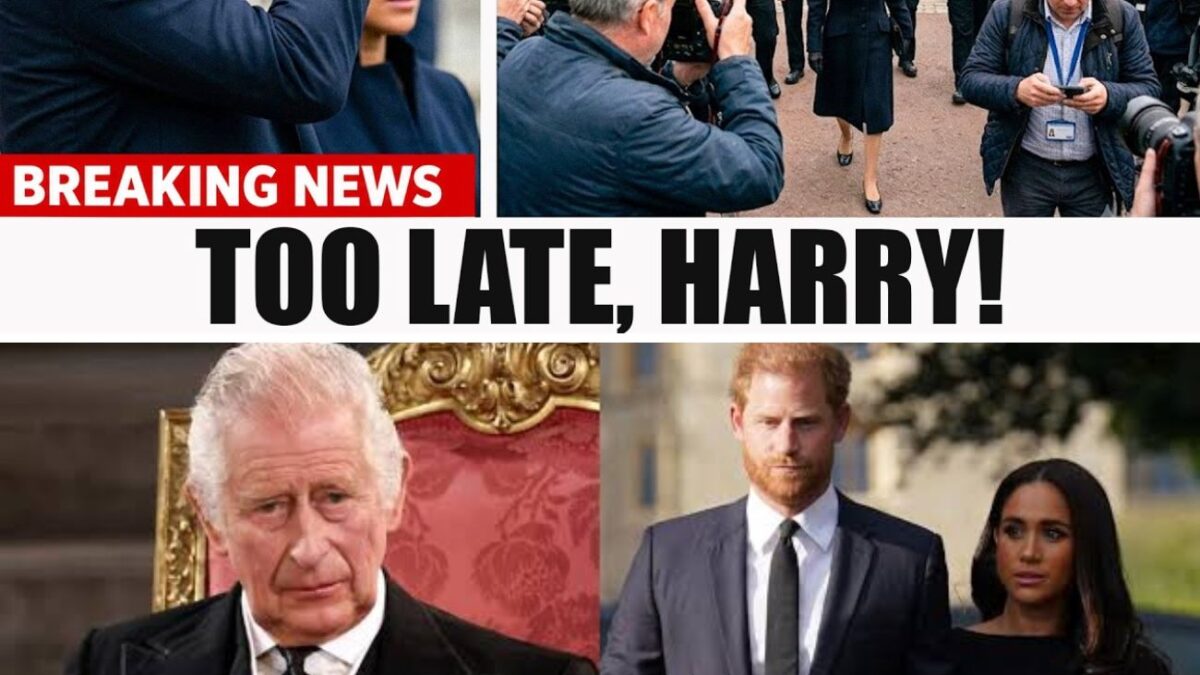
The Frogmore Showdown: Princess Anne’s Alleged Intervention That Could Change the Sussexes’ Royal Future
A handwritten letter, a collection of family photographs, and a decision that reportedly came down to the final moments before a signature: in this dramatic account, those were the ingredients of a royal confrontation that could have reshaped the relationship between King Charles and his younger son, Prince Harry.
At the center of the story stands Princess Anne, portrayed as the person who challenged the king when emotion threatened to override institutional caution. The disputed prize was Frogmore Cottage, the Windsor residence once associated with Harry and Meghan Markle’s early married life. According to the narrative, Charles was considering allowing the Sussex family to stay there again during a proposed visit to Britain. Anne’s intervention allegedly stopped the plan before it could become official.
The story begins approximately 72 hours before Harry and Meghan were expected to arrive in the United Kingdom. At Kensington Palace, Prince William reportedly learned that his father was considering reversing the decision that had removed the Sussexes’ residential access to Frogmore Cottage.
For William, the prospect was said to raise more than questions about family reconciliation. Frogmore lies within the Windsor estate, relatively close to Adelaide Cottage, where William, Catherine, and their children have lived. The narrative imagines William worrying that a return by his brother, accompanied by private security and possible media activity, could undermine the privacy his family had worked hard to preserve.
The decisive pressure on Charles, however, was allegedly emotional rather than political.
A two-page handwritten letter from Harry had arrived alongside photographs of Prince Archie and Princess Lilibet. The pictures reportedly showed the children playing outdoors, offering their grandfather a glimpse of a family life from which he had long felt distant. In the story, Charles studies the images with visible emotion. For a father who wants to rebuild his relationship with his son and grandchildren, the possibility of welcoming them back to a familiar place carries considerable weight.
He is said to have reached for the telephone to authorize the release of the cottage’s keys.
Then Princess Anne walks into the room.
Rather than responding to the photographs with sentiment, Anne allegedly places an envelope containing documents on the king’s desk. The papers, according to the supplied account, concern a possible entertainment project being discussed in Los Angeles. Its reported working title is The Next Generation, and the narrative claims it would focus on Archie and Lilibet reconnecting with their British royal heritage.
The most consequential allegation concerns a proposed payment linked to filming on recognizable royal estate grounds. The account claims that a production arrangement required exclusive footage of the children in an unmistakably royal setting. If true, such a condition could create a conflict between a private family visit and a commercial production.
There is no independently verified evidence presented here establishing that such a contract exists or that Harry and Meghan sought access to Frogmore for that purpose. Nevertheless, within the story, the alleged document transforms Anne’s understanding of the request.
She reportedly tells Charles that he must distinguish between photographs sent out of affection and images being used to support a commercial proposal. The emotional meaning of the pictures has not necessarily changed, but the question surrounding them has become more complicated.
Why, Anne’s argument goes, should a decision about royal accommodation be made under pressure when the king has not had time to examine every implication?
Her case rests on four central points. First, reopening Frogmore could appear to reverse an earlier institutional decision simply because of an emotional appeal. Second, a Sussex return might complicate the privacy and security arrangements of other members of the royal family. Third, the late Queen Elizabeth II’s principle that royal life could not be divided indefinitely between public duty and private commercial activity remains a powerful theme in the family’s dispute. Finally, Anne allegedly invokes historical examples to remind Charles that royal accommodation carries responsibilities beyond personal affection.
The story presents Anne as calm rather than theatrical. She does not need to raise her voice. Her strength lies in asking the king to consider what the decision would communicate to the wider institution.
Charles, caught between his responsibilities as a father and his obligations as monarch, reportedly listens in silence. The draft authorization remains on the desk. Instead of signing it, he puts down his pen.
The proposed reversal is abandoned.
The narrative then returns to an earlier meeting, allegedly held in August. During that encounter, Harry is said to have asked whether his family might stay temporarily at Frogmore during a future visit. Charles reportedly offered secure guest accommodation at Buckingham Palace instead, presenting it as a practical alternative.
Harry, according to the account, was unhappy with that option because accommodation within a working royal palace would involve greater supervision and fewer opportunities for independent activity. The story interprets this difference as a clash over privacy, control, and the terms on which the Sussexes could reconnect with the royal family.
It also draws a comparison with Tyler Perry, who famously offered Harry and Meghan a place to stay after their departure from royal duties. The script uses Perry’s generosity as a cautionary parallel, suggesting that private hospitality can become entangled with public narratives about entitlement and ownership. Its further claims about a specific property sale and the Sussexes’ intentions remain unverified and should not be mistaken for established fact.
In the account’s next dramatic turn, the palace allegedly takes administrative steps to prevent unauthorized private convoys from entering parts of Windsor Home Park. The message is delivered without a public confrontation. No announcement explains the alleged dispute; instead, the story portrays the estate’s security procedures as a silent signal that the proposed Frogmore arrangement will not proceed.
A public appearance by Charles and Anne is then interpreted as symbolic. Charles is described carrying a walking stick associated with his late mother, while Anne walks beside him. The narrative treats the image as a reminder of continuity and royal duty. Yet a photograph alone cannot establish the private intentions attributed to either person.
For Harry and Meghan, the account imagines a difficult change of plans. Rather than staying at Frogmore, they arrive in London and arrange private commercial accommodation. The story depicts this as an uncomfortable outcome for a couple who had hoped for a more familiar base during their visit.
It also describes a formal letter sent to Harry’s legal representatives, allegedly confirming that Frogmore would not be reopened for the family’s use and that private travel, accommodation, and security costs would not be covered by royal funds. No authenticated copy of such a letter is provided in the narrative, so these details remain allegations rather than verified developments.
Ultimately, the story’s central conflict is not simply about a cottage behind the gates of Windsor. It is about the difficult boundary between family affection and institutional responsibility. Charles is portrayed as a grandfather longing for closeness; Anne, as a sister determined to prevent that longing from dictating a consequential decision. William’s concerns represent another dimension of the dispute: the need to protect his own household from further upheaval.
Whether viewed as a family drama or a cautionary tale about royal privilege, the narrative leaves one question hanging over the Windsor estate: can reconciliation succeed when relatives disagree not only about the past, but also about privacy, public duty, and the use of their shared family history?
For now, the alleged confrontation remains an unverified story. Its most enduring theme, however, is recognizable far beyond the royal household: love may open the door to forgiveness, but rebuilding trust requires clear expectations, honest conversations, and decisions that can withstand scrutiny.








