ROYAL FASHION BOMBSHELL: Meghan Markle Furious After Roland Mouret’s Couture Mix-Up Involves Catherine — The Palace Drama Nobody Expected
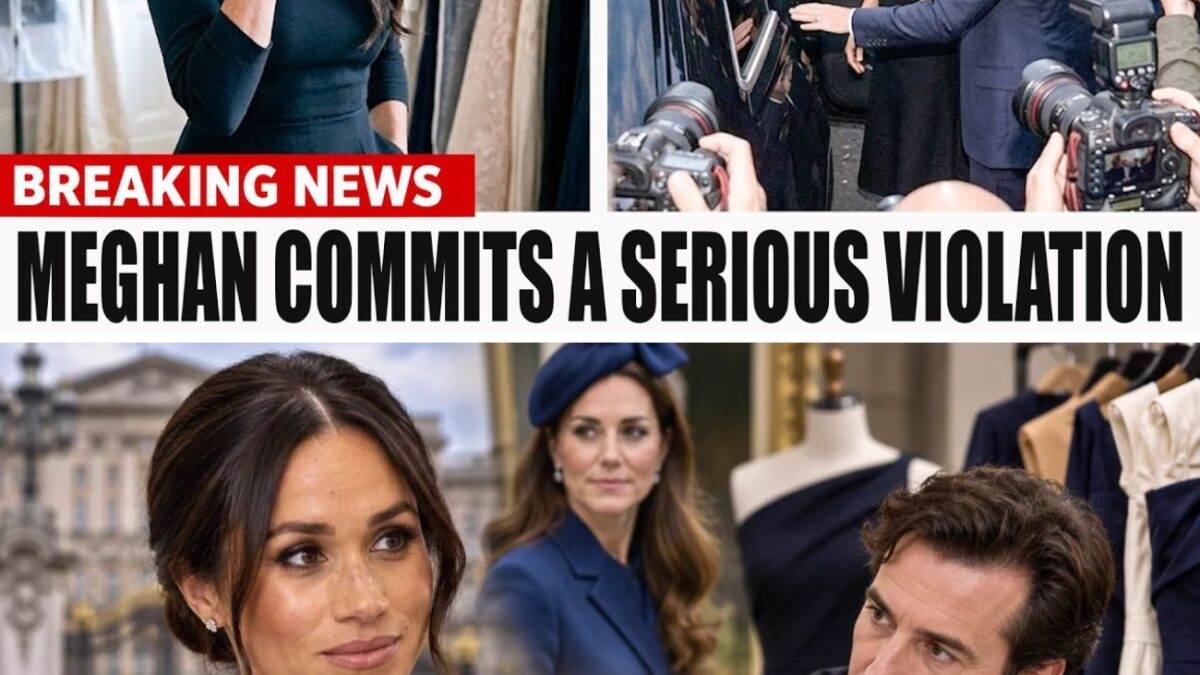
Meghan Markle, Catherine and Roland Mouret: The Couture Mix-Up That Sparks a Royal Fashion Storm

In the world of royal fashion, even a telephone call intended to resolve a routine administrative matter can become the centre of an extraordinary controversy. In this dramatic account, a request from the fashion house of French couturier Roland Mouret reaches the wrong royal office, bringing Meghan Markle, Catherine, Princess of Wales, and the delicate rules governing designer clothing into an uncomfortable spotlight.
What begins as a simple attempt to recover borrowed garments soon develops into a story about friendship, professional boundaries, and the tension between celebrity culture and royal protocol. At its heart is a question that neither glamour nor public relations can easily answer: when a designer lends a creation for a special appearance, where does generosity end and responsibility begin?
The Telephone Call That Changes Everything
The story traces the relationship between Meghan and Roland Mouret back to 2015, when their professional and social circles allegedly crossed paths at an exclusive gathering connected with Soho House in Istanbul. Mouret, known for his sculptural silhouettes and distinctive approach to eveningwear, is portrayed as someone who recognised Meghan’s potential and offered her access to his creative expertise.
At the time, Meghan was an actress building her profile through television and fashion appearances. A relationship with a respected couturier could provide both professional opportunities and access to a world where personal connections often mattered as much as talent.
According to the script, garments from Mouret’s atelier were subsequently made available to Meghan for selected appearances. Such arrangements are common in the fashion industry, where designers may lend pieces to celebrities for premieres, photographs, and other public events. The garments remain the property of the fashion house unless a different arrangement is agreed.
The trouble begins when an assistant at the atelier attempts to coordinate the return of several valuable pieces. Instead of reaching the intended contact, the assistant mistakenly calls an office associated with Catherine, Princess of Wales, and her longtime stylist, Natasha Archer.
The request is reportedly straightforward: the fashion house wants its borrowed dresses returned.
Yet the timing and destination of the call transform an ordinary administrative task into an awkward moment. A request that might otherwise have remained between a designer and a client now appears to touch the separate worlds of two women whose public images are frequently compared.
For Catherine’s team, the call raises questions about the handling of clothing and the importance of maintaining clear boundaries between private purchases, professional loans, and commercial gifts. For Meghan, as the script portrays it, the mistake threatens to expose a potentially embarrassing situation before members of the royal household.
The Rules Behind the Royal Wardrobe
Royal clothing is not simply a matter of personal taste. Every public appearance carries symbolic weight, and the relationship between the monarchy and commercial brands can be sensitive.
The script contrasts Catherine’s wardrobe arrangements with the fashion-loan practices associated with Meghan’s earlier career. It portrays Catherine’s official clothing as being purchased through established household arrangements, while garments sent without solicitation are described as subject to procedures that may require their return.
The underlying concern is understandable: when a public figure receives expensive clothing from a company, observers may wonder whether the gift creates an expectation of publicity or favourable treatment. For a royal undertaking official duties, even the appearance of commercial influence can raise questions about impartiality.
However, the precise treatment of designer loans and gifts depends on the circumstances and applicable household rules. A loan is not automatically the same as a gift, and the details of any particular arrangement cannot be established from the dramatic script alone.
Nevertheless, the story presents this distinction as the dividing line between two different approaches to fashion. One treats clothing as a professional asset that must be accounted for and returned. The other, according to the script’s portrayal, is accused of allowing the advantages of celebrity relationships to blur those boundaries.
It is this alleged difference that gives the telephone call its explosive significance.
Meghan’s Alleged Confrontation With Mouret
When Meghan learns that the return request has reached Catherine’s circle, the script depicts her as furious. Rather than treating the incident as an unfortunate mistake, she allegedly calls Mouret directly and accuses him of exposing her to embarrassment.
The designer is portrayed as deeply unsettled by the exchange. Their relationship, once described as a friendship spanning approximately eleven years, is said to have deteriorated after the dispute over the garments.
According to the narrative, Meghan declares that she will no longer wear his creations. What might have been resolved through a quiet conversation becomes a personal rupture, with professional disagreements taking on the weight of betrayal.
The script also claims that certain couture pieces were not returned promptly and that the designer later recognised similarities between his work and garments allegedly worn by Meghan. These assertions are part of the supplied dramatic narrative, not independently established findings.
Still, the emotional conflict at the centre of the story is easy to recognise. Fashion relationships are built on trust. Designers invest time, skill, and resources in the people who wear their work, while stylists and public figures depend on professional cooperation behind the scenes. When expectations differ, a disagreement over a dress can become a dispute over respect.
For Mouret, as the script imagines it, the problem is no longer merely about fabric or tailoring. It is about whether a longstanding creative relationship still rests on mutual consideration.
A Previous Incident in Montreal
The narrative then reaches back to 2016, when Meghan was filming a commercial campaign in Montreal for Canadian retailer Reitmans, referred to as Wrightman’s in the supplied transcript.
The script alleges that the production encountered tensions over accommodation, wardrobe choices, and creative decisions. Its most striking claim concerns a pair of nude, lace-up Aquazzura heels reportedly borrowed for the campaign.
According to the account, the shoes could not be located when filming ended. The narrative alleges that they were later found to have been taken away with Meghan’s personal belongings and that the production company ultimately absorbed the cost.
These are serious allegations, and the script’s description does not, by itself, establish what happened or whether the claims have been independently corroborated. They should therefore be understood as part of the story’s disputed account rather than as a proven conclusion about Meghan’s conduct.
Within the narrative, however, the Montreal episode serves a particular purpose. It suggests that the couture disagreement was not an isolated misunderstanding but part of a broader pattern involving borrowed fashion, professional expectations, and accountability.
That interpretation drives the story’s drama, even as the distinction between allegation and verified fact remains essential.
Catherine as the Contrast
Catherine enters the account less through direct confrontation than through contrast. The script presents the Princess of Wales as a public figure whose wardrobe is carefully managed and whose official appearances are focused on her engagements rather than commercial promotion.
It also describes her visiting community organisations and meeting families facing difficult circumstances. These scenes provide a quieter counterpoint to the fashion controversy, placing public service at the centre of the narrative.
Yet Catherine’s role in the original incident appears largely incidental: her stylist receives a telephone call that was intended for someone else. The script does not establish that Catherine personally accused Meghan of wrongdoing or initiated a confrontation.
That distinction matters. The headline may suggest a direct feud between the two women, but the central event described is an administrative mix-up involving a designer’s request. The larger rivalry is primarily created by the dramatic framing.
Even so, the comparison raises a broader question about the pressures placed on women associated with the royal family. Their clothing choices are scrutinised, their relationships with designers become public talking points, and small procedural details can be transformed into symbols of character.
Beyond One Dress
By the end of the story, the misplaced call has become a metaphor for a much larger conflict. The script portrays the Sussexes’ commercial ambitions as being in tension with the traditions of royal public service, while presenting Catherine and the senior working royals as symbols of institutional continuity.
It also extends its criticism to the public appearances of Prince Harry and Meghan, alleging that publicity planning, security arrangements, and commercial ventures have damaged their standing. Those broader claims, like the fashion allegations, should not be confused with verified evidence simply because they are delivered in an authoritative tone.
What remains compelling is the underlying dilemma. Public figures often rely on networks of personal and professional relationships, but those relationships cannot survive indefinitely without clear expectations. A borrowed dress requires an agreed return arrangement. A designer deserves clarity about the use of their work. An assistant needs accurate instructions. And a celebrity must be able to distinguish professional generosity from an entitlement to continued access.
Whether the original telephone call was merely an innocent mistake or the spark for a deeper disagreement, the episode illustrates how quickly a private misunderstanding can become a public spectacle.
In the end, the most important question is not which woman wins a supposed fashion rivalry. It is whether the people involved can establish the facts, respect professional boundaries, and resolve disputes without allowing speculation to become a substitute for evidence. In a world where every outfit can generate headlines, the truth may be considerably less glamorous than the drama surrounding it.








