ROYAL HEALTH SCARE: King Charles Left Heartbroken as Princess Anne’s Warning Signs Spark Painful Family Confrontation
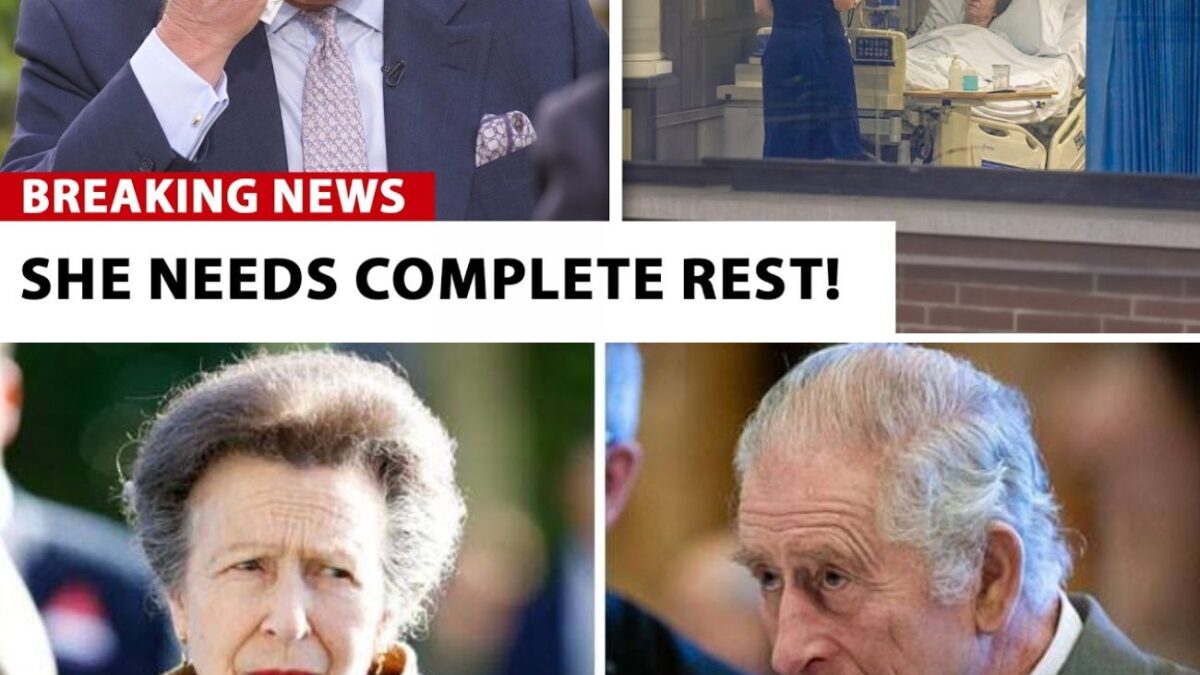
Princess Anne’s Medical Crisis: The Warning Signs That Changed Everything for the Royal Family
For more than half a century, Princess Anne has earned a reputation as one of the hardest-working members of the British royal family. She has attended countless engagements, supported charities, visited hospitals, and met people whose contributions rarely attract public attention. She has done much of it without fanfare, rarely asking for sympathy or allowing personal difficulties to interfere with her responsibilities.
But in this fictional account, that familiar determination becomes the source of a family crisis that leaves King Charles confronting an uncomfortable question: had everyone grown so accustomed to Anne’s strength that they failed to recognize when she needed help?
The Moment Everything Changed
The story begins at Gatcombe Park, Anne’s Gloucestershire home. She is reviewing correspondence connected with her charitable work when she rises from her desk and suddenly feels unsteady. The room seems to tilt, and when a member of staff asks whether she is all right, her words come out confused.
Medical assistance is summoned. Before long, an urgent message reaches King Charles.
For the king, the news is particularly frightening. Anne is not simply his sister; she is one of the people who has shared the extraordinary pressures of royal life with him since childhood. Her practical nature and formidable work ethic have long made her seem almost indestructible.
The fictional medical briefing offers little reassurance. Doctors describe a serious neurological episode affecting functions that may include speech, movement, and balance. Anne is conscious at intervals and considered stable, but her condition requires close observation and substantial rest.
When Charles asks how long her recovery might take, the physician cannot provide a reliable answer. Weeks or months cannot be promised, and the eventual extent of her recovery remains uncertain.
For a man accustomed to making difficult decisions, the absence of a clear timetable is agonizing.
A Family Confronted With Fear
Prince William learns about the emergency during a private call. According to the narrative, his first concerns are not about royal schedules or the organizations that depend on Anne’s patronage. He wants to know whether his aunt is frightened and who is staying with her.
The doctor’s warning is sobering: an apparent improvement does not necessarily mean the danger has passed. Neurological recovery can be unpredictable, and a patient who seems alert and familiar may still need careful supervision.
Then comes the detail that changes how the family understands the preceding days.
At a charity awards ceremony in Windsor, Anne had reportedly lost her balance briefly and stopped speaking in the middle of a sentence. The pause lasted only a few seconds. She recovered, smiled, and continued greeting volunteers.
Nobody raised an alarm at the time. Those who noticed the moment assumed that Anne was tired or had simply been working too hard.
In the story, the incident becomes a painful reminder that seeing something unusual is not the same as understanding its significance.
Her husband, Sir Timothy Laurence, is particularly troubled. After more than three decades together, he believes he can distinguish ordinary fatigue from something more concerning. He had encouraged Anne to seek medical advice, but she insisted that she could manage.
The next morning, he tried again. She refused once more.
Anne’s decision was not presented as indifference to her health. Rather, she feared disappointing the people who had waited months for her visits. Charities had organized events around her attendance, and she believed that keeping those promises was part of her responsibility.
That sense of duty had served her for decades. Now, it seemed to be preventing her from acknowledging her own vulnerability.
Timothy Laurence Faces the King
When Charles asks Timothy for a fuller account, the conversation becomes emotional.
The king struggles with the possibility that earlier medical attention might have changed what followed. He wants to know why the warnings were not acted upon more forcefully.
Timothy explains that he did urge Anne to seek help. He also admits that he could not make decisions on her behalf. Her independence was not a passing habit but a defining part of her character.
Charles responds with anger, asking whether keeping his sister happy had become more important than keeping her safe.
The accusation cuts deeply. Timothy removes his wedding ring, turns it between his fingers, and admits that he has been asking himself the same question repeatedly.
His hands are trembling.
For the first time, Charles recognizes that his brother-in-law is not defending himself out of indifference. He is grieving, frightened, and struggling with a decision he cannot undo.
The king’s anger gives way to shame. He apologizes, understanding that neither man can know whether a different choice would have produced a different outcome.
A further medical consultation brings another difficult message: Anne must not return prematurely to strenuous duties. Emotional pressure and excessive activity could complicate her recovery.
No royal authority can make her body heal on command.
The Diary That Became a Burden
Doctors recommend that Anne’s immediate engagements be postponed or transferred to other members of the royal family.
For Charles, this creates a deeply personal challenge. He knows that his sister may interpret the decision as evidence that she is no longer needed.
Her engagement diary is filled with visits to hospitals, military organizations, charities, and community groups. Every appointment represents a promise to someone who expects her to arrive.
William helps his father review the commitments. He understands the practical consequences for the organizations involved, but he also recognizes the danger of allowing Anne’s schedule to dictate the pace of her recovery.
When Charles worries that his sister will feel that her life is being taken away, William offers a different perspective: they are trying to give her the chance to recover it.
The immediate engagements are reassigned, with the understanding that longer-term decisions will involve Anne herself when she is ready.
When Charles finally speaks to his sister, she surprises him by asking which engagements remain hers.
He explains that she will not be returning to work soon. Anne asks whether the arrangement is temporary, but he cannot promise a date that the doctors themselves cannot predict.
She responds with a brief, defiant laugh, joking that he has finally managed to keep her off the road.
Then she sees the emotion on her brother’s face. Beneath his composure, he is struggling to hide his fear.
For once, Anne has no reassuring answer.
An Admission That Changes Everything
Later, after speaking privately with her physician, Anne asks whether she will ever be able to return to her old pace. The answer is honest: recovery must come first, and her future abilities will become clearer with time and treatment.
When Timothy stays beside her, Anne finally acknowledges what happened in Windsor. She remembers the sudden loss of balance, the unfinished sentence, and the fear she pushed aside because she believed she could continue.
She admits that she hoped the symptoms would pass.
Timothy does not reprimand her. He simply tells her that he wishes she had allowed him to help.
Anne then asks for Charles to return, not to discuss schedules or medical reports, but to have an honest conversation.
She tells her brother that she fears people will remember only the appointments she misses and the promises she cannot keep. Then comes the confession that neither of them expected: she does not know who she is if she can no longer do the work that has defined her life.
Charles answers that he needs his sister, not her perfect attendance record.
The words give Anne permission to consider a different understanding of responsibility. She agrees to step back, accept treatment, and allow other family members to continue supporting her charities.
She also asks that the palace communicate her absence honestly without disclosing intimate medical details.
A Different Definition of Strength
In the story’s conclusion, Buckingham Palace announces that the Princess Royal is recovering from a serious medical episode and that her engagements have been suspended on medical advice, with no fixed return date.
Messages and flowers arrive from people who remember Anne’s visits and the personal attention she gave them. Zara Tindall brings some of the messages to her mother, including a card that urges her to give herself the time she has so often given others.
Anne asks Zara to place it beside her closed engagement diary.
The image captures the central lesson of this fictional account. For decades, Anne’s reliability has been a source of admiration. Yet even the strongest people can become trapped by the expectations built around them.
Charles comes to understand that protecting his sister’s dignity matters more than preserving the appearance of tireless service. Timothy learns that love cannot always overcome another person’s determination, and Anne begins to recognize that accepting help does not erase a lifetime of achievement.
Her future remains uncertain, but her worth is not.
The diary can stay closed while recovery takes its course. The charities can continue their work, and the family can learn to support the woman they have depended upon for so long.
Perhaps the most important change is not a royal decision or a revised schedule. It is Anne’s willingness to acknowledge that she, too, deserves care.
After a lifetime of showing up for everyone else, she is finally learning that resting is not a failure of duty. Sometimes, it is the bravest promise a person can make to herself.








