ROYAL JET SHOCK: Princess Anne Orders Harry Off the Plane as Meghan’s £250,000 Letter Sparks Palace Fury — But the Real Story Changes Everything
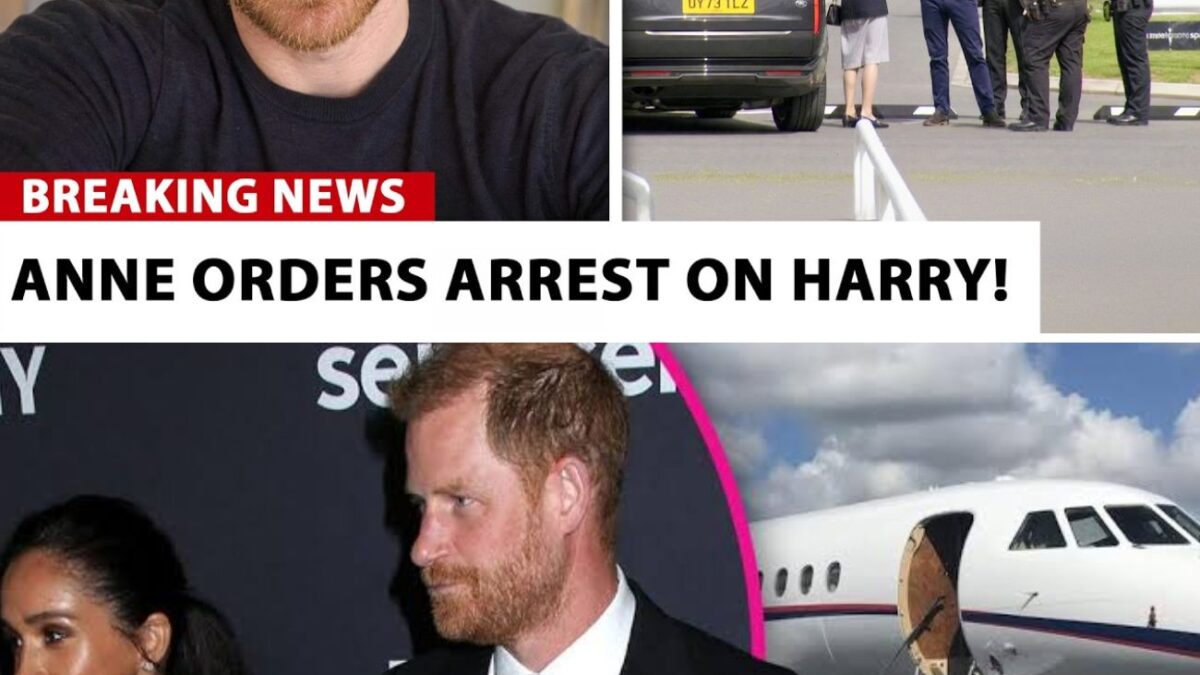
The Royal Jet Controversy: Why Princess Anne’s Alleged Decision Involving Prince Harry and Meghan Markle Was Not What It Seemed
The image is almost cinematic: a rain-soaked runway in Birmingham, Prince Harry standing beside his car, and a royal aircraft taxiing away without him. Within minutes, a headline practically writes itself. Princess Anne has allegedly refused her nephew a seat on her private flight. Meghan Markle has supposedly asked the royal family for £250,000. And somewhere behind the palace doors, tempers are said to be rising.
But the story presented in the script takes a very different turn. According to its account, the apparent humiliation was not intended as punishment. It was the result of a travel misunderstanding, a strict distinction between public and private expenses, and a letter whose contents were allegedly misrepresented during a senior staff meeting.
The question is not simply whether Harry was allowed aboard a plane. It is whether a sensational accusation can distort the meaning of an entire family dispute.
An Unexpected Problem on the Birmingham Runway
The story begins in September, after Harry reportedly visits a Birmingham school to launch an Invictus-related education initiative. He spends the morning speaking with children about resilience and the importance of getting back up after difficult experiences.
Later, he heads to the airport, believing he has permission to join Princess Anne on a chartered flight to Scotland. His destination is Balmoral, where his father, King Charles, is said to be staying.
According to the script, Harry’s office had contacted the Royal Travel Office approximately a week earlier. Anne was scheduled to travel from Birmingham to Aberdeen on September 18, and her aircraft might have had an available seat. Harry’s representative therefore made an inquiry.
The request was not necessarily unreasonable as a family matter. If a plane was already travelling north, why could a son not accompany his aunt and continue to Balmoral?
The difficulty, as the script explains, was the distinction between family privilege and official entitlement.
Royal journeys funded through public resources are subject to scrutiny. The account argues that working members of the royal family travelling on official duties operate under different arrangements from relatives who no longer perform official royal work. Harry and Meghan stepped back from their senior royal roles in 2020, meaning their travel could not simply be treated as an extension of the working household’s schedule.
Yet the story claims that a young equerry, hoping to help Harry, mistakenly suggested that the arrangement would be approved. Harry’s office allegedly interpreted that reassurance as confirmation.
When Harry arrived at the aircraft, his name was reportedly absent from the passenger list.
Then Princess Anne arrived.
The Two-Minute Conversation
In the account, Anne climbs aboard and discovers her nephew already seated near a window. Harry greets her warmly, apparently assuming everything has been arranged.
Anne, however, understands that a problem has developed. The script describes her sitting opposite him and speaking quietly for approximately two minutes.
No dramatic shouting. No public argument. No theatrical announcement to the waiting staff.
Harry eventually collects his coat and bag, thanks the steward, and walks back down the steps.
To observers on the runway, the scene could easily appear humiliating. A prince has boarded a royal aircraft and then left it before departure. Anyone looking for evidence of a family feud might see precisely what they expected to see.
But the explanation attributed to Anne is very different. She allegedly tells Harry that the aircraft is being used for official travel and that his presence could invite questions about public money. If his name appeared in a published travel report, the visit to his father might become the centre of a damaging media controversy.
The script presents Anne’s decision as an attempt to protect both Harry and the King from that outcome.
She supposedly assures him that she will contact Balmoral and tell their father that Harry is coming. There will be a room waiting for him.
Instead of boarding the aircraft, Harry reportedly begins the long drive north. The journey is exhausting, but the destination remains the same: a chance to spend time with his father.
The Letter That Changed the Story
The most explosive part of the narrative concerns a separate matter: a handwritten letter allegedly sent by Meghan to the King’s private secretary.
According to the script, Meghan asks whether the royal household might contribute £250,000 towards a project connected with the Invictus Games planned for Birmingham the following summer.
At a meeting of senior household staff, one figure allegedly reduces the request to a simple accusation: “She only wants the money.”
The remark, as presented in the story, earns laughter and agreement from some people around the table. A brief refusal is reportedly recommended.
But the script claims that a travel booking clerk attending the meeting has read the complete letter—and believes its second page changes everything.
The alleged proposal is not for Meghan and Harry’s personal expenses. Instead, it concerns travel and accommodation for the families of wounded, injured, and ill service personnel competing at the Invictus Games.
For some participants from poorer countries, the cost of bringing loved ones to an international event can be prohibitive. The letter reportedly explains that athletes may achieve something extraordinary while looking into the stands and finding no family members there to share the moment.
The £250,000 request, according to the account, would help those families attend.
It also claims that Meghan and Harry offered to cover their own costs and match the household’s contribution pound for pound. The money, the letter allegedly states, would not go to them, their office, or their foundation.
The emotional force of the proposal rests on a simple idea: the people who sacrifice and struggle to recover should not have to celebrate their achievements alone.
The script connects that message to Meghan’s own experience of family disappointment, referring to her father’s absence from her wedding. It suggests that this personal history shaped her concern for competitors whose loved ones might otherwise remain thousands of miles away.
Whether the letter existed in precisely the form described cannot be established from the script alone. But within its narrative, the contrast is unmistakable: a request portrayed as greed may instead have been intended as an act of support.
Princess Anne Asks One Question
After leaving Harry behind, Anne allegedly receives a briefing note summarising the meeting. It labels Meghan’s request a “cash demand” and recommends a short refusal.
The account says Anne then contacts the booking clerk, asks how Harry’s travel arrangement was approved, and learns about the meeting and the remark made about Meghan.
She reportedly asks to see the original letter.
After reading both pages, Anne writes a question beside the summary on her briefing note: “Have you ever met her?”
The question becomes the story’s turning point.
The senior figure who allegedly dismissed Meghan, the script claims, had never met her personally. His opinion was based on media coverage and his established view of the Sussexes, not direct experience.
Anne’s objection is therefore not presented as a demand that Meghan receive the money. The account explicitly says the royal household does not provide the requested funding because the rules governing public expenditure still apply.
Instead, the issue is how the request was represented—and whether a private judgement was allowed to become an institutional decision before the full proposal had been properly considered.
What Happens at Balmoral?
The narrative continues with Anne reaching Balmoral and explaining the situation to Charles. The King allegedly reads Meghan’s letter himself and agrees that public funds cannot be used for the proposal.
However, he reportedly considers another route. He could approach service charities with which he has longstanding connections and ask whether they might support the families. He is also said to express an interest in meeting them if they attend the Games.
Meanwhile, Harry arrives at Balmoral before dawn. The script says Charles has stayed awake waiting for him, and Harry remains for three days.
Their private conversation is left unexplained. That restraint matters: whatever difficulties exist between father and son, a family relationship cannot always be reduced to the latest headline.
The alleged fallout at the Palace is equally dramatic. The script claims the senior figure later faces consequences for the way the meeting was handled, while the young equerry receives a second chance because his mistake was well-intentioned. It further alleges that a tabloid considered publishing the runway story but did not proceed.
These details remain claims within the supplied narrative, not independently confirmed events.
Beyond the Headline
The script ultimately asks readers to consider how quickly assumptions become accepted as facts. Meghan and Harry’s commercial ventures have attracted criticism, and public expenditure involving the royal family deserves legitimate scrutiny. Neither issue, however, proves the motive behind a particular request.
The alleged £250,000 proposal is the heart of the controversy because its supposed purpose differs sharply from the accusation attached to it. If the money was intended to help military families attend an event, that context would be essential to any fair assessment.
Princess Anne’s reported decision to keep Harry off the aircraft also carries a different meaning in this version of events. Rather than a punishment, it becomes an insistence on following financial rules while preserving an opportunity for father and son to meet.
The story closes with the image of families travelling to Birmingham to watch loved ones compete—parents, partners, and children witnessing achievements that once seemed impossible.
That is the emotional ending the script wants readers to remember. Not a prince standing alone on a wet runway, nor a royal family trading accusations, but the possibility that a disputed letter could help people who rarely receive the spotlight.
The real lesson, if the account’s central message is taken on its own terms, is that a headline cannot reveal everything about a person’s intentions. The facts still matter. The rules still matter. And before a judgement becomes a scandal, the whole story deserves to be read.








