UK Parents in Revolt? Prince Harry’s Psychedelic Therapy Controversy Sparks Explosive Claims of a Royal School Ban
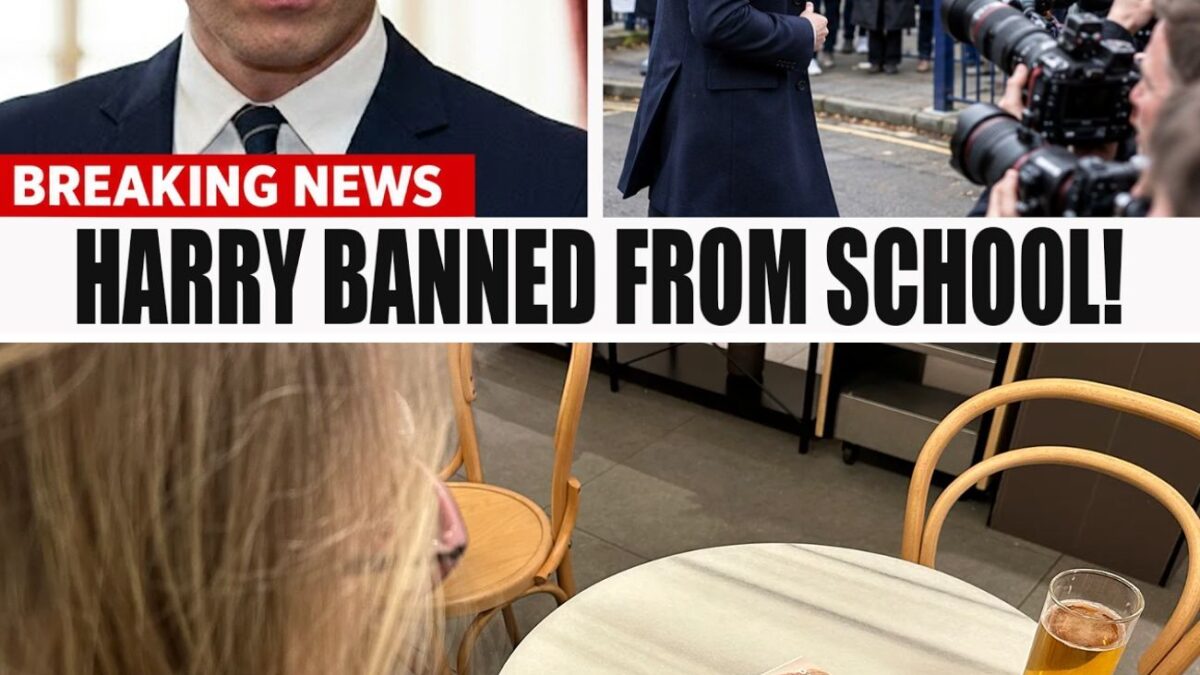
Prince Harry’s Psychedelic Therapy Debate and Birmingham School Visit Ignite a Royal Storm
Prince Harry has found himself at the center of a heated debate involving grief, psychedelic-assisted therapy, children’s privacy, and the increasingly complicated relationship between the Duke of Sussex and the British public. What began as a personal discussion about bereavement has collided with renewed scrutiny of his public appearances, raising difficult questions about celebrity influence and the responsibilities that come with speaking to vulnerable audiences.
The controversy has attracted additional attention because of Harry’s recent visit to Birmingham, where he participated in an educational event connected to the Invictus Games. Yet the most dramatic claims circulating around the episode require careful examination: there is no independently established evidence that British parents submitted more than 200 complaints to Kensington Palace or that a nationwide ban preventing Harry from entering schools was imposed.
A Masterclass That Opened a Difficult Conversation
In October 2026, Harry appeared in a MasterClass programme titled Redefining Grief: Building Resilience Through Loss, discussing his experiences with grief alongside neuroscientist Dr. Mary-Frances O’Connor. The conversation explored the psychological consequences of losing a loved one, including emotional numbness, depression, and the complicated process of learning to live with painful memories.
Harry’s own experience of bereavement began when his mother, Princess Diana, died in a car crash in Paris in August 1997. He was just 12 years old. The loss became a defining event in his life, shaping his relationship with the royal family, his public identity, and his understanding of mental health.
His discussion of psychedelic-assisted therapy brought another dimension to the programme. Harry has spoken about the potential therapeutic applications of certain psychedelic substances, an area that continues to attract scientific interest as researchers investigate possible treatments for specific mental health conditions.
However, the distinction between discussing research and recommending unsupervised drug use is crucial. MDMA and psilocybin are not interchangeable with ordinary wellness products, and their legal status varies by jurisdiction and circumstance. Neither should be presented as a universal cure for grief or depression.
The central question is not whether people should be permitted to discuss emerging treatments. It is how public figures communicate complex medical subjects without creating unrealistic expectations among people who may be experiencing profound emotional distress.
For someone struggling after a bereavement, the promise of rapid relief can be particularly compelling. That makes accurate explanations of potential benefits, limitations, contraindications, and medical supervision essential.
Why the Birmingham Visit Attracted Attention
On September 18, 2026, Harry visited Ninestiles Academy in Birmingham to help launch INSPIRE, an educational initiative associated with the Invictus Games. The programme was designed to use the experiences of wounded service personnel and veterans to help young people explore resilience, mental fitness, and overcoming adversity.
The visit was a real public engagement, reported by British news organisations. It also generated discussion about how Harry interacted with pupils and how the appearance was presented on camera.
Some footage circulated online showing students who appeared less enthusiastic than supporters might have expected. One pupil complained about having multiple cameras in front of him. The clips encouraged criticism of the event’s presentation and prompted questions about whether young people were comfortable being filmed.
For parents, the broader issue is understandable. Schools have a responsibility to protect pupils’ privacy, explain filming arrangements, and ensure that educational activities remain appropriate for their age group. When a high-profile visitor arrives with a media team, those responsibilities become particularly visible.
Nevertheless, criticism of an appearance is not proof that a school visit was unauthorised. Nor does a student’s reaction establish that every pupil objected to Harry’s presence.
The available reporting identifies the visit as part of an Invictus education initiative. Claims that Harry stormed into a classroom without permission, that every participating family had withheld consent, or that the visit triggered a nationwide parental rebellion have not been independently substantiated.
The School Ban Claim: What Is Actually Established?
The allegation that British parents forced schools to permanently ban Harry and Meghan Markle is among the most dramatic elements of the circulating narrative. It is also one of the claims requiring the strongest evidence.
A genuine national prohibition would ordinarily leave a clear documentary trail, including an identifiable authority, an official directive, or statements from the schools concerned. No such evidence has been established by the reporting reviewed for this article.
That does not mean schools should ignore legitimate concerns about filming, safeguarding, or the influence of celebrity visitors. Parents are entitled to ask how footage will be used, whether appropriate permissions have been obtained, and whether children can decline to participate without disadvantage.
But those reasonable questions should not be confused with proof of a coordinated campaign against a particular individual.
The distinction matters because dramatic online narratives can turn a limited disagreement into an apparently national crisis. Repeated claims about petitions, institutional bans, and furious parents may sound persuasive without establishing that the alleged events actually occurred.
For Harry, the reputational consequences of such speculation may be significant regardless of whether the most extreme allegations withstand scrutiny.
Prince William and the Wider Royal Divide
Any controversy involving Harry inevitably invites comparisons with his older brother, Prince William. Their relationship has been strained by years of public disagreements, competing accounts of family events, and Harry’s decision to step back from his position as a working royal alongside Meghan.
William occupies a different public role, with responsibilities connected to the future of the monarchy. Harry, meanwhile, has developed a separate identity through charitable projects, media productions, and advocacy concerning mental health and military veterans.
It is tempting to frame every disagreement as a decisive contest between the two brothers. The reality is more complicated. Their different approaches to public life reflect personal choices, institutional expectations, and unresolved family tensions that cannot be reduced to a single school visit or television appearance.
There is also no independently established evidence that William received the alleged collection of more than 200 parental letters described in sensational accounts, or that he convened officials to impose new restrictions on his brother.
Without documentary confirmation, claims that the Prince of Wales personally orchestrated an institutional crackdown should be treated as speculation rather than established royal policy.
The Difficult Balance Between Advocacy and Responsibility
Harry’s willingness to discuss grief publicly has helped keep an important subject in the conversation. Many people struggle to acknowledge bereavement, particularly when they feel pressure to appear strong or move on before they are ready.
His personal story may encourage some audiences to seek help. At the same time, a famous speaker’s influence creates a responsibility to distinguish personal experience from medical advice.
Psychedelic-assisted treatments remain a complex subject. Research into substances such as psilocybin and MDMA has attracted considerable interest, but promising findings from controlled clinical settings do not automatically justify unsupervised use. Risks can include severe psychological reactions, dangerous interactions, and other complications, depending on the substance and individual circumstances.
People experiencing grief or depression deserve balanced information and access to appropriate professional support, not simplistic promises that one intervention will solve every problem.
The same principle applies to educational appearances. A celebrity’s good intentions do not remove a school’s obligation to safeguard pupils, while a disappointing moment on camera does not automatically establish misconduct.
Both issues demand more than outrage. They demand evidence, context, and an honest assessment of what happened.
A Controversy That Demands Clear Answers
The story surrounding Prince Harry brings together several emotionally charged subjects: the death of Princess Diana, the brothers’ troubled relationship, the privacy of schoolchildren, and the debate over emerging mental health treatments.
Those subjects make for compelling headlines, but they also make accuracy especially important. The MasterClass discussion and Birmingham school visit are supported by published reporting. The alleged nationwide school ban, the supposed parental petition containing more than 200 complaints, and the dramatic claims of a secret royal operation remain unverified.
Until reliable evidence establishes otherwise, they should not be presented as confirmed developments.
The larger debate remains worthwhile. How should influential figures discuss experimental therapies? What protections should apply when cameras enter educational settings? And how can public institutions distinguish genuine concerns from online narratives designed to provoke outrage?
Those questions deserve serious answers, regardless of whether someone supports Harry, William, or neither brother.
Ultimately, the most consequential test for any public figure is not whether every appearance generates applause. It is whether their words and actions withstand informed scrutiny. In a media environment where allegations can travel around the world in minutes, separating verified events from dramatic speculation is essential to understanding the real story behind the headlines.








