WILLIAM AND CATHERINE WALK OUT ON CAMILLA! The Alleged Royal Betrayal That Left 80 Guests Speechless
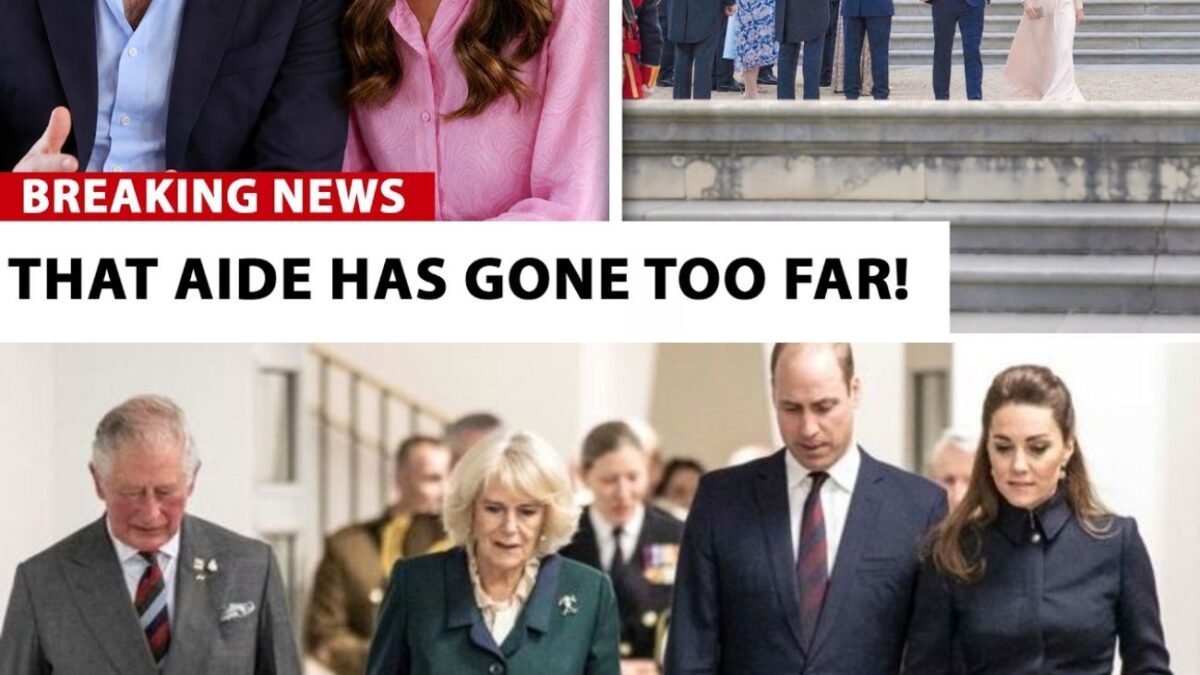
William and Catherine’s Dramatic Clarence House Exit: The Alleged Betrayal Behind the Royal Reception
The reception at Clarence House was supposed to be an uncomplicated evening of royal courtesy. Around 80 school librarians had gathered to celebrate their work, Queen Camilla was preparing for an upcoming Caribbean tour, and Prince William and Catherine had agreed to attend at King Charles’s request.
Yet, in this fictional account, the evening ended with the Prince and Princess of Wales walking out together before the planned group photograph. The reason was not a scheduling disagreement or an unexpected engagement. It was an alleged attempt to arrange a private conversation without Catherine’s knowledge or consent.
An Invitation With Hidden Expectations
The invitation arrived in late September. Camilla’s office had asked William and Catherine to attend an autumn reception for school librarians, an event intended to recognize people who help children discover the confidence and imagination that reading can provide.
William was initially reluctant, but his father personally asked him to attend. Charles wanted his son and daughter-in-law to stand beside Camilla before her overseas tour.
Catherine agreed readily. She had long been interested in children’s education and the role that libraries play in communities where books are not always readily available.
She did, however, have one condition: no journalists and no private interviews. Camilla’s office reportedly confirmed that the only photography would be an official group picture.
According to the story, a different arrangement had already been discussed privately.
Camilla allegedly wanted a favorable newspaper profile before leaving for the Caribbean. The columnist she hoped to win over was Simon Ashby, a fictional journalist who had previously criticized her tour plans.
The script portrays Camilla as offering Ashby something valuable in exchange for a more sympathetic article: ten private minutes with Catherine.
The crucial problem was that Catherine had never agreed to the meeting.
The Reception Begins on a Positive Note
On the evening of October 7, guests arrived at Clarence House dressed for the occasion. They represented schools from across England and Wales, including communities where librarians often provide far more than access to books.
William and Catherine entered together and greeted Camilla before joining the reception.
Catherine soon found herself speaking with Pat Fenwick, a 61-year-old school librarian from Hull who had spent nearly three decades working with children.
Pat described pupils who came into the library simply to find somewhere warm and peaceful. Some initially showed little interest in reading. Others gradually discovered books that opened up new possibilities.
One boy had spent an entire term sitting beside a radiator without reading a page. Eventually, he picked up a story about a dog traveling across the country. He finished it within two days and returned asking for more.
Now sixteen, he hoped to become a veterinarian.
The story moved Catherine, who recognized the quiet significance of Pat’s work. Their conversation was genuine and unhurried, precisely the sort of encounter that made the evening worthwhile.
Across the room, William was enjoying a lighthearted exchange with other librarians.
For a brief period, everything appeared to be going well.
Then a senior aide approached Catherine.
The Invitation to a Private Room
The aide politely explained that Camilla wanted Catherine to greet an old family friend waiting in the garden room. The meeting would take only two minutes.
Catherine had no obvious reason to suspect anything unusual. She excused herself from Pat, promising to return and finish their conversation.
Inside the smaller room, she met a man who introduced himself as Simon Ashby. He spoke pleasantly about books, the reception, and his own childhood experiences with libraries.
But the conversation soon changed direction.
Ashby asked whether William might meet his brother, Prince Harry, during the Sussexes’ anticipated visit to Nottingham. Catherine immediately recognized that the question was not casual conversation.
Then she noticed a notebook lying on a nearby table.
When she asked who he was, Ashby admitted that he wrote for a Sunday newspaper. He also explained that Camilla had arranged the meeting and told him Catherine wanted to discuss Harry and family matters.
According to the fictional narrative, Catherine had been placed in a compromising situation without her permission. Her private words had effectively been offered as a possible bargaining chip for a flattering newspaper profile.
Ashby, realizing that Catherine had not knowingly agreed to the conversation, appeared uncomfortable. He explained what he had been told rather than pretending the meeting was innocent.
Catherine stood up.
At that moment, William appeared at the doorway. Pat Fenwick had noticed that something felt wrong and alerted him to the fact that his wife had been led away by an unfamiliar man.
William listened as Catherine explained what had happened. He looked at Ashby and asked whether the account was true.
The journalist confirmed it.
William held the door open for his wife. Neither needed to say much more.
Two Words That Changed the Evening
When William and Catherine returned to the reception, Camilla was standing near the fireplace while a photographer prepared for the group picture.
She greeted them brightly and indicated where Catherine should stand.
William stopped in front of her.
According to the script, he quietly challenged Camilla for arranging a private meeting between his wife and a journalist without her consent. Camilla dismissed the concern, describing Ashby as an old friend and suggesting that the situation had been misunderstood.
William was unconvinced.
“There won’t be a photograph,” he declared before making the decision unmistakable: “We’re leaving.”
Conversation faltered around the room. Guests who had expected a pleasant royal photograph suddenly found themselves witnessing an uncomfortable confrontation.
Camilla objected to their departure, insisting that they could not simply walk out in front of everyone.
Catherine remained composed. She made it clear that she did not blame the guests, who had come to celebrate the work of school librarians.
Before leaving, she returned to Pat and thanked her for alerting William. She then made a point of thanking other librarians for their contributions to children and their communities.
Only after those conversations did William offer his arm.
Together, they crossed the room and left Clarence House through the front entrance, passing the photographer and the prepared lights.
The group photograph never happened.
The Fallout Behind Closed Doors
Outside, photographers captured the couple’s unusually early departure. Images circulated online, prompting speculation about what had gone wrong.
Inside Clarence House, the reception lost its momentum. Guests began collecting their coats, and the photographer packed away the equipment.
In the story, Ashby ultimately decides not to publish the favorable profile he had discussed with Camilla. He tells his editor that he does not want to participate in an arrangement that used both the journalist and Catherine.
The following morning, Camilla calls Catherine. Rather than beginning with an apology, she complains that the departure embarrassed her in front of approximately 80 guests.
Catherine responds by returning to the central issue: she had been promised there would be no press, and she had never agreed to discuss Harry with a journalist.
When Camilla argues that the private meeting was only supposed to last ten minutes, Catherine delivers the point that ends the conversation: those ten minutes were never Camilla’s to give away.
Later, Charles contacts William to hear his explanation. William describes the meeting, the notebook, and the alleged suggestion that Catherine wanted to discuss Harry.
The king listens without interrupting.
In this fictional account, the episode prompts a new principle within the royal household: one family member must never offer another member of the family to the press without that person’s agreement.
The story also describes changes to Camilla’s communications arrangements, while the journalist privately apologizes to Catherine.
A More Meaningful Ending
The most touching development comes later in Hull.
A parcel arrives at Pat Fenwick’s school library containing forty new books selected for children who love returning to familiar stories. Pat subsequently receives a call from Catherine, who apologizes for their interrupted conversation and asks whether she might visit the library.
Catherine wants to meet the next child who discovers the world of books while sitting quietly beside the radiator.
The proposed visit offers a striking contrast to the reception. At Clarence House, the evening had revolved around appearances, private arrangements, and a photograph that never materialized. In Hull, the focus would be on children, education, and the everyday work of a dedicated librarian.
The central message of this fictional drama is not simply that William and Catherine left a royal reception. It is that courtesy should never be mistaken for consent, and family relationships should not be treated as tools for securing favorable publicity.
Whether in a palace or an ordinary workplace, trust depends on respecting boundaries.
The reception was intended to produce a perfect photograph of royal unity. Instead, the story ends with a different image: Catherine sitting among schoolchildren, sharing a book in a library where no one needs to arrange a private conversation or manufacture a headline.
Sometimes, the most powerful statement is not the photograph a person agrees to take. It is the boundary they refuse to surrender.








