William Walks Out of Windsor Summit After Spotting Camilla’s Lawyer — The Hidden Reason Behind His Explosive Decision
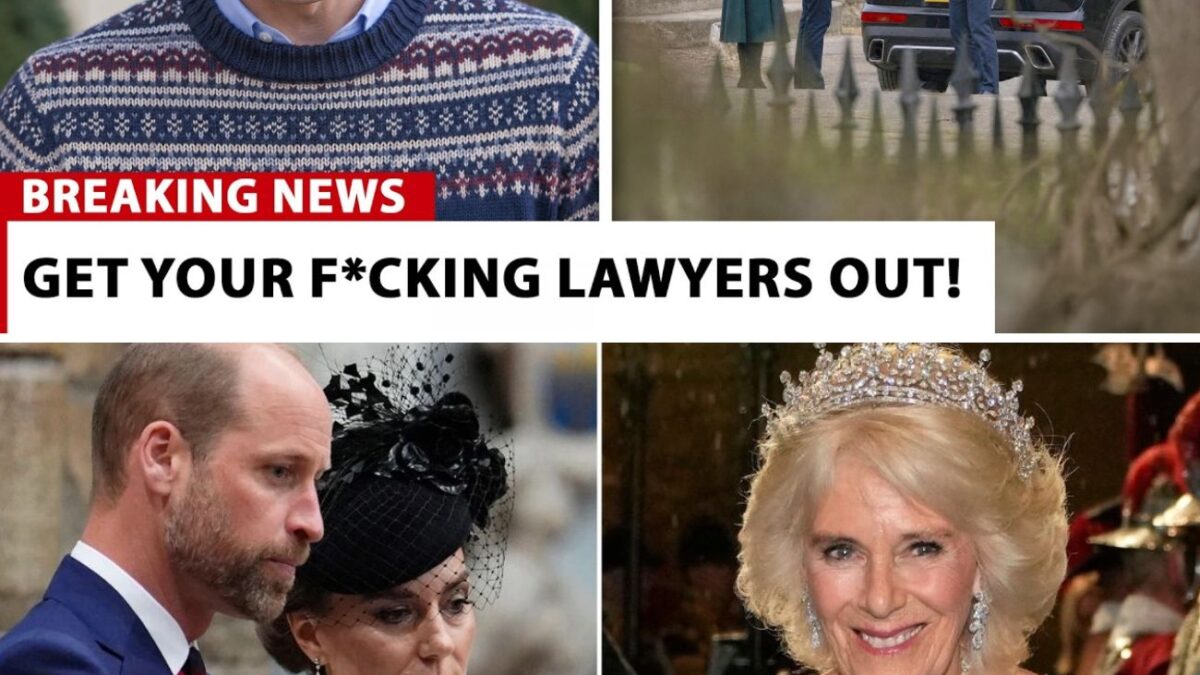
William Walks Out of Windsor Summit After Spotting Camilla’s Lawyer — The Hidden Reason Behind His Explosive Decision
What was supposed to be a carefully arranged family summit at Windsor reportedly collapsed almost instantly when William noticed an unexpected face in the room: Camilla’s private lawyer.
There was no dramatic confrontation. No shouting match. No angry exchange that could later be replayed and dissected. According to the account presented in the script, William simply recognized the solicitor, understood what her presence could mean, and decided that the meeting would not go ahead.
That quiet decision became the most explosive moment of the entire gathering.
A Windsor family summit would never be an ordinary family conversation. The setting itself carried enormous significance. Unlike Buckingham Palace, associated with formal state business, Windsor represented something much more intimate: family, history and private relationships. The idea was supposedly to bring senior members of the family together to discuss difficult questions about the future.
There was already a precedent. In January 2020, the family gathered at Sandringham after Harry and Meghan announced that they intended to step back from royal duties. Charles, William, Harry and the late Queen Elizabeth II met to work through the consequences.
So when a new Windsor summit was reportedly being arranged, the message was unmistakable: something important needed to be settled.
The wider circumstances made the situation even more sensitive. Charles had been diagnosed with cancer in early 2024, a fact publicly confirmed by Buckingham Palace. His illness inevitably intensified questions about the future and about what would happen when the current reign eventually came to an end.
For Camilla, those questions carried a deeply personal dimension.
Her position at the heart of the institution is closely connected to Charles’s position as king. If Charles were no longer on the throne, her circumstances could change dramatically. Residences, staff, public responsibilities, influence and her place within the family structure could all become subjects of discussion.
From that perspective, securing some form of certainty while Charles was still king could be viewed as understandable.
But William, according to the story, saw the situation very differently.
The guest list was reportedly presented to him beforehand, and Camilla’s private solicitor was allegedly not included. That detail became crucial. When William entered the room and noticed the lawyer standing nearby, he immediately understood that this was no longer simply an informal family gathering.
A private lawyer changes the character of a conversation.
A family discussion can be emotional, spontaneous and informal. A legal presence introduces another dimension. Statements can potentially be recorded, interpreted and referred to later. An apparent expression of agreement can acquire significance far beyond the moment in which it was made.
For William, the presence of Camilla’s personal solicitor reportedly suggested that the meeting had another purpose.
The central issue was said to involve continuity: protecting Camilla’s future position after Charles’s reign. According to the narrative, this could have included arrangements concerning residences, personal comforts, her future role and potentially some continuing influence within family affairs.
Nothing publicly released proves that such an agreement was actually placed before William, and the palace has not publicly confirmed the details described in this account. That distinction matters.
Yet within the story, the entire strategy depended on William participating in the conversation.
If he sat down, listened and appeared to agree with even part of the proposal, that could potentially create the appearance of family consensus. If a solicitor were present, the significance of that apparent agreement could become even greater.
William’s response was therefore remarkably simple.
He refused to participate.
Rather than accuse Camilla or Charles publicly, he reportedly stated that the meeting would not proceed and walked away.
That restraint may have been the most powerful part of the decision.
Had William lost his temper, the entire story could have been transformed. He could have been portrayed as aggressive, unreasonable or disrespectful toward his father and stepmother. Instead, he allegedly gave the room nothing dramatic to use against him.
There was no explosive quotation.
No slammed door.
No public accusation.
Just an empty meeting.
The deeper emotional explanation offered by the narrative reaches back decades, to William’s experience surrounding his mother, Diana.
William was only fifteen when Diana died. He grew up watching the complicated relationship between his mother and the institution surrounding the royal family. That history inevitably shaped his understanding of power, secrecy and decisions made behind closed doors.
For someone carrying that memory, a warm family meeting could potentially trigger the opposite reaction from the one intended.
The atmosphere might have been designed to make William feel safe enough to speak openly. Instead, seeing a lawyer unexpectedly positioned inside the room allegedly made him suspicious that the warmth itself was part of the strategy.
In that interpretation, William was not simply rejecting a legal proposal. He was rejecting the feeling of being managed.
Yet the story becomes more complicated when Charles’s position is considered.
Charles, according to the narrative, was not necessarily acting out of hostility toward his son. His motivation was presented as a husband’s desire to protect the woman he loved. He knew that Camilla’s circumstances could become uncertain after his death, and he wanted some reassurance that she would not suddenly find herself vulnerable.
That does not make the method acceptable to William.
But it does make the conflict far more human.
Charles wanted protection for his wife.
Camilla wanted security for her future.
William wanted transparency before accepting any arrangement that could affect his future reign.
Three understandable motivations collided in one room.
After William’s departure, the story describes a quieter conversation between father and son. Charles reportedly explained that he was trying to protect Camilla rather than undermine William. William, meanwhile, allegedly acknowledged that he understood the fear behind the request but objected strongly to the way the discussion had been arranged.
The distinction was crucial.
The problem was not necessarily Camilla’s future.
The problem was the method.
If the proposal was fair, William’s position was reportedly that it should survive an open discussion. There should be no hidden lawyer, no carefully disguised negotiation and no attempt to create an atmosphere where agreement could be interpreted later.
That argument ultimately turned the entire summit back on itself.
Why hide the legal involvement if the proposal was reasonable?
That question became more damaging than any confrontation could have been.
The account also claims that William subsequently insisted that future family meetings involving legal representatives should disclose that fact in advance. If true, that would represent more than a personal victory. It would change the rules of engagement.
The supposed loophole had been closed.
Princess Anne was also portrayed as understanding William’s position. Her importance in the story comes from her reputation for respecting procedure and institutional discipline. If she believed the presence of a private lawyer should have been disclosed, her support would give William’s decision additional weight.
Still, there was a painful irony.
By refusing the meeting, William may have defeated an uncomfortable tactic, but he also prevented the genuine conversation that needed to happen.
Camilla’s future after Charles is not an imaginary question. Neither is Charles’s desire to protect his wife. Whatever disagreements exist between William and Camilla, the question of how a widowed queen consort should be treated deserves an honest answer.
The failed summit may therefore have solved nothing.
Instead, it exposed the enormous lack of trust between the people involved.
Camilla’s side allegedly wanted certainty before Charles’s authority disappeared.
William refused to accept certainty arranged without his full knowledge.
Charles wanted to protect his wife while he still could.
And the family ended up exactly where it started: with the future unresolved and trust in short supply.
Perhaps that is why the most dramatic moment of the Windsor summit was the moment when nothing happened.
William saw the lawyer.
He understood what that presence might mean.
And he walked away.
No shouting. No spectacle. No dramatic confrontation.
Just a closed door and a meeting that never took place.
In a family where power is often exercised quietly, that may have been the loudest statement William could make.








