William’s SHOCKING Diana Discovery: The Hidden Document That Could Change Everything About Camilla
William’s SHOCKING Diana Discovery: The Hidden Document That Could Change Everything About Camilla
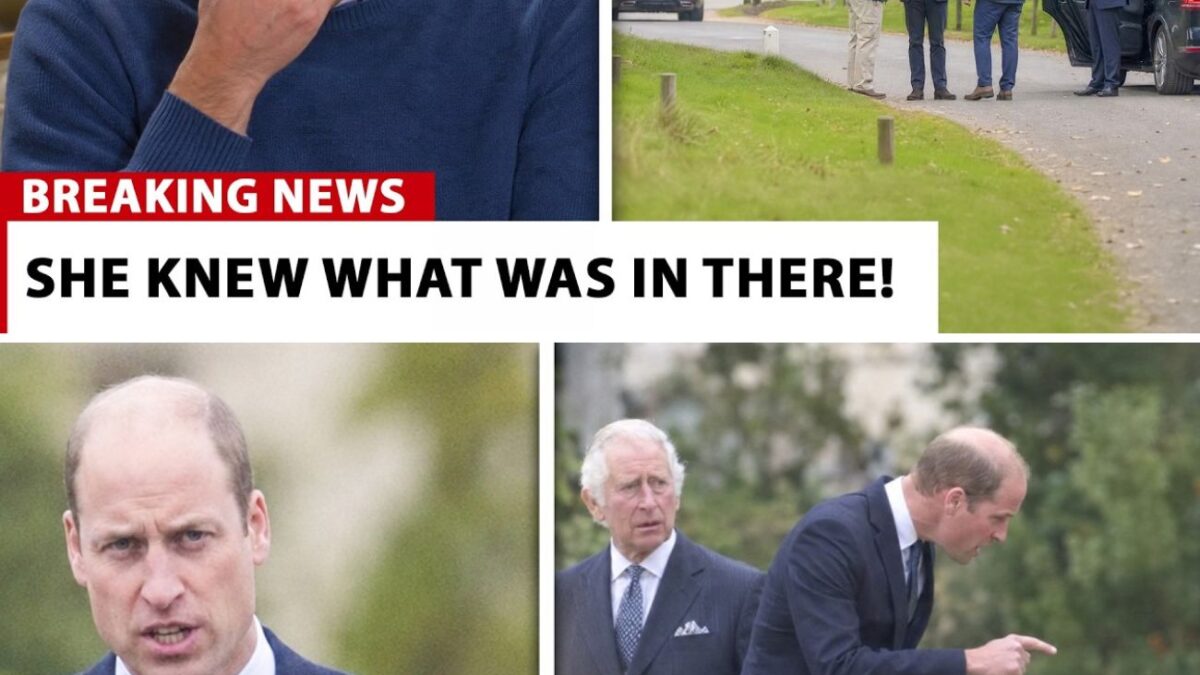
A mysterious document, an isolated burial site and a name that Prince William would least expect to see together. That is the explosive premise behind a story now circulating online about Princess Diana’s legacy, Camilla and an alleged security discovery at Althorp.
The story describes a dramatic scene in which investigators conducting a security assessment near Diana’s resting place allegedly uncover a sealed container buried near the grave. Inside, according to the narrative, is not a personal letter or sentimental message, but a formal document containing provisions concerning Diana’s private records, correspondence and other personal material.
Most startling of all, the story claims that one of the names attached to the document is Camilla.
It is a revelation that, within the story, changes everything for William.
The alleged discovery begins at Althorp, the Northamptonshire estate where Diana is buried on an island in the middle of a lake. According to the fictionalized account, investigators are there as part of an extensive security assessment designed to examine vulnerabilities around a location that attracts enormous international attention.
During the examination, investigators allegedly notice that part of the ground has been disturbed.
The discovery is described as unusual because the disturbance supposedly dates back years rather than weeks. Beneath the ground, investigators allegedly find a sealed container.
Inside is a document.
According to the story, the document is written in formal legal language. It allegedly contains provisions determining who could access certain private materials connected to Diana and who could authorize their disclosure.
That distinction becomes central to the entire controversy.
The story does not portray the document as evidence of a crime. Instead, it presents it as an alleged agreement concerning control over Diana’s personal legacy.
And then comes the name that transforms the discovery from an intriguing security matter into a deeply personal family drama: Camilla.
According to the narrative, William had never been told that such an agreement existed.
That alleged omission is presented as the real shock.
William was only fifteen when Diana died. Her funeral became one of the most watched events in modern British history, and the young prince was forced to grieve while millions of people watched.
As an adult, William has repeatedly spoken about his mother and the consequences of the intense media attention surrounding her life and death. He has also taken a strong interest in questions concerning the treatment of Diana by the press.
The fictionalized story therefore asks a painful question: if decisions concerning Diana’s private legacy were being made behind closed doors, why would her own son supposedly have been excluded?
That question becomes even more dramatic when the story turns to Camilla’s alleged reaction to the security review.
According to the script, Camilla opposed the examination because she feared that disturbing the area around Diana’s grave would create another wave of public controversy.
There are, of course, ordinary explanations for such a reaction. A royal burial site is highly sensitive. Any investigation around it could attract enormous media attention and encourage speculation.
But within the story, William interprets the alleged resistance differently.
Once the supposed document is discovered, opposition to the investigation begins to appear suspicious.
The central issue is no longer whether anyone committed a crime.
It is trust.
The document, as described in the narrative, allegedly establishes long-term restrictions over private correspondence, journals, recordings and other material associated with Diana. It supposedly determines who can access such information and who can decide whether it should ever become public.
The story then makes a powerful distinction between privacy and control.
Privacy protects sensitive information from unnecessary exposure.
Control determines who is permitted to see that information.
If the alleged agreement truly existed, the story argues, William would have a legitimate reason to question why he was not informed.
And the location of the alleged document creates another layer of mystery.
Why would something supposedly important be hidden near Diana’s grave rather than stored in a conventional legal archive?
The story offers several possibilities without establishing any of them as fact. Perhaps someone believed the location was secure. Perhaps the material was considered too sensitive for ordinary storage. Or perhaps the document was simply part of an old arrangement that had been forgotten.
But within the narrative, none of those possibilities is emotionally satisfying for William.
He allegedly wants to know who created the document, who signed it, who knew about it and why he was excluded.
Those questions lead directly back to Camilla.
The story does not accuse her of causing Diana’s death, nor does it claim that the alleged document proves anything about the Paris crash. Official investigations into Diana’s death remain separate from this fictionalized premise.
Instead, the supposed discovery concerns what happened after Diana was gone — and who controlled information about her life and legacy.
That distinction is important.
The alleged document becomes symbolic rather than criminal.
It represents a family history managed through silence.
For William, the most painful possibility would not necessarily be discovering that Camilla signed a document. It would be discovering that she knew about it for years while maintaining a public relationship with him without telling him.
That is where the story’s emotional tension reaches its peak.
A family can survive uncomfortable history. It can survive difficult conversations. What is much harder to survive is the feeling that someone deliberately decided you did not deserve to know the truth.
The story imagines William confronting precisely that realization.
Every family gathering could suddenly look different. Every polite conversation could carry an uncomfortable question. Every silence could become something worth examining.
Who else knew?
Did senior members of the royal household know?
Were lawyers involved?
Was the agreement formally binding?
Who decided that Diana’s sons should remain outside the alleged arrangement?
And perhaps the most haunting question of all: what else might William not know?
The fictionalized narrative deliberately refuses to provide an easy answer.
There is no confession. No definitive admission. No publicly authenticated document establishing the allegations as fact.
Instead, the story ends with uncertainty.
That uncertainty is what makes the alleged discovery so powerful as a piece of royal drama.
The supposed document would not prove that Camilla committed a crime. It would not rewrite the official history of Diana’s death. But if such an arrangement were ever independently authenticated, it could force William to reconsider how his mother’s private legacy was handled after her death.
And that is the real heart of the story.
Not the piece of paper.
Not the grave.
Not even Camilla’s alleged signature.
It is the possibility that William could discover that decisions concerning his mother were being made while he was deliberately kept outside the room.
For a man who spent decades carrying Diana’s memory into the future, that would be an extraordinarily personal revelation.
Yet the most important point remains: the FBI discovery, the buried document and Camilla’s alleged involvement described here are elements of the supplied fictionalized scenario, not established facts.
Until credible evidence or authenticated records emerge, they should remain exactly that — a dramatic story built around one haunting question:
What if the person trying hardest to protect Diana’s legacy was never told the whole story about how that legacy was protected?
And if William ever discovered that the silence had been deliberate, the consequences would extend far beyond one document.
They would reach into the very foundations of trust within the royal family.








