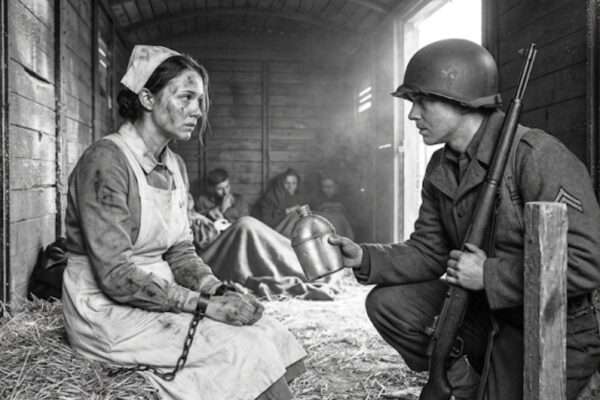
“Eat This Brown Paste” – German Women POWs Shocked That Americans Ate Peanut Butter Every Day
“Eat This Brown Paste” – German Women POWs Shocked That Americans Ate Peanut Butter Every Day
In November 1944, a train stopped in the Alabama countryside and thirty-four German women stepped down into a world they had been taught to hate. The air was damp and mild, unlike the dry heat of North Africa. Among them was Helga Brandt, twenty-six, a nurse who had served with Rommel’s Afrika Korps. She had dressed terrible wounds, watched men die in the desert and learnt to expect hardship. Yet nothing had prepared her for the first meal at Camp Aliceville.
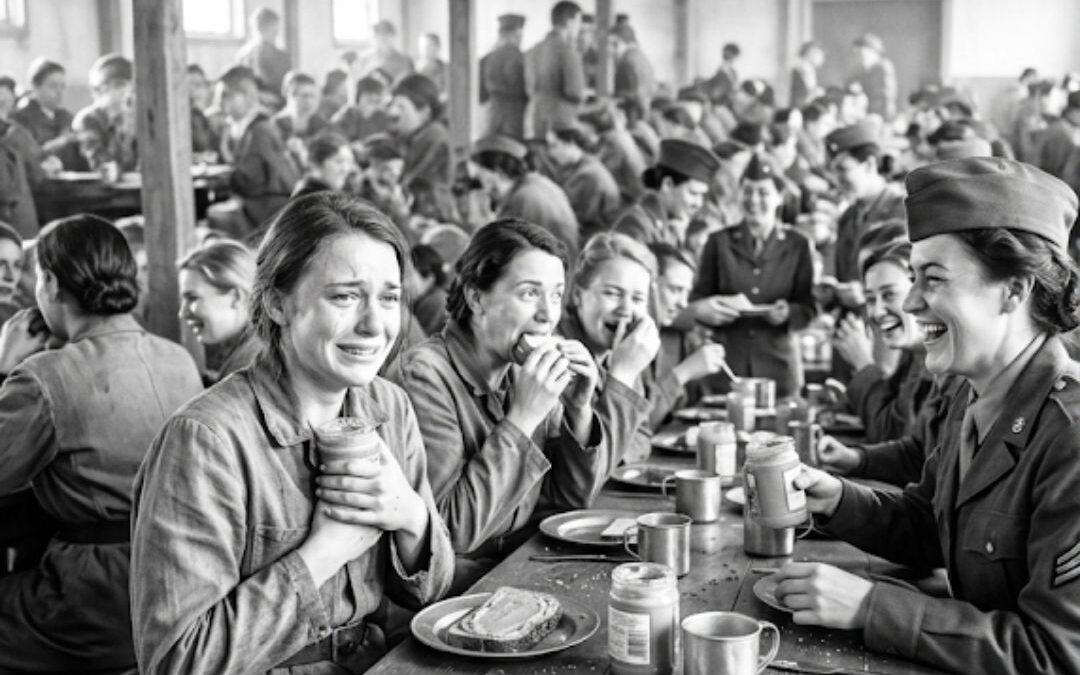
The women’s quarters were fenced off, but the wooden barracks had proper beds, hot showers and a medical room. Their first meal was served in a clean dining hall. American staff brought soup, fresh white bread, meat and peaches in syrup. At the centre of each table stood a glass jar filled with thick brown paste. Its label carried two unfamiliar words: peanut butter.
Helga turned the jar in her hands. The paste clung to the glass and looked like machine grease. Ingrid, a young signals operator from Hamburg, sniffed it cautiously. Neither knew what to make of it. A kitchen worker passed with a sandwich spread generously with the same substance and took a happy bite.
A guard called Betty noticed their puzzled faces. She opened a jar, scooped out a spoonful and ate it without bread. “Peanut butter,” she explained. “You’ll get used to it. It’s good.” Another guard, Ruth, said she had eaten it since childhood. Her husband took it to work, her children loved it, and most American households kept a jar in the kitchen.
That night Helga lay awake beneath a clean, warm blanket. She was troubled less by her surroundings than by the guards’ behaviour. They ate the same bread and soup as the prisoners. Nobody appeared to reserve better food for themselves. In the camps she had imagined, such a distinction would have been unmistakable.
At breakfast the next morning, curiosity overcame suspicion. Helga watched a kitchen worker named Dorothy prepare sandwiches. She spread peanut butter on one slice of bread and strawberry jam on another, pressed them together and wrapped the sandwich in paper. “Peanut butter and jam,” Dorothy said to a colleague. “The best lunch.”
Ingrid reached for a jar. The table fell quiet as she twisted off the lid. The smell was rich and nutty, faintly sweet. She spread a thin layer on bread and took a cautious bite. At first she said nothing. Then she looked at the slice as if it had surprised her.
“Well?” Helga asked. “Is it awful?”
Ingrid shook her head. “No. It’s good. Salty and sweet. It fills you up.”
One by one, the others tried it. Some smiled; others laughed at the sticky texture. Helga took her own first taste. The flavour was unfamiliar but comforting, substantial without being heavy. After months of poor rations, it felt like food that could be relied upon. By the end of breakfast, the jars on their table were nearly empty. The kitchen staff watched in amusement. Yesterday the women would not touch it; today they wanted more.
The camp authorities soon noticed. Peanut butter had been included in ordinary rations, not supplied as a special treat, and the sudden demand outstripped expectations. The women were told that jars would be shared between tables. Ingrid protested that one was not enough. When an officer reminded her that they had refused it the day before, she replied, “Yesterday we did not know what it was.”
For Helga, the discovery was about more than taste. That evening she wrote in a small notebook: The Americans eat this every day. They make it from peanuts, which seem common here. We were told they had no food. That was a lie. She stopped there, but another question followed her into the night: what else had been a lie?
The guards noticed the little economy but generally allowed it, provided it caused no trouble. Betty sometimes arranged small exchanges for extra recreation time or a warmer blanket. She understood that the spread had become a source of happiness. Colonel Harold Morrison, the camp commander, observed that the women argued less and co-operated more when they had a small pleasure to anticipate.
Yet the jars were doing something no camp report could measure. They were making the women ask questions. Where did the peanuts come from? How could America produce so much? Ruth explained that farms across Alabama, Georgia and Mississippi grew them in great quantities. They were used for food, oil and sweets; some even went to feed animals. The prisoners listened in silence. Back home, butter was precious, meat scarce and families careful with every scrap. The idea of having enough peanuts to spare seemed almost impossible.
Helga remembered the speeches and headlines she had heard in Germany. America had been presented as feeble and close to collapse. The evidence before her did not fit that picture. Neither did the people. Betty told her about her brother, killed fighting in Italy. She did not pretend the loss meant nothing, but said she could not bring him back by hating the women in front of her. “I see women like me,” she told Helga. “The war has caught us all up.”
In the spring of 1945, English lessons began. The prisoners wanted to understand conversations and read labels without a translator. Maria, despite being the oldest, became a determined student. She was especially taken with the word “plenty”. Americans used it to mean more than enough. German families, she observed, were accustomed to hoping for enough. Having extra was harder to imagine.
Germany surrendered on 8 May 1945. The news reached Camp Aliceville by radio. The American staff felt relief that their husbands and sons might return. The German women reacted differently: some wept for their defeated homeland; others felt exhausted relief that the fighting in Europe had ended. That evening, the dining hall served a special meal. Peanut butter was placed on the tables without the usual restriction. Betty raised a jar in a simple toast to peace. Helga answered in careful English, “And to plenty.”
In January 1947, orders finally came. Thirty-one women, including Helga, were to return to Germany; three remained in America after making their own arrangements. On the evening before departure, the staff organised a farewell meal. Paper flowers decorated the dining hall, and jars of peanut butter stood on every table. Betty urged the women to take what they could carry. Dorothy gave Helga a handwritten recipe card explaining how to make the spread when she had peanuts of her own. Beneath the instructions she had written: “For when life is normal again.”
Helga held the card and cried. Normal life seemed impossibly distant. Their ship left Mobile Bay on a cold February morning. Some women waved to the guards who had come to say goodbye. Ingrid admitted that she had never expected to feel sad about leaving a prison. Helga understood. Camp Aliceville had been a place of confinement, but it had also been where some of their certainties fell away.
They reached Germany to find a country scarred by destruction and divided into occupation zones. Helga arrived in Stuttgart in March 1947. Her mother was thinner and older, but alive. They held one another for a long time before either could speak. That evening Helga opened one of her remaining jars and spread a little peanut butter on dark bread. Her mother tasted it cautiously.
“This is American?” she asked.
“Yes. They eat it every day. Even we prisoners had it.”
Her mother took another bite. “We were told they had nothing,” she whispered.
“I know,” Helga replied. “We were told many things.”
Helga wrote a letter to the camp, although she knew it had closed. She thanked the people who had fed the prisoners without ceremony. She kept Dorothy’s recipe card, a reminder that kindness could outlast the coldest and darkest winter. To the Americans, peanut butter had been ordinary. To the German women, it had shown that the world was not as their leaders had described it. It had also been a small kindness offered across a terrible divide.
Years later, Helga told her grandchildren about the war and the strange brown paste she had once mistaken for machine grease. When they asked what she had learnt, she did not begin with battles or speeches. She spoke of a jar on a dining-hall table, and how an everyday meal had forced her to question what she believed.
“Truth,” she told them, “is not always announced with great speeches. Sometimes you discover it in the ordinary things people share.”
Peanut butter did not end the war, rebuild the cities or bring back the dead. It could not undo the choices that had brought the women to Alabama. But at Camp Aliceville, a simple food became a way of seeing beyond the stories they had been told. The women arrived expecting cruelty from an enemy. They found routine, unexpected abundance and people capable of kindness. They returned to a ruined country carrying memories and a clearer understanding of how easily fear can be built on lies.
For Helga, the lesson remained as vivid as that first unfamiliar taste: a nation is not understood through the words of its rulers, but through the lives of its ordinary people.
You Might Also Enjoy


A millionaire beat his pregnant wife until she lost the baby – her father’s revenge shocked the public.

The doctor sent the inexperienced nurse away – but her combat skills, acquired in the Navy, revealed who she really was.

Nine nurses fled from the feverish mafia boss – his portly veterinarian opened the stab wound in his back.

The mafia boss had been unable to walk for eight years – then a single mother found a needle hidden in his wheelchair.

“My Skin Hurt” — German Woman POW Shocked as U.S. Army Medics Save Her From Losing Both Hands