The Life of Diana’s MOTHER Was Much CRUELER Than You Think – Frances Shand Kydd
There is a stone bridge on the west coast of Scotland that crosses a narrow tidal channel to a small island called Seil. Locals call it the bridge over the Atlantic. In the early 2000s, a woman lived on that island in a converted croft attending Catholic mass at a small church. She had once walked through Westminster Abbey as one of the youngest brides married there in decades. She had lived on the Sandringham estate, neighbor to the queen. She had given birth to the future princess of Wales. By the end, nobody in the village recognized her. Her name was Frances Shand Kydd. And the question most people ask about her is the wrong one. Most people ask why she left her children. That question assumes the answer is simple. A selfish woman, a broken family, a mother who chose a lover over her own daughters and son. The tabloids printed that version for decades. Diana herself, in private interviews that later became public, reinforced it. The real question, the one that turns a tabloid headline into something far more disturbing, is what the aristocratic system did to Frances before she ever walked out, what it continued doing to her for decades after, and why the woman who tried to escape one of England’s most powerful families ended up more isolated, more punished, and more completely erased than anyone who stayed quietly inside the machine.
To understand how Frances reached that remote Scottish island, buying groceries in a village shop and attending mass in a tiny church where nobody connected her face to the most famous royal story of the 20th century, you have to start not with Frances herself, but with her mother, and you have to understand that her mother’s deepest loyalty was never to her own daughter. It was to the crown. Ruth Gill was born in Scotland, trained as a concert-level pianist in Paris, and in 1931 married Maurice Roche, the fourth Baron Fermoy. The marriage brought Ruth directly into the orbit of the British royal family, not as a distant social connection, but in the most physical way imaginable. Maurice Roche was a personal friend of King George VI.
The friendship came with a tangible reward. The Fermoys were granted the use of Park House, a substantial 10-bedroom property sitting directly on the Sandringham estate in Norfolk. This was not a house in a neighboring village. Park House stood on royal land within walking distance of the royal family’s private country residence. The Fermoy children grew up hearing the same pheasant shoots, attending the same local church at St. Mary Magdalene, crossing paths with royal staff on the same gravel paths. Proximity to the crown was not a social aspiration for the Fermoy family. It was a postal address. And Ruth Fermoy understood with the precision of a woman who had rebuilt her entire identity around institutional loyalty that this proximity was the family’s most valuable inheritance—more important than money, more important than the barony itself, and certainly more important than any individual person’s happiness.
When Maurice died in 1955, Ruth did not retreat into private widowhood. She deepened her connection to the institution that had defined her married life. She became a Woman of the Bedchamber to Queen Elizabeth The Queen Mother, one of the most intimate and trusted positions in the royal household. The role was part companion, part lady-in-waiting, part social gatekeeper. Ruth’s daily life now revolved around the Queen Mother’s schedule, preferences, friendships, and court appearances. Her loyalty to the crown became total and professionally maintained over decades. It was the single most important commitment of Ruth’s adult life, more important than personal friendships, more important than private conscience, and as the years would prove, more important than her relationship with her own daughter.
Frances Ruth Roche was born on the 20th of January 1936 into this world of aristocratic service and royal adjacency. Her childhood home sat on royal grounds. Her mother’s employer was the Queen Mother herself. The families who surrounded hers were not merely wealthy. They were structurally fused to the British monarchy through service, land, marriage, and daily proximity. Frances learned early that belonging to this world meant something non-negotiable. It meant loyalty, discretion, emotional restraint, and the understanding that personal desires were always secondary to institutional continuity. The system did not spell this out in written contracts. It did not need to. The architecture of Park House said it. The guest lists at Sandringham said it. The careful choreography of every shooting weekend, every church service, every Boxing Day gathering said it.
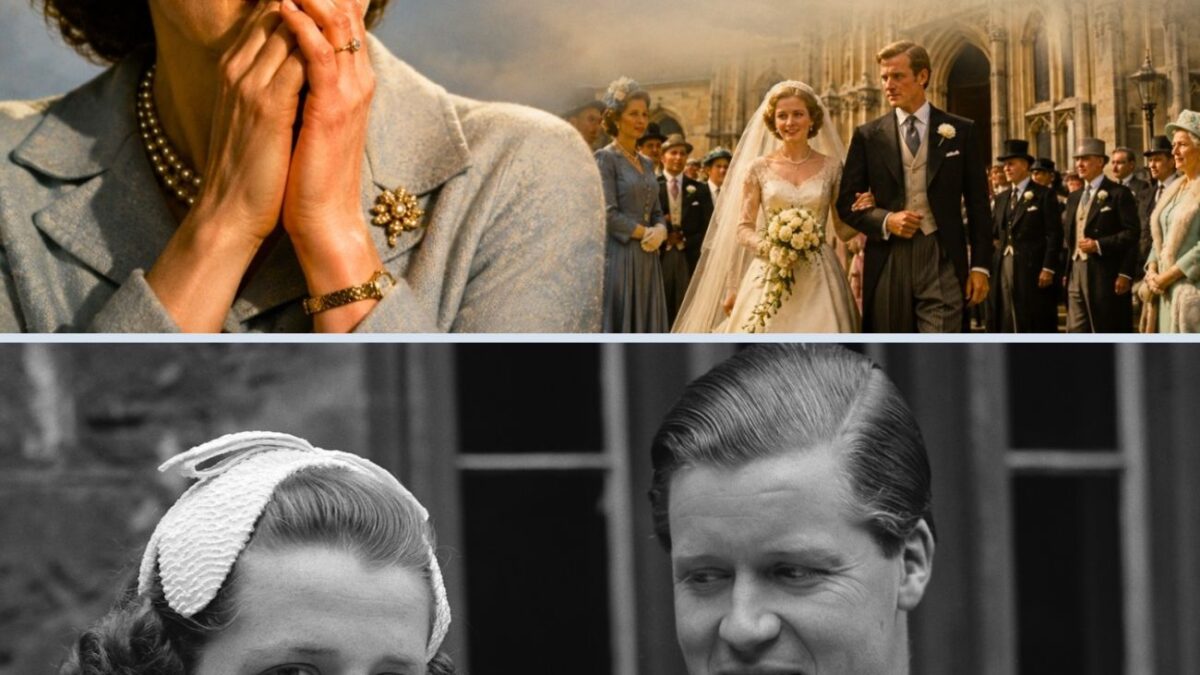
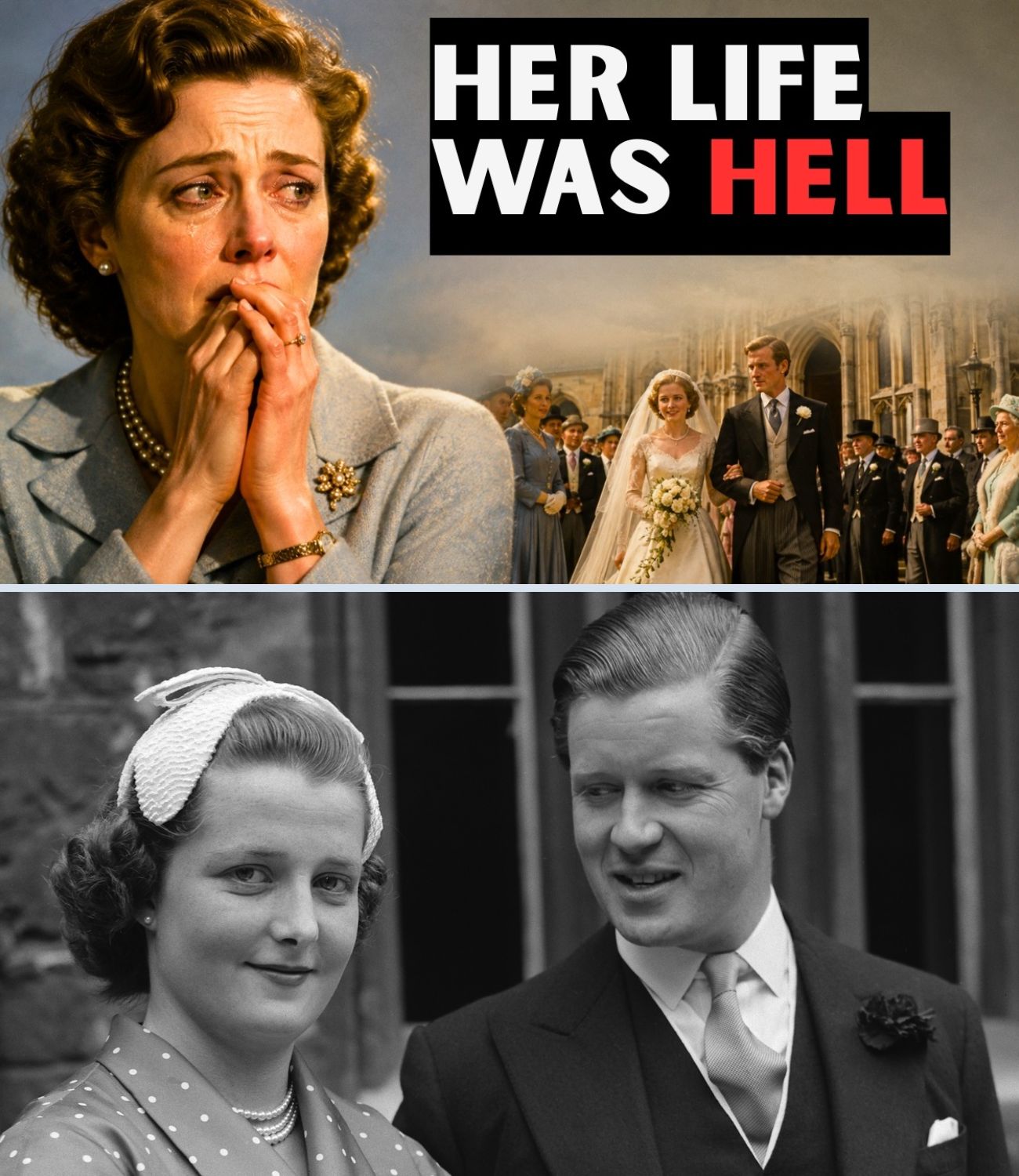
And in 1954, when Frances was just 18 years old, the system found its most direct use for her. She married Edward John Spencer, Viscount Althorp, heir to the Spencer earldom, at Westminster Abbey on the 1st of June 1954. The Queen attended, the Queen Mother attended, the Duke of Edinburgh attended. Frances was reportedly one of the youngest brides married at Westminster Abbey in the 20th century—18 years old, standing at the altar of one of the most symbolically important churches in the English-speaking world. The groom was 30, 12 years older. The guest list read like a directory of aristocratic and royal power, every name representing a connection that would either protect or punish Frances depending on whether she followed the unwritten rules.
The wedding was not simply a celebration. It was an institutional enrollment. The abbey was the contract. The congregation was the witness. The flowers, the music, the royal guests, all of it projected the image of a young woman entering a life of extraordinary privilege. The unspoken clause embedded in the bloodline expectations of every aristocratic marriage of that era was simpler and colder: produce a male heir.
Frances moved into Park House on the Sandringham estate. The house had 10 bedrooms, large grounds, staff quarters, and the peculiar social distinction of being so close to the royal residence that Frances’s future children would grow up playing with young princes on the same Norfolk lawns. The house itself was comfortable rather than grand by aristocratic standards, but its value was never really about the building. Its value was the address. Park House sat inside the perimeter of one of the most exclusive royal estates in Britain. Frances could walk from her front door across grounds where the Queen’s family spent their private holidays. This proximity was the Fermoy-Spencer inheritance, not merely money or title, but structural closeness to the monarchy itself. It was a privilege. It was also, in ways Frances could not yet see, a form of surveillance. Every dinner party, every church service, every estate walk, every Christmas gathering reinforced the understanding that the Spencer family existed within the crown’s gravitational field. Everything they did was observed. Everything they failed to do was noted. Leaving that field would carry consequences that no divorce court could fully measure.
Sarah Spencer was born in 1955. Jane Spencer followed in 1957. Two healthy daughters, loved and welcomed, but structurally insufficient for the system’s requirements. The Spencer earldom passed through male primogeniture, a rule so embedded in the fabric of English aristocratic life that it was treated not as a legal technicality but as a fact of nature. The title, the estates, the land, the centuries of accumulated social and political position, all of it depended on a son. Without a male heir, the earldom would pass to a cousin or a distant branch, and everything the family had built around its core identity would shift.
The pressure on Frances was not always spoken in explicit terms, but it saturated every family conversation about the future, every glance at the family tree, every comparison with other aristocratic families who had secured their male heir early and without difficulty. Frances was not simply a wife and mother inside this system. She was a succession instrument. Her body was the mechanism through which the Spencer line would either continue or fail.
In January of 1960, she delivered what the family had been waiting for: a son. They named him John. He lived for approximately 10 hours. The death of baby John Spencer is the hinge upon which Frances’s entire story turns. Not because of the grief alone, though that grief must have been immense, but because of what the family’s institutional response revealed about its true priorities. According to multiple biographers, including Andrew Morton and Tina Brown, Frances was subsequently sent to Harley Street specialists in London. She was not sent to grieve. She was not sent for counseling or emotional recovery. She was sent to be medically examined to determine whether her body was responsible for the baby’s death, whether she was physiologically capable of producing a healthy male heir, whether the reproductive fault, as the system framed it, belonged to her.
The polished consulting rooms on Harley Street, with their brass nameplates and professional discretion, became the site of Frances’s deepest humiliation. Her reproductive system was being audited like estate machinery that had malfunctioned. The aristocratic system had lost its investment and it wanted a diagnosis. The conclusion arrived at through clinical examination rather than compassion was that the problem was Frances. This single detail changes the entire moral architecture of Frances’s story. She was not a woman who carelessly abandoned her family. She was a woman whose dead infant son was treated as a mechanical failure, whose body was investigated for defects as though she were livestock being assessed for breeding viability, and whose grief was subordinated entirely to the family’s need for a male heir. The Harley Street visits were not medical care in any meaningful sense. They were quality control performed on a human being by a system that had confused a woman with a dynasty.
Diana Frances Spencer was born on the 1st of July 1961. Another girl. Some accounts suggest that the family’s initial response was quietly muted, not outright cruelty, but a disappointment that could be felt in the rooms of Park House like a shift in air pressure. A third surviving daughter did not solve the succession problem. Frances had now delivered four children, buried one son after 10 hours of life, submitted to invasive medical examinations at Harley Street, and still had not fulfilled the single task the aristocratic system valued above all others.
Then on the 20th of May 1964, Charles Spencer was born, a healthy boy, the heir the family had demanded for a decade. The Spencer title was secured. The succession was resolved. The earldom would survive into the next generation. Frances had done what was asked of her. She had given the Spencers their future. Five children in nine years, one buried, four surviving. The contract, as the system understood it, had been fulfilled. It should have been enough to hold the marriage together. It was not.
By the time Charles arrived, the emotional damage inside the Spencer household was structural. A decade of reproductive pressure, the death of John, the clinical humiliation of Harley Street, the relentless institutional expectation that treated Frances’s emotional life as irrelevant, all of it had hollowed out whatever personal connection the marriage might once have contained. Frances had married at 18, produced five children by 28, buried one, been medically investigated like defective equipment, and received almost no recognition that she was a person with needs rather than a function with obligations. The marriage to Viscount Althorp was not simply unhappy in the way that many marriages become unhappy. It was a contract whose only value terms had been fulfilled and whose emotional bankruptcy could no longer be concealed behind duty and the rhythms of aristocratic country life.
Somewhere in the mid-1960s, Frances met Peter Shand Kydd. He was the heir to a wallpaper manufacturing fortune, wealthy but from the commercial rather than the hereditary class. He was not part of the Sandringham orbit. He was not connected to the crown through generations of strategic service. He represented something the aristocratic system could not offer: a relationship chosen freely rather than arranged. He was married. Frances was married. Their affair was precisely the kind of transgression that aristocratic husbands had committed for centuries with almost no social, legal, or reputational consequence.
Discrete relationships outside political marriages were tolerated, managed, and quietly absorbed by the system as long as the person conducting the affair was a man. Aristocratic husbands kept mistresses in London townhouses, visited them between parliamentary sessions, fathered children who were acknowledged privately or ignored publicly, and continued attending family dinners and court events without meaningful social penalty. The system had centuries of practiced tolerance for male infidelity. But Frances was not a husband. She was a wife. And in the aristocratic world of 1960s England, the rules governing personal freedom were applied with brutal asymmetry. A man who strayed was managed. A woman who fell in love was destroyed.
Frances left Park House around 1967. Diana was approximately 6 years old. Years later, in the taped interview she gave to Andrew Morton for his biography, Diana described a memory from that period—hearing her mother’s footsteps on the gravel drive as she left, or perhaps the sound of a car pulling away into the Norfolk darkness. Whether the memory is precisely accurate or partly reconstructed from the emotional residue of early childhood, it became the foundational wound of Diana’s entire life: the sound of gravel, the sound of a mother disappearing. Diana carried that image into adulthood, into her own royal marriage, into her public identity as the princess who desperately searched for love because she believed love had abandoned her on a Norfolk driveway when she was six. The memory shaped everything, and the public accepted it as the complete story: the mother who left, the children who suffered, the family that carried on.
But the whole story was something the public never received. Frances left an unhappy marriage. She expected, as nearly every mother in that era could reasonably expect, that she would receive custody of her children. British courts in the late 1960s overwhelmingly favored mothers in custody disputes. The legal presumption was maternal. Frances had every rational reason to believe the law would protect her relationship with her children. She was not abandoning them. She was leaving a marriage and assuming correctly by the standards of the time that the courts would allow her to take her children with her. That assumption was reasonable, legally grounded, and supported by precedent. It was also fatally wrong.
The custody hearing took place in 1969. Frances was 33 years old. Viscount Althorp wanted to retain the children at Althorp and Park House. Frances wanted to take the children with her into her new life. The case should have followed the standard maternal preference pattern of the era. It would have if not for one devastating witness: Ruth Fermoy, Frances’s own mother, took the stand and testified against her daughter.
The full weight of that fact requires a moment of silence. Ruth Fermoy, the woman who had raised Frances, whose home on the Sandringham estate had shaped Frances’s childhood, whose royal connections had arranged the very social world Frances married into, stood in a British courtroom and actively supported the legal case for removing custody from her own daughter. Ruth, Woman of the Bedchamber to the Queen Mother, guardian of aristocratic propriety, the woman whose social identity and professional position depended on unwavering loyalty to the establishment, chose the institution over her child. She sided with the Spencer family. She endorsed the father’s custody claim. She helped ensure through the weight of her testimony and the credibility of her position that her own daughter lost all four surviving children.
The judge ruled against Frances. In an era when mothers almost always received custody, Frances did not. Sarah, Jane, Diana, and Charles Spencer remained with their father. Frances was permitted scheduled visits, but she had been legally and physically severed from the daily fabric of her children’s lives. She would not put them to bed. She would not walk them to school. She would not sit with them through childhood illnesses, help with homework, manage their friendships, or answer their questions about why the family had broken apart. She would arrive for visits and then leave again, each departure a smaller echo of the original one, each goodbye reinforcing in the children’s minds the idea that their mother was the one who kept leaving.
The woman who had entered Westminster Abbey at 18, produced five children, buried one after 10 hours, been subjected to Harley Street examinations, and then committed the unforgivable aristocratic sin of leaving an unhappy marriage for love, was now permanently stationed outside the gates of every house her children lived in. Ruth Fermoy’s betrayal was not personal cruelty in isolation. It was institutional logic applied with surgical precision. Ruth had spent decades constructing a position inside the royal household that depended on one principle: loyalty to the system above all personal attachments. Her closeness to the Queen Mother, her court standing, her reputation, all of it required the enforcement of a code that said:
“Women endure. Women do not cause public embarrassment. Women do not choose happiness over continuity.”
Ruth enforced that code against her own daughter because her institutional identity required it. The cost was Frances’s relationship with her children. The reward was the preservation of Ruth’s position within the world she valued more than motherhood.
Frances married Peter Shand Kydd in 1969, the same year she lost custody—the man she had sacrificed everything for, the man who was supposed to represent freedom and a life defined by love rather than aristocratic obligation. For a time, the marriage offered something that resembled escape. They lived together away from the Sandringham orbit, away from the Spencer estate machinery, away from court protocol and succession anxiety. But escape was not permanent. They separated in 1988 after 19 years. The divorce was finalized in 1990. Peter Shand Kydd married another woman in 1993. Frances was now twice divorced, exiled from the aristocratic world by her first departure and now alone after the collapse of the relationship that was supposed to justify everything she had lost. The man for whom she had surrendered her children, her mother’s loyalty, her social standing, and her public reputation was gone. Freedom had failed her twice.
But the cruellest passage of Frances’s life was not the custody defeat, not the Harley Street humiliation, and not the second divorce. The cruellest passage was watching the system she had escaped reach out and take her daughter. On the 29th of July 1981, Frances sat inside St. Paul’s Cathedral and watched Diana marry Charles, Prince of Wales. The ceremony was broadcast to an estimated 750 million television viewers around the world. Diana’s ivory silk taffeta wedding dress had a 25-foot train. The guest list included heads of state, European royalty, and the complete ceremonial architecture of the British establishment. Frances was present. She reportedly wept. Her physical position inside the building, though socially complicated—present but peripheral—mirrored her position in the family with uncomfortable precision. She was Diana’s mother. She was also the woman the public had already reduced to a single narrative: the mother who left.
What Frances witnessed that day was a repetition of her own recruitment: a young woman, barely 20, entering one of the most powerful institutional marriages on Earth; a ceremony engineered to project permanence, romance, and public joy; a family system that would exploit Diana’s youth, her image, her fertility, and her willingness to perform, and then respond with institutional force when she deviated from the script. Frances had lived inside that system. She had been recruited at 18, used throughout her 20s, and expelled at 33 when she asserted her right to personal happiness. She understood what the cathedral was. It was not a church that day; it was a processing facility, and her daughter had just walked through the doors.
Diana’s marriage unraveled publicly through the 1980s and early 1990s in ways Frances’s marriage never had: the tabloid wars, the competing biographies, the Morton book with its taped confessions, the Panorama interview in which Diana looked into a television camera and told millions of viewers there had been three people in her marriage, the formal separation, and finally the divorce. Diana’s suffering became the most watched royal crisis since the abdication of Edward VIII. And through every phase of that very public disintegration, Frances watched from outside the palace walls—the mother who had lost custody, the mother whose own painful story had been overwritten by her daughter’s global fame, the mother who understood with experiential certainty that no adviser or friend could match what the royal aristocratic machine was doing to Diana because it had already done exactly the same thing to her a generation earlier.
Their relationship during these years remains difficult to reconstruct with certainty. Some accounts suggest they drew closer during Diana’s most painful period, united by their shared experience of being used by the same system. Other accounts suggest the relationship deteriorated significantly in the mid-1990s. The reasons vary depending on the source: some cite Frances’s increasing reliance on alcohol, others her conversion to Catholicism in 1994, others public comments Frances made that Diana found intrusive. The full private truth may never be documented with precision. What can be said with certainty is that Frances’s conversion to Catholicism represented something far larger than a change in spiritual practice. In the Spencer-Fermoy world, the Church of England was not merely a denomination; it was social infrastructure. The Anglican Church was the church of the crown, the aristocracy, the court, and the establishment. Converting to Catholicism was a departure not simply from one Christian tradition to another, but from the entire institutional identity that had shaped, recruited, exploited, and expelled Frances over 40 years. It was the most complete form of separation available—not geographic, not marital, but theological. She left the church of the people who had taken her children.
Ruth Fermoy died in 1993, one year before Frances’s conversion. Some accounts suggest Ruth expressed private regret before her death about having testified against Frances in the custody hearing. The sourcing is inconsistent, and the details of any reconciliation remain unverifiable. What is beyond dispute is the magnitude of the damage Ruth’s testimony had inflicted. It had defined Frances’s adult life. It had shaped Diana’s emotional architecture. It had provided the foundation for Diana’s public search for love. It had given the tabloids their permanent shorthand for Frances. Whether a few words spoken on a deathbed could meaningfully address 25 years of structural devastation is a question the evidence cannot answer.
Then came August the 31st, 1997. Diana was killed in a car crash in a Paris tunnel. She was 36 years old. Frances was 61. The mother who had lost legal custody of her children in 1969, who had spent nearly three decades navigating the painful and publicly scrutinized position of a non-custodial parent, now had to bury one of those children. The public mourning that followed was without precedent in modern British experience. Flowers accumulated outside Kensington Palace in such extraordinary quantities that they had to be organized and eventually cleared by volunteers. A nation entered a state of collective grief that stunned even the royal family.
The funeral was held at Westminster Abbey, the same building where Frances had been married 43 years earlier, the same building where the system had first absorbed her into its architecture. Charles Spencer delivered the eulogy. It was sharp, emotional, and widely interpreted as a direct challenge to the royal family’s treatment of Diana. He positioned the Spencers as Diana’s true protectors. The speech was powerful. But Frances’s position within the mourning was characteristically marginal. She was Diana’s mother. She was also the woman whose identity had been permanently fixed by a single tabloid narrative. Her grief was real and enormous. Her public standing to express that grief was forever qualified by decades of simplified storytelling. Diana was buried on a small island in the ornamental lake at Althorp. The island burial was private, inaccessible to visitors. Frances, who had once lived at Althorp as its future countess, held no formal place within that memorial landscape. The estate that had once needed her body to produce its future earl now had no institutional space for her.
After Diana’s death, the withdrawal accelerated. The loss of her daughter removed whatever remaining thread connected Frances to the world she had once inhabited. She retreated to the Isle of Seil, that small tidal island on Scotland’s western coast, connected to the mainland by a single stone humpback bridge built in 1792. The community is tiny. The landscape is stark: water, stone, wind, and silence. The nearest town of any size is Oban, a fishing and ferry port. Frances lived in a converted croft, attended Catholic mass at the local church, and bought groceries at the village shop. She was largely unrecognized by neighbors who had no reason to connect this quiet, aging woman with the spectacular Westminster Abbey bride of 1954.
The tabloids had already found her before Diana’s death. In 1996, Frances was convicted of drink driving near her Scottish home and banned from driving. The press covered the conviction with the practiced cruelty reserved for people whose private suffering has been reclassified as public entertainment. She was not covered as a woman coping with loss and the cumulative weight of decades. She was covered as scandal. The headline was the conviction. The human being underneath it was irrelevant to the story the newspapers wanted to sell. She had long resisted the press. As early as 1980, she had written to The Times protesting the media intrusion surrounding Diana’s courtship. That protective fury had aged across the years into something quieter and more broken.
Frances was diagnosed with Parkinson’s disease. Reports also indicate the presence of brain cancer. The details of her decline were largely private, which may have been the only form of privacy the system ever extended to her. She died on the 3rd of June, 2004. She was 68 years old. She had outlived Diana by nearly 7 years. Her funeral was held at the Catholic Cathedral of St. Columba in Oban. She was buried at Pennymuir Cemetery on the edge of Oban—not at Althorp, not in the Spencer family vault, not near Diana’s island grave, not in any location connected to the Anglican aristocratic world she had been born into, married within, and expelled from. The funeral followed Catholic rites, the faith Frances had chosen a decade earlier when she left the church of the establishment. Her children attended, including Charles Spencer and Diana’s sons, Prince William and Prince Harry, who were 21 and 19. The ceremony was quiet. The location was deliberate. The separation from the Spencer vault was final.
The geography of Frances’s burial is the verdict her life delivered on the system that shaped it. Diana rests on an island in a lake at Althorp inside the estate where the Spencer family has lived for more than five centuries. Frances rests in a cemetery in a Scottish coastal town hundreds of miles from any Spencer property. Mother and daughter, separated by a custody ruling in 1969, separated by the rigid machinery of aristocratic expectation, separated by fame, separated by tabloid narrative, separated by death, remain separated in the ground. Two islands define this story: one ornamental, surrounded by memorial gardens and visited by tourists who pay admission; one quiet, at the end of a stone bridge visited by almost no one who understands what it represents.
The system that recruited Frances Ruth Roche at 18 years old extracted from her exactly what it required. It got the male heir. It got the proximity to the crown. It got the next generation of Spencer children, one of whom became the most photographed and most publicly mourned woman of the 20th century. What Frances received in return was a decade of reproductive pressure, the death of a newborn son who lived 10 hours, medical examinations that treated her body as defective dynastic equipment, a custody defeat engineered by her own mother’s courtroom testimony, a public reputation reduced permanently to a single act of supposed abandonment, two marriages that ended in divorce, a daughter she watched enter and be consumed by the same system, a faith she found alone, a criminal conviction reported without mercy, and a final home on a tidal island where nothing followed her except the weather and the sound of water against stone.
The bridge over the Atlantic still stands on the road to Seil. It crosses a channel so narrow that the name sounds almost like a joke, a grand title stretched across a modest span of old stone. But for Frances Shand Kydd, that bridge was the last crossing. On one side lay the mainland, the aristocracy, the palaces, the court, the ceremonies, the guest lists, the tabloid cameras, the family that had used her, and the public that had judged her. On the other side lay a small island, a croft, a Catholic church, and a quiet that resembled peace, but carried inside it the full accumulated weight of everything she had been and everything she had lost. The bridge is still there. The croft is still there. The cathedral in Oban is still there. The grave carries her final married name—not the title she held at Westminster Abbey, not the aristocratic family she was born into, not the daughter who made her name recognizable to the world, just the name of the woman who crossed the bridge and did not come back.
You Might Also Enjoy

“We Thought They Would Negotiate”—What Argentine Soldiers Said When The British Attacked Goose Green

“You’ll Never Finish My Ruck March, Limey” — US Sergeant Who Challenged the SAS, Then Fell Out First