What German Prisoners Couldn’t Understand About Britain
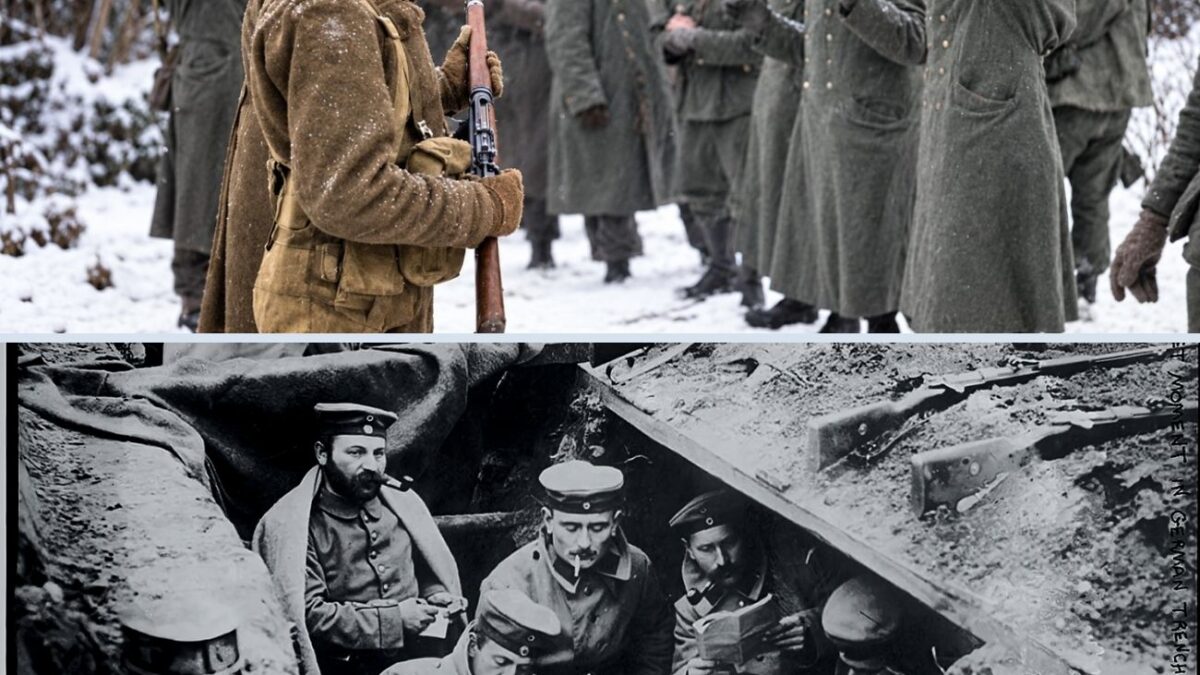
“I feel British in my heart now. When people ask me about life, I say my education began when I got to England. I learned about humanity, tolerance, and forgiveness.” Bert Trautmann said those words to the Guardian in 2010. He was in his mid-80s by then, a former sergeant of the Luftwaffe. He had won five medals in the Second World War, the Iron Cross among them. British screeners had once put him down on paper as a convinced Nazi. The line sounds like a courtesy, an old man thanking his hosts. It was nothing of the kind. It was a confession about everything he had once failed to understand.
From the first U-boat crew in 1939 to the last prisoners shipped home in 1948, the men who came to Britain in German uniform kept running into the same wall. The country they were held in refused to behave the way they had been told it would. Their generals could not make sense of it. Their common soldiers could not make sense of it. And the files the British kept on them, many of them closed for half a century, show exactly where the incomprehension began.
So, consider the puzzle at the center of this story. At its peak, in September 1946, Britain held around 402,000 German prisoners. By the summer of 1948, almost every one of them had been sent home. Just under 25,000 asked to stay. Why would men who had spent years trying to destroy a country decide, once the gates opened, that they wanted to live in it? The answer lies scattered across interrogation transcripts, camp records, letters to small local newspapers, and the memories of a goalkeeper.
The first of these men arrived within 2 weeks of the war’s outbreak. On the 14th of September, 1939, the crew of the submarine U-39 was captured. Their commander, Gerhard Glattes, would not be released until April 1947, 7 and a half years later. The officers went to Grizedale Hall in Lancashire, a 40-room mansion built to hold 200. In November 1939, it held 21. It earned a nickname, the U-boat hotel.
But the real story begins in another mansion in North London, in a room the prisoners were never allowed to see. In autumn 1939, the War Office requisitions Trent Park, a country house on the northern edge of London near Cockfosters. On the surface, it becomes a holding center for captured enemy officers. Underneath, it becomes something else. The man in charge is Lieutenant Colonel Thomas Kendrick. Before the war, he served in Vienna as a British passport officer, which was cover for intelligence work. According to the historian Helen Fry, after the annexation of Austria, he issued visas that let Jews escape the Reich in such numbers that she calls him the Oskar Schindler of Vienna. Now, he works for MI19.
His task is simple to state: make the enemy talk without ever asking him a question. Hidden microphones are wired through the house, through the rooms, into the trees in the garden. Below, in what the staff call the M room, listeners sit in front of recording machines. Each acetate disc holds about 7 minutes of sound, then a fresh disc, then another.
Above them, the prisoners live in a version of England built entirely for their benefit. By the end of the war, according to the museum that now occupies the house, 59 German generals have passed through Trent Park. Helen Fry counts nearly 100 senior officers in the special quarters overall. They have individual bedrooms with adjoining sitting rooms, a billiard table, table tennis, card rooms, a festive dinner on Christmas Eve, and they have a welfare officer.
He introduces himself as Lord Aberfeldy, a Scottish aristocrat, a distant cousin of King George VI. None of it is true. His name is Ian Munro, and he is a British intelligence officer. The title does not exist. The generals believe him completely. Every 2 weeks, he travels into London to buy what they ask for—boot polish, cigarettes, wine. Some afternoons, he takes a general for a walk in the grounds. They talk about the house, the food, the weather. Then he stops beneath a particular tree and lets the conversation drift toward the war. The tree has a microphone in it.
Back to the grounds of Trent Park. Fry’s research describes outings arranged for selected prisoners: lunch at Simpson’s in the Strand, the Ritz, Harrods, the Savoy. Picture it from the German side. You have been captured. You expected a cell, interrogation under bright lights, perhaps worse. Instead, a lord pours your wine and asks whether the room is warm enough. The generals draw the only conclusion their training allows, that the British are sentimental, soft, impressed by rank.
According to Helen Fry’s account, one German officer went further. He concluded that the British were too stupid to bug their conversations. He said it inside a house wired from cellar to garden. This is the first thing the prisoners could not understand. They mistook courtesy for weakness and never imagined that the courtesy was the weapon.
The proof arrives on the 22nd of March, 1943. Two generals are placed together. One is Ludwig Cruewell, captured on the 29th of May, 1942 in Libya, when his pilot mistook British troops for Italians and landed among them. The other is Wilhelm von Thoma, captured in North Africa. They talk freely. Von Thoma mentions rockets. He has seen them tested at Kummersdorf, and what puzzles him, as the listeners recorded, is that London is not yet in ruins. A German general sits in an English country house, surprised that the city outside is still standing.
The disc is changed. The transcript goes up the chain. British intelligence turns its attention toward a research site on the Baltic coast called Peenemünde. In August 1943, the RAF bombs it. Von Thoma never knew what he had given away, and neither did the others. Over the course of the war, according to the Trent Park Museum, some 3,000 conversations between German prisoners are bugged there.
In 2001, the German historian Sönke Neitzel found roughly 50,000 pages of interrogation reports and recorded conversations from Trent Park and its American counterpart, Fort Hunt. U-boat strength, magnetic torpedoes, navigation beams, the rocket program, and something else—something Kendrick marked on certain discs with a large red letter A. Keep that letter in mind. Keep one more question in mind, too, because in the end, it matters more than the rockets: Who exactly was wearing the headphones? That answer has to wait. First, the war has to end.
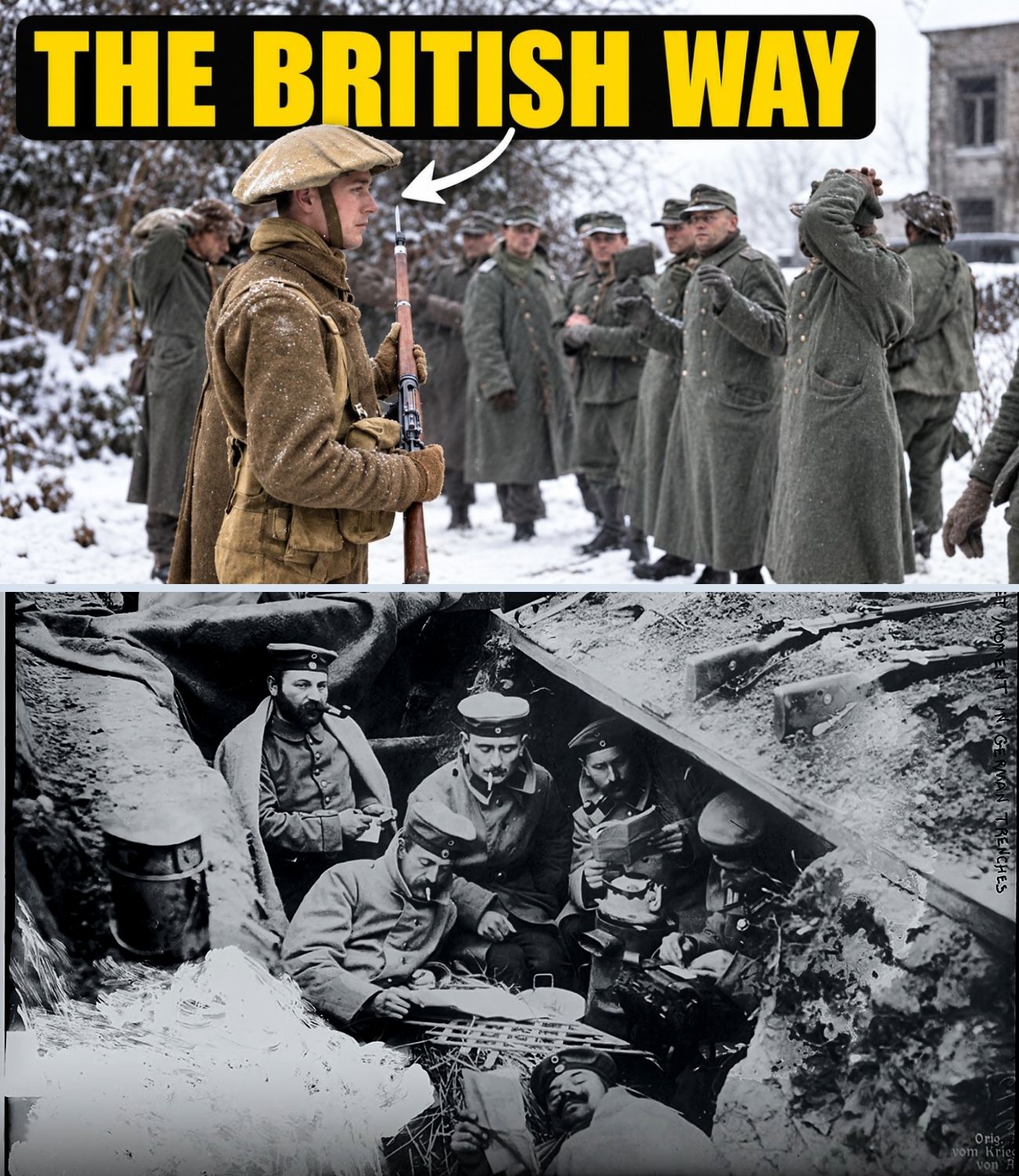
Early 1945. Germany is collapsing from both sides. Bernhard Trautmann is 21 years old. He was born in Bremen on the 22nd of October, 1923. He joined the Nazi youth movement as a child in 1933. He volunteered for the armed forces at 17.
“When you were a young boy, war seems like an adventure, and growing up in Hitler’s Germany, you had no mind of your own,” he told The Guardian in 2010.
He served roughly 3 years on the Eastern Front. Of his original regiment of a thousand men, 90 were alive at the end of the war. He remembered how the war first looked to him:
“You didn’t think of the enemy as people at first. Then, when you began taking prisoners, you heard them cry for their mother and father.”
He had been taken prisoner before, by the Russians, by the French Resistance. Both times he escaped. Now, near Cleve on Germany’s western border, he is caught again. The accounts of the moment vary in detail, so we keep only what they share. American soldiers capture him. He runs. He goes over a fence. He lands at the feet of a British soldier. By Trautmann’s own account, he expects to be shot.
The British soldier looks down at him and says, “Hello, Fritz. Fancy a cup of tea?”
A cup of tea? To a young man fresh from 3 years on the Eastern Front, it makes no sense at all. That is the second thing the prisoners could not understand. The enemy did not seem to want revenge.
Trautmann is shipped to England, a transit camp in Essex, then Marbury Hall in Cheshire, then Camp 50 at Ashton-in-Makerfield in Lancashire. At every stage, he is sorted. The British have a system. On the 18th of September, 1944, the War Cabinet approved a policy of re-education for German prisoners. Every man is screened and given a category: A or white (anti-Nazi), B or gray (uncertain), C or black (committed National Socialist). Trautmann is placed in category C, a convinced Nazi.
The government prints a weekly newspaper for the prisoners in their own language, the Wochenpost. The camps produce their own magazines. There are lectures on democracy. Trautmann found some of them long and dull; one subject he remembered was the Constitution of the British Empire. And every prisoner, whatever his color, is made to watch the same film, The Liberation of the Camps, covering Bergen-Belsen and Buchenwald.
The screen shows piles of bodies, bulldozers driven by British soldiers pushing the dead into pits. Some prisoners shout at the screen. Others file out in silence, eyes on the floor. Trautmann is one of the silent ones, recalling his thoughts at the time: “How can my countrymen do things like that?”
Inside the camp, he is given work. He drives for officers. One of them is a Jewish sergeant named Hermann Bloch. Trautmann later admitted that, deep down, he still carried the old prejudice when he arrived. He also described what changed it:
“I quickly came to see Bloch and every other Jew as human beings. It does not happen in a single step.”
In March 1946, another Jewish officer calls him a German pig. Trautmann hits him. He is found guilty of assault and given 14 days detention. The record keeps that episode. So do we.
Not every prisoner bends. In March 1945, at Island Farm, Camp 198 near Bridgend in Wales, where some 1,600 German officers are held, 70 prisoners break out through a tunnel about 20 yards long. The British do not pretend the men in their camps are saints. They simply refuse to treat them as the Reich treated its own prisoners.
The figures compiled after the war make the contrast hard to ignore. Of the German prisoners held by the United Kingdom, the recorded death rate was around 3 in every 10,000. In Soviet captivity, it was more than 1 in 3. And the men in British camps work. By mid-1946, 63,000 German prisoners are working on British farms. Another 22,000 prepare building sites. Tens of thousands more are put to other labor—roads, rubble, drains. They are paid 1 shilling a day. By one estimate, German prisoners do a fifth of all the farm work in Britain in 1946. The country Germany bombed for years is now being fed in part by men who wore German uniforms.
And slowly, in the fields and the farmyards, something happens that no ministry planned. The farmers talk to them. The rules say they must not; fraternization between British civilians and enemy prisoners is forbidden. But a man who stands beside you at harvest time, every day for months, becomes difficult to treat as an abstraction. By 1946, public opinion is shifting. Why are these men still here? Why are they not home with their families?
In September 1946, the government begins repatriation in earnest. Under public pressure, the monthly figure is pushed up to 15,000 men. And at the end of that year, the ban on fraternization is lifted—just in time for Christmas, on the 25th of December, 1946. Britain is still rationed. Families count their food by the ounce. In Oswaldtwistle, Lancashire, a Methodist minister makes an appeal. On Christmas Day, 60 German prisoners are taken into private homes. Across the country, the same thing happens in other towns, other villages, other kitchens. A man who has spent years in barracks and camps walks through a front door, greeted by a family table with a place laid for him.
In Norwich, at Mousehold Camp, a prisoner named Hans Dittrich receives an invitation from a local woman, Mrs. Statham. His reply is kept today by the Norfolk Record Office:
“I accept with pleasure your kind invitation for Christmas Day.”
Dittrich came from Dresden. He had spent the Christmases of 1942 to 1944 with the German Army, one of them alone on a small outpost. Then came more Christmases as a prisoner, first in America, then in Britain. Now he has a seat at an English table. After one such Christmas, another German prisoner wrote to a local newspaper, his words preserved in the histories of the period:
“In no way was I prepared for what was done for me during Christmas Day by the family. I was like a dear part of it. Where they were, I was, too. What they had, I had, too. And where they went, I went, too.”
In a country where everything was counted, that is the third thing the prisoners could not understand. They had been told that the British were decadent and that the British hated them. What they found was a people with very little who gave part of it away to the men who had been their enemies.
By late 1947, almost every restriction is gone. Prisoners can leave the camps without an escort and mix freely with the people around them. And here the story turns back on itself. Return to Trent Park. Return to the basement, to the men in headphones. Who were they? They were Germans, around 100 of them, German-born Jewish refugees recruited from the Pioneer Corps, men who had fled the very regime whose generals they were now listening to.
Fritz Lustig was one. He left Germany after Kristallnacht. In 1940, Britain interned him on the Isle of Man as an enemy alien. Then it put him in uniform as a private. He rose to sergeant. In the M Room, he listened. Peter Gantz was another. Members of his family were murdered in the Holocaust. Day after day, these men sat with headphones on and heard German officers speak freely among themselves about what they had seen and what they had done.
The recordings contain references to 300,000 civilians shot, to 80,000 Jews murdered at Lublin, to Auschwitz, to gas vans. One general, recorded speaking of killings he had witnessed, called them “the most bestial thing I ever saw.” A pilot said of a massacre at Lviv, “We shall have to pay for that.” And Dietrich von Choltitz, later the German commander of Paris, was recorded saying, “The worst job I ever carried out was the liquidation of the Jews. I carried out this order down to the very last detail.”
These were the recordings Kendrick marked with the red letter A for atrocity. He wanted them preserved for the trials to come. In the end, they were withheld to protect the secret of the listening operation. The transcripts were only declassified in the late 1990s. So, consider what the listeners were asked to do. They had to hear the men whose regime had destroyed their families, transcribe every word accurately, without comment. Then go back upstairs, past rooms where those same men played billiards, and do nothing but their job. The generals at Trent Park could not imagine that the British would bug them. Still less could they imagine who was on the other end of the wire.
The refugee who appears at the decisive moment of Bert Trautmann’s life comes from the same world. In 1948, the camps are closing. Trautmann has been reclassified from C to B, from convinced Nazi to uncertain. He is offered repatriation. He declines. In Lancashire, he has work and he has football. In August 1948, he starts playing for St. Helens Town, a non-league club. On the 7th of October, 1949, Manchester City sign him to replace their famous goalkeeper, Frank Swift. A former Luftwaffe paratrooper now keeps goal for a Manchester club, 4 years after the war.
According to accounts of the period, around 20,000 people protest against the signing. Then one letter changes the conversation. It is written by Dr. Alexander Altmann, the communal rabbi of Manchester. Altmann had been forced to flee Germany in 1938. His father, Adolf Altmann, chief rabbi of Trier, died at the hands of the Nazis in 1944. His mother did not survive either. He wrote:
“In the version usually quoted, despite the terrible cruelties we suffered at the hands of the Germans, we would not try to punish an individual German who is unconnected with these crimes out of hatred.”
A man whose parents had been killed by the Reich asks a city to judge one German by what that German himself had done. Trautmann said later, “Thanks to Altmann, after a month it was all forgotten.” The abuse did not vanish entirely. From the terraces, he still heard the shouts of “Kraut, Nazi, war criminal.” In the dressing room, his teammate Eric Westwood put it in six words: “There’s no war in this dressing room.” And when City played his first match in London against Fulham, the crowd stood and applauded him.
That was the fourth thing that prisoners could not understand and the hardest: forgiveness offered by the people with the most right to refuse it. Saturday, the 5th of May, 1956, Wembley Stadium, the FA Cup Final. Manchester City against Birmingham City. A crowd of 100,000. Bert Trautmann is 32 years old. That season, the football writers have named him Footballer of the Year, the first goalkeeper ever to receive it.
Third minute, Joe Hayes scores for City. 15th minute, Neil Kinsey equalizes for Birmingham. 62nd minute, Jack Dyson makes it 2-1. 64th minute, Bobby Johnstone makes it 3-1. Then with 17 minutes left, Birmingham break. Peter Murphy is through on goal. Trautmann dives at his feet. He wins the ball. Murphy’s knee hits him in the neck. Trautmann goes down. He is unconscious. Play stops. The trainer runs on. Trautmann gets up, dazed, unsteady on his feet. He refuses to be replaced.
Seventeen minutes remain. His defenders clear every ball as far upfield as they can. Birmingham keep coming. He keeps diving. After one save, the trainer has to revive him again. Ten minutes. Five. The final whistle blows. Manchester City win the cup. The first German ever to lift it is standing with a broken neck, and nobody knows.
That night, he goes to the banquet. He cannot move his head. The next day, at St. George’s Hospital, he is told it is just a crick. Three days later, x-rays at the Manchester Royal Infirmary show what he had played through: five vertebrae dislocated, the second cracked in two. According to the medical account, the third vertebra had wedged against the second, which may be what kept the injury from killing him.
Recovery takes months. It was 11 years since a British soldier had offered him a cup of tea. Months after the final, his 5-year-old son John was killed in a road accident. The grief went into his own house and stayed there. He played on for Manchester City until 1964, making 545 appearances. In 2004, he was appointed OBE for his work on Anglo-German understanding. He had won the Iron Cross and was now an Officer of the Order of the British Empire; very few men have held both. He died on the 19th of July, 2013, in La Llosa, near Valencia in Spain, at the age of 89.
The others had their own endings. Hans Dittrich sailed for Germany on the 10th of June, 1948—his mother’s birthday. To Mrs. Statham he had written, “When we leave Norwich, we shall take with us memories of many happy hours.” He went back to a country split into zones. In his recollections, he wrote that dictatorship is the most cruel and destructive form of government.
Fritz Lustig married Susan Cohn, another refugee who had worked as a listener. Their work stayed secret for decades after the war. Thomas Kendrick’s red-letter discs never reached the courtroom at Nuremberg. The transcripts surfaced half a century later, and historians like Sönke Neitzel and Helen Fry finally read them. Ian Munro, the lord who never existed, went back to being a British officer with an ordinary name. Trent Park itself has become a museum. Visitors now walk through the rooms where the generals talked, and down to the basement where the refugees listened.
Wilton Park opened in January 1946 at Beaconsfield. Around 300 selected prisoners began 6-week courses there in democracy with lectures, seminars, and debate. It still exists today. The figures for its early years differ: one account gives about 2,400 students between 1946 and 1948, while others give more than 4,000. The surviving accounts do not settle it.
So, why have so few people heard this story? Partly because it is quiet. There are no tank battles in it, no beaches, no last stand. Partly because much of it was secret and stayed secret until most of the people in it were dead. And partly because victory tends to be remembered for what it destroyed and seldom for what it chose to spare.
The British memory of the Second World War is built around 1940—Dunkirk, the Blitz, the Battle of Britain, standing alone. That memory has much less room for 1946, for a Lancashire kitchen at Christmas with a German at the table and a share of the family ration on his plate. The people who kept this part of the story were few and scattered. Local record offices hold letters written in careful English by German hands. Some families still keep an ornament or a toy made in a camp hut and bartered with the locals.
There were the 796 British women who married German prisoners once the ban on such marriages was lifted. There were the just under 25,000 men who stayed, and there was a goalkeeper who spent the rest of his life telling anyone who asked where his education had begun.
That brings us back to the puzzle we started with. Why did men who came as enemies choose to stay? The generals at Trent Park believed the British were soft—they were being recorded. The young soldier near Cleve believed he would be shot—he was offered tea. The men behind the wire believed they were hated—they were invited to Christmas dinner. The refugees in the basement had every reason to hate—they did their duty word by word and never struck back.
The same country that had refused to surrender in 1940 refused, after 1945, to become what it had fought. The prisoners took that restraint for softness until they had lived beside it long enough to see that it was the harder choice. Bert Trautmann put it in one sentence, 65 years after he landed at the feet of a British soldier:
“I learned about humanity, tolerance, and forgiveness.”
He was naming a strength he had never been taught to recognize. It began with a cup of tea offered to a man who expected a bullet. What a nation does with its enemies, once it has beaten them, is remembered long after the battle.
You Might Also Enjoy

“We Thought They Would Negotiate”—What Argentine Soldiers Said When The British Attacked Goose Green

“You’ll Never Finish My Ruck March, Limey” — US Sergeant Who Challenged the SAS, Then Fell Out First